
The Cure For ‘Blue Dot Fever’? The Voice Of Live, Data & Reason
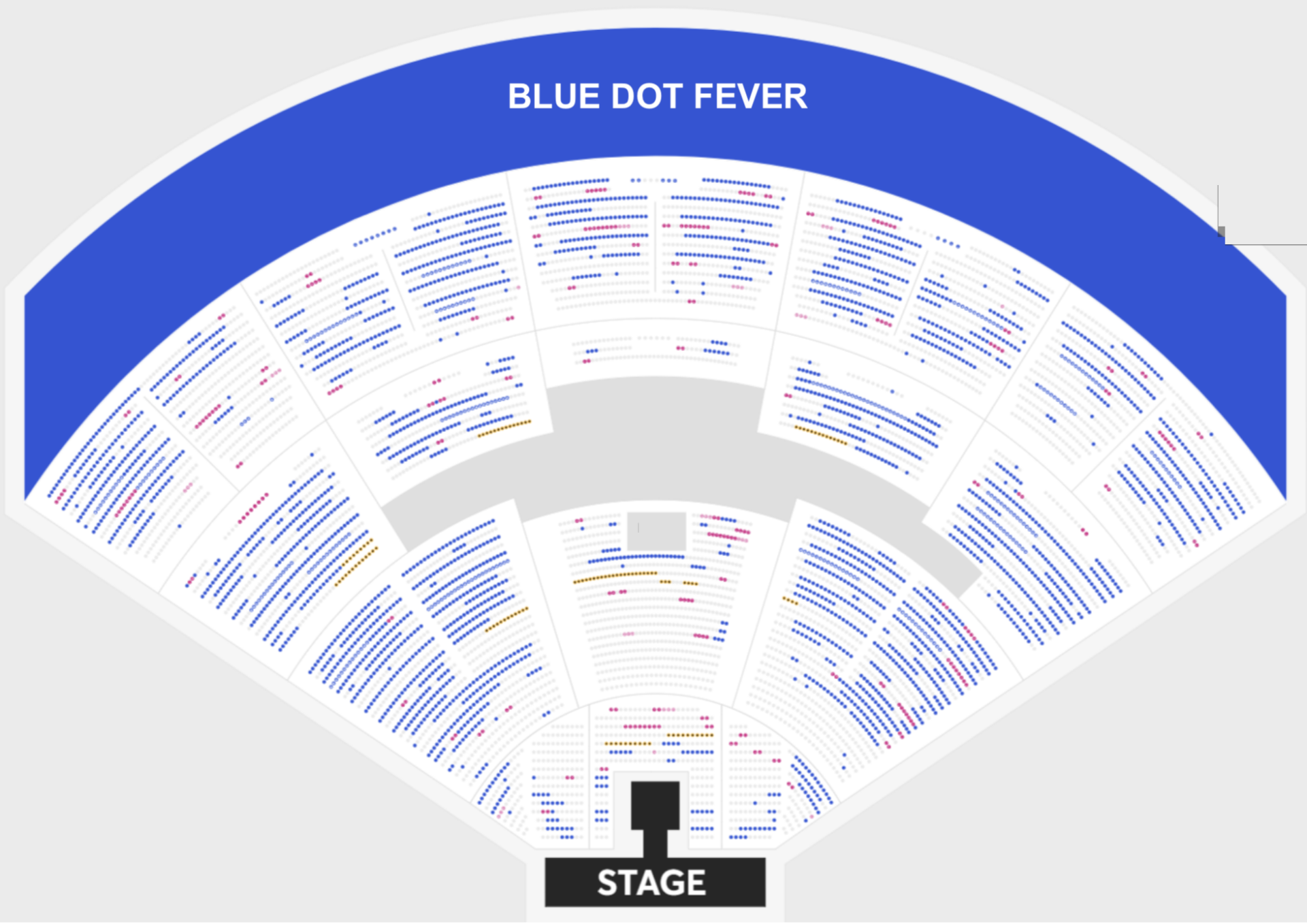
Pollstar, “The Voice of Live,” takes seriously its mandate to cover the concert business through the lens of data, not media frenzies or public sentiment. That distinction is especially important amid the recent so-called “Blue Dot Fever” craze, sparked by reports of slow sales and canceled dates for tours by acts including the Pussycat Dolls, Zayn, Meghan Trainor and Post Malone/Jelly Roll. Ticketmaster seating maps showing “blue dots,” representing unsold seats, fueled hundreds of stories forecasting doom for the concert business.
“I think it may be a simple phenomenon as to why people used to buy the National Enquirer while checking out at the supermarket,” says Peter Shapiro, the New York-based promoter and founder of Dayglo Presents. “Some people enjoy seeing successful people — aka rock and pop stars — struggle a bit.”
It’s hardly the first time this industry has seen this pattern. In 2024, amid similar high inflation, canceled dates from Jennifer Lopez, Justin Timberlake, The Black Keys and Lauryn Hill & The Fugees triggered comparable handwringing. Yet 2024 was a record-setting year according to Pollstar’s Top 100 Worldwide Tours chart, which reported an all-time high gross of $9.5 billion, average ticket prices of $136 and the second-highest ticket sales ever at 69.9 million.
To be fair, those figures reflect the very top of the business. Smaller tours and venues faced greater economic strain. Still, the narrative of an industry collapsing ignored the reality that much of live entertainment operated at historic levels.
In prior years, superstars like Taylor Swift, Beyoncé and Madonna — notably all women — were erroneously criticized over “blue dots” and low secondary-market ticket prices. Yet secondary-market resale has little bearing on a tour’s success, those tickets all sold on the primary. Additionally, late buying consumer behavior is increasingly the norm, with many tours now seeing more sales closer to show time.
What also happened in the 2020s was that live entertainment took on greater social, cultural and economic importance. During the pandemic, endlessly and daily we were asked when concerts would return. Significantly, it was also when a divided U.S. government approved the bipartisan $16.25 billion Shuttered Venue Operating Grant program, the largest arts relief package in history supporting independent venues and live-related businesses.
Amid renewed inflation concerns and economic anxiety, the live industry is once again being treated as an economic bellwether. Tours facing sales challenges make for dramatic headlines in ways declining grocery, housing or retail figures don’t. The optics of empty seats are immediate, visual and emotionally resonant.
At press time, the Labor Department had released data showing inflation up 3.8% YOY, the highest level since 2024. The increase was driven by surging gas prices amid the U.S.-Iran conflict and affecting nearly every economic sector. Consumers are feeling financial pressure, and some tours will inevitably struggle in this economy.
Still, economic headwinds are nothing new in this business. Touring, for decades, has weathered recessions, wars, pandemics and technological upheavals. Experienced operators are budgeting for this.
Asked whether inflation was affecting Bruno Mars’ upcoming “The Romantic Tour,” (see Bruno Mars cover story), the tour’s production manager, Joel Foreman, said his camp was prepared. “We’ve seen swings like this before and understand the fluctuation that comes with a tour of this scale,” he explained. “Costs are always evolving, so we plan for that from the beginning and build those variables into the budget as best we can.”
Compare that with Misty Roberts, the esteemed tour manager for Pussycat Dolls , Haim, Clairo and others, who says the market is “kind of scary.” “I think it’s a problem we’re facing industrywide right now,” she said. “Everything in general feels very tenuous for everyday people in America. And the idea of spending $150 on a ticket for a concert that’s three months away just maybe financially doesn’t seem like a smart move to a lot of people.
That said, Bruno Mars’ “The Romantic Tour” looks to be one of – if not the – biggest tour of 2026 and could gross half to three-quarters of a billion dollars or more while generating economic stimuli at every one of its 78 shows across the globe.
Another positive economic indicator: Pollstar’s Q1 Top 100 Worldwide Tour figures for Nov. 13, 2025-Feb. 11, 2026 showed five-year highs across most major metrics, including a 15.7% year-over-year increase in grosses to $1.35 billion and a 4.8% increase in ticket sales to 12.5 million. These are hardly signs of an industry in free-fall.
When asked about the state of his own business, Shapiro put it simply: “We are solid.” He acknowledged that weekdays are softer and the challenges a glut of entertainment options present, but the sky, for now, is not falling. And Pollstar, as always, will continue documenting the reality of the business — not so much the hype surrounding it.
FREE
 Daily Pulse
Subscribe
Daily Pulse
Subscribe
 Daily Pulse
Subscribe
Daily Pulse
Subscribe