
Pollstar Live! 2020: The State Of The International Festival Business
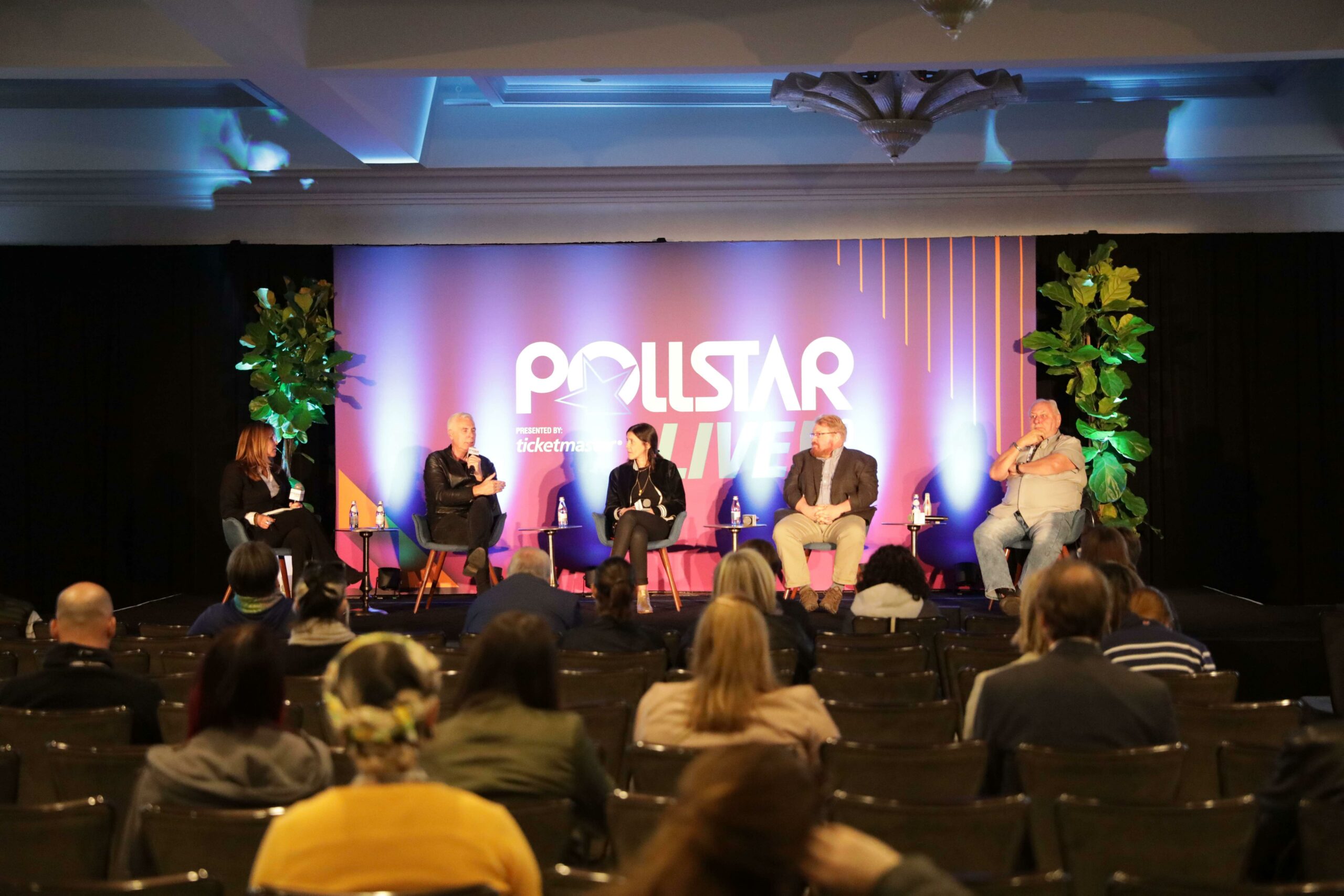
Nathan Larimer (Black Coffee Prod) – Talking international festivals at Pollstar Live!
From left: Moderator Laurie Kirby, John Giddings, Leca Guimarães, Rob Kelso and Peter Noble
Laurie Kirby, Esq., Co-founder of FestForums, hosted a panel during Pollstar Live! exploring the international festival business. An illustrious group of international festival promoters and agents talked about the state of business, talent buying and big issues in various markets across the world.
Touching upon “the current temperature in each of the regions,” John Giddings, Managing Director of Solo Music and promoter Isle of Wight festival, said the number of festivals in the U.K. went up from 400 at the time he got involved in the business to more than 1,500 in 2020.
“It’s really tough to get into the business now, because the market’s so crowded,” said Giddings, adding that he wouldn’t launch a festival today.
He lamented the fact that many events boasted the same line-ups these days, but said it enabled special events to stand out.
Leca Guimarães, international festival director at C3 Presents, talked about the role of festivals in South America. The Lollapaloozas in the region have become platforms to introduce audiences to international talent and vice versa.
Many artists come down to play the festival when they haven’t yet worked out if they can tour the market. The gig introduces them to an audience they can then sell concert tickets to.
The Lollapalooza brand means the industry will trust the event, even if it takes place in an unfamiliar territory. It also helps attract sponsors.
The desire was to get to the point that the South American Lollas sell out before announcing a band, like the Chicago original already did, Guimarães explained.
Rob Kelso, of Creativeman Productions in Japan, creators of Summer Sonic, said the festival has become a rite of passage for artists and fans alike.
His team tried establishing the even in other Asian markets with limited success. While the domestic festival market has grown in Japan, festivals showcasing international artists weren’t expanding.
Peter Noble, director of the Bluesfest Group of companies, put the Australian fires into perspective. While they caused damage to the national psyche, the people agreed that it was now time to get back to doing business.
“We’re in the business of selling tickets, and that business is about optimism,” he said, adding that ticket sales were finally picking up after a very flat summer.
“Very few people [in Australia] are going to have a great festival season this year,” he said, expecting around 90,000 to 95,000 people at his own Bluesfest, instead of the usual 100,000 to 105,000.
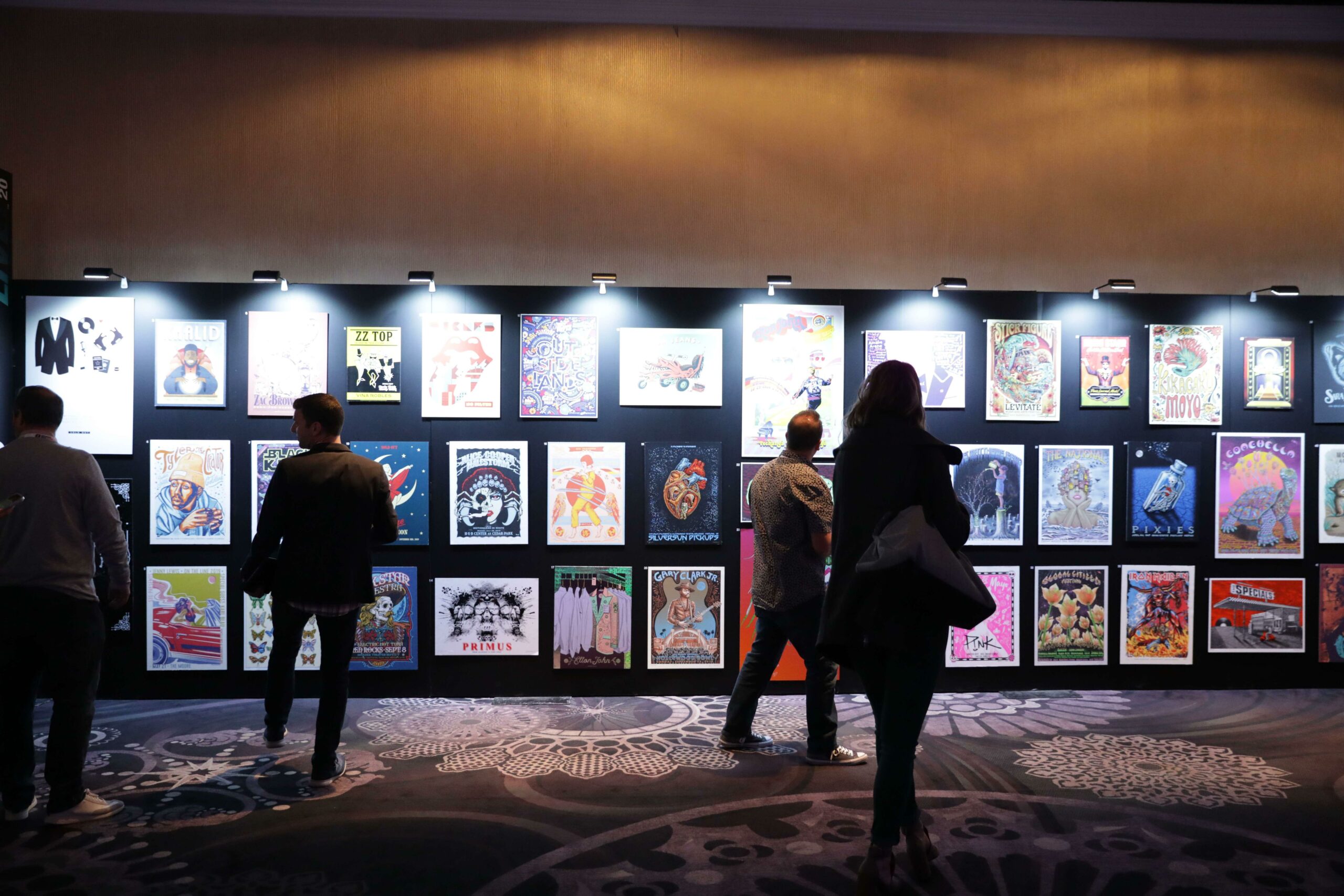
Nathan Larimer (Black Coffee Prod) – Festival poster exhibition at Pollstar Live!
Touching upon talent buying, Giddings said: “Just because an act is in the charts, they don’t necessarily sell tickets to an open air.”
Artist fees were addressed as well, and the panel agreed that headliners were hardly affordable these days – one reason that at least two of the panelists had partnered with Live Nation. “It does come down to money,” said Giddings.
Guimarães explained that it was costly to bring bands to South America, and make the trip worthwhile.
Kelso considered himself lucky, since “everyone wants to play Japan.” And while “all are fighting for the same headliners,” the lower part of the bill was “easy to book,” and didn’t cost a lot of money, he said.
Kelso’s been adding Japanese talent to the festival bill, because headliners are so expensive, but also because the audience demand for domestic talent is there.
While Noble agreed that the business was about headliners, he emphasized that
it was the quality of the acts that play all day long, emerging artists from all over the world, that blow people away the moment they enter the event, that really made a festival.
Safety and security were addressed as well, and it became clear that it was the top priority for all promoters represented on the panel.
Said Giddings: “We spend a million Pounds between security and police. Your job is to protect that audience and make it as safe as humanly possible. But if someone wants to do something, there’s little you can do.”
Guimarães agreed: “We want fans to come back obviously,” pointing to that places like Chile or Sao Paolo presented different challenges, like political and social unrest.
Noble addressed sustainability as a top priority at his own events. “Events can only do so much, but they can make a difference,” he said, pointing toward getting rid of single-use plastics and, stopping landfill.
Kirby also asked everybody to recount funny war stories.
Giddings recalled putting on Paul McCartney and Pink on a Sunday at the Isle of Wight. Their promoter Barrie Marshall called him to ask if he had any acrylic nails.
He finally found a supplier in the yellow pages that could deliver what he thought would surely be a request on behalf of Pink or her crew. But it turned out that the acrylic nails were for Paul McCartney to strengthen his nails when playing the guitar.
He also recalled booking the Rolling Stones after the festival had already sold out. Mick Jagger asked him if they could go on earlier, as he suspected the audience hadn’t come for the Stones in the first place.
Kirby remembered Nick Nolte requesting vodka in a water bottle, as he was officially not drinking at the time.
To round out the session, panelists dared to predict the future, which held the promise of more consolidation, everybody was in agreement on that.
Giddings said, he sold the majority of the Isle of Wight Festival to Live Nation, as there was “a train leaving the station, and you want to be on that train. It’s also not a pleasant feeling knowing you’re going to lose £2 million on a field in summer,” referring to the fact that he didn’t have to carry all the risk or promoting a festival himself anymore.
“They have deep pockets, you need help paying the talent,” he explained.
Guimarães added that a financially strong partner also helped create career growth for employees. “It’s important, you need backers. They help get the bands, help build the brand,” she said, adding that whoever didn’t want that could always leave and create smoothing new, smaller, and sell that on.
Noble gave a brief overview of his career, during which it became clear that he has been passionately doing his job as an independent for the past 55 years.
He did admit, though, that he’d probably have to join a multi-national at some point, as he could “see the business changing.
“I just hope they don’t forget that it’s the creativity that drives this business,” he concluded.
FREE
 Daily Pulse
Subscribe
Daily Pulse
Subscribe
 Daily Pulse
Subscribe
Daily Pulse
Subscribe