
Executive Profile: Live Nation Canada Chairman (and Juno Award Recipient) Riley O’Connor
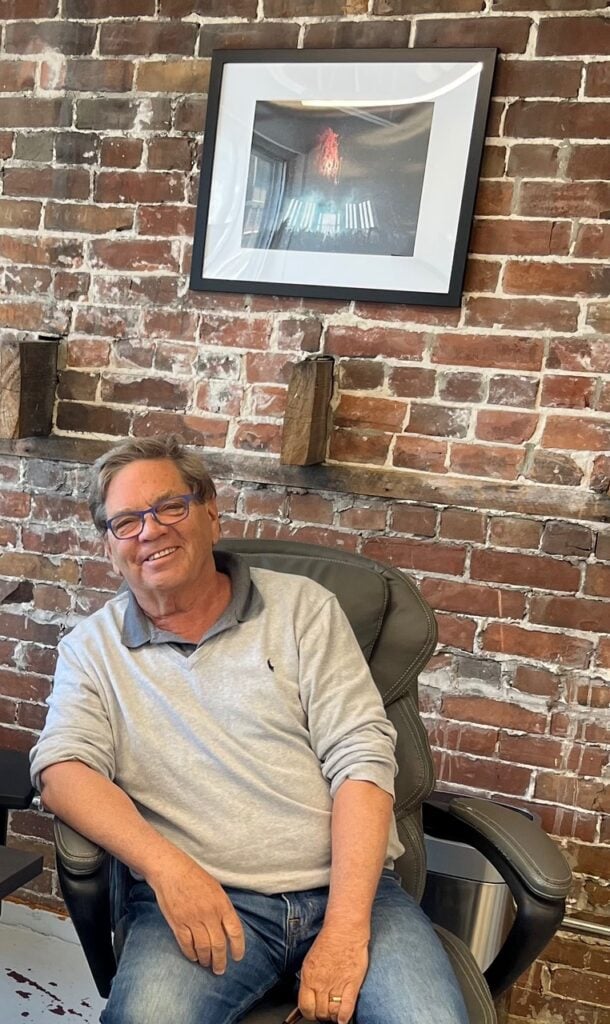
Riley O’Connor, chairman of Live Nation Canada for 18 years, has a mantra not many might know about: “Bring young people in, always.” He knows the people who built this business might not always keep up with what’s new and hip or they will one day retire, so he’s doing his part to make sure the company is populated with young, enthusiastic, knowledge staff to help the industry, while giving them opportunities he was once given.
O’Connor, who was born in Montreal and started in the live business in 1971, will be honored at the 2025 Juno Awards gala dinner March 29 in Vancouver, BC, with the Walt Grealis Special Achievement Award, the equivalent of the Hall of Fame for the Canadian Academy of Recording Arts & Sciences.
It’s not his first lifetime honor. You cross that line in the industry where you are a veteran who has made an enormous impact on careers. In his case, he has produced and promoted such Canadian acts as Rush, Blue Rodeo, The Tragically Hip, Michael Bublé, Bryan Adams, The Guess Who, Nickelback, April Wine, Celine Dion, and brought in dozens of major international names like AC/DC, Bruce Springsteen, Roger Waters, Elton John and still others.
In 2012, Canadian Music Week inducted him into the Canadian Music Industry Hall of Fame at the Canadian Music and Broadcast Industry Awards, then in 2018 Music Managers Forum Canada gave him the Brian Chater Pioneer Award and, last year, during CMW, he received the Industry Impact Award from the Canadian Live Music Association.
O’Connor is known not only to be a straight shooter, but a man of integrity and honesty. It’s adjectives like these that come up time and time again in conversation with his colleagues. He is also what many call “a lifer.”
After beginning in the concert business in 1971, locally, as a drum roadie and guitar tech for the band Mahogany Rush, and as a stagehand for the Montreal Forum, he went overseas to the UK in 1973 to work as a touring electrician, lighting designer and high rigger before giving the very thing he would devote his life to a shot — concert production.
With Norman Perry, he co-founded Perryscope Concert Productions (which later evolved into House of Blues Concerts Canada) in Vancouver in 1977 and worked as a production manager. In 1980, he became general manager, chief of operations and talent buyer.
From there, he briefly left the music industry for Baseline Entertainment, where he was sports marketing manager, special events and introduced Canada to golf skins in 1988. But a year later, he was back in music, and never left.
He joined Toronto-based Concert Productions International (CPI), in Toronto as project manager and director of talent, then was promoted to chief of production operations, and finally to director of talent for CPI USA Companies. In 1998, he joined House of Blues Concerts Canada as senior vice president of talent, overseeing all national business operations. When the Canadian merger of Live Nation and House of Blues Concerts happened in 2007, he was named chairman.
O’Connor used to have a lake-front office down at Ontario Place, on the site of Budweiser Stage, until Live Nation moved to the Liberty Village, where Universal Music Canada and Sony Music Canada also relocated. The soon-to-be Hall of Famer met with Pollstar in the boardroom of the Live Nation Canada headquarters to find out how he feels about the award, a little bit of reminiscing and a whole lot of looking forward.
POLLSTAR: How do you feel about getting the industry’s highest honor, the Walt Grealis Special Achievement Awards at the Juno Awards gala dinner?
Riley O’Connor: Well, as I said to Allan Reid [president and CEO of the Canadian Academy of Recording Arts & Sciences], I’m completely overwhelmed by the honor, especially to be with such an amazing group of Canadians. But what’s really special is knowing that I’m only the fourth promoter to get this. That’s something that I can tell my family.
You got inducted into the Canadian Music Industry Hall of Fame in 2012. At that time, Live Nation Canada was presenting about 1,100 concerts a year. Now, it’s 4,000. What changed in a dozen years?
The marketplace has gotten bigger, for one. That’s the biggest thing, but in terms of Canada, the population growth has been phenomenal. Urban centers have now turned into major urban centers — Vancouver, Calgary, Edmonton, Winnipeg. So, that’s the change in the map. And then, the change in the business is that artists now need to go out and play live to make money. That’s been the biggest transformation. You don’t have all those other revenue streams. Now, that’s your major source of income, unless you’re in the top-five echelon of artists. So, you got to really go out there and plow your trade. It’s our job to make sure that we can sustain that business and open up the landscape for them.
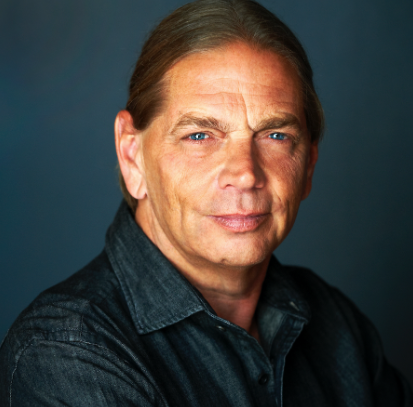
That’s a huge growth. I don’t know if you remember, but in your acceptance speech back then you put out a message to the Canadian government to protect our venues. You called them “the cathedral of our industry.” Since then, Live Nation has been buying up venues…
Not so much buying up venues, as opposed to either creating partnerships to keep them alive, or we go and build our own.
Opera House, Kee to Bala, Axis…
Those are all partnerships.
Tell me about that area of the business, because it’s relatively new for Live Nation Canada.
Part of it is about making sure we sustain the flow of artists to be able to go into an ecosystem where they can build up their live performance career. It’s better to be able to give them those opportunities at an early level, or the breaking groundwork when you’re going in there and you’re just honing your skills. The old line, as well, from 40 years ago, is if you can sustain yourself as a promoter, you’re going to get them on the way up and you’re going to get them on the way down. So now we have both sides of the business. It’s not about sustaining what’s at the top stadium level or arena business.
I feel one key to a thriving live industry in the future is introducing young people to the magical concert experience. Do you see that as an issue we should be focusing on?
In terms of a younger generation, from my experience, right now, from just my own kids and then my associates who have even younger kids, it’s now much more experiential. It’s a social event for that peer group. They partake at a much broader level than I ever did. I used to pick my moments of what shows I may want to go to. Now, they’re going to multiple shows and it’s at multiple levels. They’ll pay the money to have the quality experience.
Kids get excited and caught up in the hype of an arena or stadium show, but do you also see it at the smaller level?
Absolutely. They’re going to feel what it is like at an early level or to go into a more intimate environment and get that experience. Yeah, we’re seeing it. I’m curious now, in the years to come, what’s the next generation going to be experiencing? Will they feel the same way? That’s going to be something to watch.
You were one of the producers of the biggest ticketed concert in Canada, SARSfest, [Molson Canadian Rocks for Toronto, July 30, 2003, a charity concert featuring The Rolling Stones, AC/DC, Justin Timberlake, Rush , and others], for close to half-a-million people [at Downsview Park]. What do you remember about pulling that off?
It was 13 weeks of unbelievable madness, a lot of fun. My proudest moment is just wrangling the different factions of this city to be cooperative and work together. It was fun having people like fire, EMS and police listen to me about how we’re gonna handle a crowd of 450,000 people. I even managed to get CN Rail and VIA to work with us and give us the corridor to bring the artists up through Downsview, coming out of Union Station. Everybody was just focused. And it was great to have all the politicians on the same page.
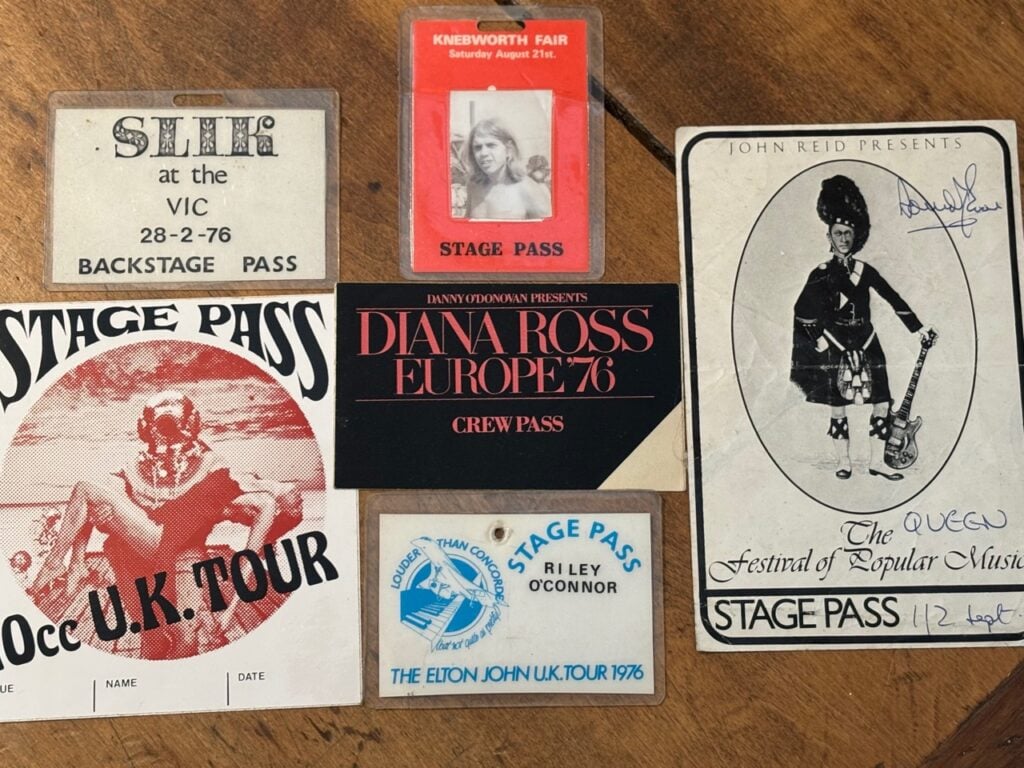
When your peers, your friends, talk about you, the word “integrity” comes up the most. “Honesty” is another. What has been your guiding principle in your career these 50-plus years?
In the very early days as a promoter, coming from a production background, I already had a sense about the show, the live presentation, and so what I found inspirational, especially starting off in Vancouver, was how do I get that feeling to as many people as we can? And then the next stage for me was my total love of the artists in Canada. I thought we were different because it was a hardship to get to venues; it was a hardship to get from city to city because we’re such a vast country with such a small population. So, the distances you travel to get there, it’s a hardship. And so, how do I make that a better experience for the artists and for the fans? How do you really do that? And it was about developing the relationships with the venues. Saying, “Hey, you got to treat your people better. You got to treat your employees better. You got to treat the fans who come in here better because they’re the reason why you have a job.” That’s the teaching moment for me. What are the reasons why we work here?
Because there is a view of the promoter that, maybe not at this level, but definitely at the smaller level, that they’re kind of…
Slimy, greasy, we’re going to take the money away you’ve had in my pocket. Yeah, and look, I had those experiences, and then people have accused me of that. And I go, “Really? So at what point do you not want to work with me? If you think that, then don’t work with me.”
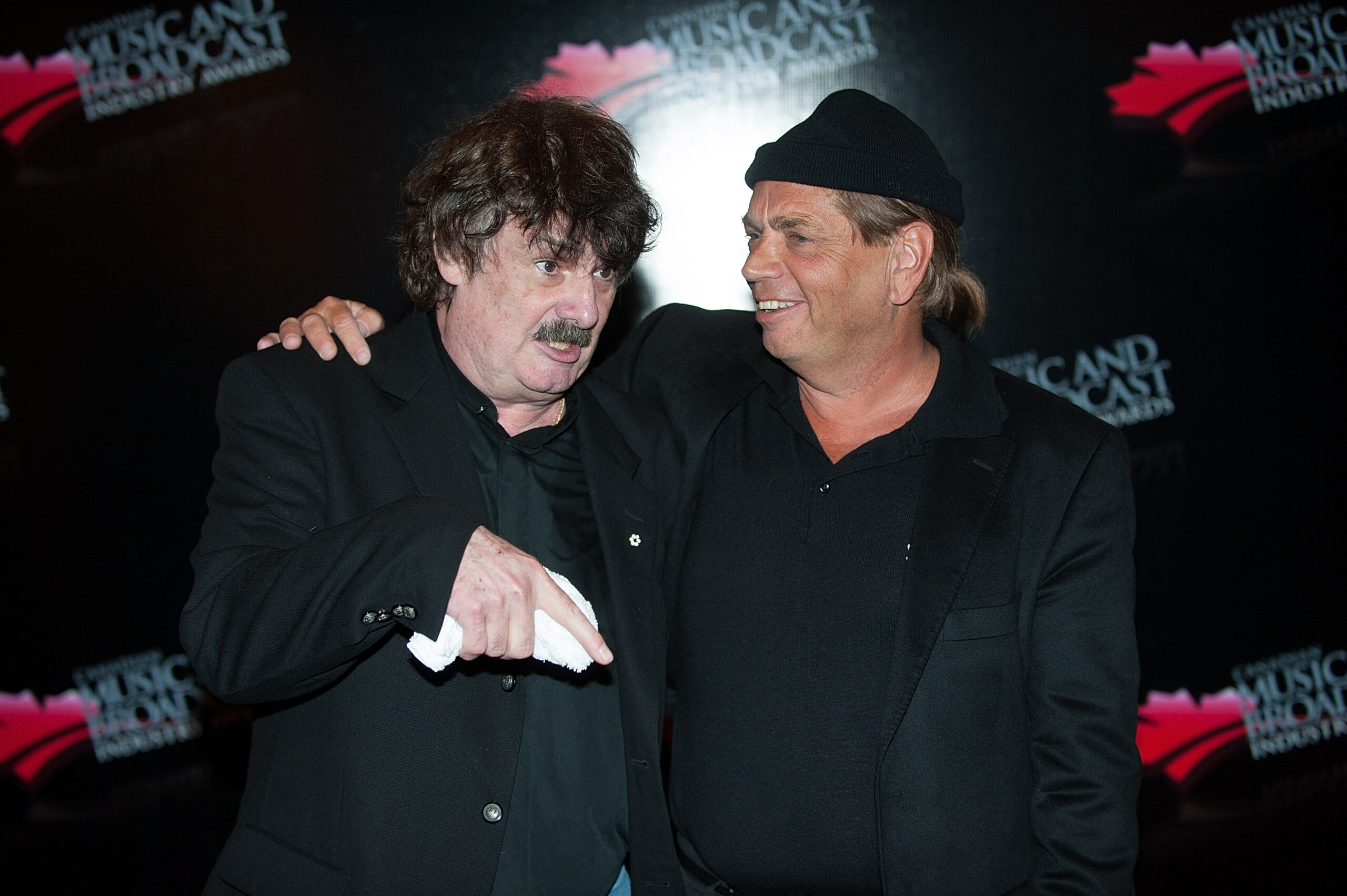
I remember Burton Cummings, on stage at your Canadian Music Industry Hall of Fame induction, said that you were always on the level. If a show is not selling, you’ll tell them. You don’t sugarcoat.
There’s no reason to bullshit anybody. One of my funniest moments starting off in the career was doing [the band] Max Webster in Nanaimo [BC] at the Beban Park Community Centre. It holds a thousand people and we sold 80 tickets. And [frontman] Kim Mitchell makes a joke from the stage when he walked on, he says, “I saw the promoter bring everybody in his Station Wagon to the show tonight. Thank you very much.” [Laughs]. Because I told him we did not do well, but he still played.
You’ve worked in every area of the live biz. You even did high rigging. You were that guy “up there” in the rafters.
We had an old arena in Victoria, the Memorial Arena. You literally had to go up and climb up on the roof and drop cables through a hole in the roof. I can remember the road manager coming in [tough voice] “Where’s the promoter?” and the stagehands going, “He’s up there.” He goes [sheepish voice], “Never mind. Take your time.” That’s what I liked about the business, just trying different things. You have a respect for all the different things, how hard it is, especially on the lighting crew; they’re first in, last out. That’s a lot of hours going in, and then you gotta get to the next city.
You’ve come up in the industry with noted Canadian promoters like Arthur Fogel, Donald Tarlton, Michael Cohl and Michael Rapino to name just a few. That’s pretty cool that you’ve all done so well and are all so important to building our industry.
Yeah, and there was a network of regional promoters out there, and then who turned national. Ron Sakamoto, great promoter, saw his pathway going into specializing in country music. There was a guy in Winnipeg, unfortunately he’s long gone, Gary Stratychuck, and he started managing Streetheart, and we made sure Streetheart became an arena attraction in Western Canada. All those experiences just make it a nice life story, I guess.
How does your role fit in at Live Nation Canada, with Erik Hoffman as president and Michael Rapino as CEO and president of Live Nation Entertainment?
Well, it’s a different kind of organization. So, for me, it’s been about how do we grow this business, and then bring the best in class of all the aspects of our business? So, we’ve managed to grow in Canada because we’ve developed specialty areas. I knew that I couldn’t continue on just being a promoter or looking at talent; I needed people who are more active in it, had a broader base of understanding, were working with a younger group of people. As I get older, I’m getting farther away from music that’s breaking in the last decade, for example. So, you gotta always nurture yourself and keep renewal. My mantra is “Bring young people in, always.” Not everybody’s gonna stay in the business, and so you have to always keep it churning and give people opportunities. That’s what it’s always about.
Based on that, you have hired programming specialists for Latin, country and South Asian music. That’s also relatively new for Live Nation Canada.
We look for people who have a talent for it. I dabbled in the Latin world, knowing that I know nothing, I can’t speak Spanish. I need somebody who has the understanding and maybe past experiences of being more immersed in the culture. Bring them into the organization and we’re gonna learn more and have our scope of awareness way broadened. Instead of looking at 10%, I wanna look at 180. That’s been our approach for the last decade. I’m fortunate to be at the age of an era growing up in a music industry that was completely changing the roadmap of a culture. This is the evolution of how it goes. It’s broadening our scope. I grew up in the 50s and 60s as a kid; Canada was a different country back then than it is today. And that’s the reality. My job now is to bring as many different people from as many cultures as we can expand to that are representative in this country and let them nourish and mature and grow.
FREE
 Daily Pulse
Subscribe
Daily Pulse
Subscribe
 Daily Pulse
Subscribe
Daily Pulse
Subscribe