
South America Focus: Venues Prospering In Major Markets Opens Opportunities For New Arenas

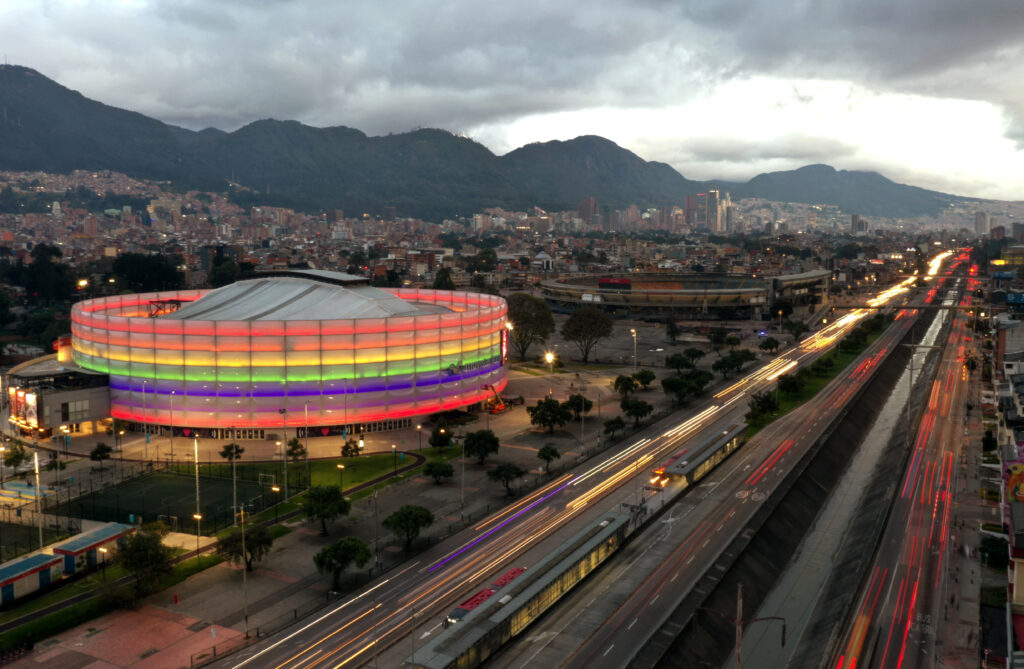
With four South America-based companies ranked among the Top 40 in Pollstar’s 2024 Year End Worldwide Top 100 Promoter Tickets chart, one could never deny the region’s influence with major markets in Brazil, Chile and Colombia. Much like the artists they have produced over the years (it’s a lot), the live business has seen steady growth with companies establishing themselves as global leaders in the industry.
Those who know the biz rave about the fans and the opportunities for everyone involved, but the lack of infrastructure, even in major markets, limits its growth.
That “but” and the assessment that follows the conjunction has plagued South America for quite some time. It’s a fair judgment, but one that soon may not apply to the region.
“It is necessary to strengthen the infrastructure because when you go to a smaller market in South America, it is different from a capital city,” said Carlos Geniso, CEO of Chilean promoter DG Medios, who has worked with acts like Coldplay, The Rolling Stones, Rosalía and Paul McCartney. “Many artists have completely determined production already, and you can’t do a show at a major market and then go to a secondary. It would have to have an infrastructure in place that is able to meet the same needs for quality live music.
“But it is developing, little by little,” Geniso added. “I think that in the next five or six years, a lot of secondary markets will emerge.”
It’s already happening. Not only have new venues been built since the COVID-19 pandemic but more are on the way with markets like Medellín in Colombia and Asunción in Paraguay, looking to add new state-of-the-art arenas that could boost South America’s presence in the global live business.
The development of such venues, however, would not have happened had it not been for the arenas and stadiums that came before them and transformed their communities.
Three of the busiest venues in Latin America share the same name, Movistar Arena, but are in three different markets: Santiago, Bogotá and Buenos Aires (ranked No. 1, 2 and 4, respectively, on Pollstar’s South America Focus Arenas chart). All are emblematic of their country’s growth in live entertainment and inspired others to follow suit.
Montevideo in Uruguay was one of those markets to take a chance on an indoor venue, and it paid off. Antel Arena, which is operated by ASM Global, has served as a catalyst for the local economy and “reshaped Uruguay’s live entertainment market” by drawing international acts that previously didn’t consider Montevideo, according to Agustina Benvenuto, the venue’s head of content and business development.
“The live music business in Uruguay has grown significantly over the past decade, with Antel Arena playing a pivotal role in accelerating this growth,” Benvenuto said. “Post-COVID, we’ve seen a resurgence in audience attendance, fueled by a strong demand for live experiences. Moving forward, we foresee Uruguay becoming a key stop for more international tours, especially as the infrastructure and support for large-scale events continue to improve.”
Lima, Perú, boasts one of the newest venues in the region with Arena 1, which opened its doors in May of 2022 with a KISS concert. The 20,000-capacity venue is the first of its kind in the area and finally provides artists with a facility specifically designed to host large events. Arena 1 has held 130 events and welcomed 750,000 guests from all over the world, especially their neighbors.
“As more artists include Lima (and Arena 1) in their tours, the number of attendees from neighboring countries continues to grow,” said Natalia Vargas, commercial manager for the venue. “Fans are often eager to follow their favorite artists on their tours, but experiencing their performance in their home country offers a unique and memorable experience. We are always thrilled to welcome visitors from around the world, mainly the neighboring countries such as Ecuador, Bolivia and Paraguay, they take advantage of the fact that Lima is a gastronomical and cultural hub, and our location, facing the Pacific Ocean, provides a vibrant and breathtaking backdrop to create truly unforgettable memories.”
With Bogotá leading the charge behind venues like Movistar Arena, Coliseo MedPlus and Estadio El Campín, Medellín felt it was time for it ti make a name for itself in live entertainment. The culturally rich city responsible for producing stars like Karol G, Juanes, J Balvin, Feid and Maluma wants to become a destination for international artists, and it’s in the process of developing a venue currently named Arena Primavera (Spring Arena), an appropriate title for a project that will make the city shine a light brighter in the eyes of promoters.
The 16,000-capacity facility in the municipality of Sabaneta will serve as a cultural hub for Medellín, which is Colombia’s second most populous city with more than 4.4 million people. The arena is estimated to cost about $55 million and is being funded by CLK Group, a consortium that owns Movistar Arena in Bogotá, promoter Breakfast Live and ticketing company Tuboleta.
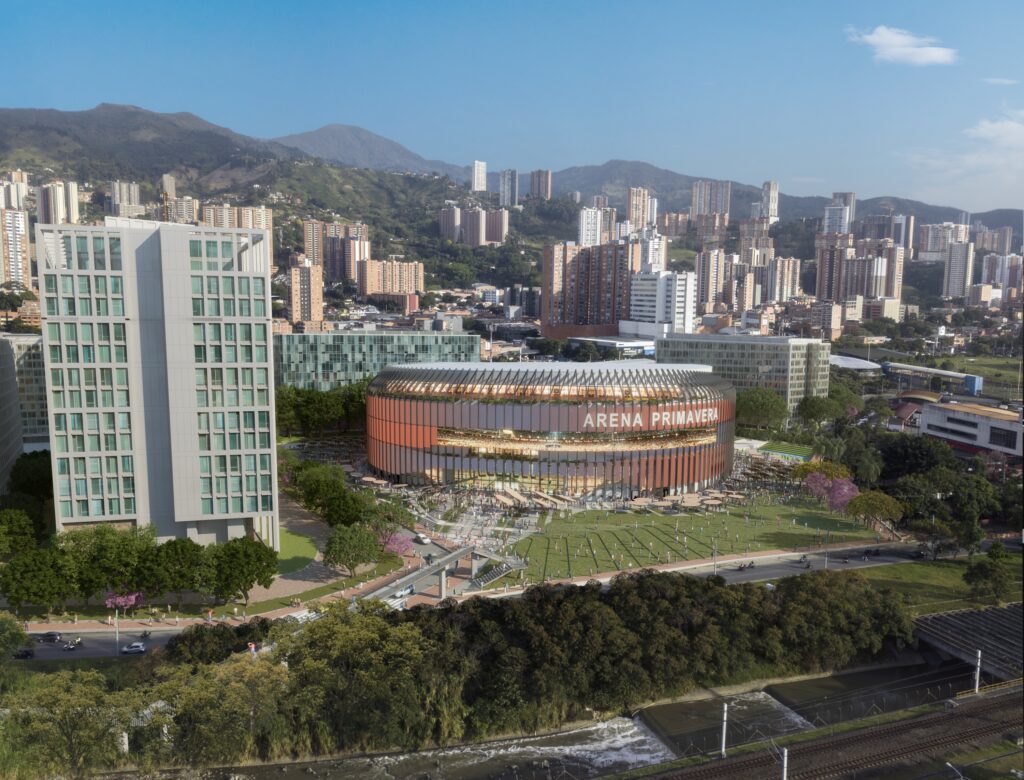
Gabriel Sanchez, chief strategy officer for CLK, told VenuesNow in October that the arena, which is part of a larger project that includes housing, will require at least two years of construction and is being designed by HOK, the U.S. architecture firm that has offices around the globe.
“The project was in our minds since 2019, and we started looking at that area because what is going on in Medellín is very important in terms of tourism and culture,” said Sanchez, who graduated from Georgetown University in Washington, D.C., with a master’s degree last year before assuming his role at CLK Group. “We started comparing Medellín to what was in Bogotá before Movistar Arena, and we realized that the market for concerts was changing and more developed. Medellín is in a better position to accept a building than Bogotá was before.”
The 592,000-square-foot arena boasts an LED façade and plenty of premium seating with luxury suites near the ground level similar to Movistar Arena, open boxes, club-level seating and spaces for people with limited mobility. The naming rights to the venue are still up for grabs, but Sanchez said plenty of suitors are vying to have their company’s title on the new arena and that CLK Group could potentially sign a deal sometime this year.
With support from local government, CLK Group hopes to make the area a cultural hub with restaurants and homes surrounding the venue. Sanchez said that CLK Group approached city officials about the arena, and it eventually evolved into a renewable energy urban plan that included an abundance of green space — using Movistar Arena as a template.
Sanchez anticipates hosting up to 75 shows in the first year of operation with about 1,000 employees. Though Latin music reigns supreme in the South American nation, he said Medellín is the “capital of electronic music” for Colombia.
It’s a major boost for the Antioquia province and the area’s capital, Medellín, which doesn’t have a modern arena. Such a building is a testament to the perseverance of a country that for decades was associated with drugs and violence.
While Paraguay doesn’t such a history, the country wants to become a more viable destination for artists similar to Bogotá with a state-of-the-art indoor venue.
It may get just that thanks to the efforts of longtime promoter Walter Ayala, who is spearheading the development of Smart Arena, a 15,000-capacity venue near the nation’s capital of Asunción that aspires to be the first sustainable arena in South America.
It will be part of a 14-acre entertainment hub that includes shopping centers, a museum and recreational areas for the surrounding communities. The project is estimated to have a $200 million price tag and will be surrounded by a green landscape, sitting near the newly built Héroes del Chaco Bridge that crosses the Paraguay River and connects the city of Asunción to Nueva Asunción.
The concept of a modern arena has percolated in Ayala’s head since 2017. With backing from private investors across the globe and support from the local government, he founded Smart Arena Entertainment, and the arena entered the initial design stage with HOK.
Ayala has hopes that construction of the new arena begins this year so it can be completed by the fall of 2027 and put his native country on the map when it comes to live entertainment. Paraguay is nestled between Argentina and Brazil, two major destinations for artists touring Latin America, making it an easy stop for those passing between the two neighboring nations
“I’m excited and pleased to have such international support on this iconic project in Paraguay,” Ayala told VenuesNow last April. “We want to make this the first net zero arena in the region and an example for the world. For our country, it is an important project because it will put us on the international map for the biggest concerts.”
Having worked in the live entertainment industry for more than 25 years by producing major events, Ayala knows all too well Paraguay’s need for an arena. There’s no shortage of stadiums in South America, due to the people’s passion for soccer, and many headliners use them to draw large crowds, but unpredictable weather in the region can lead to cancelations and promoters losing money booking outdoor venues.
“[Smart Arena] doesn’t only resolve an infrastructure problem. With it, we will be able to program shows like those of other major markets that have the infrastructure in place,” Ayala said. “We will have more tourists and attract more artists. We haven’t had a Coldplay or a Madonna here. We have a great opportunity here to help the region economically.”

Ayala believes Smart Arena will attract more talent, especially those who align with his vision of developing an eco-friendly space that promotes sustainable practices. The slogan for the project is, “Smart Arena Net Zero. Welcome to sustainable entertainment.”
“This could be the first arena in the region to be 100% carbon neutral because other arenas were remodeled or repurposed,” Ayala said. “This will be built from scratch, and we’ll be looking for the LEED Platinum certification. … It’s fundamental for us because this will be our point of reference, our Statue of Liberty. When people talk about Smart Arena, they will know it’s located in Paraguay. That is what we want.”
Secondary markets aren’t the only ones drawing interest from investors. Buenos Aires in Argentina will soon have another venue competing with Movistar Arena, which is owned by Luis Saguier. Live Nation struck a deal with promoter DF Entertainment in November to operate Estadio Luna Park for two decades. Live Nation, which owns a majority stake in the Argentinian company, will invest $34 million into the venue to increase the capacity from 8,000 to 13,000.
“The truth is that we’ve seen a lot of development in the past decade in Argentina, Uruguay, Chile, Bolivia and Perú,” said Eduardo Basagaña, CEO of promoter EB Producciones. “They all have their arenas, but I think we have to try to develop the rest of the country and also build more alternatives. I saw the large investment in Argentina for the construction of a new arena that will compete with the Movistar Arena, and then I see more movement. … I am positive about the future [of the Argentinian market].”
Though arenas are the top of wish lists for many execs in the industry, South American stadiums still haul in massive grosses for artists. The most successful of them all is none other than São Paulo, Brazil’s Allianz Parque, home of storied soccer club Palmeiras and a destination for major acts like Taylor Swift, Eric Clapton and Andrea Bocelli, whose two sold-out shows last May combined grossed a whopping $17.8 million (the two concerts were promoted by Dançar Marketing).
“2024 was a special year as it marked a decade of our operation,” said Marcelo Frazão VP of WTorre Entretenimento, which operates the venue. “We once again welcomed Paul McCartney, who was the artist who inaugurated the stadium. A very significant and emotional moment for everyone. … Great moments in music are coming in 2025. New artists on our stages and big names returning with their new tours to Allianz Parque.”
Allianz Parque has stayed consistently busy, grossing more than $81 million in the past year and selling more than 1.3 million tickets, and it’s not just international stars taking the stage.
“The most noticeable change I’ve seen is local artists moving up to stadium level, particularly in Brazil, plus a definite increase from the past in Argentina,” said Phil Rodriguez, CEO of Move Concerts.
It’s a welcome trend for the Brazilian market and Allianz Parque, which set sales records in 2023 and the following year. Frazão credits fans eclectic taste and passion for the growth of live entertainment in São Paulo.
“The recovery of the post-COVID market was very intense in our segment, with an increase in the number of concerts, audiences, ticket sales, sponsorships, sales of VIP boxes and consumption of merchandising and food and beverages,” he said. “The Brazilian market has been consolidating itself year after year as one of the main destinations for tours of all musical genres. From K-pop to heavy metal, electronic music to indie rock, Brazil (especially the city of São Paulo) has a passionate audience to fill stadiums, concert halls and festivals. We are a musical country that knows how to throw parties, a public that likes to get together, sing, dance and have a great time.”
Nelson Albareda, CEO of Loud And Live, echoes Frazão’s thoughts and adds that Brazilian music is one of the most influential in all of Latin music, a trend that will continue to grow as long as artists have a platform to share their talent.
“It’s a huge market,” Albareda said. “It’s not that big of a Latin music market because of the language barrier, but the size of the market allows Brazilian artists to play as many shows as they want.”
With more venues on the horizon, artists from all over the globe can play as many shows as they want and add more dates in cities nestled between the major markets. When that happens, the fiesta in South America, regardless of where you are, will be nonstop.
FREE
 Daily Pulse
Subscribe
Daily Pulse
Subscribe
 Daily Pulse
Subscribe
Daily Pulse
Subscribe