
‘Pick Up The Phone’: Shinedown’s Brent Smith Applies DIY Ethos To Ticket Sales, Touring (Q&A)
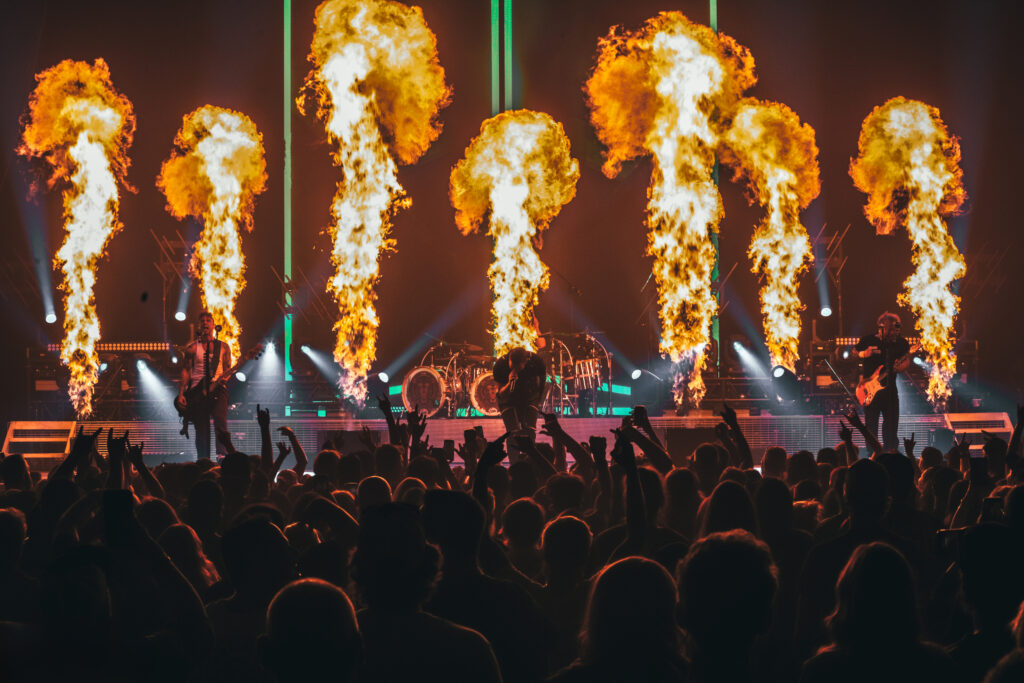
As the public face and self-described CEO of Shinedown, Brent Smith is as hands-on as it gets in the band’s business, from doing grassroots radio promo to designing sets for the band’s live show.
“We’re a democracy with a leader,” is how Smith explains the situation, a sentiment he says is shared by the band, which includes bassist/producer Eric Bass, drummer Barry Kerch and guitarist Zach Myers. “That’s a responsibility that I chose, but you also don’t want to be the artist that is so in tune with everything and there’s too many cooks in the kitchen.”
Ahead of the band’s biggest North American tour to date, the “Dance, Kid, Dance,” tour, Shinedown continues to build its touring prowess, playing major-league arenas like Madison Square Garden, Kia Forum, State Farm Arena and many others this spring and summer. Support comes from Beartooth in the spring and Bush for the summer leg, with upstart country/punk rocker Morgan Wade on all dates.
“He’s an inspiration,” says In De Goot Entertainment Owner and President Bill McGathy, who’s worked with the band from its formation, while Smith was forming what would soon become Shinedown. “The music is important and, like all great bands and songwriters, is supremely personal, yet every single person can adopt it with their own meaning. I’ve seen Shinedown’s music, literally, save lives.”
With two new singles rocking up the radio charts in multiple formats, a true feat for a decidedly rock-born band in the year 2025, Shinedown looks to build further.
“Shinedown is reaching a wider and wider audience, and really what we and the band are hoping to do is step by step paving the way for larger venues, hitting wider genres with their audiences and continuing to have tours year after year gain momentum,” said Alison Shepard, president and managing director at In De Goot. “The tour is really kind of making a statement about where the band is headed. They’re a band that continues to evolve and become more and more relevant with time.”
Although giving much credit to his management team, agency at WME and the whole road crew — not to mention bandmates — Smith is a true example of taking charge and getting involved in the nitty gritty for all things Shinedown. And he has some opinions to share with fans, the artist community and the industry.
See More: 2/21 Shinedown Pollstar Cover story
“You need to know where all your people are, and you need to know about their family. You need to understand that this is a broader way of looking at the world because it’s your money and you’re responsible for these people’s lives,” Smith said. “I’m on the phone with the actual arenas and making sure that I see what their dailies are and what are their wraps. Next week I’m going to Little Rock, Birmingham, Alabama, and I’m going into New Orleans to spend the day. It’s lots of radio promotion, lots of awareness that the show is gonna be coming to these cities.
“If the ticket counts get a little funky, you go in and start talking to the marketing and arena people, find out where the loopholes are. You gotta go in there and be like, ‘Yo, what’s going on? Tell me why this isn’t moving, let’s get it to move.’”
Pollstar: You clearly love the business aspect of Shinedown, but not all artists want to be that involved in the nuts and bolts of it all.
Brent Smith: I have this thing, I don’t like when somebody says, “Yeah, I work for them,” or, “You work for me.” You don’t work for me, you work with me, OK? And we work together. It’s way better when you are working together. The reality of that, though, is you can be really meticulous. I don’t know if you ever get this, but you get an email chain and there’s like 17 people on it and some of these people are giving like one-word answers to stuff, but you don’t even know who they are. Don’t be a dick and be like, “Get this person off this email,” just be like, “Hey, who are the people that actually need to be on this?”
The other thing is pick up the phone. I have seen email chains go back and forth for a week and every answer that needed to happen, I was able to do that in a 25-minute phone call. And then all of a sudden everybody knew what they needed to do. It’s not that hard. It’s just time management.
This “Dance, Kid, Dance Tour,” with legs this spring and summer, is the band’s biggest headline tour in North America to date.
Yeah, some of these places, like Madison Square Garden, when I did the social media content with them, they were like, “Oh, this has got to be so cool to come back and headline it for the first time.” I was like, this is the first time I’ve actually set foot in this building. We do the Boston (TD) Garden, the second leg of the tour first, and then the next day is Madison Square Garden, back to back, for the very first time ever.
It’s one thing at a time, but my goal is to sell this entire tour to capacity on every single building.
Then, where do you go from there? You go to the stadiums, man. At least in my opinion, you want to do it because you love it, but you also have a responsibility to the people around you and to all the people that are able to facilitate your dream and your artistic vision and all of that. But man, the secret to success is to never arrive, and you just gotta lean into it.
Tickets are at a reasonable price starting at $40 to $60 in most venues, which isn’t always easy to arrive at when you have a strong package (Bush, Morgan Wade, Beartooth) and a high-level production.
We just had a real talk with Live Nation about it and I was honest with them. I said, guys, girls, ladies, gentlemen, we’ve got to figure out a way to make this reasonable. Let’s look at some tiers of how we can do it in a professional manner and in a realistic way. We want everybody to be able to make money and do what we need to do, but we don’t want to gouge the audience. We also want to be meticulous about where you can get the tickets, and easily it is to get them, and keeping the bots away. Live Nation was super great about being honest with us, about how we can do it and try to make it as reasonable for the audience members as possible.
Fans and even many artists often point fingers at promoters or ticketing companies for ticket prices, scalping and anything else they may not like about a concert.
I think that what people need to know is don’t point the finger. Don’t be the artist that’s just like, “Yeah, (Bleep) Ticketmaster.” Did you talk to them? You have an incentive to be an honest business person. This is commerce, this is capitalism, but at the same time, people, don’t do the whole, “Oh, my people will talk to your people.” You are your people (laughs).
Get an open dialogue going because there’s a digital marketer that is trying to do their best and make sure that the incentives are all there and they’re talking to multiple people on the ground and there’s multiple people overseeing.
There’s a lot of loose ends that can be buttoned up if you will just take the initiative to just an open dialogue. Do a Zoom call with everybody. Get on the phone with the people from those venues or get on the phone with the people that are going to be working at Ticketmaster or Live Nation or whoever the development is of your tour.
Let them know that you are looking, that you do care, that you do appreciate them. Because guess what? If you treat them like a person and you’re respectful to them, they’re going to respect you, the artist that talks to the people actually working on the tour and doesn’t pawn it off on someone else.
I’m sorry. If it’s got your name on it or it’s your band name, then it’s your responsibility.
FREE
 Daily Pulse
Subscribe
Daily Pulse
Subscribe
 Daily Pulse
Subscribe
Daily Pulse
Subscribe