
Is Americana The New Indie? (Not Your Mommy or Daddy’s Independent Music)
Is Americana the new indie?
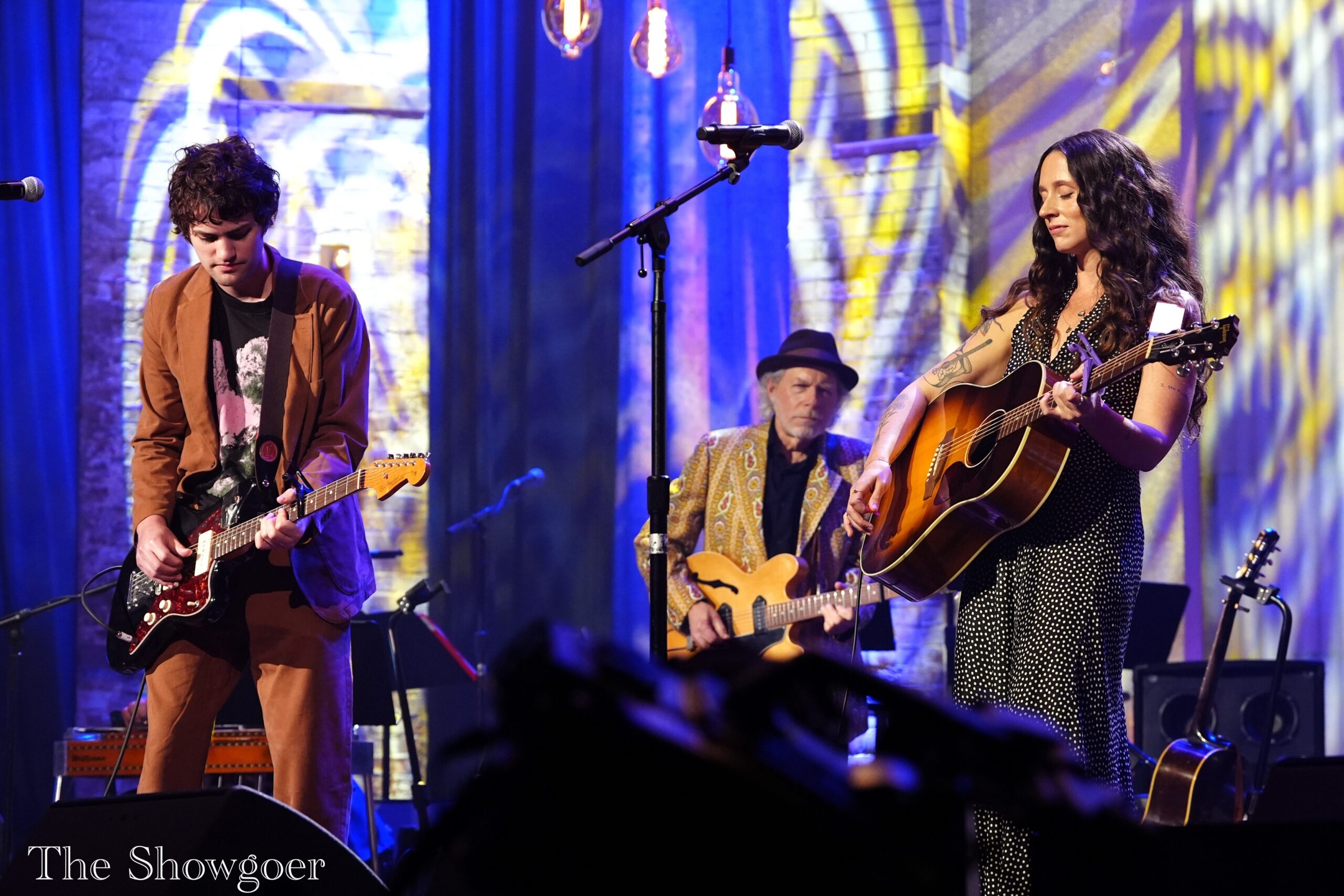
Sure, why not. But at the outset, we have to say parsing genres is straight-up dancing to architecture. That said, relatively recent shows seen over the last year or two, including by this week’s Pollstar cover artist, MJ Lenderman, as well as phenomenal shows by Waxahatchee, Angel Olsen, Julien Baker, Mitski, Noah Kahan, Allison Russell, Rhiannon Giddens, Father John Misty, Jason Isbell and Jenny Lewis among others—suggest that the indie-ish kids are moving towards roots music—pickin’ twangin’ stompin’ hootin’ hollerin’ and grinnin’ as it seems some of the larger culture is, too.
All these shows were sold-out, filled with young-ish hipster kids seemingly from cool neighborhoods like Brooklyn’s Bushwick, L.A.’s Highland Park or East Nashville resplendent in their thrift-store finest and youthful insouciance. They wouldn’t have looked out of place 30 years earlier at Pavement, Pixies or PJ Harvey show. The music, though, ain’t your mommy or daddy’s indie. That more often featured distorted guitars, primal rock beats, noise, feedback, off-kilter rhythms and then later electronic sounds, loops and dance beats—none of which, at least for now, seems to hold the kids’ attention.
“I do think there’s a cycle to it,” says Jed Hilly, Executive Director of the Americana Music Association. “There is a movement, particularly in the Americana space. I often try not to say someone is an Americana artist, because I don’t know if Emmylou Harris’s next album will be with Skrillex,” he says referencing her very real collaboration with DJ/producer Fred Again.. on “Where Will I Be,” and whose album also features Skrillex. “She is the queen of our universe with integrity, poise, grace, an ethereal voice and careful choices of songs. She’s also an artist. And I don’t know what she’s gonna do next. And that’s an artist job, to push the envelope.”
Jake “MJ” Lenderman, originally from Asheville, NC, pushes envelopes, too, in ways not often heard today combining 80s and 90s slacker rock like Dinosaur, Jr. (he recently played with J. Mascis), Sebadoh and Pavement with Americana sounds, including a pedal steel which kicks out the jams. He, like many 26-year-olds these days, is a music omnivore and cops to listening to the likes of Big Star, Paul Westerberg, The dBs, The Allmans and especially Neil Young, who long ago brought the thunder and the sweet Americana under one umbrella.
“I grew up believing that every band that I like somehow is influenced by Neil Young,” Lenderman told Pollstar. “He’s my number one.”
In no way, though, does ‘ol Neil have a lock on expanding upon Americana and roots music, which are the building blocks of so much contemporary music. The Beatles, for example, came up amidst a U.K. craze for skiffle, an acoustic stew of blues, ragtime, folk and jazz that led to the formation of thei Quarrymen, their pre-Beatles band. Led Zeppelin, The Stones, the Yardbirds, Cream and so many other invading British acts were massive R&B/blues heads. Here, too, Dylan, Creedence, The Grateful Dead, CSN&Y, Eagles, The Allmans, Fleetwood Mac, Skynyrd among others were all steeped in roots music that formed a broad array of music nestled under the larger “rock” banner.
The alt.rock-Americana convergence from the ‘80s through today also included a litany of acts, like Uncle Tupelo, which later birthed the great Jeff Tweedy and Wilco and the great Jay Farrar of Son Volt. Others included Rosanne Cash, Victoria Williams, The Jayhawks, Lucinda Williams, Bonnie Prince Billy, Old 97s, Neko Case, Ryan Adams, Drive By Truckers, My Morning Jacket, White Stripes, Black Keys, Nathaniel Raitliff and so many others.
Perhaps the most pronounced resurgence of Americana came in the early 2010s with the sudden ascendence of acts like Mumford & Sons, Lumineers and The Head & The Heart with acoustic instrumentation, harmonies and earnestness (which at times, included suspenders, jack boots and copious facial hair). Their music resonated up the charts and straight to the Grammys’ stage. and major touring careers.
Also, witness country, which is Americana adjacent if not sometimes indistinguishable. This year Stagecoach sold out faster than it’s larger catchall counterpart Coachella while friends in New York and L.A. are going to line-dancing. And pop superstars in the last year made a hard run at country including Beyonce, Post Malone and, ,just a few days ago, Chappell Roan who a week ago released “The Giver,” a celebratory sapphic foot-stomping love song. Each of these artists hail from the south, Beyonce from Texas, which is also where Post Malone grew up, and Roan’s from Missouri.
“I try to hold that respect for their trade,” says Hilly. “I think Americana is evolving to a point where there’s an understanding you can follow your creative instincts and it’s almost a reflection of, and I don’t like to use the word authenticity, but maybe it applies. I think there’s a general cool factor to be honest in that so many of these artists are doing it without the traditional music industry’s cookie cutter ways.”
“She’s a rarity in the market,” says Hilly about Roan, “in that she’s writing the song whereas the country music industry is very much focused on, yes it’s a songwriter, but there’s nine of them on a song. I don’t mean to be overly critical, but there’s a cookie cutter element to the commercial space.” (for clarity, Roan wrote “The Giver” with producer/collaborator Dan Nigro).
Hilly, for context, cites Robert Plant and Alison Krauss’ excellent 2007 album Raising Sand, which won the 2009 Album of the Year Grammy, as a touchstone for Americana. “Robert Plant and Alison Kraus made a breakthrough record after which the Recording Academy pretty much undeniably had to create the Best Americana Album award, which they did (in 2010). It’s because that record had everything—it wasn’t country, it wasn’t rock, it wasn’t bluegrass, but it was all of those things.”
What today’s generation is doing with roots music as building blocks and what they bring to it is exciting and difficult to pigeonhole: Kahan writes explicitly about mental health issues from Vermont, Lenderman adds in 90s slacker rock from the oasis of Asheville and Roan’s strident POV straight-outta the Show Me State—it’s all authentic and a new spin on old music forms that resonates with new generations and can be a gateway to a kaleidoscopic treasure trove.
“The cool thing is who knows where they got it from, but they got it,” says Hilly, “I think I’ll need an anthropologist to help figure that one out.”
FREE
 Daily Pulse
Subscribe
Daily Pulse
Subscribe
 Daily Pulse
Subscribe
Daily Pulse
Subscribe