
‘You’ve Got To Control Your Own Destiny’: The Career Of Geoff Ellis

Geoff Ellis, CEO of DF Concerts in Scotland, just turned 60, but he says he feels healthier than at 40. His most recent fielding at ILMC’s annual 11-a-side soccer match in London proved that he can still play through 90 minutes. He may not be as fast anymore, but his speed was never what distinguished him on the pitch, Ellis admits. What did was his understanding of the game, his feeling for his surroundings, and knowing what the other players were going to do next.
In that way, the game of live and the game of soccer are quite similar. And while Ellis never went pro in soccer, he did in the promoting business. He started out during his studies at Middlesex Polytechnic, where he took on the role of entertainment manager after his predecessor left. “The first gig I booked was A Certain Ratio, which I was a big fan of,” Ellis recalls, “but booking the Stone Roses [in 1989], seeing how they were felt, how they were developing, and then how they exploded, selling out Ally Pally not even a year later – that was probably the thing that made me go, ‘I could do this for a living. This could be a proper job.’”
Whether being a promoter constitutes as a proper job can be questioned. His mum always had her doubts, Ellis recalls with a smile. What cannot be questioned, though, is that Ellis was doing the job properly. “The business is all encompassing. Whether you’re an agent, manager, promoter, you’re answering emails 24/7,” he says, “But I’ve always enjoyed that; I always want to be connected. I’d rather answer a question about a choice of venue at 11 o’clock at night than not being asked that question.”
Over the years, he’s answered that question more times than he can count, for instance when people where asking about his decision to book Glasgow’s Hampden Park stadium for Robbie Williams on his 2001 “Weddings, Barmitzvahs & Stadiums Tour.” He ended up selling it out twice, Aug. 4-5, moving a total 102,193 tickets at a $4,716,754 gross, according to the Pollstar boxoffice report for that show. “We’d only ever done the Eagles outdoors a few years earlier,” he remembers, “but the Eagles were a very established artist, whereas Robbie had sold out arenas, and we were taking a big step going outdoors.”
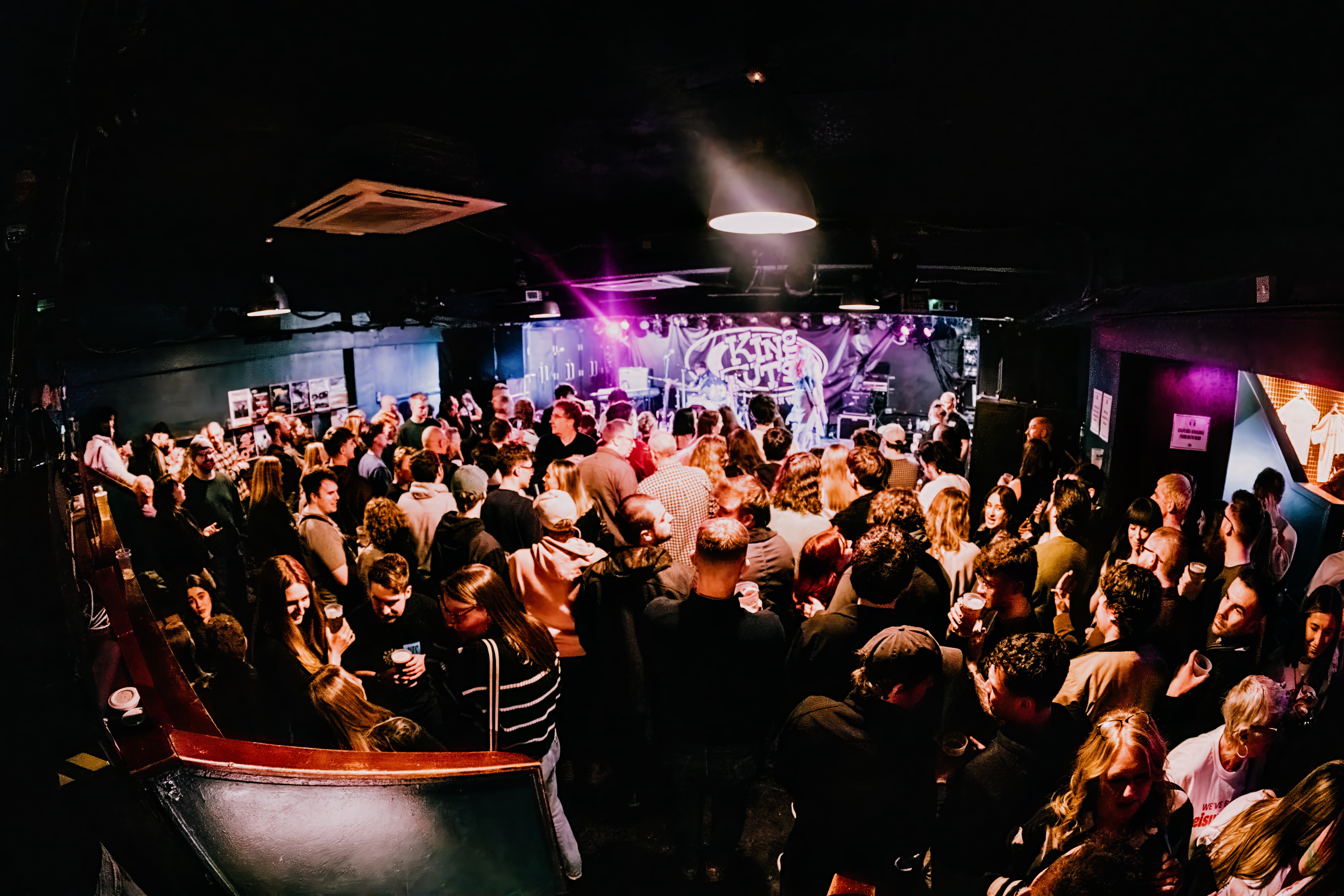
Ellis’ career has been shaped by his willingness to go above and beyond the call of duty for his artists. When a little-known band called Radiohead supported Kingmaker at the 300-cap King Tut’s Wah Wah Hut in Glasgow, Scotland, in 1991, he made them dinner – “soup and baked potatoes,” as he recalls. His dedication came round: when DF Concerts launched TRNSMT festival in 2017, Radiohead were the first band to agree to headline. And, as Ellis knows, “without Radiohead, it would have been harder to get all the other acts for the first edition.”
TRNSMT marked a departure from the tried and tested greenfield-camping formula – a formula that the legendary T In The Park Festival had stuck to for almost 25 years. Ellis’ name has become synonymous with the festival, even though it wasn’t him who founded it back in 1994. He never fails to credit MCD founder Denis Desmond, who today chairs Live Nation UK/Ireland, and DF founder Stuart Clumpas as the two individuals who did.
“I’ve always been involved in booking it, and I came up with the name. To be part of that, and to become the custodian of it when Stuart sold up and left, and to double its size in the early 2000s has to be the proudest thing for me personally, and for the whole team here at DF,” Ellis says.
The early 1990s weren’t great times for live music, as the UK was going through a recession. The UK didn’t have many camping festivals, but perhaps this wasn’t the time to launch a new one. “There was only really Reading and Glastonbury at that time, and people said we were mad to do that, but we persevered, and we developed something really strong,” Ellis says. He concludes, “Today, we talk about festivals happening pretty much every weekend in Scotland, let alone the rest of the UK. It’s about being resilient, and seeking out opportunities, and not waiting for things to fall in your lap. You’ve got to control your own destiny.”
FREE
 Daily Pulse
Subscribe
Daily Pulse
Subscribe
 Daily Pulse
Subscribe
Daily Pulse
Subscribe