People showed. People spoke. Musicians and comedians performed.
The inaugural Departure Festival & Conference in Toronto, the reimagined Canadian Music Week with additional verticals, art, comedy and tech, ended May 11 after a whirlwind year putting it all together.
It was just a year ago that CMW founder and workhorse Neill Dixon revealed at last year’s 42nd event that he had sold the much-respected entity to Oak View Group and Toronto-based Loft Entertainment, founded by Randy Lennox, the former long-serving president and CEO of Universal Music Canada and president of Bell Media. OVG is the parent company to Pollstar and has a Canadian office in Toronto, and is spearheading the $200 million-plus overhaul of FirstOntario Centre that will see a new Hamilton Arena open in late 2025.
Pollstar took in some of Departure’s conference programming and extras, such as industry pundit Bob Lefsetz’s in-depth chat with Canadian-born music executive, entrepreneur and songwriter advocate Merck Mercuriadis, which could have gone another two hours; and Bryan Adams’ keynote conversation, which was part of Radiodays North America, a previous CMW partnership for the broadcast, podcast and audio industry.
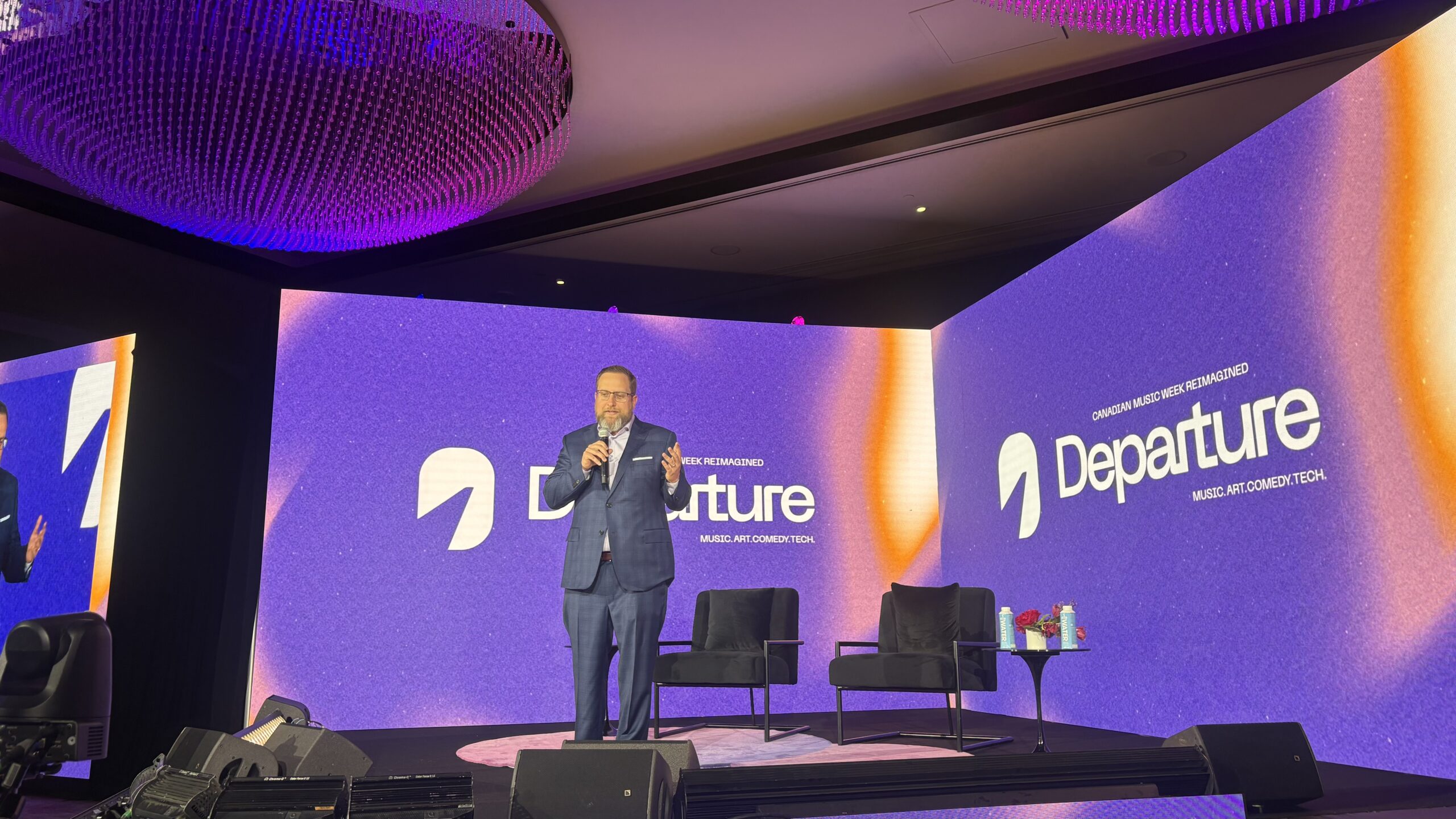
In his welcoming remarks, Lennox said, “We’re going to celebrate the power of music, and as you’ve seen we’ve added some diversity with comedy, with tech, with AI, with a number of things that you’re going to see over the next several days. So hopefully you can feel the difference. We’re very proud of the foundation that we’re standing on with Neill and Canadian Music Week, having built it for 42 years, and we hope that we’re going to innovate and have another 42 years for the legacy of this great conference.”
Below is a roundup of some wise and illuminating quotes and takeaways from this year’s event.
Departure will be back next year. A conference survey is in the app for delegate feedback.
“For musicians out there that are here today, the way to get your music out nowadays is so difficult. You can’t just rely on social media. You can’t rely on just putting your video out. You have to go out and get to people. And so that’s why I tour relentlessly. Because it’s the best way to get the music to the people.” — Bryan Adams
“I have a lot of empathy and concern about the traveling artist. Miranda Mulholland, our creative culture advisor, has always helped us understand about the value of the north-south touring line, as opposed to the east-west touring line along the Canadian border, the value of being able to do that and what that means for artists and the thickening at the border that was already happening and that now is getting scary thickening.” — Music Canada CEO Patrick Rogers
Music Canada CEO Patrick Rogers. (Photo by Karen Bliss)
“Soon, Canada will host the G7 [Leaders Summit] in Kananaskis [Alberta] at the end of June [June 15-17]. This is a huge opportunity for Canada to take a leadership role in these things. It’s a huge opportunity for Canada to say yes to AI innovation, but no to stealing music and stealing other cultural industries. And we are hopeful that Canada will take a leading role in that. We’ll then have the CUSMA, which is the Canadian-U.S.-Mexico Agreement, and Donald Trump is going to present Canadians a series of trade-offs. It’s going to be important to figure out where culture fits in that, where our digital regulation fits in that. — Music Canada CEO Patrick Rogers
“I have this line I use with my grizzled veterans who think that they’re never going to not be here. Ultimately, our legacy is in who comes after you, not what building you build or what tour you promoted. I think you have a responsibility to where you work, a responsibility to yourself, to make sure that you’re doing everything you can to bring people along and, ultimately, to groom the next generation.” — Omar Al-joulani, president of touring, Live Nation Concerts
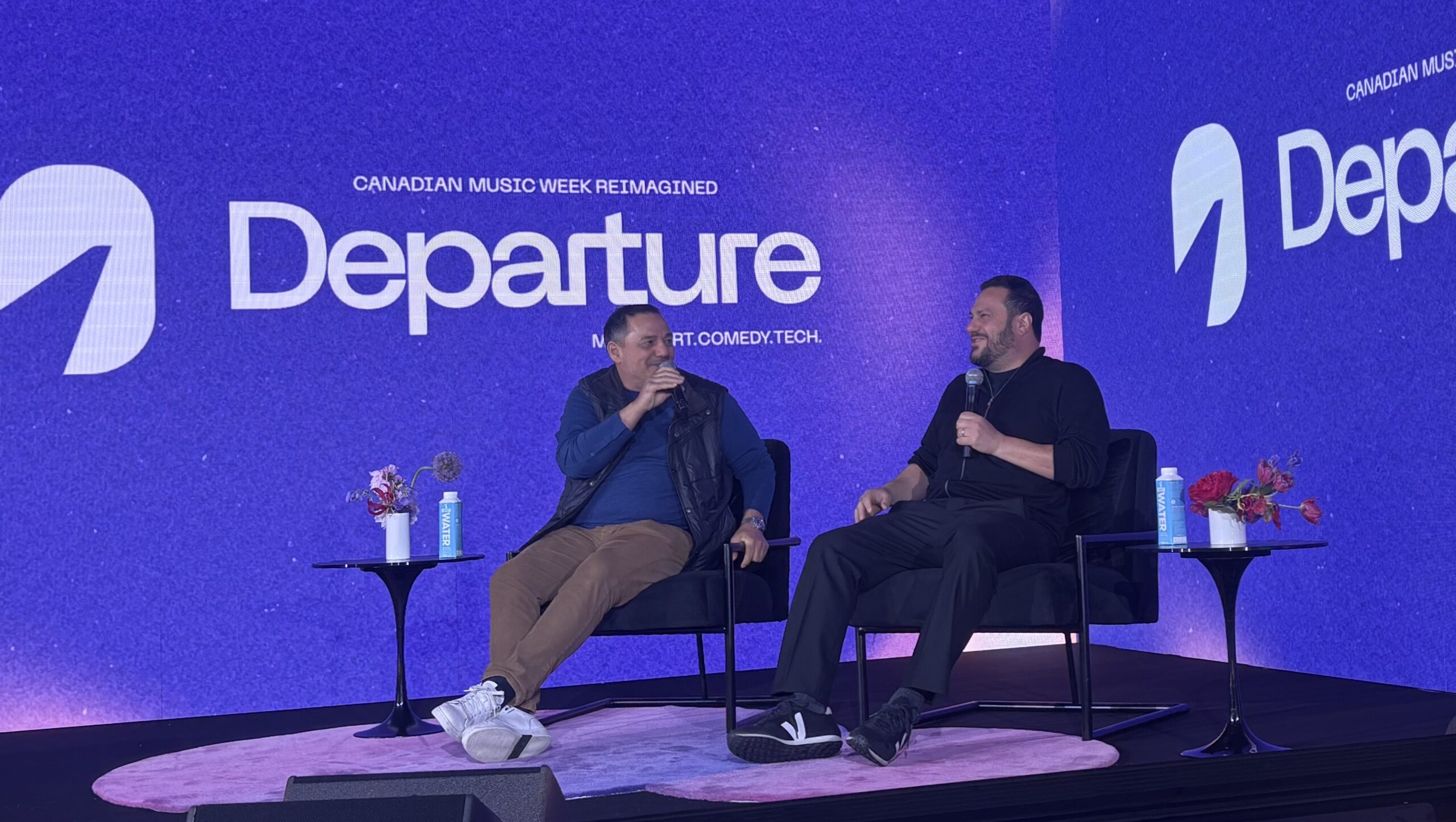
“We miss shows in Toronto because of avails. I also think no different than New York and New Jersey or Anaheim and LA or Dallas and Fort Worth now or Miami and Fort Lauderdale, Toronto’s in that zone of population and interest where you can play both arenas [Scotiabank Arena and the new Hamilton Arena] on the same tour on different legs. So, it’s really exciting. [The venue] definitely needed a facelift. I was there pre-renovation and needed a lot of work, but I’m confident that that’ll all get done and it’ll be open in December.” —Omar Al-joulani, president of touring, Live Nation Concerts
“I’ll tell you something you may not know, the highest grossing show in Canada last year, it was Pink in Edmonton.” — Omar Al-joulani, president of touring, Live Nation Concerts
Live Nation’s Joey Scoleri and Omar Al-joulani. (Photo by Karen Bliss)
“The first-ever economic impact study of live music in Canada is important because for a long time we’ve been telling the story of why live music matters without the data and now we have the data. … Our contribution to GDP is CAD$10.92 billion which, by the way, puts us somewhere between Canada’s fisheries industry and our automotive sector. Pretty impressive, and I think that the average Canadian could probably tell you a lot about fisheries and automotive, but not as much about life as it can other reason why these numbers matter.” —Erin Benjamin, president & CEO, Canadian Live Music Association
“We see a contribution of $3.73 billion in tax revenue. This is every level of government. Why does this matter? Because we’re able to say to government “Not only are we contributing this much to the nation’s GDP, but we are also contributing to taxes municipally, provincially and federally. And that means that our sector is giving back and helps, for example, municipalities fix roads and build hospitals. This industry, the industry that you are in, many of you, contributing over 100,000 jobs to this country [Canada]. That is very significant. We’re not the biggest sector, but we are far from the smallest sector. This helps us to tell our story. And all of those people, when they get paid, they earn an income, and that we call that labor income. And that combined labor income is over five billion. And that means the money that you and I make at the end of the day, we go and spend it in our local economy. —Erin Benjamin, president & CEO, Canadian Live Music Association
“Another fabulous number in this report, staggering really, when you think about it going back to 2023, 19.69 million visitors consumed live music in Canada in 2023. Think about that. Sure, Lady Gaga just had 2.1 million visitors in Rio. But Canada, 19.69 million visitors in one year. And we consider a visitor, a consumer of live music, coming from over 40 kilometers away from where you live…But what I would just say, why does this study matter to each and every one of us in this room? Here in Canada we have very little that incentivizes the growth of the live music sector. Now we have the data that says more policy will incentivize growth, and that is an incredible story to be able to tell on behalf of Canada’s live music industry.” —Erin Benjamin, president & CEO, Canadian Live Music Association
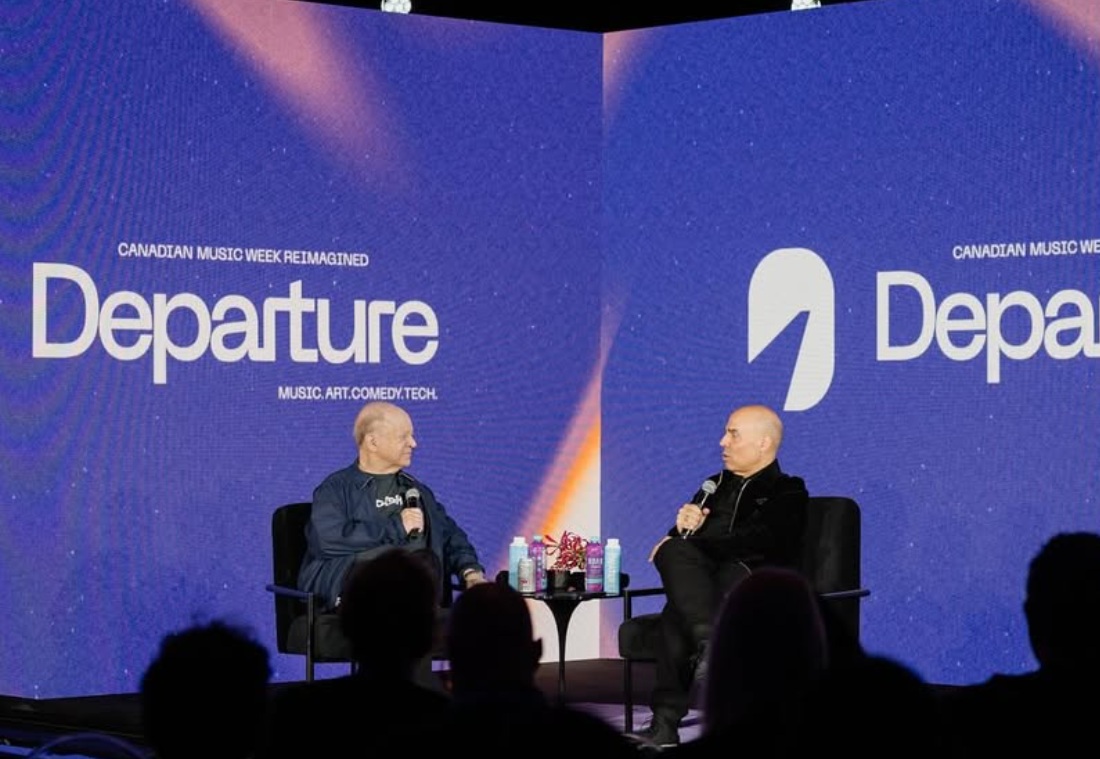
Bob Lefsetz had an in-depth chat with Canadian-born music executive, entrepreneur and songwriter advocate Merck Mercuriadis.
“Our music team is putting tours and taking not only domestic artists and putting them in arenas across the country, but international acts. How do we get Jelly Roll to do a Canadian tour? How do we get Katy Perry to do a Canadian tour, both of which are happening right now. So that’s great. The content’s never been stronger, but then it’s how do we make sure when we’re touring artists that they’re having a great experience?” — Wayne Zronik, president, business operations, Live Nation Canada
“When OVG bought (venue management and hospitality company) Spectra (in 2021), it added this asset base immediately, to us, from Windsor, Oshawa, London, and the scale that that provided immediately in Canada was the moment where (OVG CEO) Tim (Leiweke) and I looked around with a bunch of other Americans and said, ‘Well, you’re the Canadians, so you go back.’ That was the moment for us to plant the flag, put in the office, Canadians selling in our market, Canadians selling to Canadian brands, working with our Canadian counterparts. That’s opened up a lot of doors, whether it’s all of our vertically integrated services, commercial team, branding team, food and beverage team, operations, that’s our OVG model. And so with Tim’s ambition, as our fearless leader, there’s lots more projects on the horizon.” — Tom Pistore, president, Oak View Group Canada
“If you look at this market right now, and you look at the new live entertainment facilities, the renovation of Budweiser [Stage] and the soundstage there, it’s maybe one of the best amphitheaters now anywhere in North America. You look at Drake and the club [History] that Live Nation and Drake built together. You look at what’s coming with the Rogers Stadium and what that’s going to do to music here. It’s taken a while for Toronto to ultimately create these great facilities or great experiences that people can go to for music, but it’s coming. — Tim Leiweke, CEO, Oak View Group
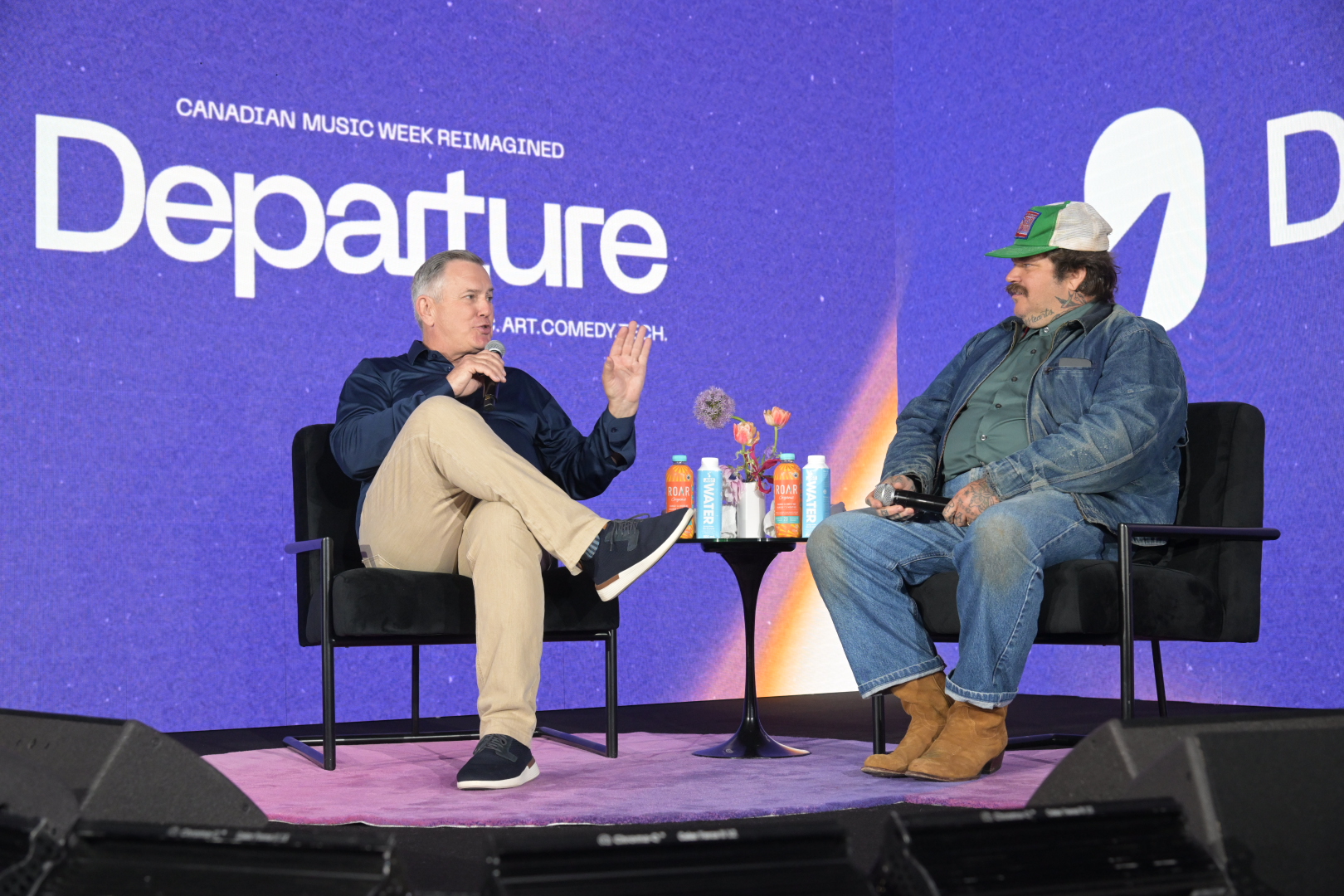
Oak View Group CEO Tim Leiweke and Matty Matheson, who announced a new partnership and restaurant concept for Hamilton Arena during Departure Festiva; + Conference.
“I don’t think you’re going to build another arena in Toronto. The land and the expenses of trying to do that are unbelievable, but they needed a relief valve for Scotiabank. There has to be another place that ultimately can be built in order to be about music, and if you look at Hamilton, that market down there is vibrant. There’s a lot of history with the old Copps Coliseum, but it was trying to go in there and do something no one’s ever done before. All of us collectively are putting in $300 million in the partnership, and that’s probably the largest private investment in the history of live entertainment in this marketplace, but if there’s a market, you’re going to bet on it. You’re going to bet on Toronto. I think it’s the best city in North America. — Tim Leiweke, CEO, Oak View Group

 Daily Pulse
Subscribe
Daily Pulse
Subscribe
