
It’s Not Easy Being Green: Live Industry Meets To Combat Climate Change

100 percent Sustainable Aviation Fuel (SAF) for a demonstration flight in January 2023. The travel industry is tackling sustainability issues in ways previously considered impossible.
Photo by Guiseppe Cacace / AFP / Getty Images
The greening of transportation, which by definition includes the moving of heavy machinery and people across continents, is like the little engine that could. It’s an uphill battle but it’s still gaining momentum.
Addressing climate change by reducing the carbon footprint of venues and tours is a growing concern, with transportation one of the largest sources of emissions.
According to a 2022 report by the UK-based Tyndall Centre for Climate Change Research, a typical arena tour can generate more than 5,500 tons of carbon dioxide and an audience can create more than 1,100 tons of CO2 per tour.
For artists and sports teams, air travel – private jets and commercial flights – is the biggest contributor with talent, crews and equipment flying long distances.
Ground transport – tour buses and semis – also add emissions, especially for large-scale productions requiring dozens of trucks. Audience travel to and from shows and games accounts for a large portion of total emission, reaching as high as 80%.
Artists including Billie Eilish and Coldplay, promoters and venue operators are trying to mitigate the impact with Eilish leading environmental activism with two new Overheated conferences planned for the UK and Germany, and Coldplay publishing a carbon report that aims to significantly reduce emissions.
According to the band’s website, Coldplay pledged to cut their tour’s direct emissions by more than 50% compared to their 2016-2017 outing and they are working with their partners and suppliers to reduce their impact and emissions as much as possible.
“We’ve teamed up with DHL as the tour’s official logistics partner in order to minimize emissions from freight and transportation. As leaders in the field of sustainable transport and logistics, DHL support the tour by offering solutions to minimize logistics-related emissions and other environmental impacts, from advanced biofuels in the air to electric vehicles on land,” the band stated via the website.
Concert trucking can embrace sustainability by prioritizing best practices that can minimize their environmental impact including regular maintenance, which ensures trucks are in optimal condition for better fuel use. Many companies are investing in newer, more fuel-efficient models and adopting technology to track and reduce fuel consumption. Tours are also using trucks powered by renewable natural gas and biodiesel or hydrogenated vegetable oil. Trucking companies are also training drivers to minimize idling, which consumes a significant amount of fuel.
By prioritizing efficient fleet management, adopting alternative fuels and limiting time spent idling, concert tours can minimize their environmental impact.
Green transportation can also include train travel, electric buses and limiting flights.
According to Liverpool FC’s The Red Way report issued on Earth Day (April 22), the team made significant steps to reduce emissions from travel, including eliminating 100% of carbon emissions from domestic team flights through investment in sustainable aviation fuel. The club also uses hydrotreated vegetable oil to fuel team buses, which creates a reduction in carbon emissions of up to 90% compared to regular diesel.
Venues are also doing their part to reduce their transportation-related carbon footprint.

has produced more than 325 pounds of fruit and vegetables.
UBS Arena, home of the NHL’s New York Islanders, recently celebrated its 1 millionth Long Island Rail Road rider and the venue sponsors a “Ride, Dine and Have a Good Time” program to incentivize and encourage people to take the train.
Climate Pledge Arena in Seattle, Washington, and PHX Arena (formerly Footprint Center), in Phoenix, Arizona, offer free transit with an event ticket.
“We want to be a force for good,” said Rosie Selle, vice president of marketing for Climate Pledge Arena. “It’s authentic to who we are as people at the arena, but also what our arena brand stands for.”
For the second year, the Massachusetts Bay Transportation Authority Commuter Rail and Keolis Commuter Services are providing round-trip, special event train service to concerts at Gillette Stadium in Foxborough. Train service has been scheduled for the full lineup of 2025 summer concerts including AC/DC, Kendrick Lamar, Post Malone, The Weeknd, George Strait, Coldplay and Morgan Wallen. Round-trip tickets are $20 and can be purchased two weeks before each show date.
Companies are offsetting their carbon use by supporting carbon sequestration projects, which is the process of capturing and storing atmospheric CO2. The goal is to reduce the amount of CO2 in the atmosphere, which is a major contributor to the greenhouse effect.
Companies are enhancing the process by supporting reforestation projects including the Orion Amphitheater in Huntsville, Alabama, which is currently undergoing a massive study to determine the exact carbon footprint of the 8,000-cap venue.
“Everything you do has a footprint. So, what do you do to offset that footprint?” said Ryan Murphy, partner at tvg hospitality, which operates Orion. “You can look at the carbon footprint of people traveling here to work, bands coming in, fans coming in – and equating that for every concert we’re doing we’re replanting X number of trees and reforesting the area around the amphitheater.”
Xcel Energy Center in St. Paul, Minnesota, home of the NHL’s Minnesota Wild, recently launched Trees for Travel. The program, which is a partnership with the Green Cities Accord, offsets the carbon footprint for team air travel throughout the NHL regular season by helping to protect and grow the city’s urban tree canopy.
Engaging fans in sustainability efforts can make a difference. To cut emissions, venues encourage fans to carpool or take advantage of free or discounted public transit.
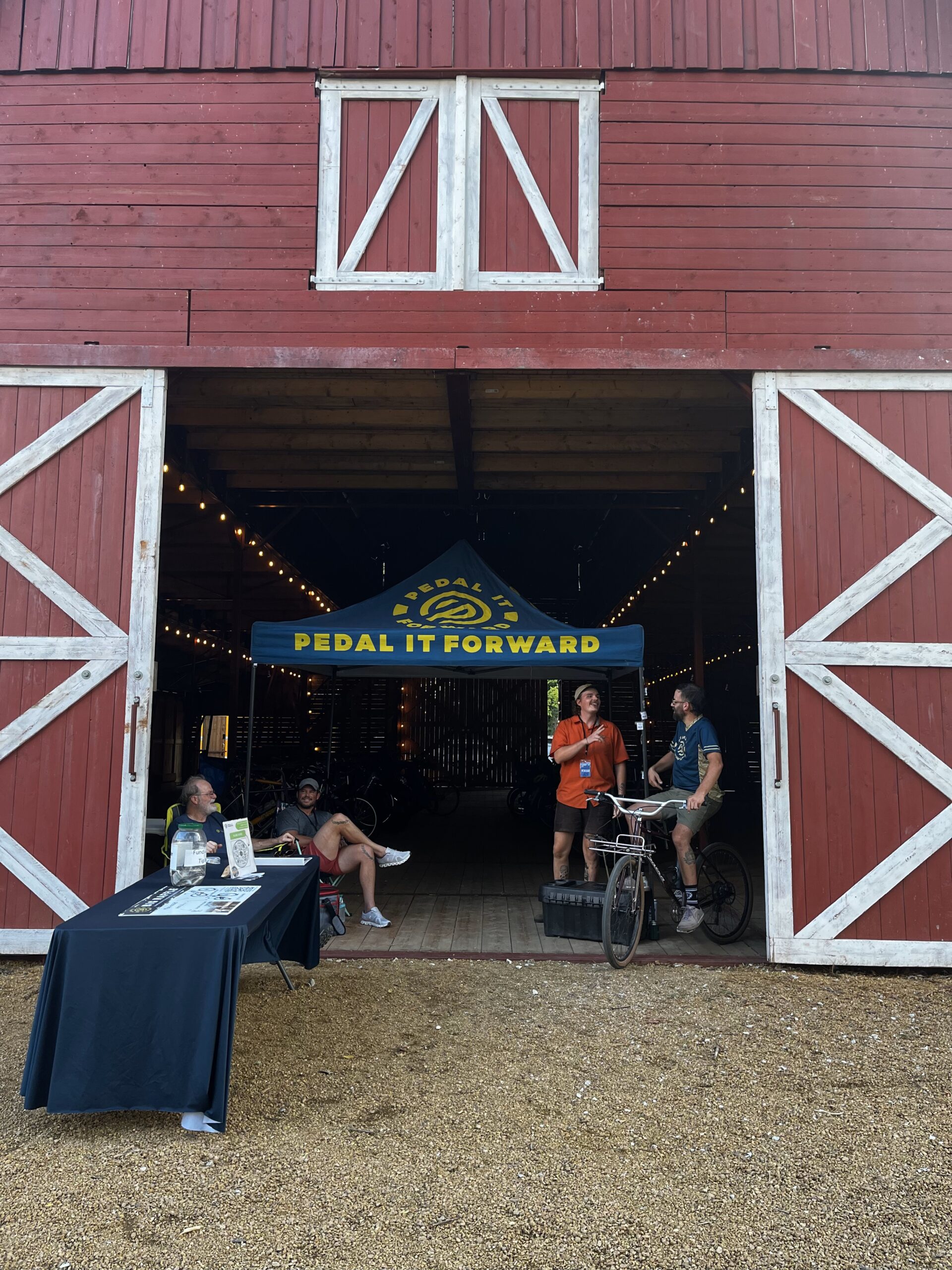
In Bentonville, Arkansas, they promote pedal power.
The Momentary, which features multiple performance spaces including a 6,000-cap amphitheater, offers a free bike valet for guests.
“With our proximity to downtown, it just so seamlessly fit that we would encourage the pedestrian/bike movement for our visitors,” said Ben Huss, director of operations for The Momentary. “It was like, ‘Here’s a need. Let’s see if we can figure out a way to solve it.’ And that’s how the bike valet got its wings.”
The Momentary hires Pedal It Forward, a local nonprofit that collects, repairs and distributes bikes to needy families, adults and children in Northwest Arkansas, to operate the bike valet. During evening concerts, they store between 50-55 bikes and up to 150 a day during festivals. The Momentary hosts 12 to 15 outdoor shows, two dozen indoor performances and up to four festivals each year.
“It’s such a great program for folks to be able to ride up to a concert and know that their bike is going to be taken care of, and then after the show, get back on their bike and ride to their homes and other places downtown,” said Huss.
FREE
 Daily Pulse
Subscribe
Daily Pulse
Subscribe
 Daily Pulse
Subscribe
Daily Pulse
Subscribe