
Keep Rollin’: What Bus Companies See Coming Down The Pike
There’s all kinds of ways to determine the health of the live industry — ticket count, gate revenue, festival attendance.
But if there’s a leading indicator — a concert business version of the Baltic Dry Index, if you will — it’s tour bus availability.
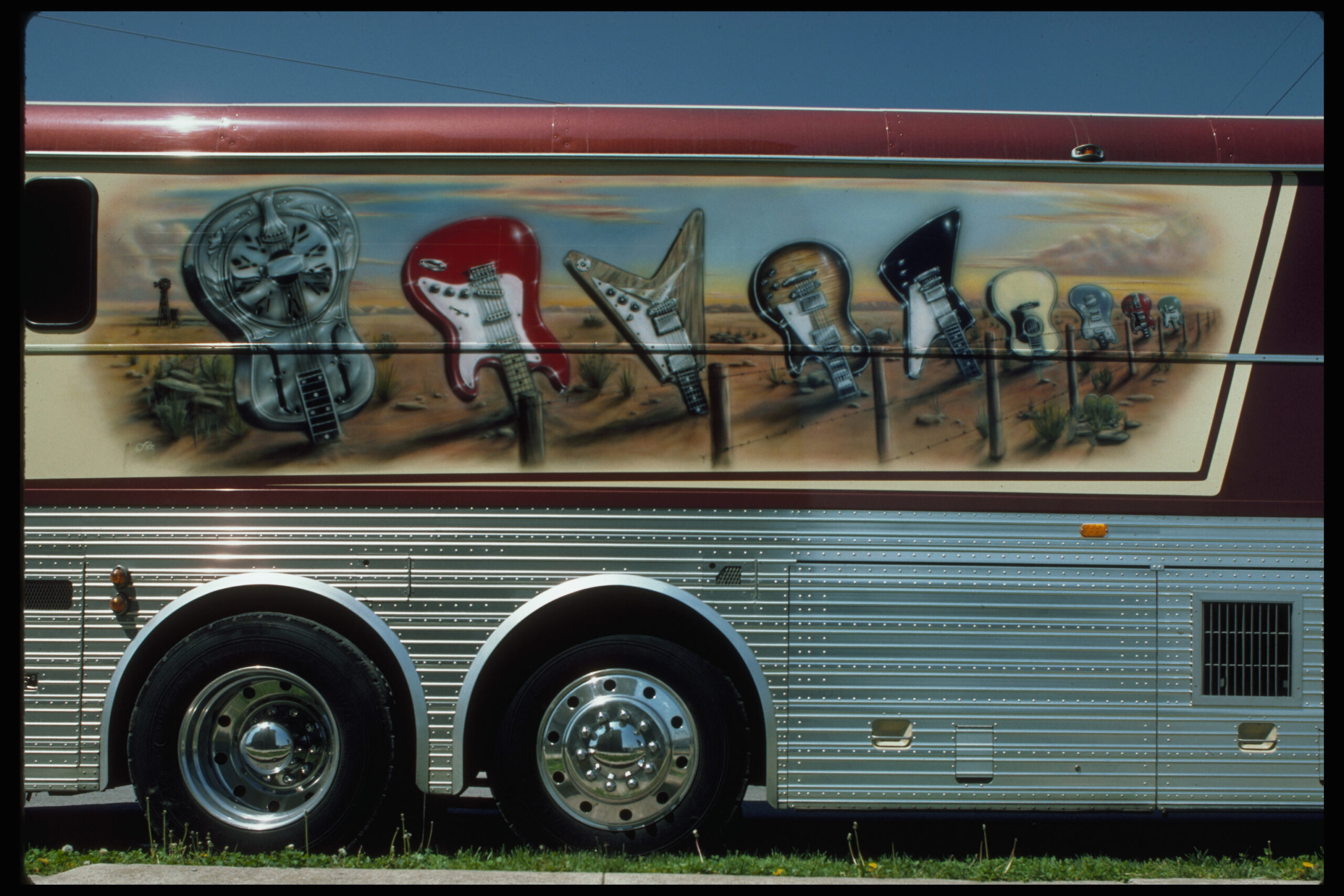
Even with the rise of jet charter , buses still do the vast majority of getting tours from Point A to Point B and the major charter companies have stayed plenty busy since the end of the pandemic and the resultant booming rebound in touring.
That’s presented serious challenges to the coach companies in the last four years or so. There are only so many buses — and new ones can only be produced so fast — and there’s only so many drivers to pilot them across the highways and interstates.
There was an exodus of drivers during the pandemic. Qualified operators tended to be older and many — off the road for the first time in years, even if not voluntarily — didn’t come back when in-person events resumed. Driving a tour bus requires a set of soft skills beyond the basics of just getting down the road, and those skills can only come with experience.
“When the tour gets out on the road, it’s all about the driver. The driver needs to be a safe and smooth driver and keep the bus clean and most importantly, get along with the people on his or her bus. A lot of it is personality and being pliable,” Mark Larson, Beat the Street’s head of leasing, said at a Production Live panel. “Unlike trucks, the load talks back.”
During that panel, Rich Thomson, Dreamliner’s CEO and founder, said most of his company’s drivers were over 50 years old. Finding “young, new talent” is as difficult for the bus companies as it is for the music business. Pioneer Coach’s general manager Doug Oliver said the drivers, as frontline employees, are truly the face of the coach companies.
“On tour, you’re going to see the driver for breakfast, lunch and dinner for the next 90 days. You need drivers who have good manners, good hygiene, good management skills and who can handle all the environmental factors. A lot of times, that’s an older driver who has experience. Finding someone who can adapt to the lifestyle is tough, because that driver deals with management every day,” he said.
Touring schedules are starting to normalize and the post-pandemic supply chain issues which plagued all manner of industries are beginning to resolve (just in time for President Donald Trump’s tariff policy to spark a trade war that’s slowed down imports; the Port of Los Angeles expects inbound containers to drop by 35 percent by mid-May), which is, at least, giving the coach companies a chance to redoubt.
For the first few years post-pandemic, consolidation was the name of the game. Dreamliner, for example, acquired Hemphill Brothers in 2023. Now, the move is diversification. Pioneer purchased 20 semitrucks to get into the cargo-hauling side of the business. Dreamliner acquired two entertainment logistic companies — Show Motion and ShowPro — in October. Turning into a one-stop-trucking-and-busing shop does make things easier for tour and production managers, but Thomson says there’s a lot of relationship- and loyalty-driven decision-making still being made.
“People aren’t used to calling a bus company and being able to get trucks. And people have relationships that go on for 10 or 20 or 30 years,” he said.
What hasn’t changed is the buses still primarily come from Prevost, the Canadian manufacturer now in its 101st year. The company has made a commitment to being carbon-neutral by 2040 and is in the midst of a five-year plan, which began in 2022, to “develop a new 100 percent electric coach” with a 250-mile range, enough to get a tour from New York to Boston on a single charge.
FREE
 Daily Pulse
Subscribe
Daily Pulse
Subscribe
 Daily Pulse
Subscribe
Daily Pulse
Subscribe