
Monami Ent’s Mona Scott-Young On Missy Elliott, Vybz Kartel & ‘Queens Of R&B’ Tour (Exec Profile)
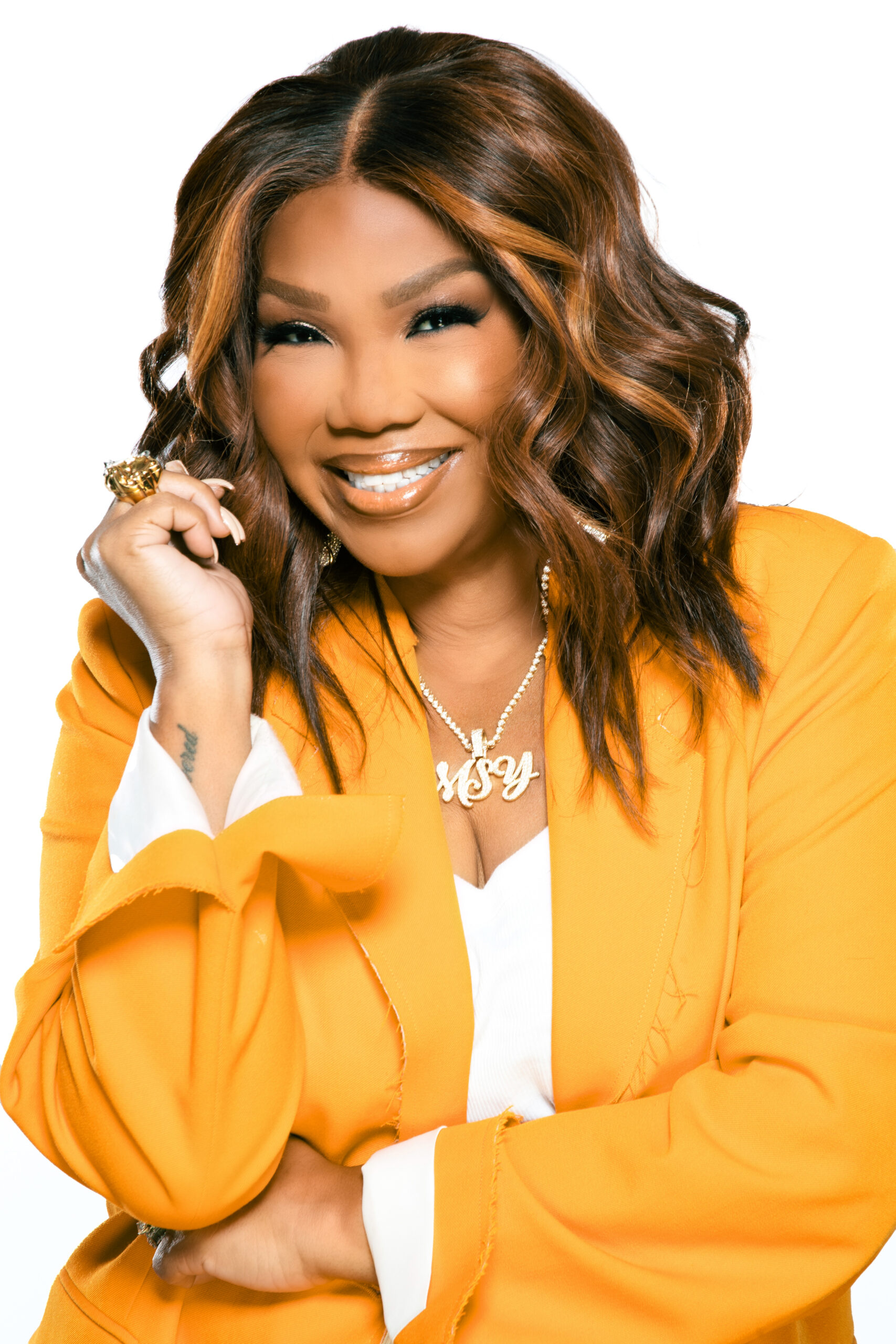
Photo by Derek Blanks / crowdMGMT
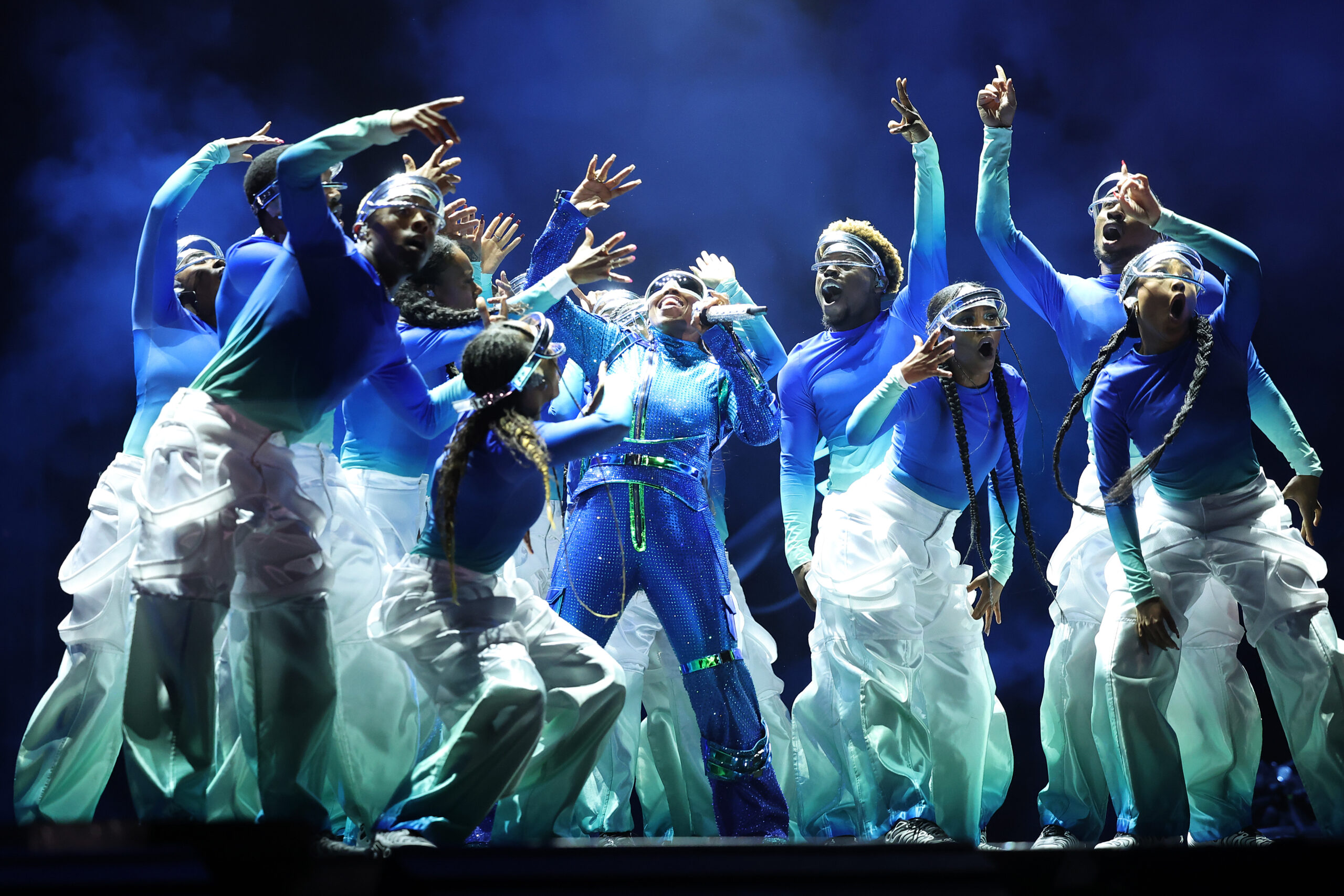
Mona Scott-Young can’t help but be a big believer in fate, especially after the year she had. Her company, Monami Entertainment, capped a year-long project with client Missy Elliott commanding the Coachella stage and establishing herself as a visionary and music icon. Elliott has finally received the roses she’s deserved, being inducted into the Rock and Roll Hall of Fame and winning the 2025 Pollstar Award for Best Hip-Hop Tour of the Year. Her first-ever solo trek grossed $42.5 million off 29 shows, according to Pollstar Boxoffice, and introduced her to a new generation of fans.
Monami Productions was also behind the “Queens of R&B Tour,” which was a Pollstar Award nominee and co-headlined by Xscape and SWV with 702, Mya and Total as supporting acts.
“This past year has been nothing short of incredible,” Scott-Young, founder and CEO of Monami Entertainment, said in a statement. “To help bring Missy’s visionary artistry to life on stage, while also celebrating R&B royalty across the country, is the epitome of Monami Entertainment – elevating culture, breaking barriers, and delivering unforgettable experiences.”
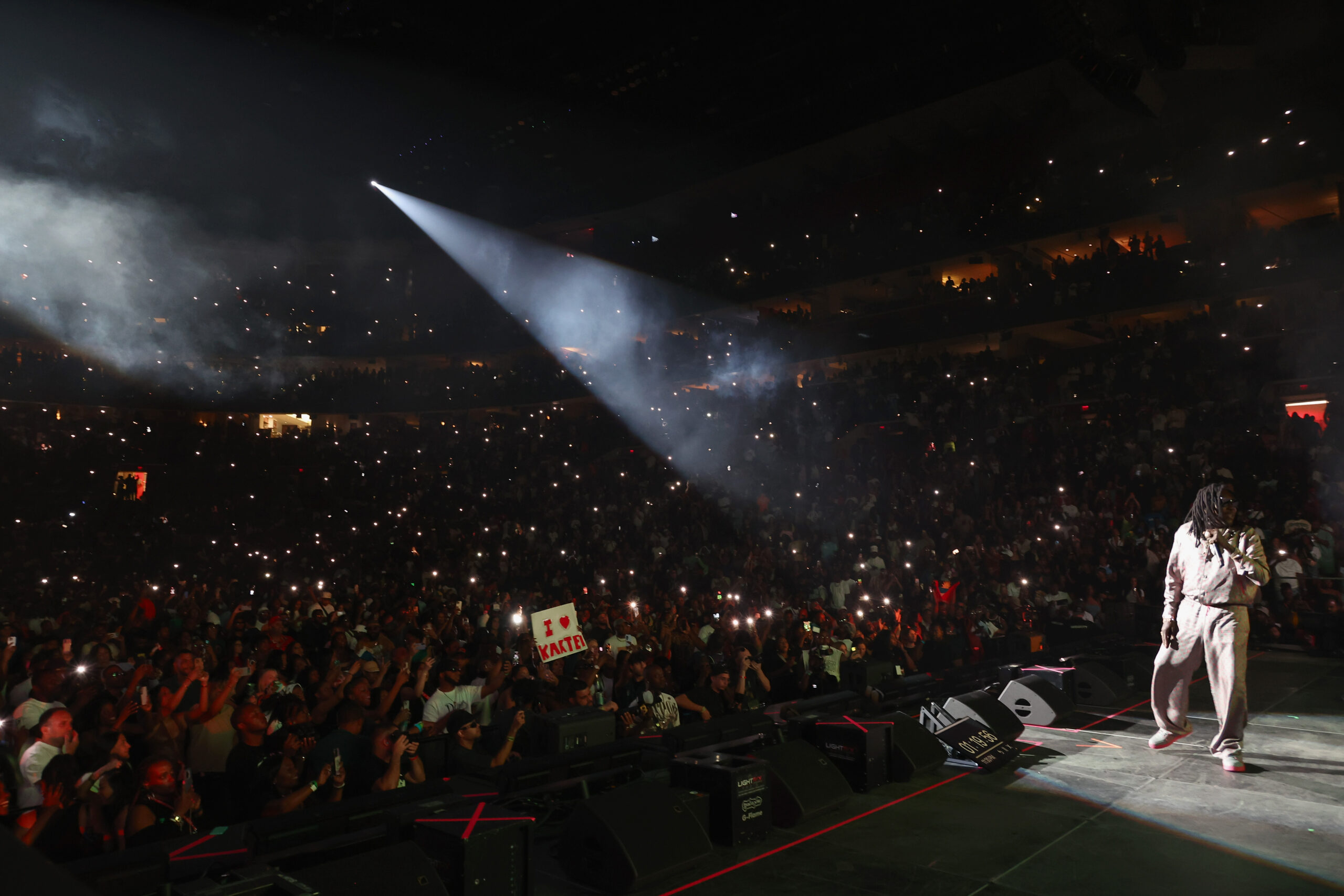
And Scott-Young isn’t resting on her laurels, working on Vybz Kartel’s return to the U.S. stages. The Jamaican star already played two sold-out nights at Barclays Center in Brooklyn in April that grossed $8.38 million, and is following that up with another show at Boardwalk Hall in Atlantic City on June 14 as well as a “Worl’ Boss Tour,” which was announced Thursday. She manages to do all of that while also working as a television and film producer, having most recently worked on “The Lost Holliday,” which is now available to stream on Amazon Prime Video.
Pollstar caught up with Scott-Young to talk about Elliott’s remarkable tour, reuniting her with Busta Rhymes on stage and what it takes for Black women to succeed in the music business.
Pollstar: What a year you’ve had, and for it to culminate the way it did at Coachella is incredible. How did it feel to see Missy get her flowers in Indio?
Mona Scott-Young: It really started with the tour. This is something that over the years—and I always say it wasn’t for lack of opportunity—people have always wanted to see her on stage and see her perform. But for whatever her own reasons, she just was never ready to do that. When she finally said she was, it was an opportunity for me to bring everything that she’s always wanted to deliver to her audience, to that stage.
There were many hours of planning and many hours of going over every detail with a fine-tooth comb. Coachella was always a pinnacle. We’d of course gotten offers to do Coachella over the years and Missy always said, “Oh, I don’t know. If I’m going to do something as massive, as iconic as Coachella, I want to make sure that I can really put my best foot forward and deliver on that.” After having the tour experience, she felt ready to go on to that Coachella stage, and it really was phenomenal. She wanted to deliver a different experience for the fans that were at Coachella versus what we did on tour. But the end result and seeing the audience’s reaction and seeing them respond to her, knowing that she’s been around such a long time and the range of generations that can get immersed in in her creativity and can enjoy the music, that’s the cherry on top for us after all the work that we put in. That’s what makes it all worth it.
Missy is a visionary artist, and everything she does is done with purpose. When it comes to the tour, what challenges did you encounter in realizing what she envisioned?
The first rule of working with Missy is that there are no rules. Everything and anything goes. And she does have a very unique point of view, a very unique vision, and a way of seeing things. As we assemble the team, it’s about finding like-minded individuals.
How do we make it happen? How do we find the yes? A lot of times, when she comes up with an idea, the first thing you do is go, “OK, let me wrap my head around this and figure out how to bring this to life. How do we execute this?” And she’s always saying to us, “It doesn’t have to make sense. The sense isn’t that it doesn’t make sense, right?” Because when you think about her videos and her swinging from a chandelier or even in the “Pass that Dutch” [music video], it’s a cornfield. What the heck does that have to do with the song? But it all ends up coming together and every detail is thought through, even if it may not make sense in that moment when she’s laying out the vision, but it always comes together in the end.
We brought back some of her iconic partnerships. June Ambrose came back to work with Missy, and she was Missy’s costume designer in the very early years of her career and came up with some of the most iconic images that we think about when we think of Missy, including the blow-up garbage suit. We have an incredible team in 1826 productions and a company called See You Later. We had been pitched and talked to so many seasoned creative and visual companies, but these guys were young, and they were energetic. They really had fantastic ideas on how to translate Missy’s ideas in her songs into visual elements on the stage. It’s really about having an open mind, not being constricted or constrained by conventional thinking and just figuring out how to bring it all to life, every single detail. Missy’s very detail-oriented. I find myself sometimes going like, “Is anybody really gonna notice that?” But for her, every single element is important and plays a pivotal role.
You’ve not only played a pivotal role in Missy’s career but careers of SWV and Xscape with the Queens of R&B Tour and their reality show, delivering nostalgia to millennial audiences. What’s your takeaway from the success of those tours?
I think there’s a lot to be said for giving people an experience, not just getting up on stage with a microphone and delivering some songs, but really creating a thoughtful entertainment experience because people want value for their money. With both of these tours, it was about coming up with a great concept that evokes emotion, giving people a fun-filled experience that makes them feel like they got their money’s worth. Production value was a big part of that for me. In everything that I do, I want to overdeliver. The Queens of R&B brand not only celebrated women but also these iconic women in this genre of music during this specific time frame. We all have these great memories associated with their songs and that era of music, and we put them together in a way that was a little bit different than what we had seen.
It’s easy to have one act come after the other, but creating a blended set was part of that. And it was an offshoot of a TV project that I did for Bravo, so we’re approaching all of these projects with a 360 view of how we could extend the experience. Here’s a show about these women coming together, seeing where they are in their lives, seeing what they’re doing with their music, and then extending that into a tour experience.
And the Missy tour was aptly titled “The Missy Elliott Experience” because people associate her with these larger-than-life visuals, with this out-of-this-world thinking around her creativity and delivering on that on stage was a big part of the success of the tour.
That’s not easy to accomplish in this economy with factors like production costs, ticket prices and saturated markets. How do you balance all of that?
I am a creative, but I am also a businesswoman. I run a production company, and so I always have to look at every project that I produce with an eye toward the bottom line. As much as we enjoy doing this for the experience of it all, we also need to make sure that the bills are paid and that it’s profitable for us and for our partners. I understand that’s a unique skill set that I have, which is why I’m really enjoying expanding on that. I’m doing more in the concert and promoting space because I think it’s necessary that we continue to build on this touring business. It’s an incredible way to continue the artist’s revenue stream, but also to keep the arts front and center. If we can continue to deliver shows that are worth the money, then people will continue to come and support those artists and those shows.
One way to build on that is with Vybz Kartel, an artist we don’t get to see too often in the States.
There’s so much there with Vybz. When I’m thinking about a concept, you want to make sure you’re cutting through because it’s a really saturated market. You want a big hook, a big concept, a big experience. Vybz, he was incarcerated for a very long time, and God bless, he is out and able to deliver his gift to the world. There was something special about being able to capture, his second show in the U.S. He had a sell-out in his New York shows. And Florida is such a huge market for Caribbean music. He’s also an international global superstar able to bring that genre of music, which I love. I’m of West Indian descent myself, so I love reggae, dancehall music.
It’s amazing to see how things really lined up for you and your clients. How have the past 12 months been for you, personally? It feels like it was meant to be.
And at the right time. Absolutely. Going back to Missy’s tour, what was special to me about that one is that it gave me an opportunity to put Busta [Rhymes], who I’ve managed for many years, and Missy together. We would call them twins in terms of their creativity. For me, that was a full circle moment in my career. And of course, we had Ciara and Timbaland, who have been extended family. It really was a family affair. When you’re able to do what you love and do it with people you love and do it in a way that delivers excellence by rising to the occasion and coming together, that’s really special. It’s one of the proudest moments of my career.
I’m having a great time because for me, it’s constantly about evolution in music and managing artists. I went into television and a big part of what I did there was bring my music Rolodex, my expertise, the world that I knew in music to a different medium and now extend into touring. It’s a natural extension of what I’ve done for years. It’s about continuing to just evolve, monetize and figure out new ways to deliver music to the world.
Speaking of evolution, how has the music business evolved in the past decade?
The way that I approach every business venture, it’s like taking a look at the landscape, taking a look at the core audience. What are they engaging in and how are they communicating? How do we continue to fold that in and develop what we’re doing so that we’re able to reach them and meet them where they are? Social media, of course, was a big leveling of the playing field, giving consumers and fans direct access to talent and giving the talent a way to connect directly with their fans as well. But I think also technology is playing a big part in that as well now. How we’re incorporating all of the technological advances into the art form, and we’ve done a lot of that within the show, with the way that the content is delivered. It’s really forced perspective and trying to be as immersive as possible. We’re continuing to push that envelope with some of the things that we have coming up and also looking at what are the different mediums that we can engage in to really enhance the performances, the delivery and connection to the audiences. Everything from AI to spatial technology, all of this stuff is kind of evolving every day. We’re constantly meeting with the folks that are developing and creating these technologies and talking to them about what the creative applications are.
As a Black woman in an executive role, what advice would you give to people of color trying to break into the industry?
I always say, “Know your stuff. Make sure that you take the time to educate yourself, to learn the ropes of whatever it is that you want to do. Make sure that you know you understand not only the execution of it but the business of it, so that you understand how to monetize.” I remember a long time ago hearing the phrase, “In business as in life, you don’t get what you deserve, you get what you negotiate.” Keep an open mind; be open to the possibilities.
When I think about my journey, it wasn’t linear. There were lots of curves and detours, but I was always open to what the universe had to offer. For me, it’s constantly about being open and also making sure that if I decide I’m going to venture into something, I make it my business to understand that business so that I can deliver on my services with the level of excellence that is undeniable. We’re not in a lot of rooms, and when we are, there are not a lot of us in those rooms. So, I want to set a bar where the expectation is that we deserve to be in those rooms. We can work at the same level and deliver at the same level as our counterparts in those rooms, so that I am kicking the door in for the next person. And their responsibility is to do the same because only then will that door remain open for others like us to come through it and have those chances. I think every time we fall short, every time we don’t live up to our own expectations, we hurt the bigger picture, we hurt ourselves as a whole. For me, it’s always about making sure that every experience with me is a positive one, is a productive one, is a successful one, so that I can continue to expand and grow my business and continue to explore and find other opportunities for my clients. But also, when I bring someone in, when I open a door, I give someone a bridge and they have a clear path that they can follow.
FREE
 Daily Pulse
Subscribe
Daily Pulse
Subscribe
 Daily Pulse
Subscribe
Daily Pulse
Subscribe