
USTA Invests $800 Million In Arthur Ashe Stadium
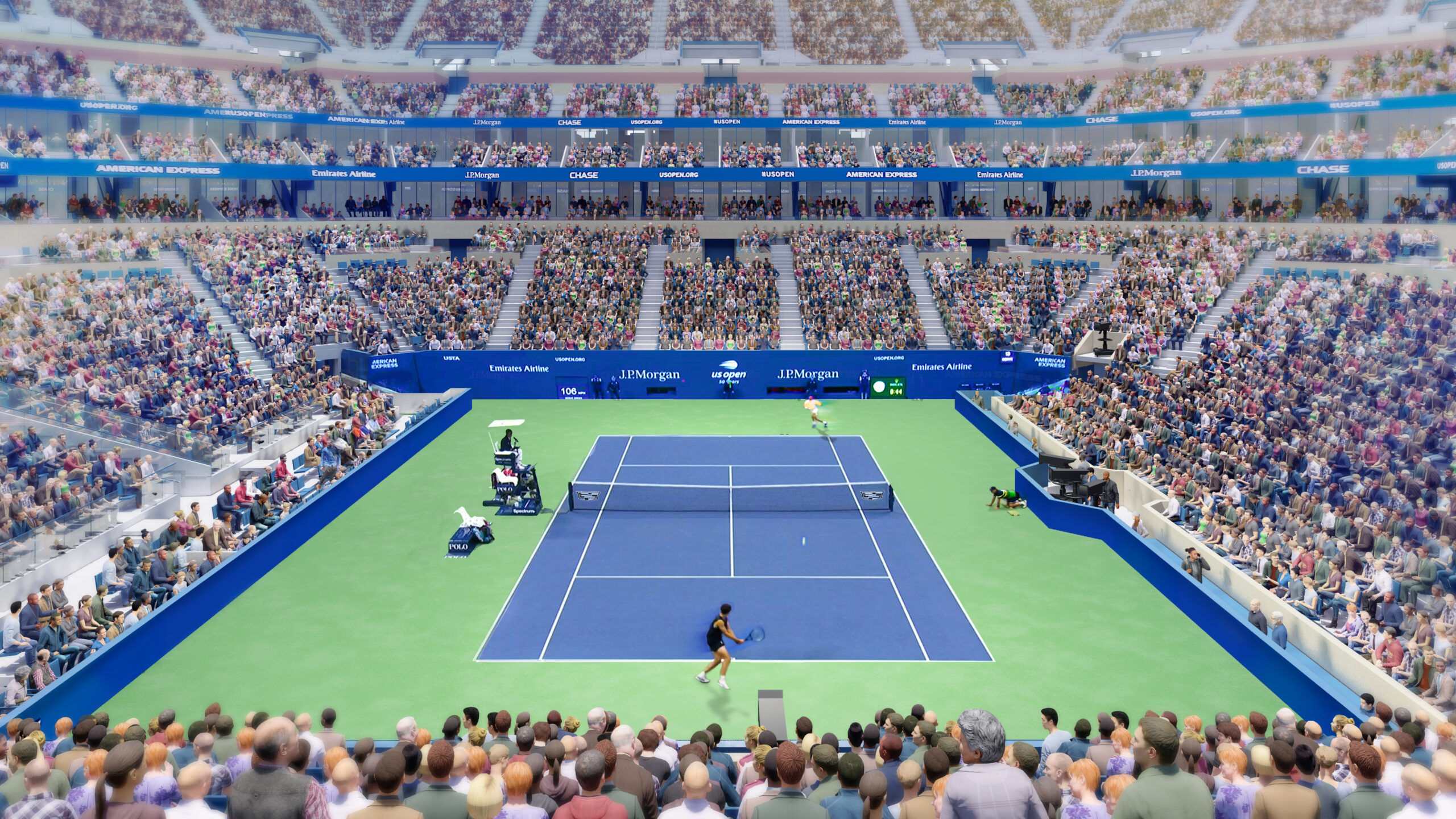
The United States Tennis Association announced a complete modernization of New York City’s Arthur Ashe Stadium at the USTA Billie Jean King National Tennis Center with an $800 million investment that includes a new, state-of-the-art player performance center.
The project, entirely self-funded by the USTA, is the largest single investment in U.S. Open history and scheduled to be completed in time for the 2027 U.S. Open without interrupting play or fan access for the 2025-2026 events.
“Why now? It’s because we’ve sort of maximized the facility that we currently have,” said Lew Sherr, CEO and Executive Director of USTA. “We know we need to deliver a better experience for players. We’re selling every ticket that we can, and we know our fans want more and want elevated experiences – and we have the wherewithal to do it.”
Combined with the U.S. Open’s 2018 renovation project, the USTA has invested nearly $2 billion into the U.S. Open and its home facility without using any public, taxpayer or government funding. The organization estimates the economic impact on the City of New York from the three-week tennis championship exceeds $1.2 billion.
“This project enables us to maintain the greatest stage in tennis – Arthur Ashe Stadium – which was constructed more than 25 years ago and modernize it in a way that will set it up for the next 25 years,” Sherr added.
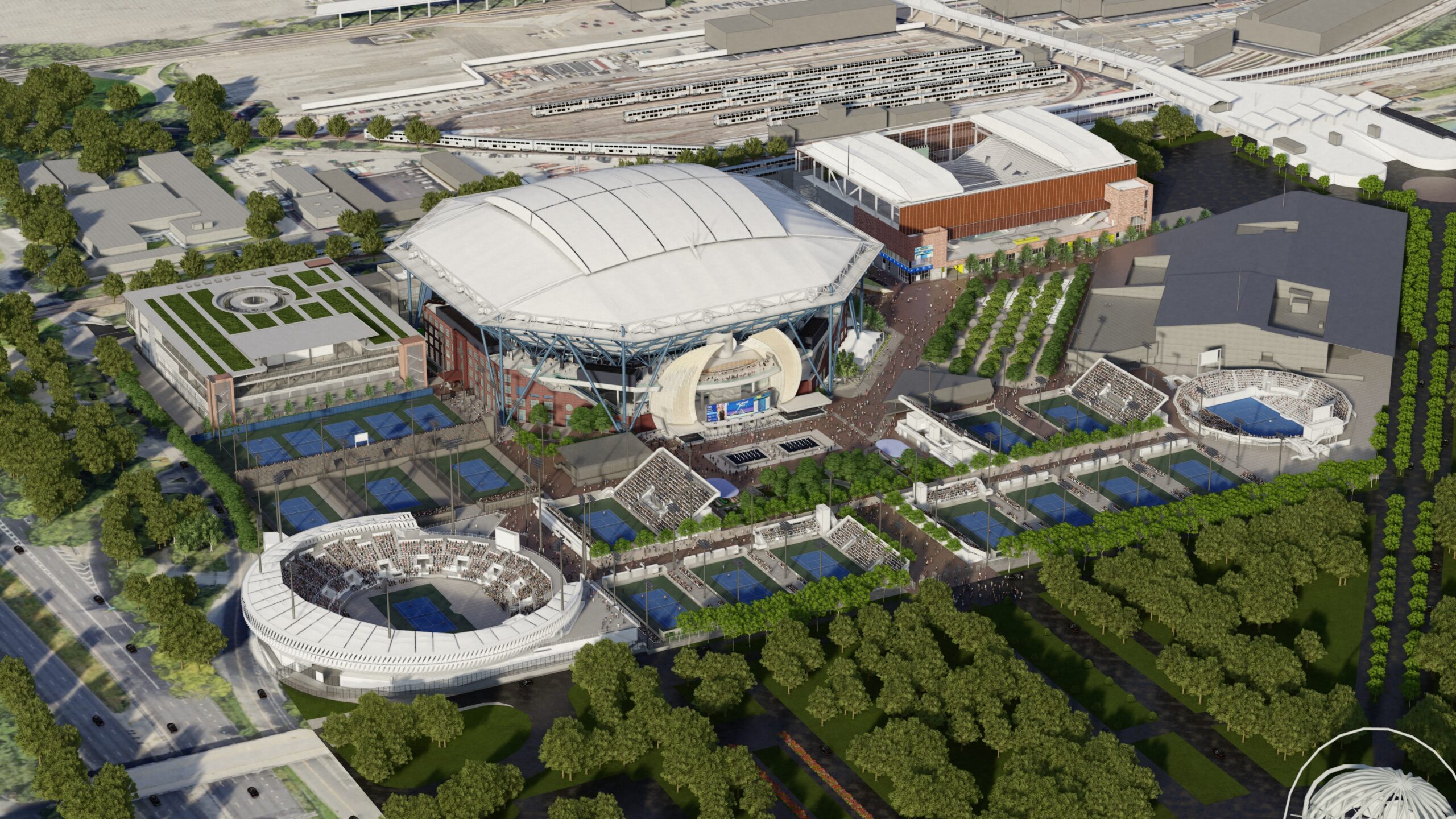
“Listen, if you have a ticket to Arthur Ashe Stadium and you’ve been here before, as great as your experience is, we’re actually taking it to 2.0,” said Danny Zausner, COO of USTA Billie Jean King National Tennis Center. “Once you are inside the stadium, every square inch is being redone, whether you’re on the club level, or the loge and the promenade – everything about it will be brand new.”
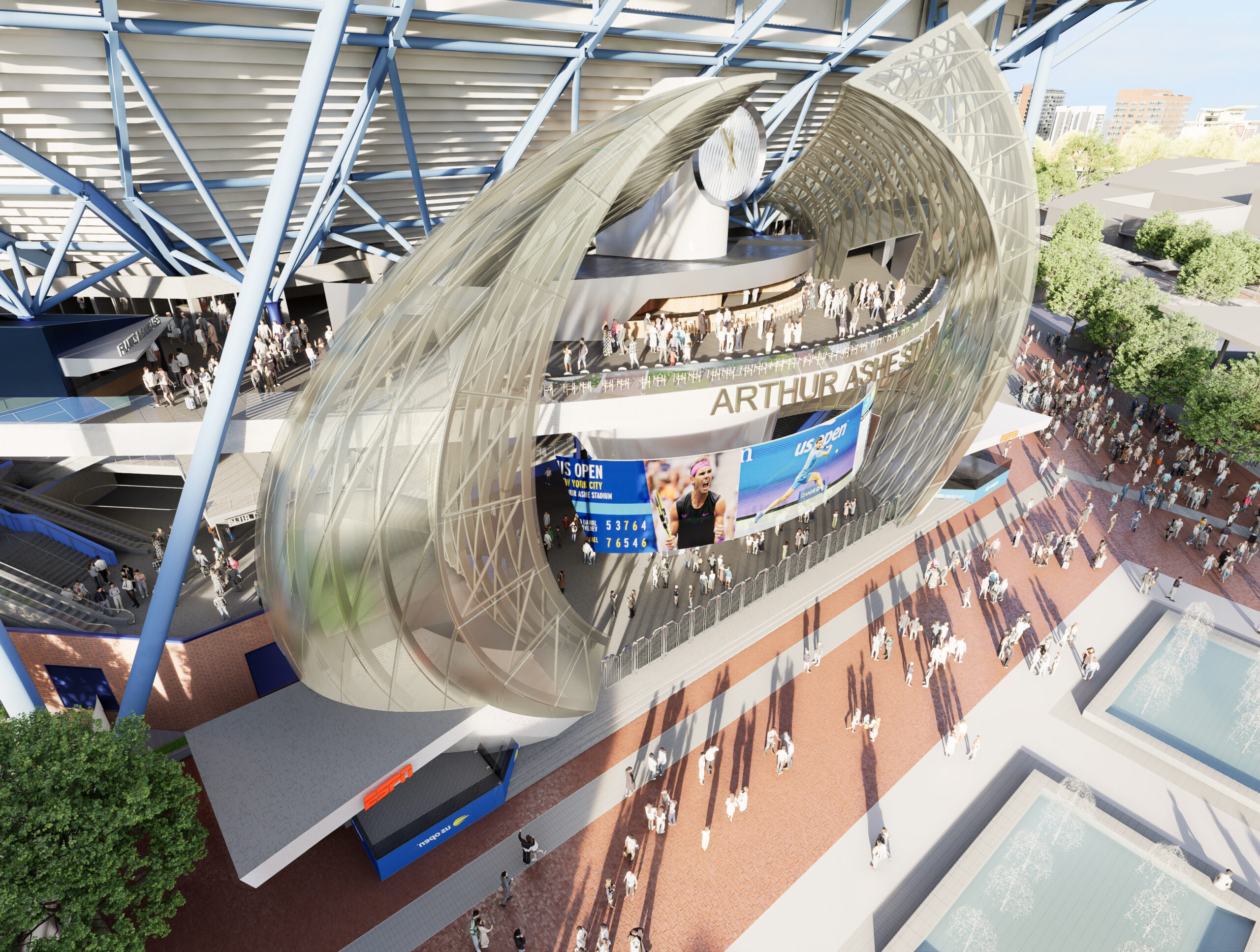
Enhancements include an impressive new entrance, redesigned food and beverage spaces, increased access to restrooms and adding more escalators and elevators to all event levels. The promenade-level concourse will be increased by 40%.
“Up on the [promenade], 19,000 people is going down to 16,000 people – so almost 3,000 less – but more restrooms, more concession stands, more retail, more open space,” explained Zausner. “When people aren’t watching tennis, they actually want a little open space just to get away from other people and that’s what we’re going to offer them.”
An extension to the courtside-level bowl will add 2,000 new seats. The renovation includes new club and restaurant areas with more dining options and premium hospitality spaces in addition to two new dedicated luxury suite levels.
“The U.S. Open helps us to deliver on our mission – growing tennis to build healthier people and communities everywhere – by showcasing our sport on the global stage, and this reimagination will bring this presentation to an entirely new level,” added Sherr.
In 2024, a record 1,048,669 people attended the three-week event, which included the new U.S. Open Fan Week. Nearly 3,000 players and members of their extended teams attend the U.S. Open each year. To better serve their needs, the new two-story, $250-million player performance center will be constructed on the top two floors of a four-story building on the west side of Arthur Ashe Stadium, adjacent to the practice courts.
The facility will include new and expanded indoor and outdoor fitness and warm up areas, featuring turf, track and U.S. Open court surfaces for training; expansive locker rooms and lounges; upsized indoor player dining; and an all-new outdoor player courtyard; as well as a new, dedicated entrance and cafe accessible only by players.
“What we are trying to do is really give the athletes, their teams and their guests an exceptional experience on and off the court,” said Stacey Allaster, the departing U.S. Open Tournament Director and Chief Executive of Professional Tennis for USTA. “This new player performance center has been curated where the athletes are really, really going to love it and optimize their performance on the court.”
The lead architect is Rossetti. The company was the architect for the original construction of Arthur Ashe Stadium as well as the 2018 renovation. The firm has experience creating player performance facilities including centers for the Los Angeles Lakers, Green Bay Packers, Miami Dolphins and Jacksonville Jaguars.
“My father [Gino Rosetti] was the architect for the original Arthur Ashe Stadium, so I joke with him that I’ve got to fix his mistakes,” laughed Matt Rossetti, the company’s Chief Architect of Serious Fun.
The stadium was initially designed with tennis as the central player, but over time USTA has shifted focus to super serving fans.
“It’s a completely different perspective,” explained Rossetti. “Arthur Ashe Stadium 2.0 became all about catching up to the whole hospitality world: the fact that things have shifted to what we’re calling spectacles.”
Rosetti’s team worked with USTA to develop revenue producing ideas that support the heightened hospitality approach with different levels of premium access and general reserved seating.
To design the new entrance of Arthur Ashe Stadium, Rossetti worked with architect Daniel Libeskind, renowned as the master planner and architect for the reconstructed World Trade Center. For the concepts and design of Ashe’s new club and restaurant spaces, Rossetti worked with Garrett Singer.
The project will take place over three phases with phase 1 starting in advance of the 2025 U.S. Open, which will be held Aug. 25 through Sept. 6, the fourth and final Grand Slam tournament of the year.
FREE
 Daily Pulse
Subscribe
Daily Pulse
Subscribe
 Daily Pulse
Subscribe
Daily Pulse
Subscribe