
Raise The (Fixed) Roof: AECOM Hunt’s Ken Johnson Talks New NFL Stadium Design Trends, Tariffs And More
Building a new stadium or arena is not for the faint of heart. It’s a costly undertaking with spectators, athletes and owners demanding the best facilities and modern amenities. The reputation of the home team or city comes with a hefty price tag and providing long-term economic viability is crucial.
Whether it’s new construction or a major renovation, multi-use facilities are becoming the default option for many new projects. Owners want buildings that generate revenue all year rather than locked gates and empty seats in the off season.
Adding a retractable or fixed roof can make a stadium impervious to bad weather throughout the seasons. A retractable playing surface can increase the number of activities that can take place in a single venue. And multiple tiered seating and hospitality options provide increased revenue potential.
Since 1980, construction management firm AECOM Hunt has built more than 90 stadiums and arenas including Mercedes Benz Stadium, SoFi Stadium, Moody Center and Intuit Dome. The company built nine of the 11 retractable-roof stadiums currently operating in the U.S. and the first fully retractable natural grass playing surface and retractable roof at the University of Phoenix.
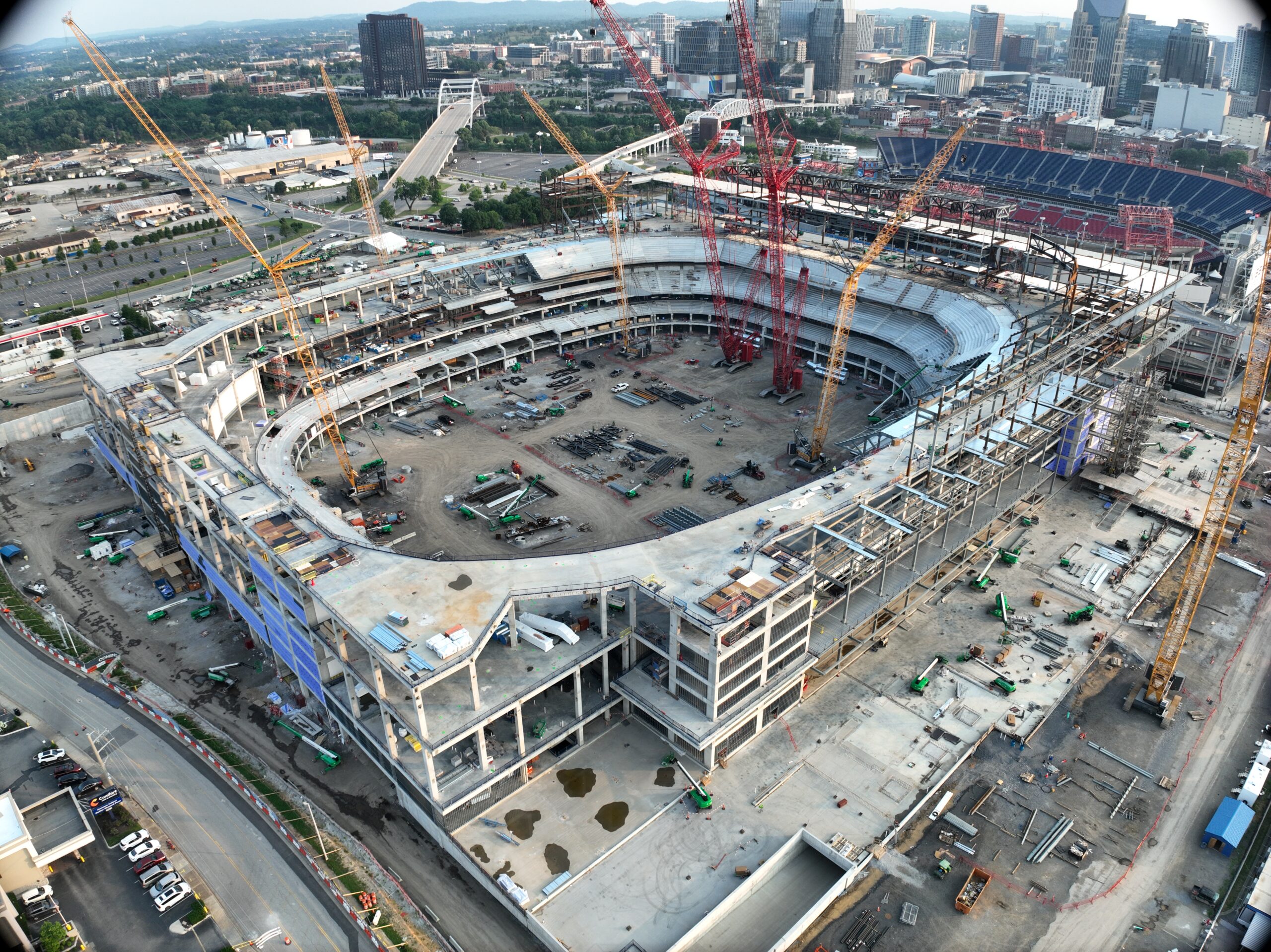
Current AECOM Hunt projects include the $1.4 billion NFL Jacksonville Jaguars’ “Stadium of the Future” renovation in Florida and the new $2.2 billion Nissan Stadium for the NFL Tennessee Titans in Nashville.
“No one is getting cold feet,” says Ken Johnson, EVP of Sports at AECOM Hunt. “That’s what’s important about what’s happening in the market today. People are finding a way to use these stadiums and arenas more purposefully.”

Renovations at Jacksonville’s EverBank Stadium include major improvements to the seating bowl, concourses, concessions, amenities and club areas. Set to be complete by fall 2028, the project also includes a new roof and plazas.
The open-air Nissan Stadium in Nashville will be replaced by a new 2.1 million-square-foot, fully enclosed and air conditioned stadium, which is expected to open in early 2027. The new stadium will feature a capacity of approximately 60,000, a full interior halo board and a 360,000 square-foot ETFE cable roof – a roofing system made with Ethylene Tetrafluoroethylene, a fluorine-based plastic polymer that is lightweight and transparent.
Johnson, who just celebrated 40 years in the industry, identified trends in venue design that are having a direct impact on the fan experience including premium seating, elevated entertainment offerings and increased technology.
“In some respects, technology has been the best thing to ever happen to the live sports business,” Johnson says. “But technology has also been the worst thing that has happened to the live sports business.”
The surge in home theaters with huge, high-end LED screens and constant access to social media has had a profound impact on how spectators experience live entertainment.
To get people in seats, venues have had to up their technology game with better video boards, real-time stats and powerful Wi-Fi networks. For example, UBS Arena in Elmont, New York, has the capacity to serve 30,000 concurrent users with a 10-gig Verizon network.
“It gives everyone the opportunity to have their phone there – looking at real-time stats and social media and all the things that are happening while the game is going on,” explains Johnson.
Another shift has taken place at the club level. In the ’90s, the percentage of club seats was typically 10 percent. Today, the number of total premium seat products is closer to half.
“The in-game experience can be more than just the game,” Johnson says. “It can be about socializing, having an opportunity to be all inclusive, to have different price points. They call it a ‘Club for Everyone,’ from a general admission seat all the way up to the most opulent seat next to the floor.
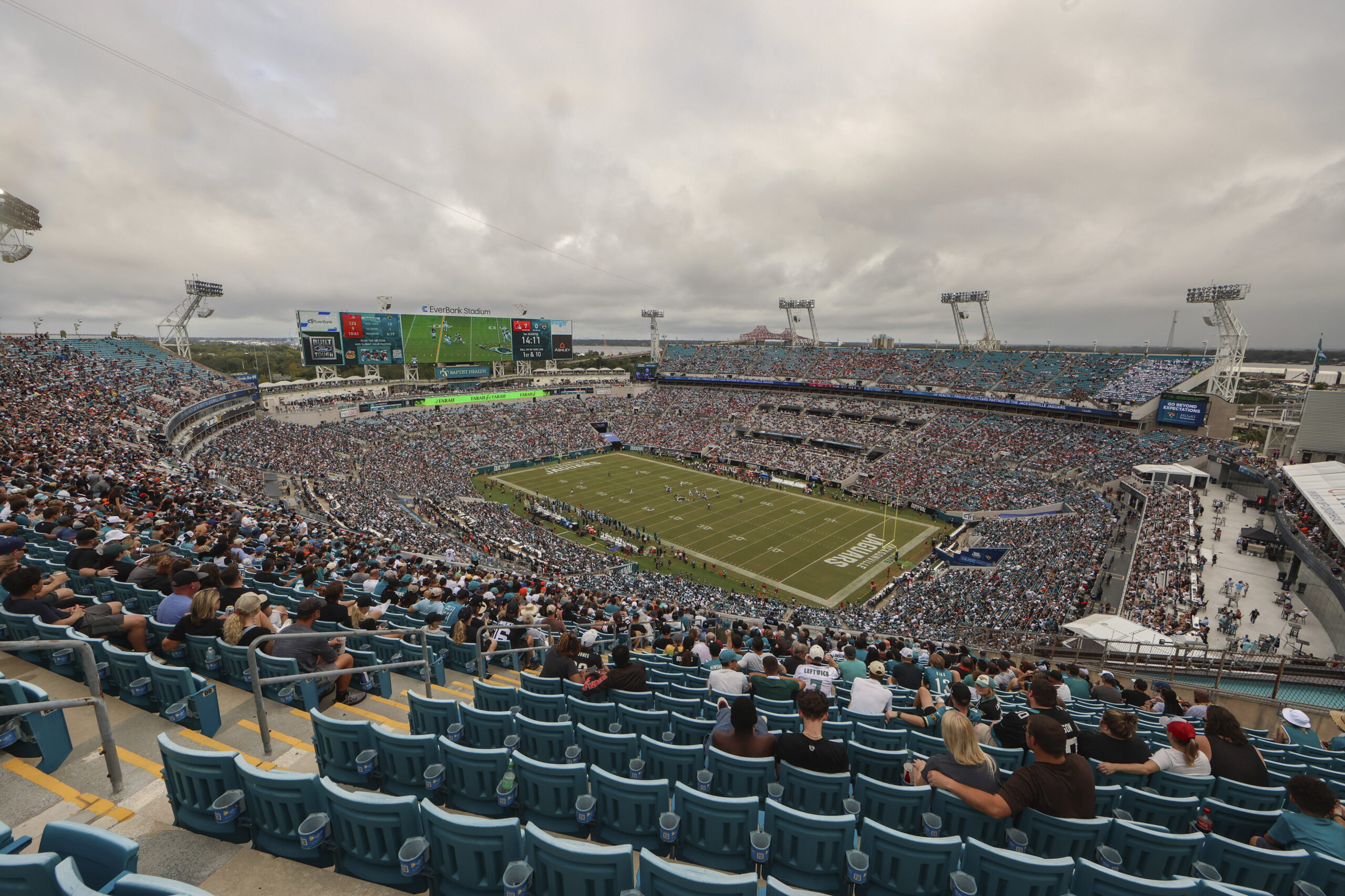
$1.4 billion “Stadium Of The Future” renovation that will add premium spaces and make the venue fully enclosed, a noted trend in the world of sports construction. Photo by AP Photo / Gary McCullough
Sports facilities in the 1970s and ’80s were purpose driven and cost effective. There were seats and a place to get a hot dog and beer, but the architecture wasn’t always unique or innovative. In the ’90s and early 2000s, architecture took on a retro flare.
“We did probably nine ballparks between 1995 and probably 2008 and every ballpark was retro,” says Johnson, adding that the latest trend is for venues to integrate and complement their surroundings. The new Nashville stadium will feature the largest open-air sports bar in the U.S. and balconies that overlook the Nashville skyline.
“It’s a place not just for a game-day experience but a place for a 365-day experience,” says Johnson. “They’re designed around the NFL product, but especially in Nashville, they are designed around concerts and other opportunities to make the venue more than just 10 activations a year.”
Architecture has evolved to accommodate the multi-use functionality of stadiums and arenas for the foreseeable future with fixed domes leading the way.
“It’s definitely the trend,” says Johnson. “Jacksonville’s going to have a roof on it. Titans will have a roof on it. [Washington D.C.] Commanders will have a roof on it. [Chicago] Bears will have a roof on it. And these are all fixed roofs. The A’s in Las Vegas will have a roof on it. The [Tampa Bay] Rays ballpark, wherever they end up, will have a roof on it. We are getting away from the open-air stadium.”
The Jaguars and Titans sit at both ends of the spectrum when it comes to the question of what to do with an aging stadium in need of a dome – renovate using the existing structure or rebuild from the ground up.
Stadiums will pay a premium for renovations modifying the structure while working around existing seasons and lost revenue from ancillary events. Starting from the ground up is typically more expensive but you can keep the doors open at the current venue during construction.
“We sit with ownership and the architects and try to be realistic about what it takes to do a mass renovation versus a rebuild, pros and cons,” says Johnson. “In the case of the Titans, it just got to the point where with what they wanted it made more sense to go ahead and start over.”
Since it was announced in 2022 (construction began last year), the cost of the project has increased from $2.1 billion to $2.2 due to design changes. In September, the changes were agreed upon by the Titans and the Metro Nashville Sports Authority Board and include more space for future growth and increasing technology. The Titans are covering the additional $100 million.
Budgeting bullseyes are even harder to hit with ongoing tariffs and trade wars.
“You gotta build those allowances as mechanisms in the contract to say who’s taking the risk on tariffs,” explains Johnson. “Because if the tariff goes up, there’s a consideration. The tariff goes down, there’s consideration. So, we think the best thing to do is have the tariff completely in the sunshine – so everyone can see what the cost is.”
For example, steel tariffs don’t hit until it reaches the U.S. shoreline, but overseas fabrication can take 12 to 14 months, which means the AECOM Hunt team has to use best practices in place of a crystal ball to estimate what tariffs could be a year from now. The impact of COVID is still being felt with fewer construction sub-contractors and material costs nearly 40 percent higher post-pandemic, according to 2024 figures.
“It’s definitely a challenge and we’re just trying to stay on top of it with our owners, our clients and our staff,” says Johnson.
FREE
 Daily Pulse
Subscribe
Daily Pulse
Subscribe
 Daily Pulse
Subscribe
Daily Pulse
Subscribe