
ROAD CASES: Production Powerhouses Level Up To Help Push Artistic Boundaries On Tour And In-House
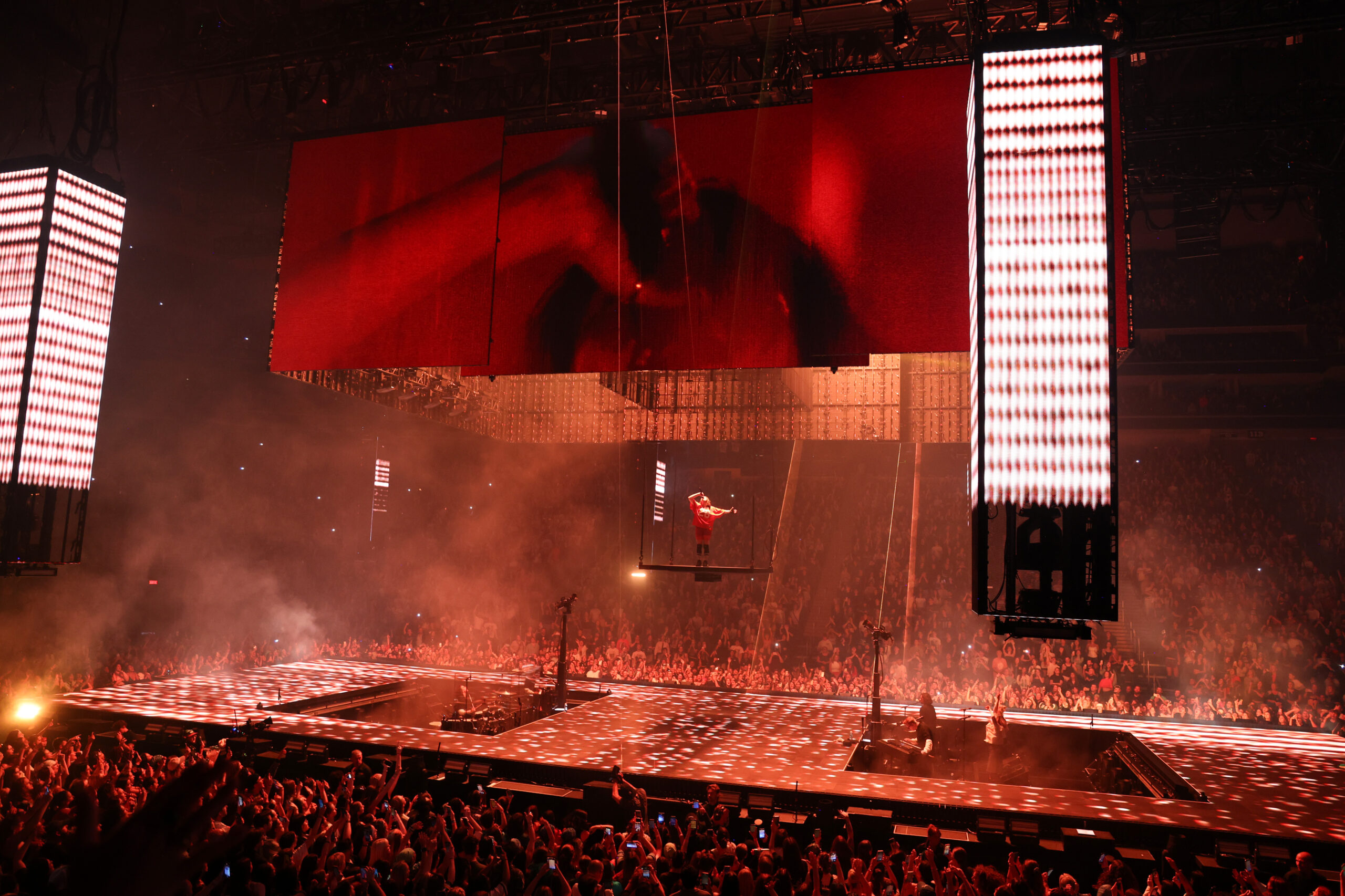
he blanket term “concert production” encompasses both the technical and the creative, with heavy machinery and lots of bodies required to bring an artist’s vision to life, on tour and on stage delivering the experience of a lifetime to fans without a hitch.
Investment in technology and innovation push the boundaries of audio and video wizardry at live shows and the venues they take place in, leading to bigger, louder, brighter productions — ones that can tour the world and, hopefully, even make financial sense for everyone involved.
It’s as difficult to manage as it sounds, starting from the basics: the labor pool.
“We came out of the pandemic with probably 35 to 40% less labor force than we had going in and, now today, I’d say we’re down still probably 10 to 15%,” says Randy Hutson, senior vice president of music for PRG, a leader in concert production, which includes staffing. Skilled professionals are in demand but in limited quantities, which can lead to added time and expense while on the road.
“There’s always a limit,” says Hutson, who got his start as a sound engineer working with artists including James Taylor, Robert Plant and Peter Gabriel. “Right now, the industry kind of takes care of itself because there’s only so many buildings, there’s only so many artists and something has to end before something else starts. The problem is the overlap. The buildings could be empty overnight, but that doesn’t mean you have a crew.”
While the supply of people, skills and materials like lighting fixtures, hoists and trusses may be limited, demand – from artists, fans and stakeholders in the live music industry – is definitely not an issue. PRG is involved in 200 shows per week in 38 locations across the world, supplying audio, video and technical solutions for major productions of all types, such as Post Malone’s “Big Ass Stadium Tour” on the road now.
“The touring world has always been at the heart of what we do, and it’s evolved faster than ever,” says Hutson. “It’s a very difficult lifestyle. It’s a great business, it’s very difficult right now, and artists and tours are looking for efficiencies. Sustainability is the new tag word, and more orders want greener solutions, and green is expensive.”
Like all aspects of the live music business, healthy competition leads to solutions and service, and new greener production elements are becoming popular, with modular staging, reusable set pieces and even recyclable materials.
“Infiniform is one of our things, and it’s a recyclable structure piece that you can bolt and cut and mend together with its own interconnecting devices,” Hutson says. “You can build sets from it, like The 1975, whose whole set was completely built out of this. You can design around it, you can clot it, you can paint it, you can put LED on it. You can put LED monitors on it, you can affix lighting to it, then you take it down and you put it back on the shelf and you wait for the next motors to go out. ”
That kind of flexibility mirrors that of the actual productions on the road these days, where in-the-round settings are becoming more commonplace to help get fans close to the action (and maximize the capacity potential), but again creates challenges on the logistics side.
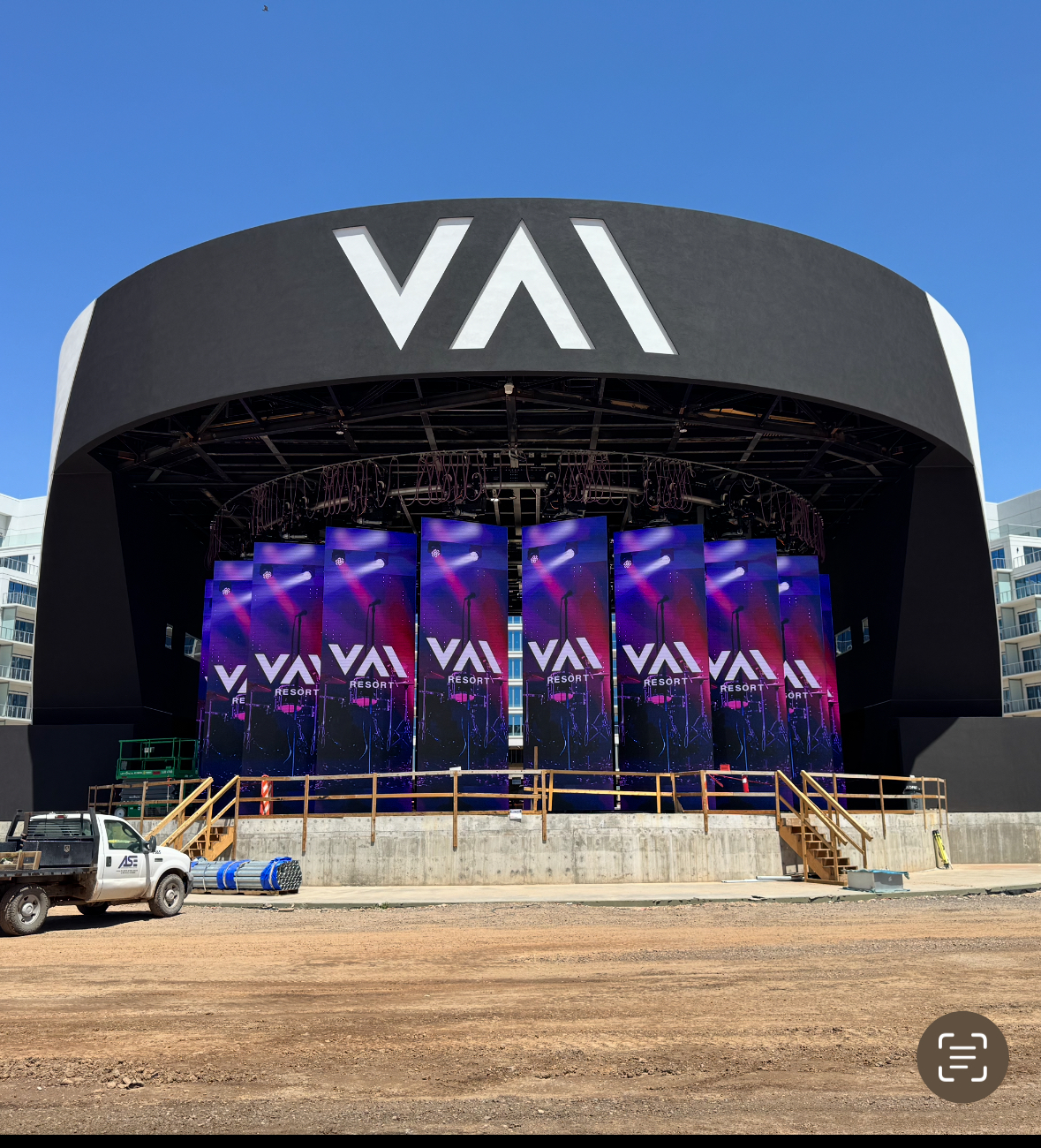
produced and designed in conjunction with TAIT and including a custom-designed array of moving LED screens, sophisticated flying systems and other engineering marvels. Courtesy VAI Resort
“Being in the middle of any venue is technically more challenging than being in the traditional end stage,” adds production veteran Butch Allen, VP of global business development at TAIT, known for pioneering staging and automation work on many of the world’s biggest tours (think U2, Taylor Swift, Rolling Stones).
“The viewing angle is now 360, so not only is it more challenging from an artist perspective but, from a technical aspect, you’re further from the power, the buildings aren’t really built to accommodate that because of scoreboards,” says Allen, who joined TAIT in 2022. “It’s a challenging thing. I spend a lot of time doing in-the-round shows. There’s where our engineering teams come into play to work with artists, their design teams and their production teams to come to the solutions they need to achieve their artistic desires in addition to meeting their logistical responsibilities.”
Those artistic desires can be lofty, such as the case for Justin Timberlake’s “Forget Tomorrow” world tour, which included the singer suspended above the crowd atop a “monolith” video platform that glides above the audience as he performs. Fabricated by TAIT in partnership with creative studio Silent House, the custom-designed winch system was a long time in the making and worked flawlessly.
“It’s millimeter accuracy,” says Allen, noting the weight and size of the lighted platform. “The ultimate success of that particular piece is the fact that very few people look at it and wonder how, they’re just mouth agape, eyes wide going, ‘Justin Timberlake is awesome!’ and the show is awesome.’”
While long-term planning and collaboration on productions like Timberlake’s are ideal, that kind of runway isn’t always possible, but necessary to meet the demands of artists and fans. For example is Rihanna’s Super Bowl halftime show, in 2023 at Allegiant Stadium in Las Vegas.
“We had heard about that in October the year before,” Allen says. “Now, was there some tried-and-true technology behind that project? Absolutely. Was that engineering something that had never been done before? Absolutely. There’s an interesting marriage between Lego blocks that are base technologies and then the innovation that our engineering and creative teams put into these things.”
Production innovation continues to push the envelope on the venue side as well, with the new $1 billion VAI Resort project in Glendale, Arizona, including a unique, unorthodox outdoor concert venue to seat around 7,000 and make use of hotel room balconies as viewing spaces.
“There’s no experience like this on the planet, where you can watch and can enjoy the show from the balcony of your room,” says Allen, noting the resort’s next-door location to a Mattel theme park and State Farm Stadium across the street.
“And then after the show, instead of getting in your car and getting all bummed sitting in traffic, just float down to an underground bar and chill out. Or rage half the night until you’re ready to go back to your room and maybe enjoy the show again another night,” he says. TAIT is behind the design of the amphitheater, from the underground control center to the top of the rotunda.
“It’s so unique,” says Allen. “There are 16 rotating panels that all traverse that stage space up there, controlled by our proprietary system called Navigator. When you go there to see an artist presented, you will have never seen that artist do that show before. It is a bespoke, unique presentation.”
With C3 named booking partner and Tixr handling ticketing, the venue and resort are hopeful for a multi-phase rollout in 2025, with no shows announced yet.
“It’s always fun to take our building full of geniuses and make them run hard with an unusual idea,” Allen says. “That’s exactly what this was, from so many different standpoints, and of course with it being a permanent installation, it comes under a completely different set of rules and needs. So in concert with VAI’s technical team, and all their team on site, we developed the maintenance plan, security protocols, trained their teams, and it’s all controlled from the heart of the system.”
On the touring side, bringing productions abroad remains a priority, with added tour stops popping up in the Middle East in particular.
“It took a couple of years really to get all of that COVID rescheduling completely out of the system and, we’re on the other side of that now, so it’s back to kind of a normal,” PRG’s Hutson says, noting a busy UK festival season and touring schedule as well. “We’re back to world tours again, and we’ve mixed in the Middle East, which is the new destination. They want to grow that from an oil-driven industry to an entertainment industry. The business is very, very busy, and demanding and competitive. Whereas to do more for less these days as a production provider since COVID, it’s been a difficult transition to deliver such high-end electronics at a lower cost.”
Other trends in touring include more blockbuster, multiple-night engagements.
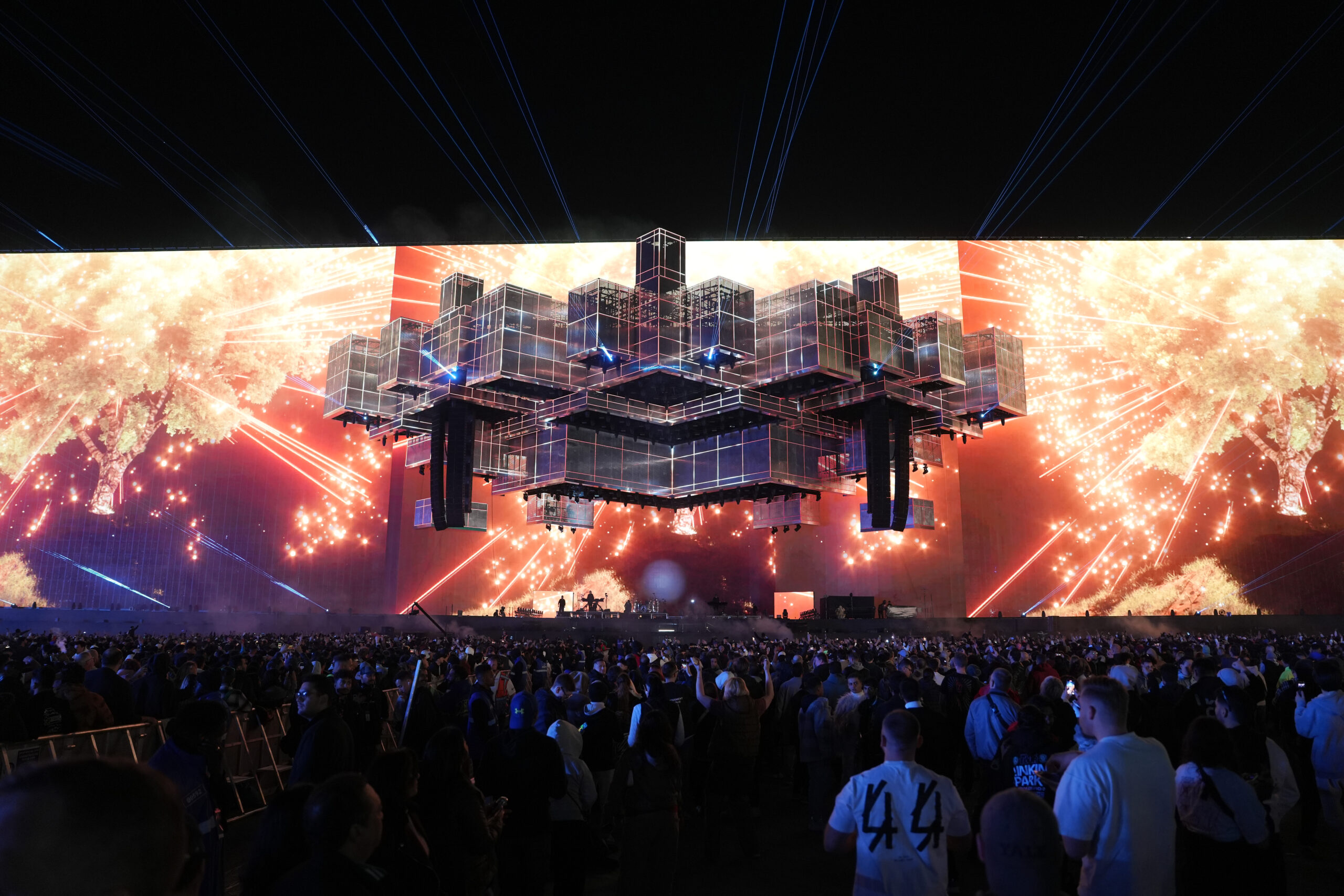
a record-breaking video package for the event totalling over 51,667 square feet of LED panels. The total continuous screen stood 114 feet high by 541 feet wide, an impressive backdrop for artists including Eminem and Linkin Park (pictured).
Photo by Direct Group Saudi Arabia / Getty Images / MDLBEAST
“If you are a well sought-after artist, you can do multiple dates in single cities,” Hutson says, mentioning Coldplay as a client on its current ongoing multi-year “Music Of The Spheres Tour.”
“Now, I keep looking for normal trends and there’s not much normal trend to it, but that’s one thing we’re kind of getting back to,” Hutson adds.
The ones running the production industry today often started nearly from scratch in the more primitive days of touring, with TAIT founder Michael Tait in 1968 driving the gear of prog pioneers YES around England in a Ford Transit van before becoming what would now be referred to as a production manager and lighting designer. Those who had to overcome the technical difficulties and logistical challenges of the old days now have a front seat in the design and implementation of new venues, leading to more efficient load-in and load-out and building with the future in mind.
“Through Michael Tait’s vision and continuing on, that ethic continues through the company to this day of innovation and technical expertise and execution,” Allen says. “So over this period of time, what started off touring as a ragtag bunch of island of misfit toys has professionalized to the point of where the newest generation of people have grown up in highly technical, complicated, really big shows. So it’s not the mystery it was 40 years ago where we were stumbling over each other and figuring it out. So, now, it’s just a matter of helping people execute their vision and assisting them as much as they’d like us to, to make sure all their goals were achieved.”
A similar story comes from Rock Werchter festival co-founder Herman Schueremans, whose long-running Belgian festival decided to take matters into its own hands to secure suitable concert stages at a fair cost.
“When you play your own show at Rock Werchter, there’s no compromise,” Schueremans told Pollstar ahead of the event’s 50th anniversary. “Stadium acts can do their own shows under top conditions on the main stage. Enabling that was the main reason Hedwig de Meyer and I started Stageco a long time ago. Top-level artists like Metallica, Talking Heads, Simple Minds – you name them – they love coming back.”
However, as previous generations begin to age out of an often grueling lifestyle and occupation, new leaders are emerging who have grown up with newer technology and high expectations for production value.
“We’re seeing a new influx of production managers that are growing with the new talent, but have a different idea of what their work flow is,” says Hutson with a laugh. “There’s a lot of movement in the production management side of the business. Mid-tour, people are moving and changing jobs. You have to put it in perspective just like anything else. It’s always stressful to have a good show, but that’s the thrill of it.”
FREE
 Daily Pulse
Subscribe
Daily Pulse
Subscribe
 Daily Pulse
Subscribe
Daily Pulse
Subscribe