
How Harvey Goldsmith Helped Pull Together Live Aid In Just 10 Weeks (Q&A)
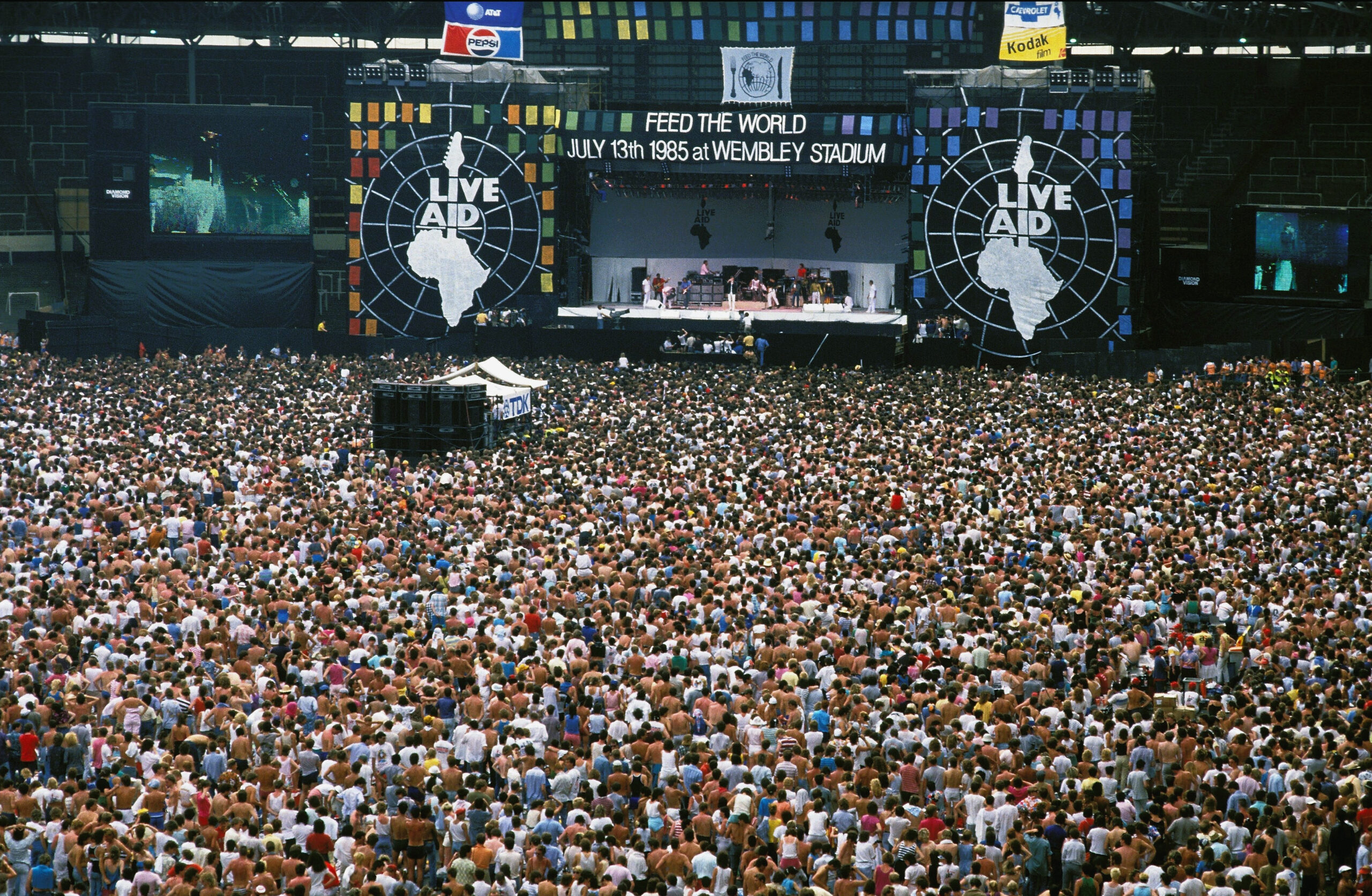
On July 13, Harvey Goldsmith, the promoter behind the legendary Live Aid benefit concert, celebrated the 40th anniversary of the ground-breaking, two-venue-on-two-continents fundraiser for Ethiopian famine relief at an afternoon gala of “Just For One Day: The Live Aid Musical” at London’s Shaftesbury Theatre.
“We’ve already gotten a million pounds as our share, which is fantastic,” Goldsmith tells Pollstar of the production, which had its world premiere in London at the Old Vic, running for nine weeks, before its North American premiere in Toronto at the Ed Mirvish Theatre for seven weeks. A portion of ticket sales goes to the Band Aid Charitable Trust, for which Goldsmith is still a trustee.
In 1985, the two star-studded same-day concerts were held at Wembley Stadium in London and JFK Stadium in Philadelphia — both venues long since demolished and replaced — broadcast globally via satellite to 110 countries and raising £140 million, according to figures from Goldsmith. London included Queen (widely viewed as Freddie Mercury’s best-ever performance), David Bowie, Elton John and Wham!, The Who, Paul McCartney, U2, Sting, Dire Straits, Tears For Fears, Bryan Ferry. Philadelphia featured performances from Mick Jagger, Madonna, Rod Stewart, Neil Young, Duran Duran, Bryan Adams; Phil Collins hopped a Concorde to play both.
In 1985, Goldsmith was aware from news reports of the dire situation in Ethiopia — Bob Geldof had been utterly transfixed by the horrific reports on the ground by the BBC of the starving children and needless death was consumed with the idea of doing something — and as the promoter for Geldof’s band Boomtown Rats had popped into the recording of the Geldof and Midge Ure-speared Band Aid charity single, “Do They Know It’s Christmas?” (which raised £8 million within a year) before Geldof went to Africa in January 1985 to see the devastating poverty for himself and pitch in toward relief efforts.
Goldsmith was managing Roger Waters, who had just split from Pink Floyd and wanted to launch his solo career at New York’s Radio City Music Hall. Then, out of nowhere, he says, Wham! manager Simon Napier-Bell called to tell him he needed to go to China for the duo’s tour. He was also in the middle of setting up a stadium tour for Bruce Springsteen: Wembley Stadium was already booked (July 4 & 6). In other words, his plate was full.
When Geldof returned home, Goldsmith says, “He realized that what he’d raised [from the single] was a spit in the ocean and decided we needed to do a concert at Wembley Stadium and the date he wanted was the date I booked for Bruce Springsteen.” Instead, Geldof agreed to July 13 — then he got the idea to do one in New York as well. So how did it end up being in Philadelphia?
In this exclusive Q&A, Goldsmith — who was also the producer and promoter of 2005’s “Live 8” 10 concerts broadcast globally to pressure the G8 leaders to “make poverty history” — talked to Pollstar about how Live Aid went from one stadium in two, how it came together so quickly, how he got the artists to stick to their set times, and why he had to go down to Wembley Stadium the night before. He is presently the chairman of British Music Experience Trust, a museum in Liverpool.
CNN is currently airing the four-part documentary series, “Live Aid: When Rock ’n’ Roll Took on the World,” every Sunday at 9 p.m., concluding Aug. 3.
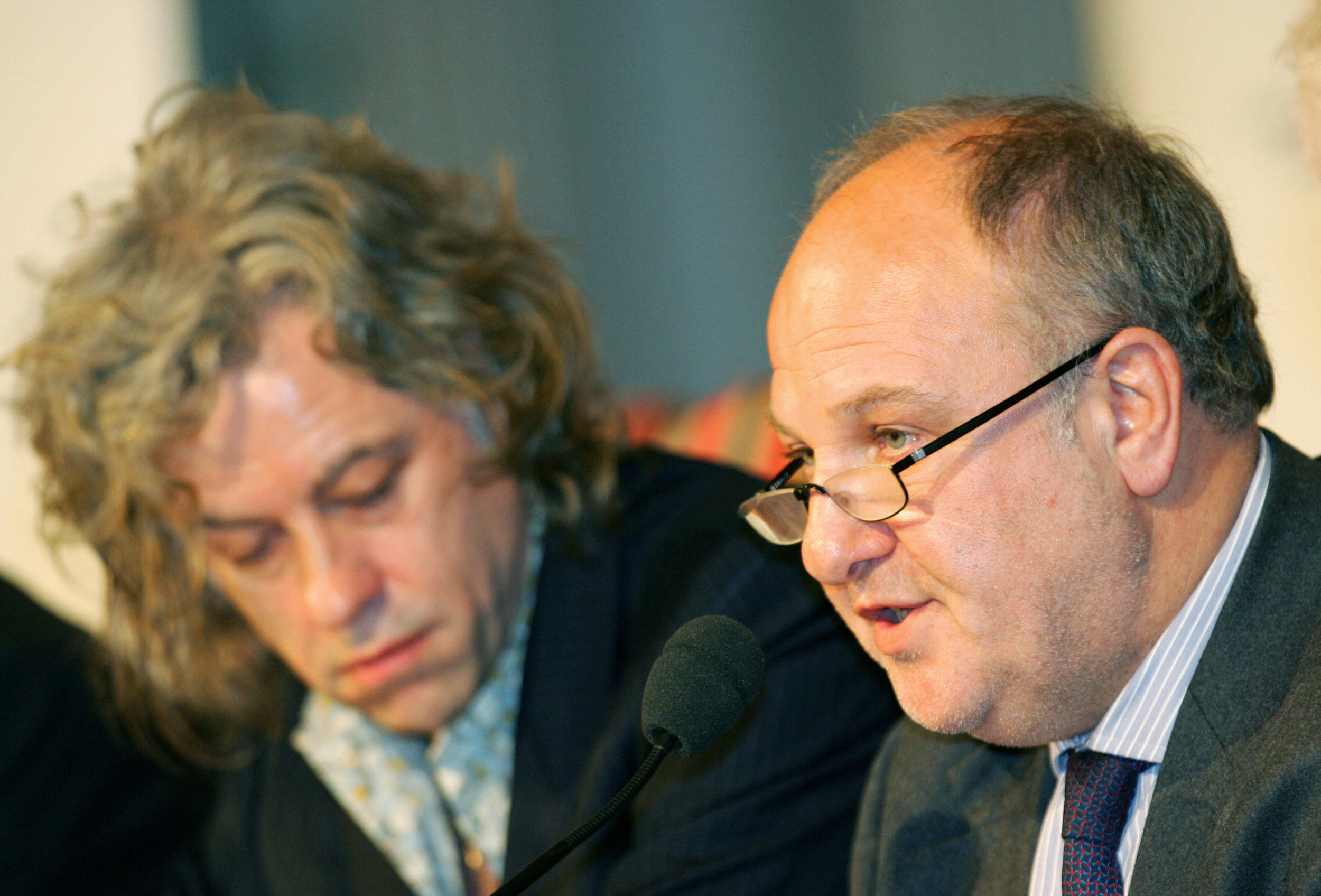
Pollstar: How did it go from one show in London to another in Philadelphia of all cities in the U.S.? Not New York. Not LA.
Harvey Goldsmith: I phoned up Bill Graham, who I’d worked with and said, “This is what we’re trying to do. Are you in?” He said, it sounds interesting. I said, “We want to play Shea Stadium.” He called me back. “Shea Stadium is not available and Giants Stadium is not available.” So I said, “Try RFK in Washington,” and he said, “It’s not available, but I’d like you to do the show on the West Coast at Stanford.” And I said, “Look, it’s now shaping up to be a broadcast, we can’t do the West Coast because of the three-hour extra time difference. Five hours from the East Coast, eight hours from the West Coast is never going to work.” And he said, “No, no, we’ve got to do this on the West Coast,” and it was like a standoff. So I thought, this is driving me nuts..
So, I then called Larry Magid, who was another friend of mine, who was the promoter of Philadelphia. I said, “Larry, you’ve got to help me out. Where can we play?” and he tried Boston and it wasn’t available. So we’re now struggling a little bit. And he finally came back and said, “I’ll go and see the mayor of Philadelphia [Wilson Goode]. There’s been some problems in Philadelphia in the city with the riots; the mayor might like it.” So he went to see the mayor of Philadelphia and he said, “Great, I’ll give you the stadium.”
I then went back to Bob and said, “Great news, we’ve got to go to JFK Philadelphia.” And he said, “Philadelphia? Why the hell are we playing now when I play in New York?” ” I said, “We can’t play in New York.” He said, “Oh, of course you can get it.” Anyway, this went on and on. And then I suddenly realized, “Look, Bob, Philadelphia is the home of the Liberty Bell. It fits perfectly. It will work really well. The mayor’s involved. He wants to give us a stadium. Larry Magid is a great promoter. I’ll still keep Bill on board and all the rest of it.” And that’s really how we ended up in Philadelphia. And he reluctantly agreed. And as it transpired, it worked out perfectly for us all.
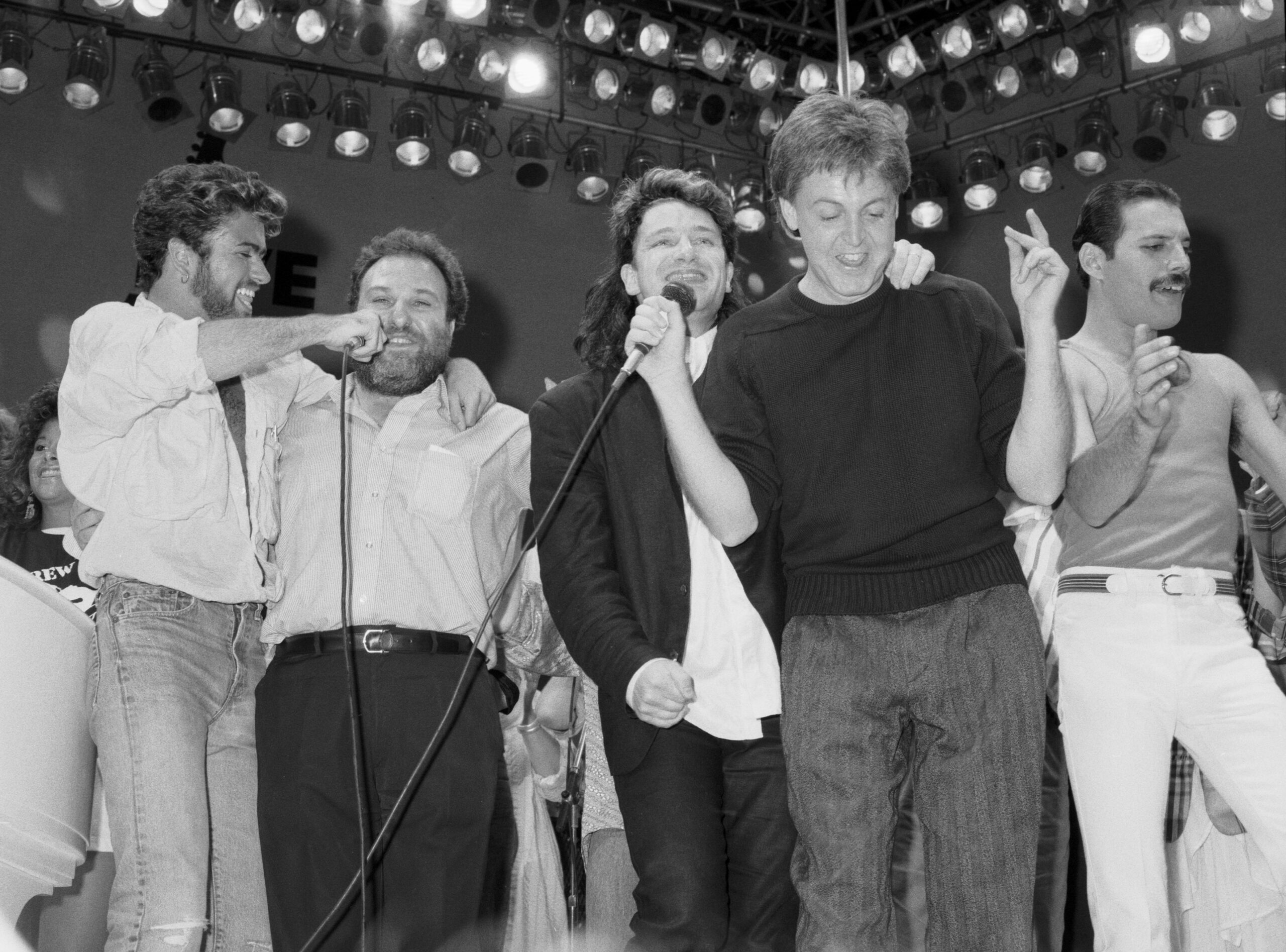
It’s pretty incredible. Most major shows and tours today are booked so far in advance but you pulled this off in a matter of weeks with no internet.
No computers. No mobile phones. The one thing I’ve always had in all of my working life is great teams of production people, probably the best there are, always, even today. I’ve got the best production managers in the world. Without them, I couldn’t do anything.
So I put my A-team onto Wembley and Bill Graham was starting to resist us playing Philadelphia. So, I sent one of my guys over, Pete Smith, and said, “Sit next to Larry, help him out, put a team together. You know all the guys out in America. If you need any from England, we’ll send them over and just sit there and make sure this works.” It was tough going, but that’s really what happened on the production side. As to all the facilities, the production companies, all the rest of it, we just used the best. I had to talk them into what the cause was and doing it for free. I said, “Look, we’ll pay for man hours, but I don’t want to pay for profit because we’re all doing this for nothing.” They all came to the table and so we had great sound, great lights, good production, great crews, great production managers. Without that, it would never have worked in a million years.
The Concert for Bangladesh was in 1971 [two same-day shows organized by George Harrison and Ravi Shankar at Madison Square Garden], I think, a first-of-its-kind charity event of that scope, but was there any other model for this?
No one had ever done two simultaneous concerts before. First of all, there’s never been 16 hours of music on TV, other than MTV, of course. So that was important. But I worked with Paul McCartney and we did a series of fundraising shows; I’d worked with The Who, we did “Who Put The Boot In” [in 1976] at four stadiums around the country [UK]. I was used to big shows and big events, but doing two shows at the same time, one in America, one in England, was unheard of, and it threw up some challenges.
How did you do it in 10 days?
We managed to find a fantastic team of people, some of which kind of came out of nowhere. Hal Uplinger and Mike Mitchell, both had just finished working on the L.A. Olympics, and they said, “We’ll sort out the broadcast and the satellite. We’ll help you with that.” We went to see the BBC engineers, and we sat down with a map and a pair of calipers, and we literally go “like this” across the table on the map to try and figure out where the satellites would be. The Olympic Games in L.A. had uniquely worked by satellite; they had three satellites. We were working with 13 satellites and 22 transponders to get across from Philadelphia to Wembley, and all these uplinks. And so, we needed someone with the expertise of Mike Mitchell and indeed with Hal to help put all this together.
Do you remember how each country came on board for the broadcast? You ended up with 169 countries.
I got a phone call from a guy called Kevin Wall who read about the event and said he owned Radiovision and could do the distribution for both radio and TV around the world — and we’ve been lifelong friends ever since. Bob and I agreed to deal with the BBC. Originally, a guy called Mark McCormack, who owned IMG [International Management Group], said Bob had contacted him. He said, “I think I can get you two hours on Channel 4” and Bob said to me, “What do you think?” I said, “No, that’s not going to work because who’s going to be on the TV and who’s not?” And then he tried the BBC. I went to a guy called Mike Appleton, who was the music TV producer at the BBC [The Old Grey Whistle Test]. He went to the head of daytime television, who went to the director general, and they bought into it. So, once they came on board, it was a lot easier to get broadcasters all over the world. So, all of the prime broadcasters from NHK in Japan to ABC for a short broadcast; MTV for the whole thing in America, and so on, Germany, France, Italy, and then other countries said, “Why aren’t we on board?” So, we added Russia and China, which was unheard of. We added Vietnam, Philippines, and so on. There were just more and more broadcasters coming on board, both the radio and television.
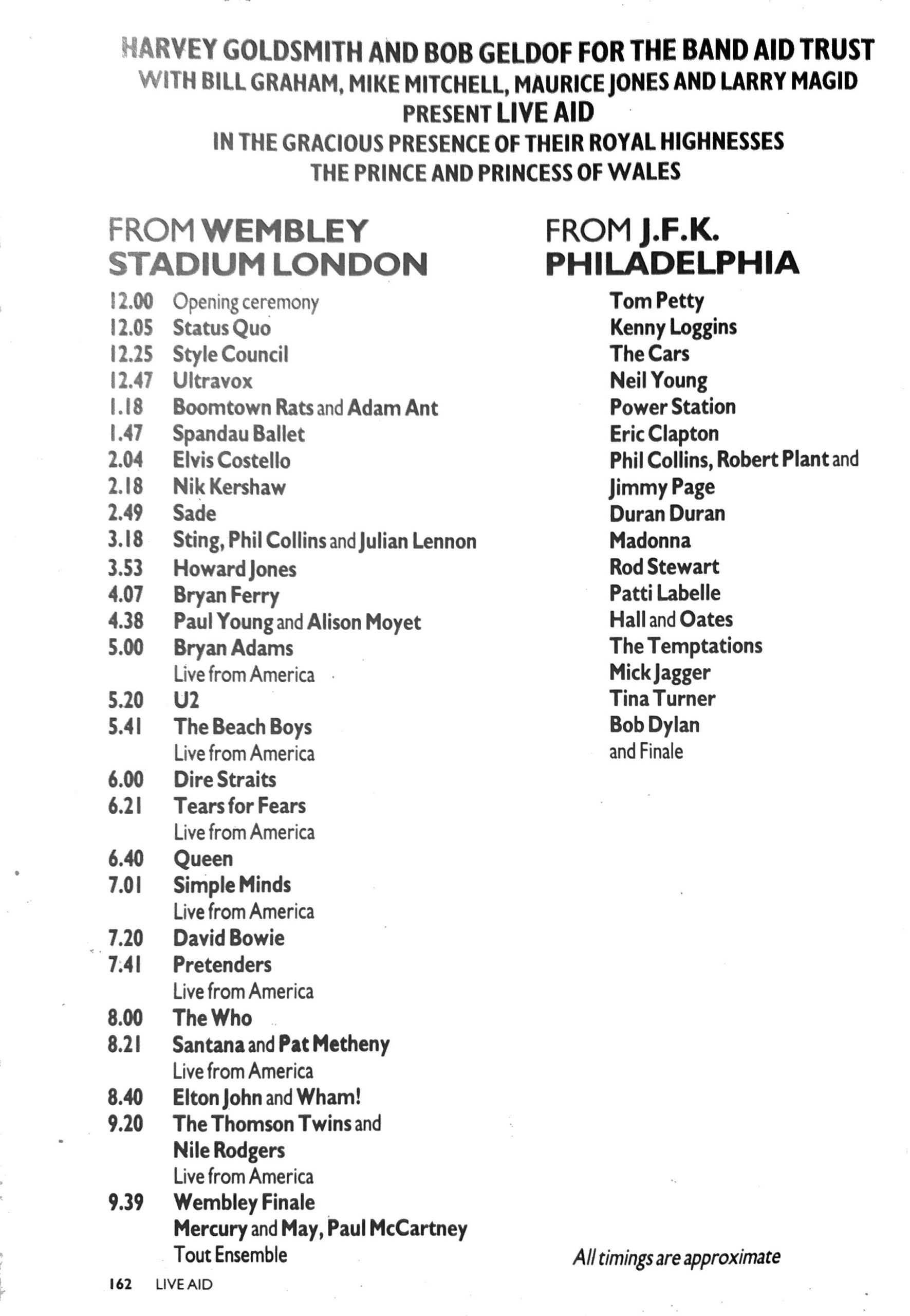
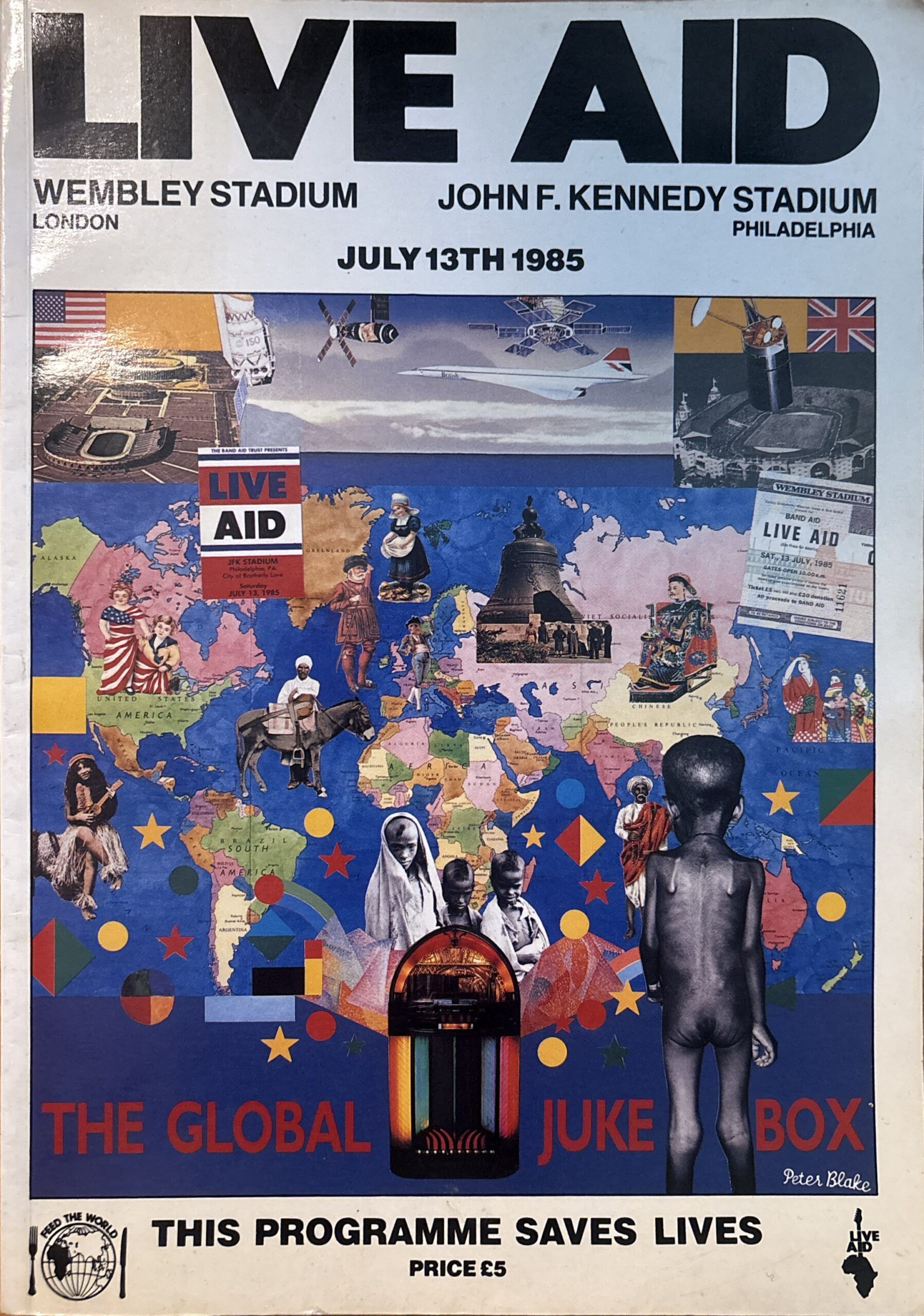
The very last page of the concert program has the schedule and the timing, which is so precise. You’ve got Ultravox 12:47 p.m., and Boomtown Rats and Adam Ant to 1:18 p.m., et cetera. How on earth did you even put this together with two dozen artists and egos and hierarchies and adhere to to-the-minute set times?
I sat down with Andrew Zweck, who was head of production for the show in England, Pete Smith in America, the three of us, plus a few others, and I said, “Look, if this is going to work, we have to stick to time. We’ve got so many acts, we can only allow each act to play 18 to 20 minutes. We had been experimenting with a circular stage for another event and one of the guys in the production team said, “Why don’t we think about using the circular stage?” I said, “Done, let’s do it.” So that means we could have one act playing, one act setting up and one act coming off. That cut down the changeover time immensely.
And I just set out rules. One of the key rules was no one on stage except the artist, the one before and the one coming off and the crew. That’s it. The other thing is we sent these maps around saying, “Stick to the time,” et cetera. And then on the morning of the show at Wembley, I sent one of the crew out to go and buy 40 clocks, big enough that you could see and I put one around my neck and underneath it, I put a note which says, “I don’t care what time you go on, but I do care what time you come off. Stick to time.” And I also said, “Please leave all the egos behind.” Everybody, every artist, I didn’t have to tell them anything, they knew the seriousness of it. They knew how important it was to help. And every single artist was standing on the side of the stage, ready to go when it was their time. I mean, George Michael, bless him, never, ever went on stage less than half an hour late, ever, ever [laughs]. And so on. Nobody wanted to let the slide down and that’s really how we kept to time.
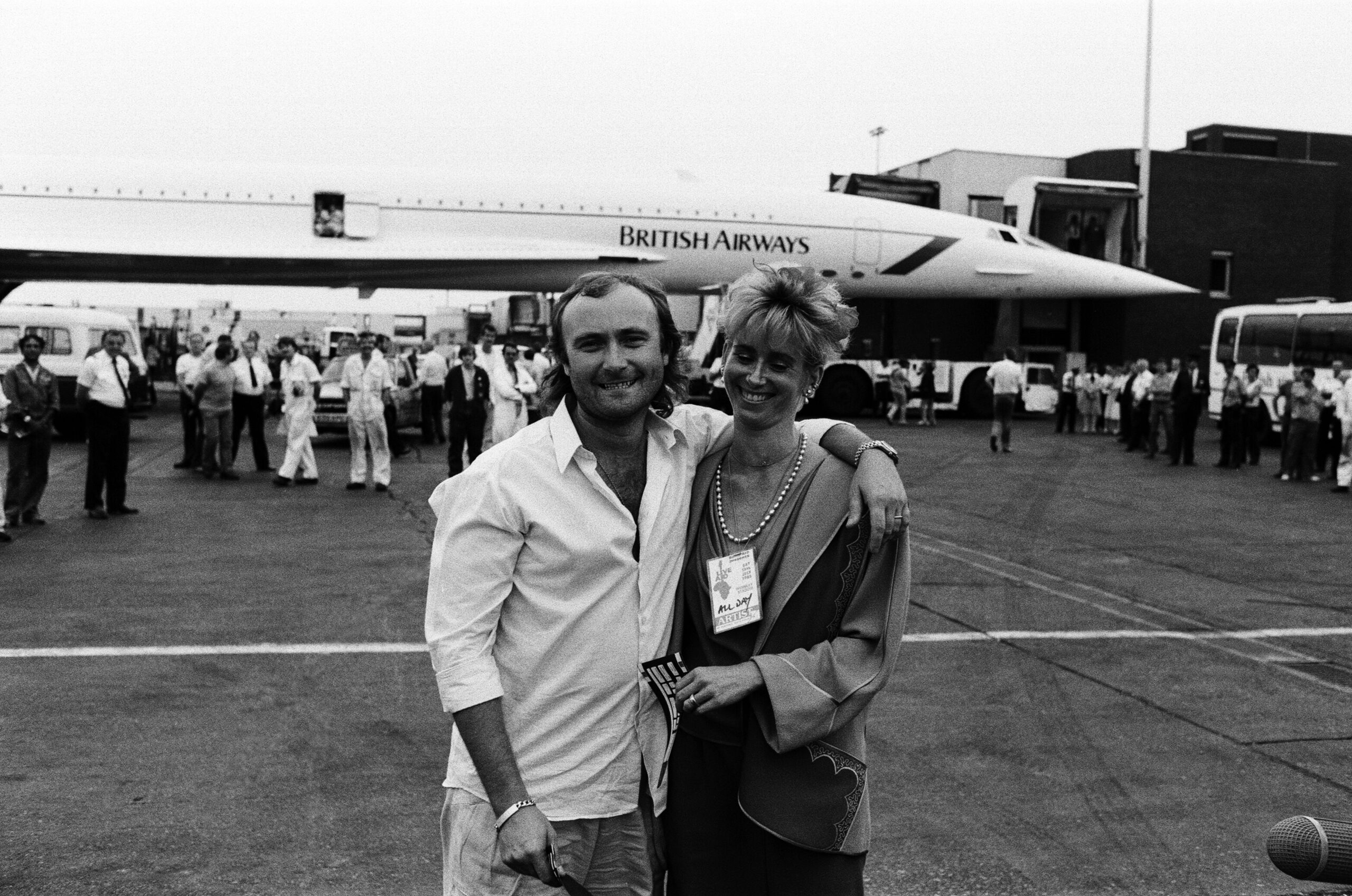
And of course, Phil Collins, on top of everything else you are dealing with, wanted to play both shows.
[Laughs] So Phil Collins didn’t want to do it. Tony Smith, his manager, was an ex-partner of mine, and I kept phoning Tony. Bob said, “We’ve got to get Phil.” He was having so much success. It was a Friday afternoon, about two weeks before the concert, and I said, “Tony, you’ve got to sort this out.” He called me about half an hour later. He said, “I’ll talk to him, but only if Phil could do both shows.” He was thinking, “That’ll get rid of Harvey. That’s the end of it, [laughs] but I said, “OK, done.” That was my mantra at the time. Everything was yes. There were no noes at all.
So I thought, how do I do this? And of course, Concorde could get to New York, three hours and nine minutes. I phoned up at the British Airways press office. I said, “I have got the stunt for you of the century. You’ll get more press out of this than anything else British Airways have done. Here’s the deal. Phil Collins is going to play at Wembley Stadium in the afternoon; we’ll put him on a helicopter to Heathrow. You’re going to put him on a Concorde, take him to New York and then we’ll helicopter him to Philadelphia; he’ll play both shows and we’ll fill the Concorde with the press.” About 45 minutes later, they called me up and said, “We love the idea. Let’s do it.”
You know, today, everybody hesitates. Nobody wants to stick their neck out. Everybody wants to conform. What does TikTok say? What does Facebook say? And what happens if I do this? And here we have Concorde picking up Phil Collins, who’s playing both shows on the same day, which, of course, is unheard of.
Were there any behind-the-scenes, last-minute glitches?
Earlier on the Friday night [before the concert], the turntable stage at Wembley broke down. So I had to go down and the crew were really completely fried. So I jumped in the car. I went to the off-licence [liquor store]. I bought three crates of ice-cold beer, drove down to Wembley, which calmed the crew down. I said, “Come on, we’ve got to work this out” and it turned out that a bit of scaffolding pole got stuck inside the turntable mechanism. So, we sorted that out. I went home, I was pretty exhausted.
I then got a phone call from Tommy Mottola [an artist manager at the time] saying if I don’t put Hall & Oates on the ABC primetime show, he’s going to pull Mick Jagger and Tina Turner [from Philly show]. I said, “Pull them; it’s too late now; I couldn’t care less,” but they all performed. So, then I finally flopped into bed about two o’clock in the morning. Bob called and I explained to him what had happened that night. And we both said to each other, “You know, we could raise probably 5 million pounds. That would be fantastic.”
You raised infinitely more, a staggering $140 million. Earlier this month, Black Sabbath’s farewell show raised $190 million for various charities, according to musical director Tom Morello, from ticket sales and paid livestreams. CNN flashes a “text this number” to donate for the victims of the Texas flood. In 1985, you raised that amount from ticket sales and people calling from their landlines or putting a check or cash in the mail.
Well, we persuaded the broadcasters to do a telethon. And that came out of Jerry Lewis who did a telethon every year in America [for Muscular Dystrophy Association]. And I thought, “Well, if he could do it, then we could do it.” So that’s how we set it up. You’d have to phone in and pledge your money and then send it. And again, like the record, it was slow at first. It was quite difficult. And it wasn’t really until the CBC, Canadian Broadcasting Corporation, showed this video of The Cars [“Drive”] with those awful pictures [of children starving from the famine] that the money just suddenly went berserk and was flying in from every different direction. Outside of America, no one had ever done that kind of thing on broadcast before for pledging money.
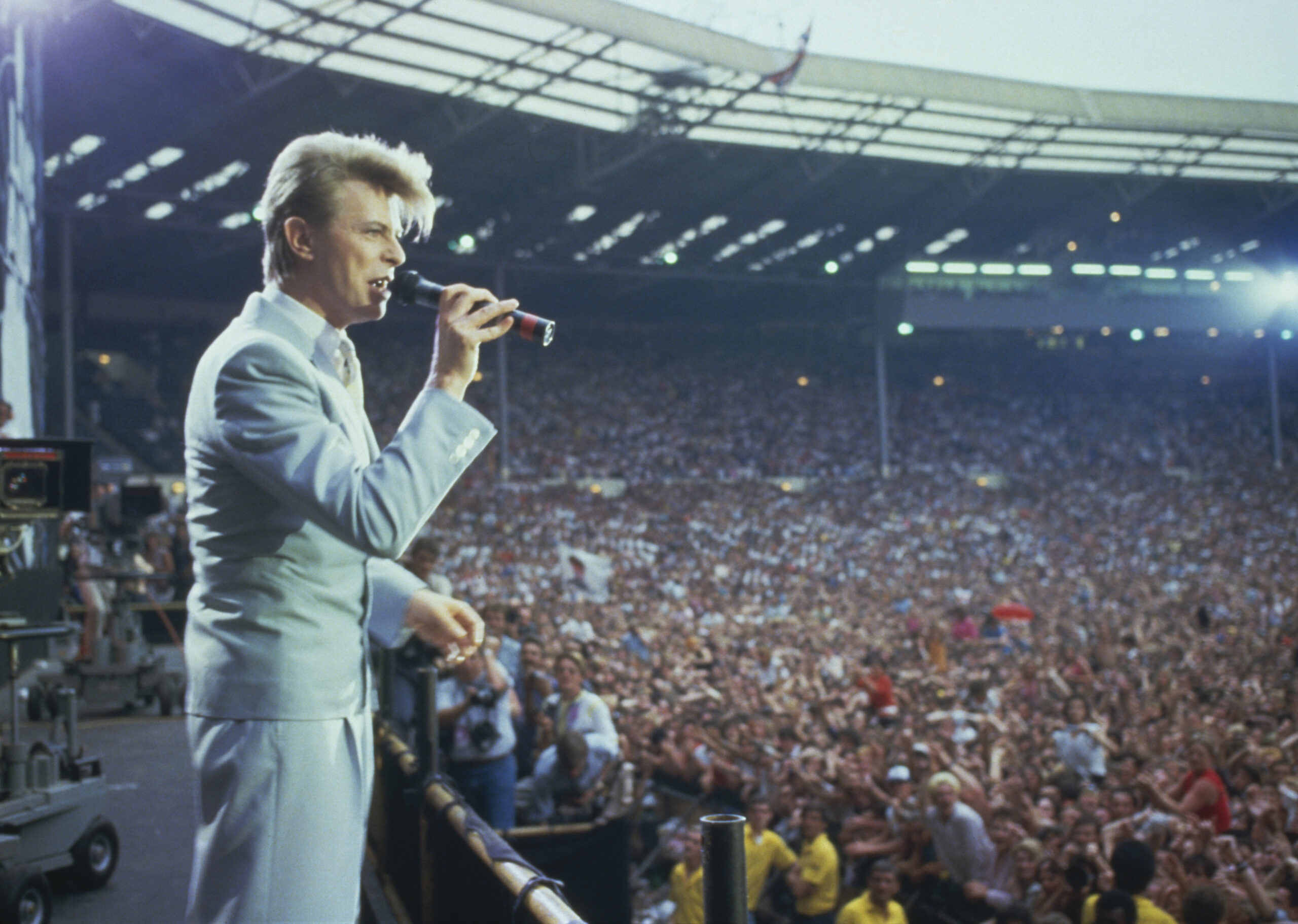
I’m sure Bob didn’t expect this to be his legacy, to be knighted, to have a musical and 40 years later you are still one of the trustees of Band Aid Charitable Trust. I’m sure many people don’t realize it’s still active. Live Aid, Band Aid, still brings in about £7 million a year. What are some of the projects you are funding?
[Lawyer] John Kennedy and I sign all the checks. Both of us are doing on average two days a week, 40 years later. We’re still dishing out on average between 6 million or 7 million pounds a year. There’s still a demand. We have a team and none of us have ever taken a penny, nothing. We have a team of advisors who recommend the projects and vet the projects. The only rule we laid down from day-one was that we would only give money to projects where we could see where the money was going and, second, where the local people could participate and help in the projects because a lot of the NGOs would run the projects themselves and then leave, and then the local population went “What do we do now?” Obviously the first tranche of money was always food, blankets, medicines. After that, we started looking at other projects, building clinics, water wells, schools, shelters, helping to build crops and so on. There’s an organization [called] Mary’s Meals that we’ve just given a load of money to that’s feeding 70,000 people.
And while Live Aid was for famine relief in Ethiopia, you expanded aid to other African countries.
It’s called the Sahel Belt, Sudan, Ethiopia, Chad, Mali, Eritrea … That’s the belt that runs along Africa. We give to all of those countries, but that’s our limit.
FREE
 Daily Pulse
Subscribe
Daily Pulse
Subscribe
 Daily Pulse
Subscribe
Daily Pulse
Subscribe