
‘The Risk Is Also What Turns Me On’: Q’s With Matthieu Drouot, CEO, Gérard Drouot Productions
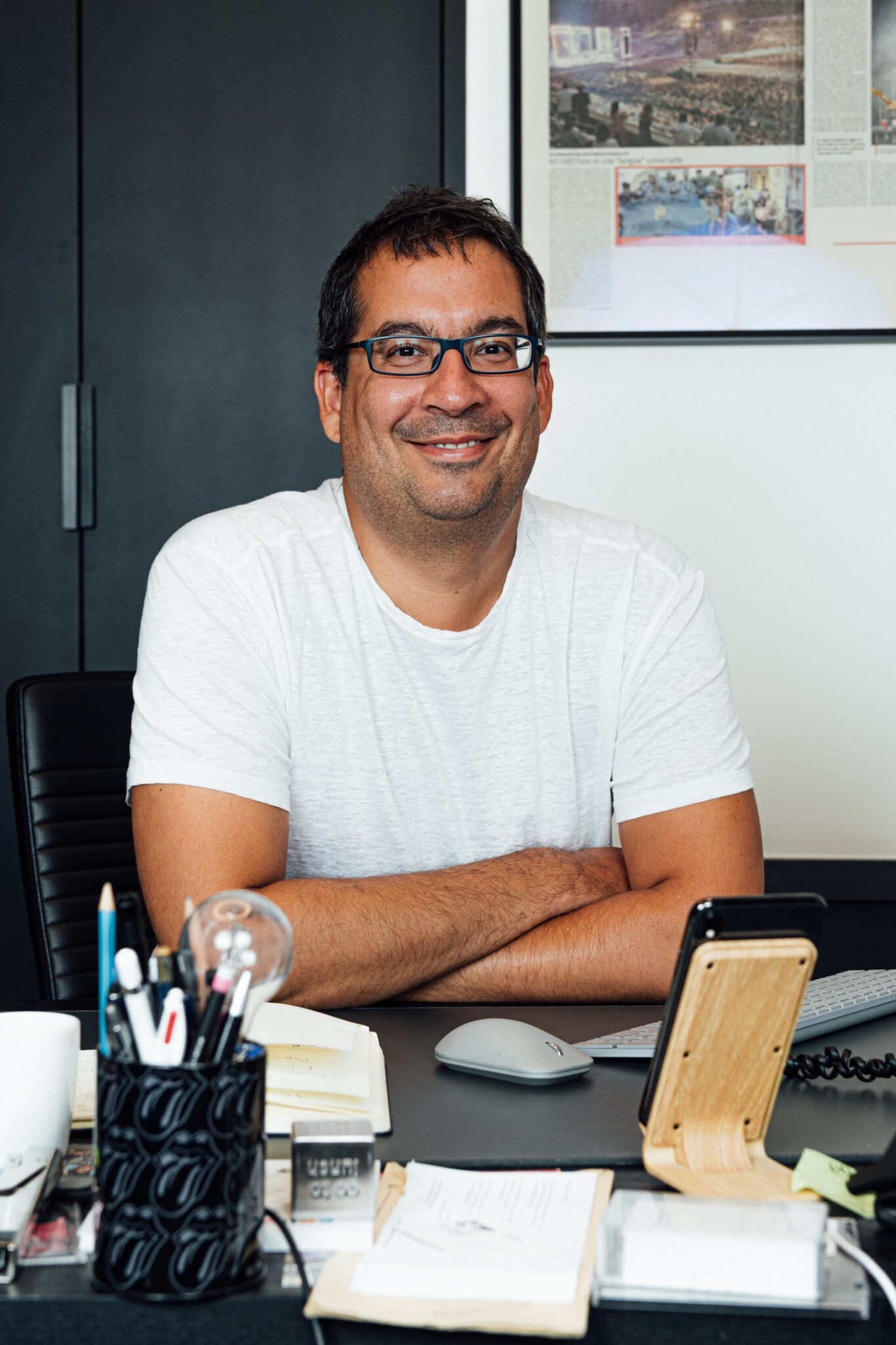
When Pollstar reached out to Matthieu Drouot for our annual France Focus, he was just about to launch a sold-out eight-date residency of Melody Gardot at L’Olympia Paris. 15,000 tickets, sold out. It’s but one of many success stories, Gérard Drouot Productions is celebrating in 2025, which isn’t an easy year by any stretch of the imagination.
What helps navigate the dynamic French market is the fact that Matthieu Drouot learned from the best; that he has a passionate team willing to put the work in; and a diverse roster of artists and events.
Pollstar: How’s does 2025 compare to 2024?
Matthieu Drouot: 25 is an up and down year for many reasons. Things are not as easy as they were post-COVID. Following the passing of my father, I had some very difficult years, but the dynamism of our business made things easier: more and more people went out to see our shows, and they paid more money to see our shows.That led to some good years in 23, 24.
We’re now getting to a point where the competition is more intense than ever, not only between promoters, but also between tours. All major artists of the world seem to be touring, every style of music is represented, there’s just shows happening everywhere. The French market is big, it’s a deep territory, it’s not only Paris. We’ve received a good amount of new venues, like the new arena in Lyon, or the one in Bordeaux.
We have more infrastucture to do shows, and that’s very welcome, but the market cannot expand without limit. At some point, you don’t sell tickets because there’s just too much out there. When you have 10 shows in Paris on the same evening, or multiple major festivals happening the same weekend, then it becomes very difficult for everybody to do business.
What are some of the success stories you want to highlight?
We just finished Hellfest, and it was the best edition yet. It had sold out in a few minutes at 70,000 capacity. When a festival is offering a unique lineup and experience, fans will come, even if the ticket price is high.
I had a fantastic tour with Lenny Kravitz, we sold 38,000 tickets at Paris La Defense Arena, which was his biggest headline show ever, not only in France, but worldwide. Lenny had been used to headline Accor Arena whenever he came to Paris since the late 1980s. For the first time in his career, we went up to play La Defense arena, the 40,000 capacity indoor stadium, and we sold it out with Richard Ashcroft as a special guest, the former Verve lead singer, who is very rare in France. We sold out 11,000 seats at the arena in Bordeaux, as well as 14,000 in Lyon. We sold out Marseille, and Nantes, as well.
I did three stadiums with Bruce Springsteen – the first time in his career that he did three football stadiums on the same tour in France. One of the shows had been postponed from last year. The shows were magnificent, we sold out the Stade Velodrome in Marseille, as well as the first of two shows at the Stade Pierre-Mauroy in Lille. I did not sell out the third show, which I had added based on the demand for the first. When I added the second show, all of a sudden, the demand dropped.
So, there are some signs of the business telling us to watch out. As a promoter, you get excited with unheard-of ticket sales. Bruce had never sold that many tickets in his career in France. We managed to sell out a football stadium in a region he had never done befor, which he was absolutely thrilled with. But a stadium is still a big place to fill, and there can be challenges. So, it’s been an up-and-down year so far.
So, even at that level, you can’t make any guarantees. How do you navigate a market as dynamic as France right now?
It’s impossible to predict. If we were capable of predicting ticket sales for one show or the other, we would all be doing very well. We’re still doing well, but you just never know in advance how you’re going to do – it’s the beauty and the nightmare of this business. It’s a bit like in the sports business. You look at the NBA calendar pre-season, and you may think the LA Lakers will win 55 games come November. Six months later you realize that you won 70, or you won only 40. And the live business, in a way, is similar to the sports business, in the sense that we don’t know what attendance we will draw until we go on sale, until we do the shows. So many factors play a role.
Aside from the sheer number of events out there, what’s another one?
Avails. I did 90,000 tickets across two nights in Lille with Bruce. Anyone will be impressed with selling 90,000 tickets in a market like Lille, which is not the top market. But Stade de France in Paris was not available. I know that I would have done more tickets in Paris, but it came down to a decision. Do I let Bruce skip France, or do I try something different than Paris? This business is about making choices and decisions. I don’t regret the decision. When I make a profit, I make a profit. When I lose money, I lose money. Luckily I can fulfill my engagements, and people know that they will get paid, regardless of what happens. But the risk and uncertainty is also what turns me on. If we knew in advance what we’d do in ticket sales, with the help of an algorithm or whatever, we would get bored. We enjoy seeing artists sell out a place they didn’t expect to sell out in the first place. And it’s impossible to sell out all the time. Sometimes, it’s not the right market, or simply not the right day. If you don’t take risks, you don’t get rewards. That’s just the nature of our business.
Is it fair to say, that the French market is saturated?
I wouldn’t say there’s too many tours, or too many festivals, because I will always promote the diversity of music, regardless. Even with the amount of shows that are out there, you can still find artists or music, for which there’s demand in various territories.
That being said, if you want a slot at Stade de France in 2026 it’s very difficult. Even for avails in 2027 there’s not many options left. So, we have to hold dates two years, three years in advance, which creates completely new logistics. When I started in this business, I would call for avails six months, nine months, 12 months ahead of time. Then you hold dates, you route a tour, you do budgets, you get a confirmation, you go on sale.
Now you have to hold date two, three years in advance, but you don’t talk to management or agents for months, because you’re not going to go on sale three years in advance. It just doesn’t happen. So you have to be very cautious about what dates you hold, and how you budget. People sometimes ask me for costings for shows in 27, and I tell them that it’s impossible to guarantee costs and income for 27. The venue may change its rent, the economy may change, fans may have less money to spend. It creates completely new ways of working, even just remembering that you started working on something three years ago.
So, while I’m never going to say that there’s too much happening, I can see that some artists tour every year for different reasons. The artists that are struggling in 25, in my opinion, are the ones that were on tour in 22, 23, and 24. I was very successful with Lenny Kravitz in 25, his last arena tour was in 2019, six years ago. If the audience has to choose between two shows, and one of them was in town a year or two ago, and the other one hasn’t been touring for 10 years, they will buy the ticket for the show they’ve not seen since 10 years. I’m selling out two nights at Stade de France with AC/DC in August. The last time they headlined Stade de France was in 2015 on the “Rock or Bust Tour”. I did an open-air show at the Hippodrome Paris Longchamp last summer. Again I could not get Stade de France because of the Olympics. I sold out 80,000, and this year I will sell out again, 150,000 tickets across two shows. But that’s because AC/DC is so rare. Even in August, when Parisians usually leave town for their summer holidays, you can be sure that they just won’t miss AC/DC, because it may be their last show.

Where are the opportunities to generate business even in a tour-heavy year like 2025?
I try to create new stuff, like the Heavy Weekend, a new festival in Nancy in the East of France: one stage, four acts per evening across three days. The feedback I’m receiving from the locals is great, because Nancy hasn’t seen a rock festival in years, the local appetite for these events is huge. It’s not Paris, it’s not Hellfest, it’s not Les Eurockéennes de Belfort. It’s different. It’s a different location where an audience is available and happy to come. To create a festival and make it profitable takes years, of course. It’s year two, and right now, I’m investing. But I’m confident, that in three, four or five years, I will start to see profits.
What drives me is the feedback from the crowd, and also from the artists, who are open minded and happy to try out a new event. I did 16,000 tickets this year on the last evening of Heavy Weekend, headlined by Slipknot, with two French acts – Mass Hysteria and Rise of the North Star – and one U.S. opening act completing the bill. 16,000 tickets for a new festival isn’t bad at all.
Also, new talent. The amount of talent out there is huge. I’m trying to draw an act from Manchester, Lusaint, whose music I fell in love with. I got in touch with Robert Davis, her manager in London now, as well as her agents at One Fiinix Live. We’re trying to grow her from 500 tickets to 1,000 to 2,000. Maybe she’ll be an arena act in a few years, I can only wish her the best. The audience is very open minded to listen to new talent.
Is it an option to ask artists to tour less?
It’s a difficult conversation to have, saying, ‘hey, maybe you should stay off the market for a year or two’. Artists don’t make much revenues from records sales and streaming services, they rely on live touring. But the reality is that if you tour every year all your career for 30 years straight, you’re going to sell less and less tickets. That’s just the reality. Management, agents, and promoters have to monitor that to make sure the artist gets the best business out of every tour they embark on.
Even if a stadium show like Bruce Springsteen’s didn’t sell out, it must have still placed Lille on the map for many – fans, artists, promoters alike – as a go-to market?
Of course. The first time KISS headlined Hellfest, it turned Hellfest into a household name. Since then, Metallica, Iron Maiden, everybody apart from AC/DC and a few other rock legends have played it. This year, we had Korn headline, and, for the first time, Muse. Whenever you do something big for the first time, it will resonate for years to come. When my father was still alive, we had Bruce Springsteen headline Vieilles Charrues festival in Carhaix, in Brittany, in 2009. All of a sudden, people knew about Carhaix and Vieilles Charrues, and artists wanted to play the festival. The Lille venue will obviously benefit from my Springsteen shows, because everybody now knows there’s a nice stadium in Lille.
That also may be what saves us in this business, that even if you lose money, you’ve built demand for the next show, and not necessarily with the same artist. You build a venue reputation, or a festival reputation. And what matters is that fans have the best experience. They must be happy with the money they spent.
What’s your approach to ticket pricing?
I’m very careful when it comes to how much to charge for tickets. You may be able to sell a platinum ticket at €500 instead of €100 once, but I’m not sure fans will pay that price again on the next tour. Fans remember what they invest. It’s true, sometimes we sell out shows very quickly, and the demand for tickets for certain shows can be so high, you can easily increase the ticket price. But we are not in the business of managing short-term careers. We are monitoring long-term careers, and it’s important to properly assess at what level the career of an artist you work with really is. If you simply try to maximize the possible income on one tour, and you charge ticket prices that are too high, you may still sell them on the first tour, but what about the second?
My company is doing well, because the business we do is so diversified. I do rock shows, jazz shows, classical music, family entertainment, French artists, international talent. In a way, my company can afford one artist failing, because someone else will succeed. But it’s not my thing, I cannot be happy with an artist failing, I hate that. I cannot be happy seeing one artist selling less, just because someone else is selling more. I’m always looking for my artists to sell more than on the previous tour.
My father, when he was alive, would always tell me, that an artist never stays the same from tour to tour. They’ll either sell more or less, and monitoring that is our job.
Is it easier to ignore short-term success in favor of long-term careers, if you’re working independently, and aren’t guided by quarterly results?
I wouldn’t say that corporate companies don’t have long term vision. But there’s a difference between a long-term vision by the head of a corporate company, and the long-term vision being shared within the many individual offices of that company. I try hard to make sure that I share the same vision as my staff, but even at our size, it’s not always easy.
What’s the best aspect about being independent?
Nobody will tell me to do a show or not to do a show. I offer a lot of money on some shows, and I just cannot envision myself being prevented from doing a show, because someone at a round table says, ‘no, it costs too much money, you cannot do that’.
And the worst?
Being independent can be very lonely, and it’s not easy. You must be very strong to be able to deal with that. You don’t have big corporate meetings. When you lose money, you lose on your own. When you make money, you make it your own. It’s a very lonely situation, but the one, where I think I can do the best job. I’m not saying I will never be part of a corporate company, but I’m only 41 years old. Who knows what will happen when I’m 50 or 60?
FREE
 Daily Pulse
Subscribe
Daily Pulse
Subscribe
 Daily Pulse
Subscribe
Daily Pulse
Subscribe