
‘Curating Has Become Extremely Important’: Q’s With Arnaud Meersseman, Managing Director, AEG Presents France
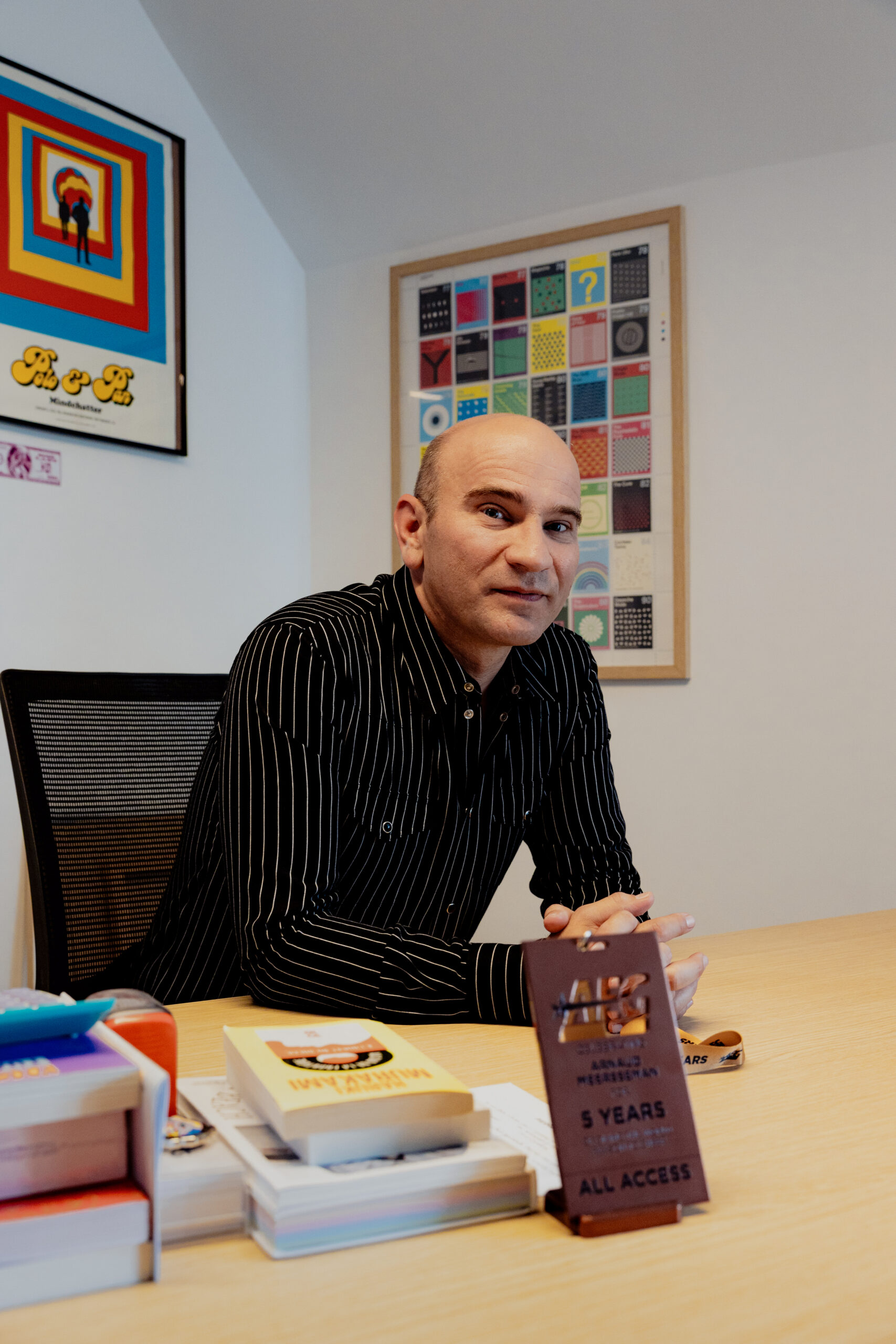
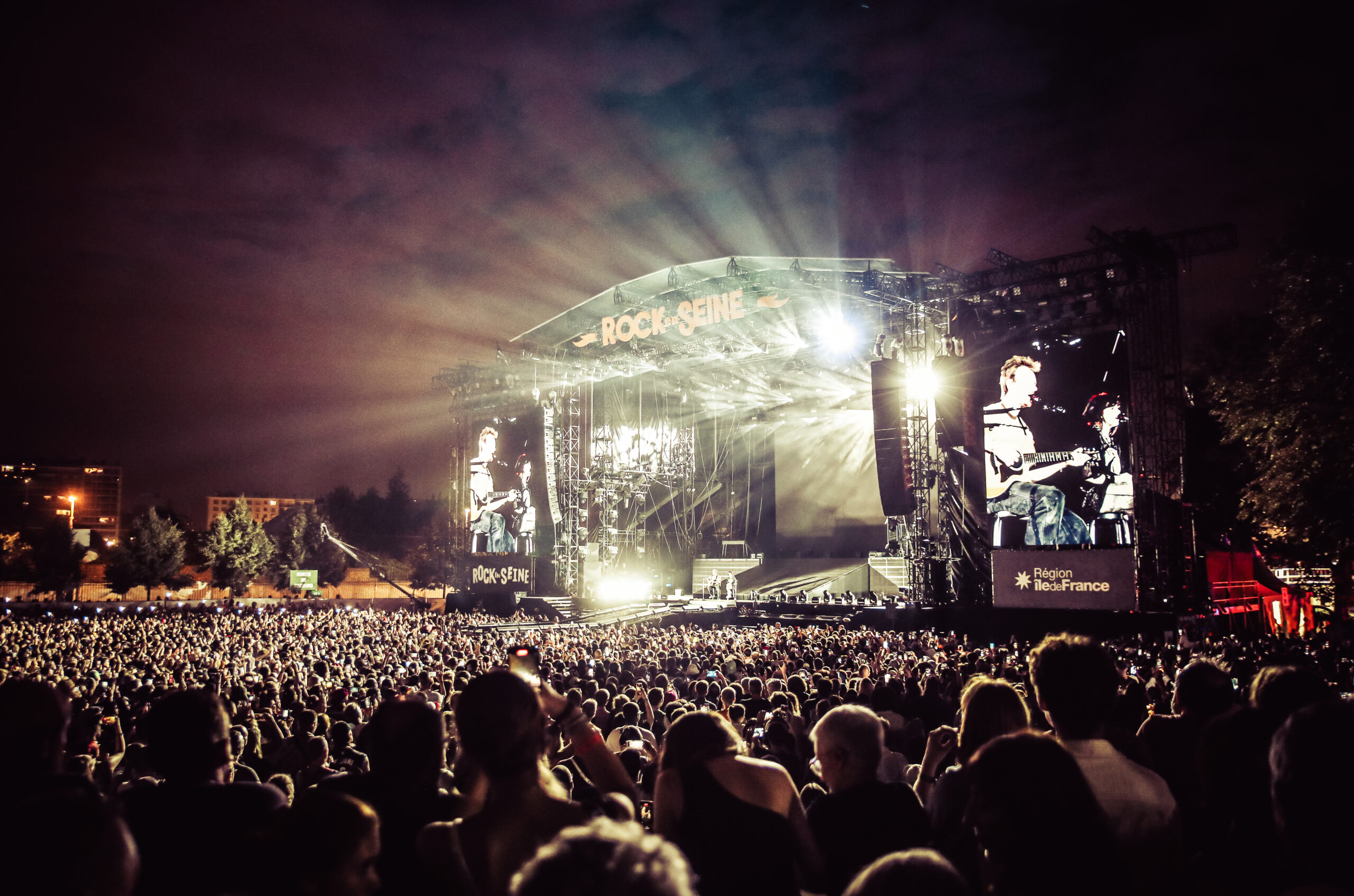
Pollstar speaks with Arnaud Meersseman, who oversees the successful business of AEG Presents in France, which includes one of the countries main events, Rock En Seine festival in Paris, as well as a healthy touring business across the circuit, from domestic club level acts to international blockbuster stadium shows.
AEG Presents France already carried its momentum from a record 2024 into an even stronger 2025, and there’s room for growth next year. Operating at that kind of level requires a well-though out business strategy in order to keep up with constanty evolving audience expectations. And while there are certain signs of a market saturation, there remain great opportunities to put on a great show, and Meersseman talks about some of them – and much more – in this interview.
Pollstar: How’s business?
Arnaud Meersseman: Business is very good. We’ve had a record year last year, this year is ahead of 2024, and the way things are shaping up it looks like next year will be even stronger than this year. So, all in all, it’s very good, which doesn’t mean there aren’t areas where one must be careful. But, all in all, looking at the business globally, it’s booming.
Is it fair to say, you’re penciling things in more in advance than ever before?
Yes, there’s been a shift in temporality since COVID. The bigger acts book way in advance, be it on festivals like Rock En Seine, for instance, where all our headlines have either been offered or already confirmed their slots, while this year’s festival hasn’t even taken place yet. This is quite unique, and has never happened before. Some of the larger stadium acts are holding dates across all of next year, we’ve already had requests for 2027. We’ve entered a new world post COVID. It gives us visibility, and allows us to map out our trajectory in the long term.
With all that in mind, what are some of the important questions a promoter operating in France needs to ask in 2025?
First off, how do we meet today’s audience expectations. There’s been a lot of transformation in the way music is consumed, what audiences expect in terms of representativity, the diversity of genre, visibility, engagement. The overall experience is one of the deep questions one must ask themselves. For festivals, for instance, it means that you can’t just put two stages in a field, and expect people to come. There needs to be a top notch fan experience for them to communicate saying, ‘this was an amazing show’, be it sound, lighting, the safety, the hospitality, the comfort. Providing all of that has become a quintessential part of our job.
Another question is, how are we making or business future proof? How are we anticipating things like the impact of AI, climate change, market saturation?
Sustainability is a big one. How do we reduce the footprint of shows, venues, festivals? We’re lucky in France to have an extensive public transport system. What can we do to encourage ride sharing? How do we get rid of singles-use plastic? We Love Green Festival has been a pioneer.
How do you make your festival more resistant to extreme weather? The recent storm we had in Paris would have completely wiped out a festival.
How to you diversify? How do you create that FOMO moment, how do you create more engagement with artists? How do you give fans something they don’t get anywhere else?
All of these need to be taken into account in order to build a successful business model for the years to come.
What are some of the ways to navigate market saturation?
We have to be smart in the way we steer bands on tour during certain periods. The market regulates itself, because of venue avails. Some periods are just way too heavily toured, notably early fall and Spring around some tentpole events. It helps when agents have several periods, in which they’d consider touring. One area where we have some control is on domestic acts, because we’re the producers of those tours, and are directly involved. We can suggest touring at the end of January, for example, when the traffic is lighter, when there are less international acts on the road.
Has domestic talent become more important to your business in recent years?
It has deeply increased. When setting up AEG in France, the initial focus was to get the international business up and running. But, at the same time, we were laying the groundwork and building a team for domestic talent, which is very different in terms of the way it’s worked. I’m not sure you’re aware of the model here, but we’re the producers for the tour, essentially taking on the role of a record label. We pay an advance, we’re responsible for finding the teams that will be on the tour, we pay for the rehearsal. We advise the bands on how to build their shows, etc.
Building that division takes time, and we’re now reaching a phase in AEG France’s development where domestic is becoming a larger component. It’s still nowhere near as large as the international touring we’re doing, I’d say it’s around 80% international, and 20% domestic at this point in time. But we’ve been signing some acts, notably an electronic act called Polo & Pan, who’ve closed the Outdoor Theatre of Coachella, and are currently on an arena run in the United States. We’ve also just signed one of the hottest domestic acts, Theodora, who’s gone from selling 1,600 tickets six months ago to selling 18,000 tickets in 48 hours. We’ve got a couple of signings in the pipeline, international as wells as domestic acts that are either buzzing or established.
A domestic roster must also help offset the trend of international artists touring Europe less, either for shorter periods, because it’s too expensive, or setting up residencies in some key cities, but leaving out so-called secondary markets.
As you say, a lot of international acts will come and do Paris, a couple of shows, and maybe one Parisian festival. On a domestic act’s cycle, we’re able to play 80 to 100 shows across the country on one cycle, including 20, 30 French festivals. The international component remains very important, though. Because there’s less international touring, a lot of French festivals tend to have many of the same domestic acts on their lineups. It’s a balance of domestic and international you want.
Is the French venue circuit healthy? Are the clubs struggling like they seem to be doing in some places? What’s the situation like in France?
AEG France promotes across the spectrum. We just did Luvcat’s first Paris show at Supersonic Records. Capacity is 80. We’ve been working with The Last Dinner Party since they started in at La Maroquinerie, which is a 500 capacity club. And we just finished promoting four stadiums with Ed Sheeran. The top tier acts at the highest level usually go very quickly. In the middle, it’s hard to pin down. You see older acts, who are having a second life and suddenly do better than they ever did. We’re also seeing some very buzzy, developing acts, performing in small venues, that will go extremely quickly. Again, I’m taking the example of Theodora. By the time we were setting up club shows, we were ready to go on sale with three Zéniths. Benson Boone just sold out Accor Arena. A year ago, we were at Cafe de la Danse, which is 500 cap. The clubs are an essential part of the construction of artists, who still need to put in the time and build that link needs with the audience, create a touring profile for people to pick up on. The small clubs are essential to building that, and speaking with most of the club owners in Paris, they’ve got a pretty healthy business. They’ve got full calendars. There’s some concern about changing consumption patterns, less f&b sales in some instances, but in general, in terms of schedule, most of the Paris clubs are pretty packed.
Are there enough venues of all sizes in different markets to develop and build an act?
We’re very lucky in France to be gifted with an extensive network of publicly subsidized venues. Most French towns, let’s say the 20 to 30 biggest French towns, all have a 1,500 to 2,000-cap venue, usually with a 300 to 500-cap club built in. Most of the big towns also have what we call a Zénith, which is 6,000 to 8,000 capacity. These are state-owned venues that are publicly or privately operated. What’s missing is the space between 1,500 and the 8,000-cap, there may be a gap there, but otherwise we’re extremely lucky that most towns have their venue.. And it’s a heavily publicly subsidized network.
At the arena level, which is usually privately owned and operated, the big cities including Paris, Bordeaux, and Lille are well-equipped. Western France, Brittany, is clearly lacking arenas, some of the Southwest outside of Bordeaux, too. But we’re seeing towns, so-called secondary markets, like Montpellier, for instance, where they’ve just built a 14,000 cap arena, or Marseille, where there’s an arena being built right now. When you get to stadiums, it’s really the main cities: Marseille, Lyon, Bordeaux, Lille, Paris, and maybe Nice.
What are some trends that are shaping your business right now?
On festivals, I think we’re seeing demand for a themed day. Instead of mixing genres in a more generalist way, there seem to be more hardcore fans of a type of genre, who all want something that makes sense. Curating has become extremely important. You can’t just bunch a couple of acts together. You need to be able to tell a story and build a bill from top to bottom, with the hottest new and upcoming acts and an established headliner, and it needs to be coherent.
We’re seeing requests for out-of-the-box venues, a lot of acts want to do something different, because there’s so much traffic, and everybody ends up playing the same venue. We’ve got a show by the German DJ collective Keinemusik on sale, for which we were able to secure part of the St Cloud park that overlooks the whole of the city of Paris, including the Eiffel Tower. It was a lot of work getting it in, but we put it on sale, and the 13,000 tickets flew out immediately, because not only is Keinemusik very popular, but it’s a site that nobody’s yet to do shows at. Our U.S. colleagues do that a lot. I think it’s easier for them to get permits, froms, and licenses, at least it feels that way from France. We’re a very administrative and rule driven society, but we’re always on the lookout to find that warehouse, that park that nobody’s used before. It’s especially difficult in Paris, because it’s kind of a museum city, very protected, but on the outskirts of Paris, there are a lot of exciting things happening.
What’s the biggest challenge and the biggest opportunity you see right now?
The biggest challenge is inflation. Costs keep piling up on top of each other, productions costs, artist fees, even insurance, and nobody can can pull it off without raising ticket prices. Salaries, are not keeping up at the same level. Figuring that out collectively, is our biggest challenge. I wish I had the answer, but hopefully, somewhere down the line, we figure it out.
The biggest opportunity is that there’s never been so much demand for unique events, you just need to be a little bit smart about crafting them. We’re doing some events that are completely out of the box, and not music related. For instance, we’re doing a sumo tournament in Paris at the Accor Arena with the official Japanese Sumo Association, brought to us by a partner. It’s not happening anywhere else in Europe. It’s in a year’s time, and we’re already more than 50% sold out across two dates. Those kind of things excite me. As the live experience develops and becomes so important in people’s life, more and more of these opportunities will arise, and it’ll be good to seize them.
FREE
 Daily Pulse
Subscribe
Daily Pulse
Subscribe
 Daily Pulse
Subscribe
Daily Pulse
Subscribe