
Guest Post: How The Music Biz Is Pioneering Energy Systems To Help During Natural Disasters
Guest post by David Koenig, Program Director for the Music Sustainability Alliance
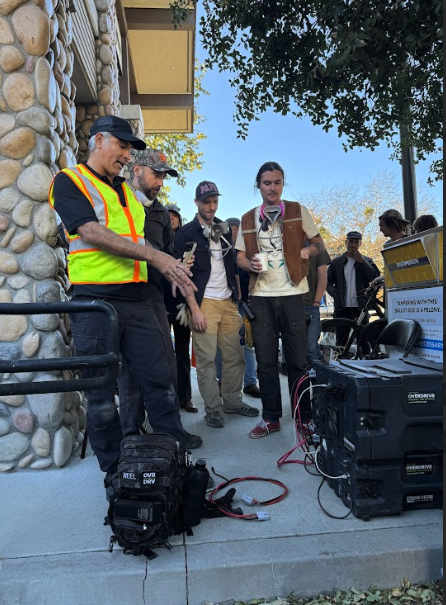
As wildfires raged through California, first responders needed power to keep base camps running and phones charged. The source? Electricity from systems and batteries that had, just months earlier, been lighting up the stage at Dodger Stadium
This may sound unlikely, but live events and emergency response share a critical need: reliable, deployable energy in challenging environments. The same resilient power systems that keep concerts running in the desert or on remote muddy fields have proved essential when disasters strike.
How Music Festivals Became Energy Innovators
Music festivals and touring productions face extreme power challenges: they require megawatts of reliable electricity in remote locations, without permanent infrastructure, and only for a few days. These conditions have driven industry innovators like Overdrive and Showpower, and organizations like REVERB, to pioneer portable, rugged, and rapidly deployable energy systems, now used far beyond entertainment.
The recent Pacific Palisades and Eaton fires in California showcased this transformation. As communities evacuated and first responders set up command centers, touring and festival-tested portable microgrids, battery storage systems, and intelligent energy management platforms were quickly deployed to provide power for emergency communications, base camp equipment, and evacuation shelters.
Overdrive’s rapid response to the California wildfires stands out as a vivid example of how these innovations are now being mobilized under urgent, real-world conditions.
“From the beginning of our company, I always thought disaster relief would benefit from renewable energy systems,” said Neel Vasavada, President and Co-Founder of Overdrive Energy Solutions. “However, I never expected that the system we had powering concerts at Dodger Stadium just months ago would be deployed during a natural disaster in our own back yard. In a crisis, speed and reliability matter and we were ready to deploy within hours, providing critical power when the grid went down.”
The Technology Behind the Transition
These live event-born energy solutions are battle-tested in highly demanding real-world conditions, typically more rigorous than controlled lab testing. A system that can power 50,000 people through a dust storm at Burning Man or a torrential downpour at Glastonbury has already demonstrated the resilience required for disaster relief zones.
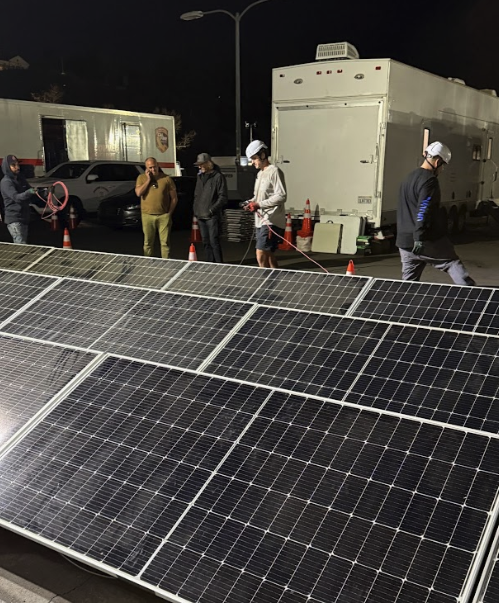
The game-changer is a combination of clever packaging and power delivery coupled with energy management software. Developed for touring productions and festival grids, these platforms provide real-time monitoring and management of power generation systems, enabling highly efficient power delivery whether using distributed, solar, grid, generator hybridization or distributed power strategies. In an emergency, this same system ensures that critical services and command centers and communication hubs receive uninterrupted power.
Solar arrays and hybrid power systems can also be used to enhance resilience. By combining solar, battery storage, available grid and low emissions “tier 4f” generators, these setups can provide resilient, reliable and cost-effective power as needed, while minimizing fuel use and emissions. These systems offer multiple innovative replenishment methods including onshore power connections, renewable charging capabilities, and modular battery replacement – all designed with plug-n-play functionality for quick deployment. This flexibility effectively reduces or even eliminates traditional refueling requirements addressing logistical challenges in both live event and emergency settings. Compared to diesel-only setups, these hybrid solutions have proven to be up to 95% more fuel-efficient while maintaining 100% uptime reliability – a level of dependability crucial for music festivals, touring and emergency response.
The Economic and Logistical Advantage
Beyond sustainability, these innovations make financial sense. Electricity-based energy solutions now achieve cost parity with traditional diesel generators, allowing live events organizers, emergency response teams, and businesses to choose more flexible and powerful alternatives without sacrificing affordability.
The operational benefits extend well beyond cost. Silent, fume-free energy systems eliminate diesel exhaust backstage and reduce generator noise, creating cleaner, more comfortable environments for performers, crew, and emergency personnel alike.
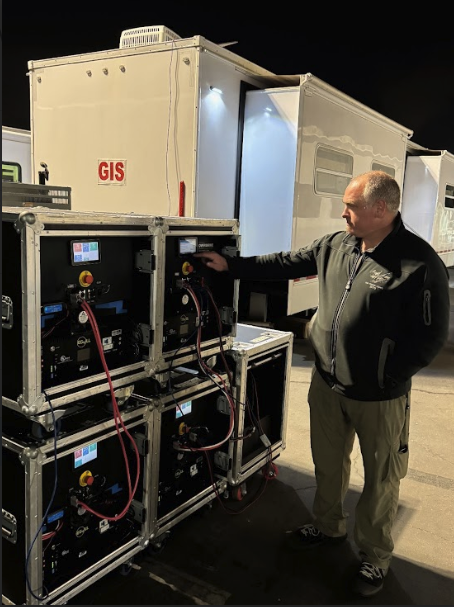
The logistical benefits are just as significant. In disaster zones, fuel supply chains can be disrupted, making it difficult to deliver diesel to critical areas. Tour and festival-tested renewable energy systems eliminate the need for constant refueling, reducing costs, emissions, and operational risks—a crucial advantage when responding to hurricanes, wildfires, or other crises.
From Backstage to Frontline: What Comes Next
What began behind the scenes is now powering front-line needs. Live event-born energy systems have already supported emergency shelters, urban delivery, and mobile infrastructure. But their potential goes further. These deployable, clean energy platforms can meet the growing demand for resilient power in remote communities, communities affected by brownouts, public health facilities, refugee camps, and climate-impacted regions where conventional infrastructure falls short.
The music industry has, perhaps unintentionally, created a scalable innovation pipeline – one that tests, refines, and field-deploys solutions under real-world pressure. That same iterative model now offers a blueprint for building flexible, clean infrastructure across sectors.
But realizing that potential will require broader commitment. Cities and states should integrate mobile hybrid systems into disaster preparedness plans and recognize them as eligible for clean energy and resilience funding. National agencies, from FEMA to the Department of Energy, can accelerate adoption by pre-approving live event-tested systems for emergency deployment. And the music industry itself has an opportunity to lead by phasing out diesel generators by 2030 and continuing to champion innovation that serves both performance and planet.
These aren’t just concert tools anymore. They’re infrastructure tools. They’re survival tools.
As industries rethink their energy strategies, these touring and festival-driven innovations aren’t just for emergencies, they’re the future of flexible, resilient power.
What started as an effort to keep music playing is now an opportunity to power the world.
READ MORE:
How MSA’s Music Sustainability Summit Put Green Touring Center Stage
FREE
 Daily Pulse
Subscribe
Daily Pulse
Subscribe
 Daily Pulse
Subscribe
Daily Pulse
Subscribe