
Plastic Free July: How Venues & Green Leaders Are Partnering Toward A Plastic-Free Future (Sustainability Matters)
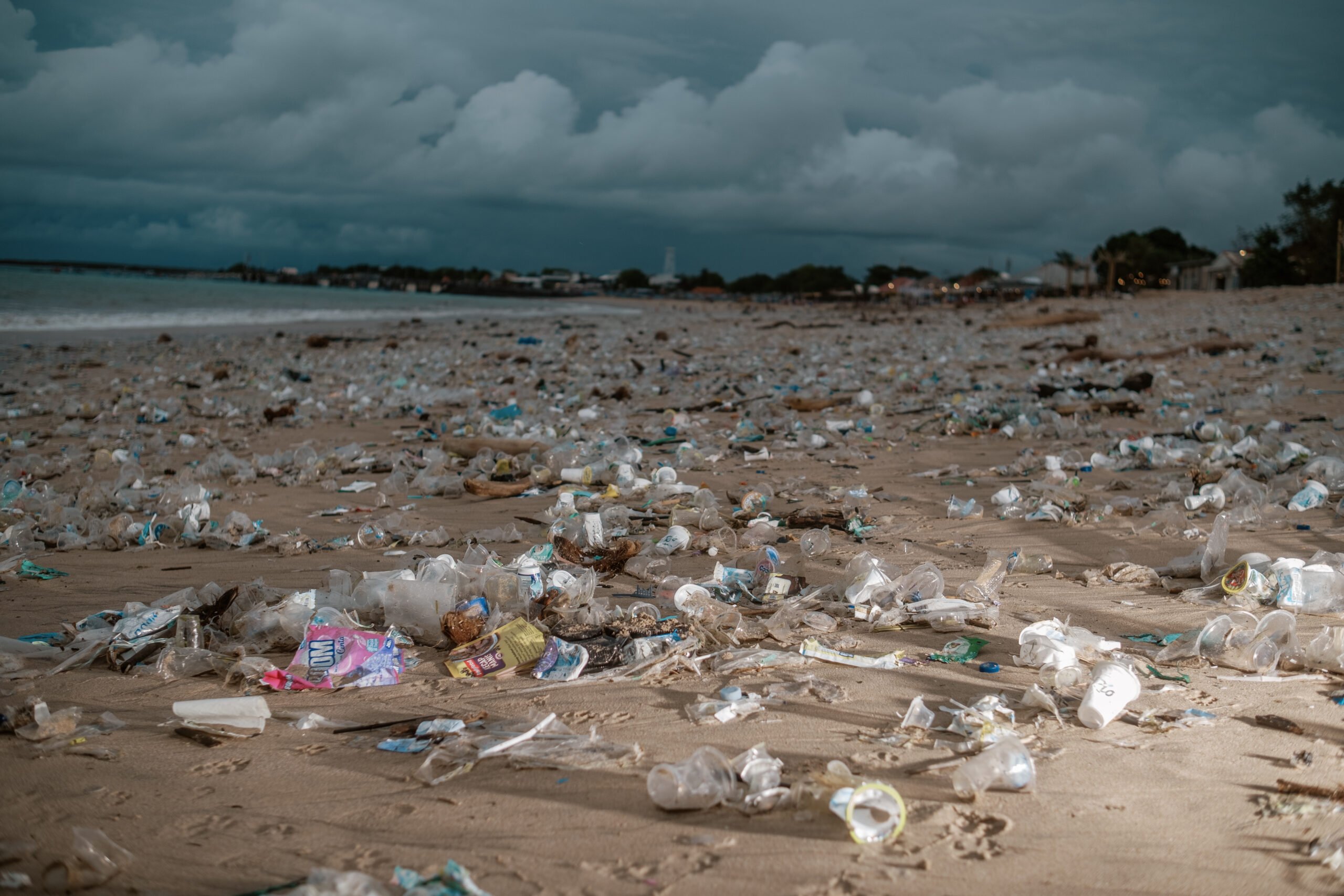
Plastic is everywhere, from our iced lattes cups to the synthetic clothes we wear – even our bodies are filled with microplastics. And while the early days of eco-friendly music events emphasized recycling bins as the key to going green, a 2022 study by Greenpeace found that a majority of plastics is going to landfills, no matter what bin you put them in, with the U.S. plastic recycling rate estimated to be between 5% and 6%.
In 2011 the Plastic Free July campaign was launched to encourage folks to challenge themselves to avoid using plastic for the month (or longer!). Six years later, the campaign – started by Rebecca Prince-Ruiz and a small team in local government in western Australia – led to the establishment of the Plastic Free Foundation as an independent, not-for-profit charity to grow the campaign.
“Plastic Free July is more than a movement – it’s a global groundswell for cleaner streets, oceans, and communities,” Prince-Ruiz OAM, founder and executive director of the Plastic Free Foundation, told Pollstar. “Millions are stepping up by saying no to single-use plastics, from ditching disposable cups to bringing their own bottles and offering refills at events.”
In regards to how the live business can get involved, she added, “The music industry has massive reach – and that means massive potential. Artists, venues, promoters, and fans can turn small sustainable swaps into big cultural shifts. Whether you’re backstage, on stage, or in the crowd, your choices matter. Make the Plastic Free Pledge – and help lead the encore for a cleaner, greener future.”
Recent plastic-free wins in the live events space include A1RWATER being announced as the official water of the NBA’s Miami Heat, going into effect in July. Zach Ruiz, Sustainability Manager for the Miami HEAT and Kaseya Center, explains that A1RWATER will be offered at every HEAT home game and non-HEAT events at the Kaseya Center in its concession stands.
“A1RWATER is an innovative partnership that harvests water from the humidity in the air,” said Ruiz. “It prides itself on providing consumers with a circular bottled water solution that avoids the use of single-use plastics while providing aluminum can options. This technology not only provides our guests with a canned water alternative, but also reduces the reliance on overstressed groundwater sources. We are proud to align ourselves with a partner who is taking action to reduce plastic pollution, much of which ends up in our oceans and waterways.”
A large portion of the sustainable movement still involves plastic – but it’s a shift away from single-use plastics to products that stay out of landfills by being collected, washed and then reused thousands of times. Re-use companies that have launched in the past decade include Bold Reuse, R.World, Re:Dish and Cup Zero.
In June, GOAL – a sustainability-driven membership and support network for sports, entertainment and live event venues, which was co-founded by Pollstar parent company Oak View Group – teamed up with nonprofit environmental advocacy group Ocean Conservancy to announce the “Protect Where We Play Tour” to reduce plastic waste with Bold Reuse managing all reusable cup operations at participating concerts and sporting events.
“Over 11 million metric tons of plastic pollution enter the ocean each year, equivalent to a garbage truck’s worth of plastic entering the ocean every minute. But it doesn’t have to be this way, and no one is better positioned than the sports and entertainment industry to lead the change,” Jenna Di Paolo, Chief Brand and Communications Officer at Ocean Conservancy, said in a statement.
“The Protect Where We Play Tour – with legends like Coldplay, Billie Eilish and The Lumineers – is a proof point that reusables at scale are not just possible, but can be a cool and gamified addition to the live entertainment experience. With this partnership alone, fans will keep a million cups from finding their way to the sea. At the end of the day, our people and planet deserve less plastic polluting all the places they come together in joy.”
Following two Coldplay shows at Las Vegas’ Allegiant Stadium in June, the next stop for the “Protect Where We Play Tour” is the WNBA All-Star Game at Gainbridge Fieldhouse in Pennsylvania on July 19.
Heather Watkins, co-founder and CRO of Bold Reuse, notes that Bold Reuse also uses melamine, stainless steel and glass in some projects, but when a stadium wants to start, “reusable plastic is the easiest way to get in from a cost perspective.”
Speaking of cost, Watkins points out that in addition to reusable products reducing venues’ carbon footprint by “95% plus within closed loop spaces … a no-brainer from a waste and sustainability perspective, what’s cool now is from a sponsorship perspective, these venues are driving new revenue sources because it’s adding an additional asset to their repertoire of sellable sponsorships packages, which is a really exciting place for big venues and artists.”
Bold Reuse is working with 16 major professional sports stadiums across the U.S., as well as a number of arenas, theatres and convention centers – and Watkins adds that “we’re really expanding heavily into the music scene now.”
One organization demonstrating how a closed-loop space could work on a grander scale is Closed Loop Partners, which was founded in 2014 with a mission “to drive value and sustainable profitability by scaling businesses and solutions that advance the transition to a circular economy.” In February, the NextGen Consortium, led by Closed Loop Partners’ Center for the Circular Economy, released results from the Petaluma Reusable Cup Project, the first initiative to focus on reuse across an entire U.S. city. With partners including Starbucks, The Coca-Cola Company, PepsiCo, Yum! Brands and other global businesses, the three-month project featured 30 businesses in Petaluma, California, swapping single-use cups for reusable alternatives. Over 220,000 cups were returned throughout the 2024 program.
“We envision a world in which reuse is the norm, supported by optimized reverse supply chains, effective policy, and active citizen participation in new systems. Closed spaces, such as stadiums, are ideal venues to introduce successful reuse models since they can ensure a significant percentage of reusable packaging is returned by attendees, inspiring and educating consumers and sparking a cultural shift to reuse as an everyday reality in other parts of our lives,” said Kate Daly, Managing Partner and Head of the Center for the Circular Economy at Closed Loop Partners.
FREE
 Daily Pulse
Subscribe
Daily Pulse
Subscribe
 Daily Pulse
Subscribe
Daily Pulse
Subscribe