
The Biz: EU Probes UMG’s Downtown Buy; RAP Act Returns & More
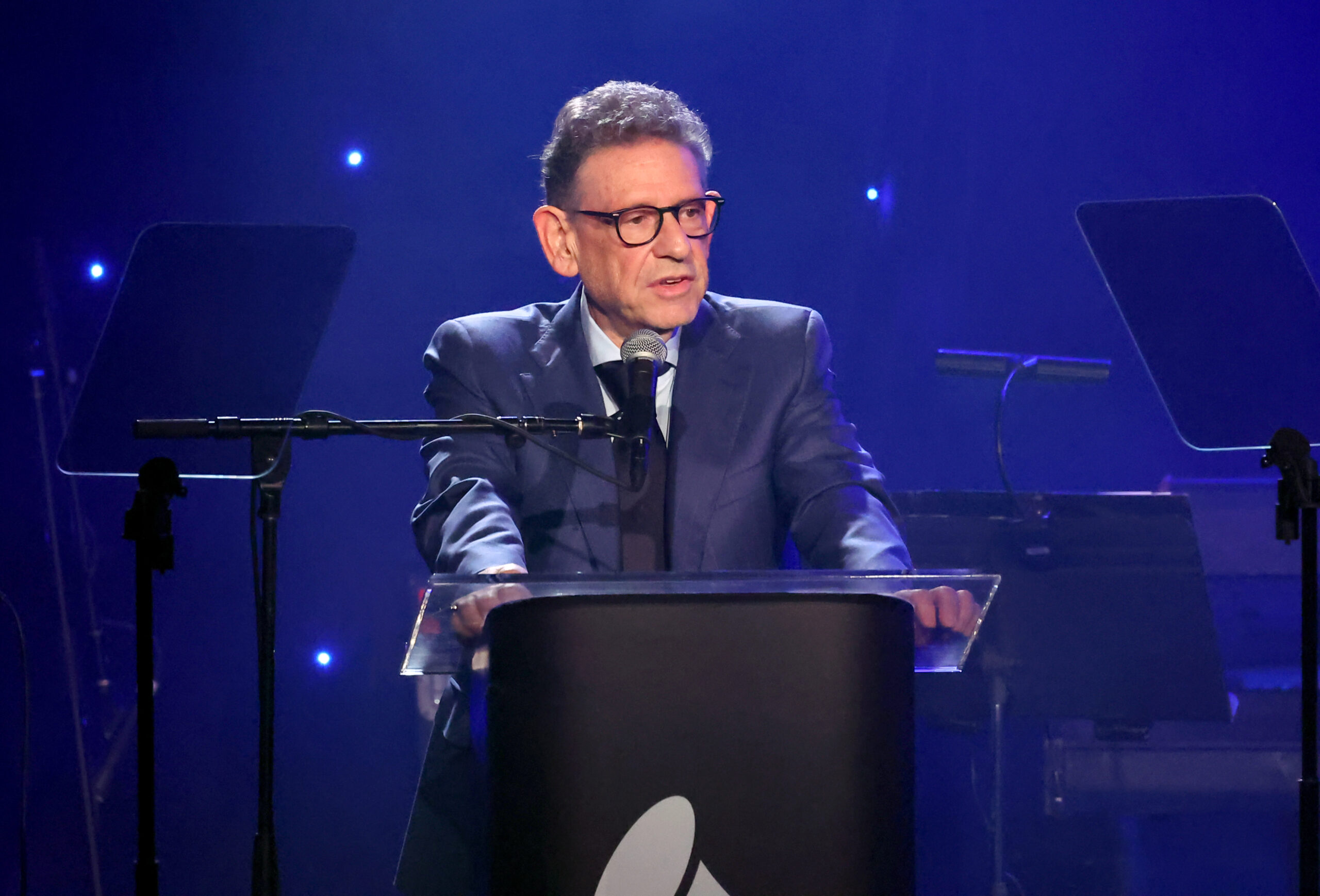
EU Investigates UMG’s Downtown Deal
The European Commission is opening an investigation into Universal Music Group’s proposed $775 million acquisition of Downtown Music Holdings.
In a July 22 press release, the EC said it “has preliminary concerns that the transaction may allow UMG to reduce competition in the wholesale market for the distribution of recorded music in the European Economic Area (EEA) by acquiring commercially sensitive data of its rival record labels.”
The Commission is “also preliminarily concerned that the transaction may allow UMG to reduce competition in the market for the supply of artist and label services in the (European Economic Area) by removing an important competitive force.”
Virgin Music Group, part of UMG, announced plans to buy Downtown in December and formally notified the European Commission in April, which began a preliminary Phase I investigation. The latest announcement triggers Phase II, which UMG and Virgin characterize as a “customary” part of the merger process in Europe.
RAP Act Returns
Two Democrats — Reps. Hank Johnson of Georgia and Sydney Kamlager-Dove — have reintroduced the Restoring Artistic Projection Act in the U.S. House of Representatives.
The RAP Act adds a presumption to the Federal Rules of Evidence that would limit the admissibility of evidence of an artist’s creative or artistic expression against that artist in court. It follows several high-profile incidences of prosecutors using lyrics — primarily rap lyrics — as evidence of a propensity for violence and crime in court cases.
“This legislation is long overdue,” Johnson said. “For too long, artists – particularly young Black artists – have been unfairly targeted by prosecutors who use their lyrics as evidence of guilt, even though there is no evidence that the lyrics are anything more than creative expression. When you allow music and creativity to be silenced, you’re opening the door for other realms of free speech to be curtailed as well. The government should not be able to silence artists simply because they write, draw, sing, or rap about controversial or taboo subjects. The Restoring Artistic Protection Act (RAP Act) would protect artists’ First Amendment rights by limiting the admissibility of their lyrics as evidence in criminal and civil proceedings. I thank my colleague Congresswoman Kamlager-Dove for joining me in co-leading this legislation.”
“From poetry to plays to music, creative expression should be viewed as just that—not evidence to be held against artists in court,” said Kamlager-Dove. “Far too often, artists’ lyrics are used against them as evidence in court—disproportionately impacting young, Black artists. At a time when the Trump Administration is attempting to curtail free speech and silence dissent, legislation to protect artists’ freedom of expression is more important than ever. I’m proud to co-lead the RAP Act to encourage artists to create freely, without fear of repercussions or retribution.”
Developer Cleared To Buy Oakland Coliseum
The Alameda County Board of Supervisors unanimously approved the sale of the Oakland Coliseum to Oakland Acquisition Company, an affiliate of the African American Sports and Entertainment Group. Officially, the sale is for a 50% share in the 112-acre property with a price of $125 million.
It’s a major hurdle in the quest to revitalize the property, now tenantless after the A’s announced a planned move to Las Vegas, joining their former Coliseum-mates the Raiders. In the meantime, the peripatetic A’s are playing without a geographic designator, with their home games at the AAA park in Sacramento.
The redevelopment project, in which AASEG is teaming with a Chicago-based investment firm, is expected to cost $5 billion. For now, AASEG has a year to complete the purchase before it can move forward.
Fenway Food & Bev Workers Urge Ballpark Food Boycott
The union representing the concessions workers at Boston’s Fenway Park are urging Red Sox fans to buy their food and drinks outside the stadium in support of a planned strike action.
Aramark employees at Fenway and MGM Music Hall voted overwhelmingly to approve a strike, seeking higher wages more in line with their counterparts at other pro sports facilities, along with protections against automation and seniority-based scheduling.
And from last week…
Reservoir Buys Into Immersive Entertainment Player Lightroom
Lightroom, the immersive entertainment company that has hosted, among other things, an album launch for Billie Eilish’s Hit Me Hard and Soft and “A Film for the Future,” the companion film for Coldplay’s album Moon Music, has received an investment from Reservoir Media.
As part of the deal, Reservoir will provide “best-in-class IP” for Lightroom’s immersive creations, giving Reservoir “an opportunity to enhance the value of our music assets, capitalizing on milestone moments, as well as our evergreen music catalog, to create shows rooted in IP,” according to its CEO Golnar Khosrowshahi.
In recent years, Reservoir has struck deals with Tommy Boy Music, electronic label New State, Fool’s Gold Records and others.
Bieber Settles Up With Scooter
Justin Bieber has reportedly settled his outstanding debt to Scooter Braun.
After canceling his 2022 “Justice World Tour,” Bieber owed AEG Presents $26 million as part of his advance, a debt that HYBE covered; at the time, Braun was CEO of Hybe America. Bieber agreed to repay that debt over time, but allegedly only made one payment.
As part of the deal, Bieber will now repay Braun the $26 million plus another $5.5 million that represents half of the $11 million commission he owes Braun for his management services.
Bieber’s seventh album, Swag, was released July 11 in a surprise drop.
Jane’s Litigation
Jane’s Addiction lead singer Perry Farrell is facing a lawsuit from his bandmates following the band’s breakup late last year after Farrell appeared to physically attack guitarist Dave Navarro during a show. The tour was swiftly canceled; it was to be the first run for the band with the original lineup since 2010.
In the suit, Navarro, bassist Eric Avery and drummer Stephen Perkins, are seeking $10 million. The suit, filed in Los Angeles Superior Court, says Farrell’s “brutal and unprovoked” attack led to lost tour revenue, as well as losses due to a now-unrealized planned album.
Farrell responded with a counterclaim of his own, pinning the discord on Navarro’s loud playing as part of “a longstanding pattern of harassment and bullying [Farrell] has suffered at the hands of the other members of the band, and the various passive aggressive, or sometimes just aggressive ‘tricks’ they would use to undermine his performances on stage.”
The counterclaim says the tour was canceled by his bandmates without consultation with him and that Instagram posts and comments from the rest of the band that Farrell had “mental health issues” and “needs help” are libelous.
FREE
 Daily Pulse
Subscribe
Daily Pulse
Subscribe
 Daily Pulse
Subscribe
Daily Pulse
Subscribe