
Gas South Arena Revs Up With $170 Million Renovation
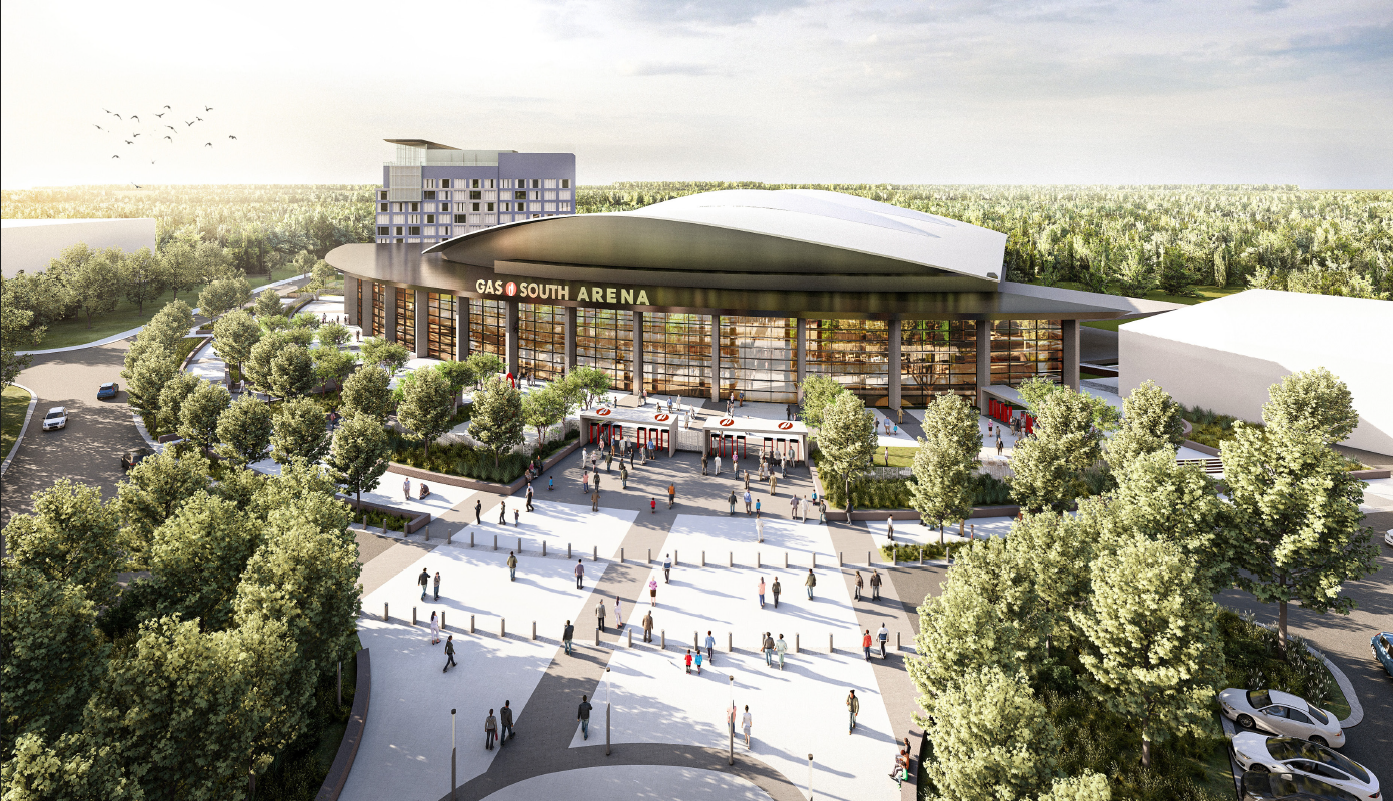
With the aim of staying ahead of the curve in a competitive market, the Gas South Arena in Duluth, Georgia, is undergoing a $170 million transformation, reinforcing its place as an important economic and cultural driver in the region.
On July 22, The Gwinnett County Board of Commissioners voted unanimously to approve funding for the renovation project – a sweeping, floor-to-ceiling refurbishment of the 13,000-capacity-plus venue, which has hosted nearly 20 million guests since opening in 2003. The renovation is the next phase of a massive District expansion that began in 2020. The District, which includes the arena, the 700-seat Gas South Theater and the Gas South Convention Center, sits on 118-acre campus 22 miles northeast of Atlanta.
“As we are working our way across the campus, the arena was the next target,” says Stan Hall, Gas South District President and CEO. “But on top of that, the building is 23 years old and there are some things that we were seeing in the industry at newer buildings that simply weren’t even considered 23 years ago on buildings this size.”
The campus, which is operated by the Gwinnett Convention and Visitors Bureau, has found success hosting a diverse range of events, including franchise teams ECHL’s Atlanta Gladiators, NLL’s Georgia Swarm, Pro Volleyball Federation Atlanta Vibe; concert heavyweights including Carrie Underwood, Justin Timberlake, Enrique Iglesias & Pitbull, George Strait and Eric Clapton; civic and cultural events such as Gwinnett Ballet Theatre, Gwinnett Symphony Orchestra and dozens of local high school graduations; and sporting events including the NCAA Women’s Gymnastics Championships and in 2026 the ACC Women’s Basketball Tournament (March 4-8).
To attract and retain professional teams and major events, Gas South Arena has stayed on top of upgrades but Hall believes it was the right time for a major rehaul.
“We have to pause and take a look at what we need to do to stay completely relevant and competitive with this entertainment industry for large venues like this,” offers Hall.
When the arena opened, there were only a handful of competitors in the market. Today there are more than 20 facilities including several with capacities over 10,000 including State Farm Arena, Mercedes-Benz Stadium, Truist Park and numerous amphitheaters.
“The disadvantage of that many people competing with you is that you have to 100% stay at the top of your game so that you can say, ‘Here’s why you need to come to Gas South District,’” offers Hall. “You don’t want to hear the excuse: ‘You guys don’t have this’ or ‘You don’t have that.’”
What they don’t have now but will in the future is premium seating throughout the venue in addition to completely new seats in the bowl.
The number of suites (32) and the total capacity will not change, but Gas South Arena is embracing the “low-seating” concept creating loge seating with better access at a higher price point.
“The concept of premium seating has changed drastically,” explains Hall. “We still operate under that premise that our suites are the most expensive seats we have in the building but they are at the furthest line of sight than any seat in the whole building.”
The proposed upgrades focus on revitalizing the arena’s interior and exterior.
The entry plaza will become a gated security zone to improve screening, streamline egress and enable outdoor programming including F&B, merchandise and a separate building for ticketing. Gas South Arena still does all security searches on the outside of the building with traditional metal detectors and wands. The new set up utilizes digital screening that allows 10 to 15 people to go through at one time.
“You go through that security area and you just keep on going and there’s not a stop at all where you are waiting in a security line,” offers Hall. “So that’s going to be great for us getting people from our parking decks to their seats.”

Interior plans include upgrading technology with a complete overhaul of the audio and video production infrastructure, new LED displays, digital signage and upgraded network and security systems. Concourses will be expanded and restrooms modernized.
Food & Beverage is being reimagined with contemporary concession areas that will prioritize speed, efficiency and variety, new clubs and high-end bars. Atlanta-based Proof of the Pudding has been the hospitality partner since the building opened and provides services across the District. The building is currently cashless and will be moving to the Grab and Go concession model throughout the venue for general customers.
“Tap and go and you’re on your way,” says Hall. “This cuts out any long lines for concessions, which we certainly have our share of those.”
Structural modifications include adding an energy efficient roof on top of the existing structure along with upgrades to HVAC and electrical systems to enhance guest comfort and ensure the facility remains operational for years to come. Construction is being done with sustainability at the forefront and input from a District Green Team.
“Sustainability and the whole green concept, with us, is something that we have always had a presence, but I would say, certainly not to the level that we have today,” says Hall.
Construction of the two-year project begins this fall and will be done in phases to keep the venue fully operational, allowing concerts, family events and other programming to continue uninterrupted. The architectural firm that guided the master planning for the project is Perkins & Will with additional support from general contractors Brasfield & Gorrie and Atlanta-based project consulting firm IMPACT Development Management.
Development of the District doesn’t end with the arena.
Hall said the $170 million price tag includes adding another deck to the parking garage. Other parking structures are planned that will nearly eliminate surface parking.
“Three or four years from now, I think people who haven’t been to our campus in a while, I don’t think they will recognize it – based on where we are heading,” says Hall.
FREE
 Daily Pulse
Subscribe
Daily Pulse
Subscribe
 Daily Pulse
Subscribe
Daily Pulse
Subscribe