
The Tribute Of Ozz: How A Humble Kid From Birmingham Became The Prince of Darkness & Face of Heavy Metal
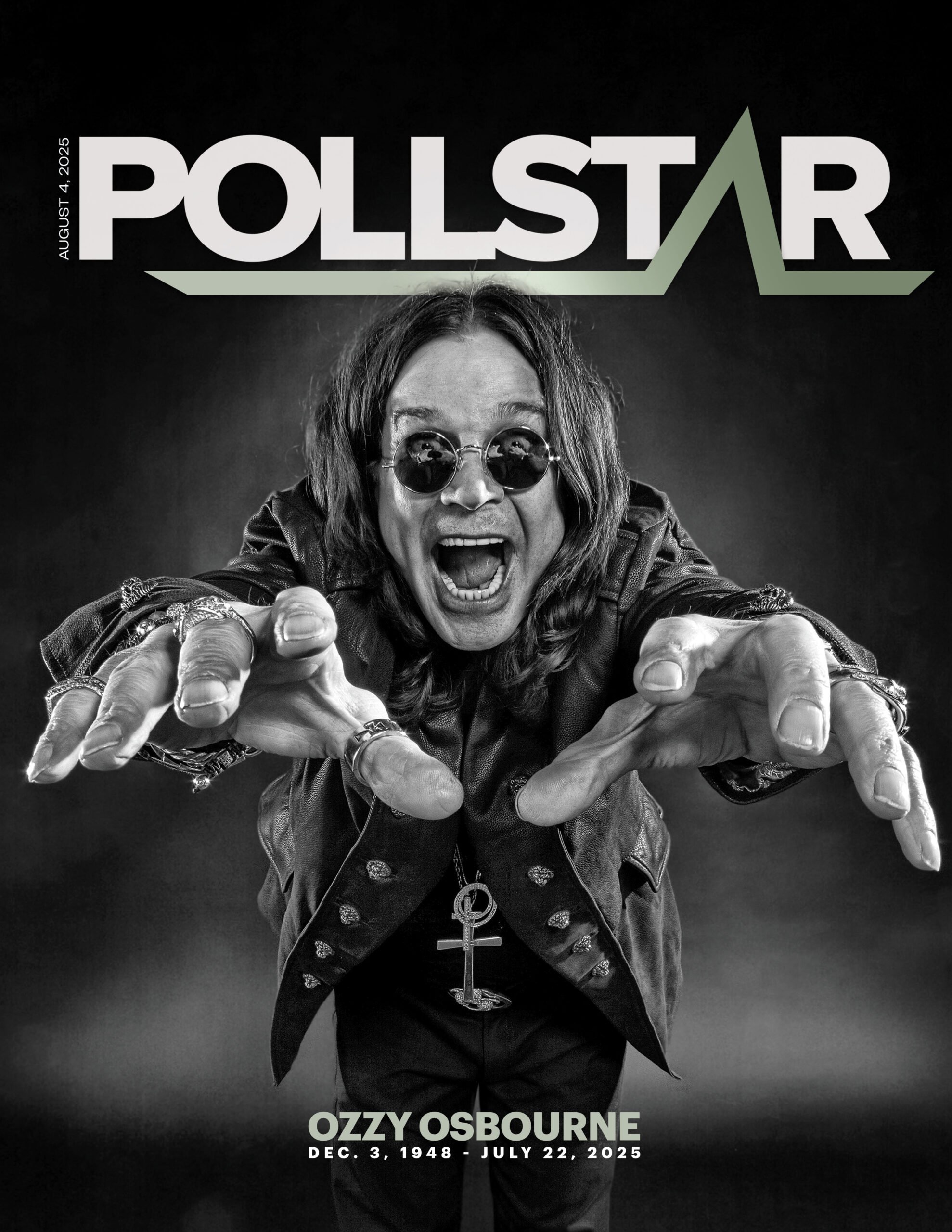
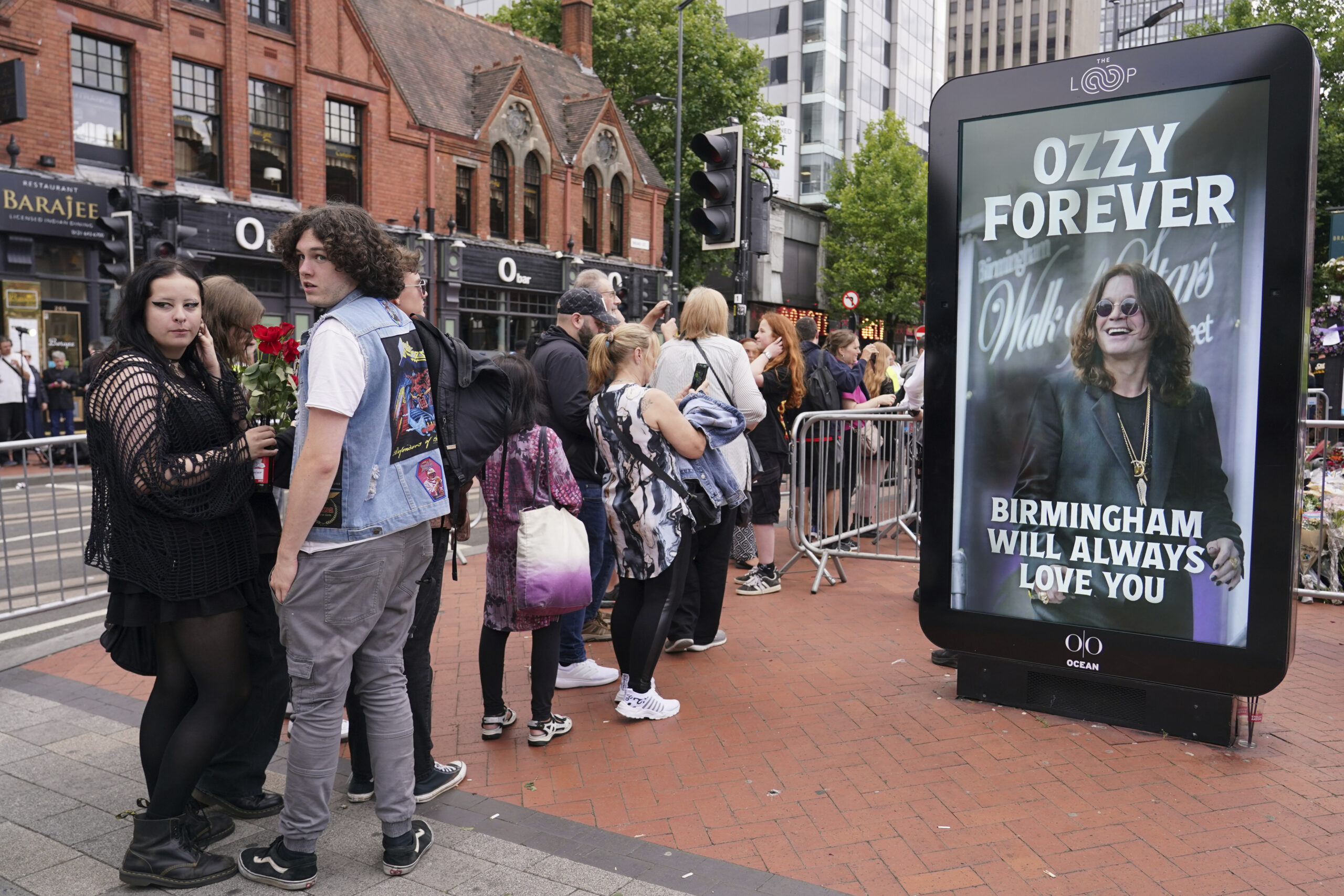
The send-off for Ozzy Osbourne, who left this realm on July 22 at the age of 76, has put into perspective just how integral the Prince of Darkness was to not only heavy metal and popular music but to popular culture worldwide. Making the front page above the fold of even the Wall Street Journal, Osbourne’s funeral procession in Birmingham, England, depicted a mass mourning for a beloved public figure rather than merely a popular musician or singer of a rock band.
In declining health for years, the occasion was punctuated by the fact that Ozzy had just weeks earlier performed a farewell concert in his native Birmingham, an event that included dozens of friends, peers and contemporaries as well as a chance for Ozzy himself to put a cap on a remarkable, nearly 60-year music career that could only be described as unique.
Sharon Osbourne on Ozzy’s Farewell Show,
‘Proving Everybody Wrong,’ Black Sabbath & More (The Pollstar Interview)
“I had the greatest time working with them, getting to know them on a personal level,” says promoter Louis Messina, whose time with Ozzy and partner/wife/manager Sharon dates back to the late ‘70s, including bills with Van Halen and later being instrumental in developing the influential touring festival known as Ozzfest.
“He might have been the Prince of Darkness but he was also the Prince of Kindness,” Messina continues. “He was more than just Ozzy on the stage, off stage he was funny, witty, kind and I just adore him and his whole family. Watching the kids grow up, Jack and Kelly and Aimee, in front of my eyes, was pretty cool.”
Messina jokes that he “has no horror stories” about working with Ozzy, and says “if you asked him, he’d say I was the crazy one. He was nothing but fun, man, and offstage I never laughed so hard as I did with him and Sharon.”
No one can mention Ozzy for more than a few sentences without bringing up Sharon, who is not only credited with steering his solo comeback and managing his career for decades, but is considered an inseparable part of Ozzy himself.
“They were more than a team, more than husband and wife, they were one,” says Messina. “The two became one. They had this magical love affair that was real, and you could see it yourself, and I saw my whole time knowing them back to the ‘70s and 80s. It’s sad to see him go, especially knowing how close the whole family is. My heart and prayers go out to them.”
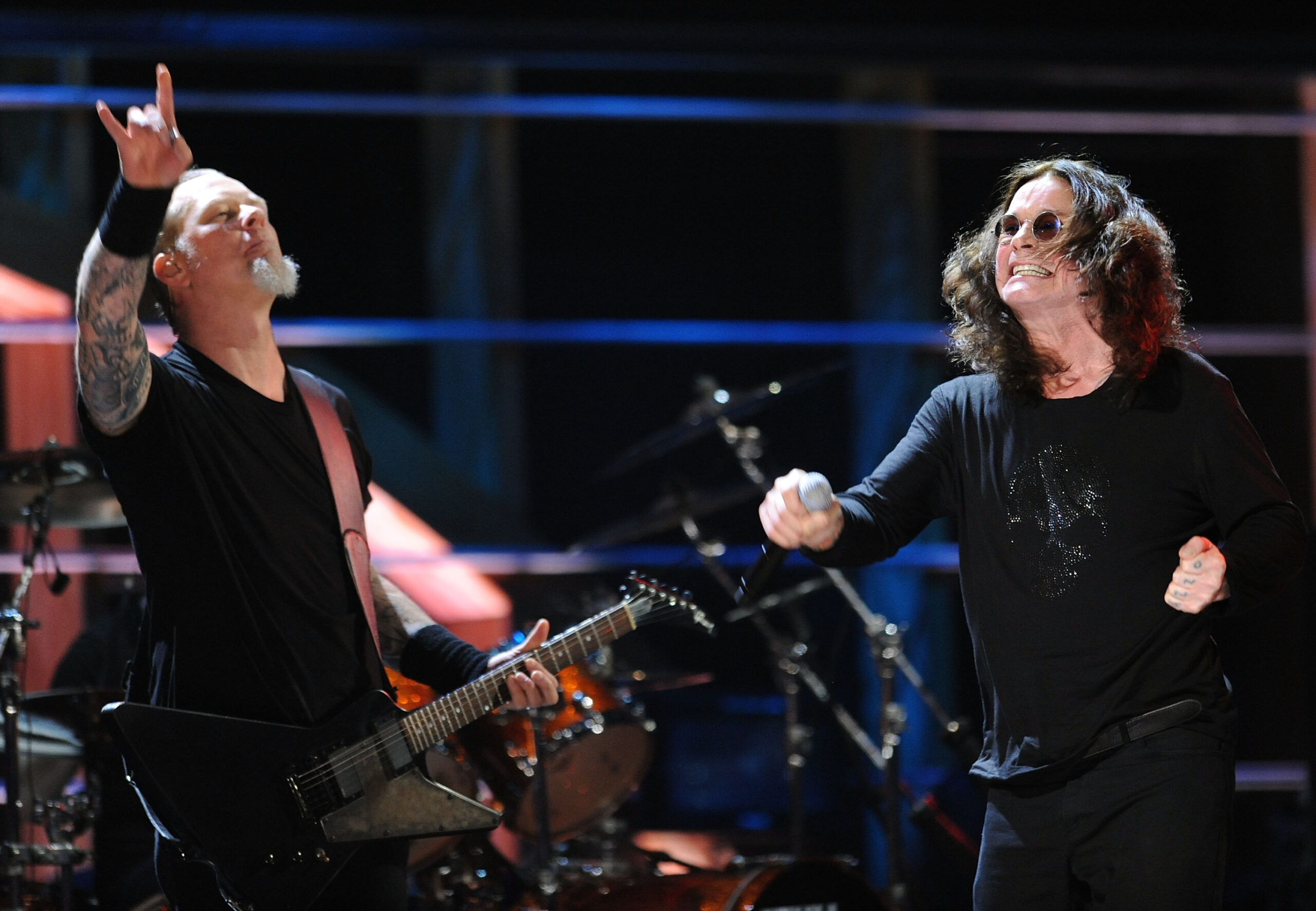
Ozzy’s musical influence may be most apparent as the frontman of Black Sabbath, widely regarded as the first true heavy metal band and coming well before contemporaries who would further define the genre — and decidedly separate from the more traditional blues-rock stylings from which it had formed borrowing the heavier moments from Led Zeppelin, Deep Purple, Blue Cheer and others.
Having formed in 1968, with the same lineup, as a blues-rock band known as Earth, the full Black Sabbath mystique and sound was already fully conceptualized for its debut album released in 1970, priming the pump for Ozzy to emerge as the face of heavy metal forever after.
Simply titled Black Sabbath, with its cover depicting a woman cloaked in back in front of an old watermill in England, a scene that can only be described as creepy, the album’s opening title track, also titled “Black Sabbath,” appropriately features full horror-cinema theatrics recounting a tale of a psychedelic meeting with the Grim Reaper, Satan, or worse — “Oh no no, please god help me!” The track, while kitschy and perhaps immature to some critics, perfectly defined the band’s further purpose and intention, blending classic horror literature and cinema with the heavy rock stylings still taking shape at the time.
The song also notably mostly eschews blues-rock stylings (which are very present throughout the rest of the raw, jam-heavy mostly power trio romp of the rest of the LP) for more sinister-sounding modal scales — along with chugging, rhythmic palm muting that would later become a staple of heavy metal and exploited by guitarists of all stripes, although taking about a decade for the rest of the world to catch up sonically.
In the band’s short-lived Ozzy era from the 1970 debut to genre-defining Paranoid (also released in 1970) to 1978’s shambolic Never Say Die!, the band basically invented not only heavy metal but single-handedly defined what would become subgenres like doom metal (Volume 4’s “Under The Sun”), stoner or sludge metal (most of 1971’s Master of Reality) and thrash metal (“Symptom of the Universe” from 1975’s Sabotage), inspiring countless bands to come and in a way few bands have, before or since. Working at such a rapid clip and doing things that hadn’t been done before, it’s no surprise that the band’s albums remain core regular-rotation listening for countless metalheads across the world, including each new generation of rock bands who inevitably still borrow from core fundamental Sabbath-inspired metal tropes that now date back more than 50 years.
If there was ever an apt frontman to become The Prince Of Darkness, Ozzy Osbourne was the perfect, if unlikely, candidate. Coming from humble means and working in factories as a teenager in industrial Birmingham, England, Osbourne, while a talented and charismatic performer, was objectively not musically gifted in the way of other rock frontmen of the era like Robert Plant, Freddie Mercury or Roger Daltrey, much less the later heavy metal titans like Judas Priest’s Rob Halford or Iron Maiden’s Bruce Dickinson, known for impressive vocal range and sheer volume. With a distinct timber and personality that shone, through, Ozzy’s vocal abilities were still the perfect foil to Sabbath’s heavy rock. And Osbourne, unlike other lead vocalists, was eminently relatable, an everyman seen on stage clapping along wildly, covered in sweat enjoying the show as much as any adoring metal-head in the crowd.
Crafting a persona and mystique that involved more than its fair share of partying and mayhem, some of which eventually led to his firing from his own band, Ozzy was more Mad Hatter than Jason Voorhees, known as a warm, loving friend, father and spouse. His music or antics may have frightened out-of-touch politicians or puritans like Tipper Gore, but those who were in on the fun were more than ready to participate and become part of the gag.
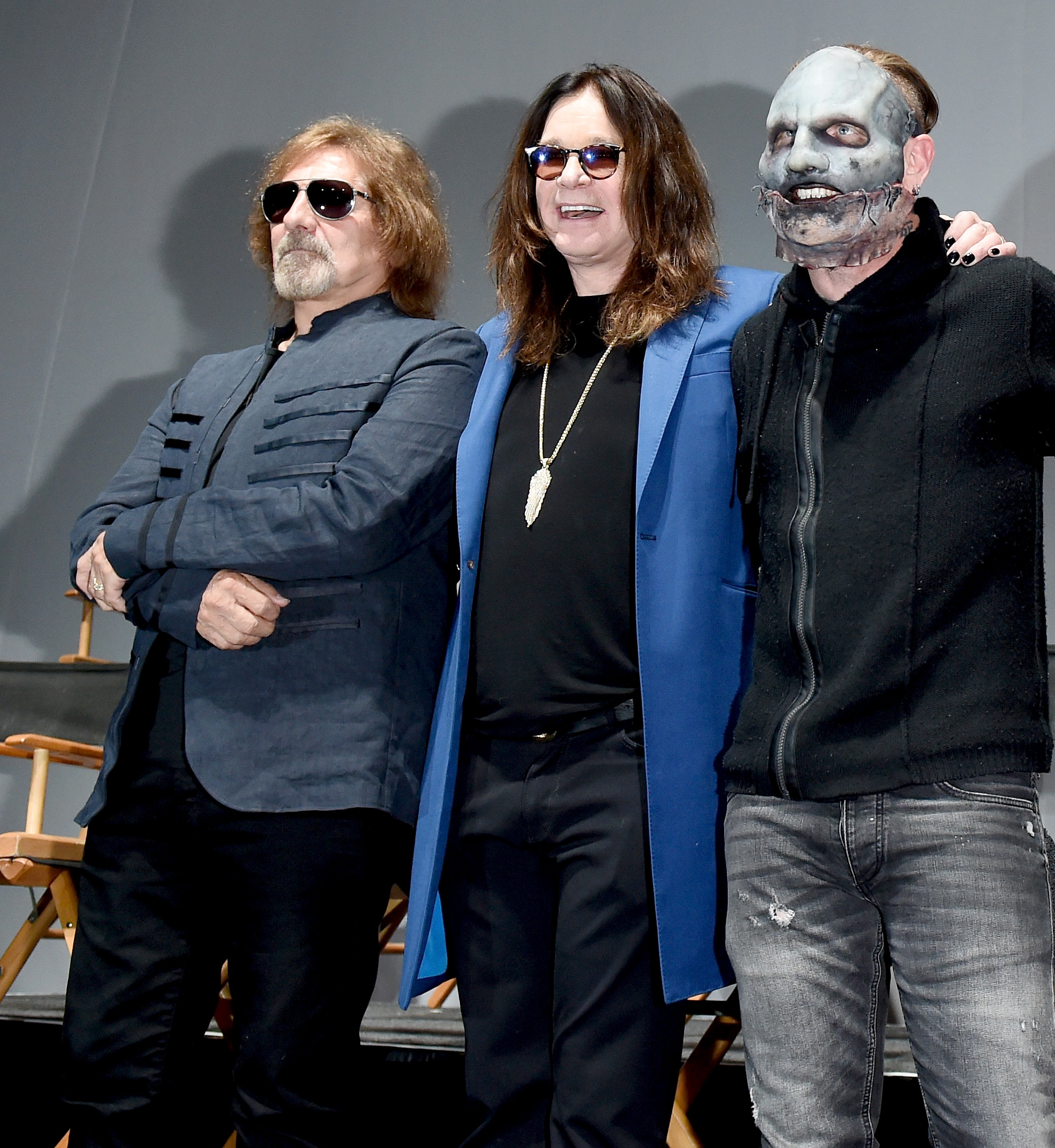
It all adds up to why Ozzy’s solo career, which endured longer and in many ways more successfully than his Sabbath era, worked while other similar rock ‘n’ rollers fizzled out.
“Ozzy is, without question, the most important figure in the history of heavy music — and Sharon, in my opinion, is the sharpest and most visionary mind the music industry has ever witnessed,” says promoter and artist manager John Reese, who co-produced the 2016-2017 Ozzfest Meets Knotfest events teamed with fellow counterculture metal heroes Slipknot.
“Sharon is a living legend. Her brilliance, strength, and unwavering love for Ozzy — and her dedication to preserving and honoring his legacy — were at the heart of every decision. What resulted remains a defining moment in my career,” said Reese, who also developed and produced popular lifestyle events like Mayhem Festival and Ohana Festival. “I’m heartbroken by the loss of such an extraordinary human being who touched the lives of so many. I’ll forever be grateful for the opportunity to work alongside Sharon and John (Fenton) and for the lasting impact Ozzy and Sharon have and continue to bestow on all of us.”
Echoing that sentiment is Slipknot manager and head of 5B Artists + Media Cory Brennan, who shared his condolences, adding, “Without Ozzy or Sharon, the heavy music world would be radically different – not in a good way. I have the highest respect for them.”
The Osbournes were known as fiercely loyal and appreciative of those working behind the scenes and on the production side,. And one concert promoter shared a rare example of just how far that sentiment went.
“It was September 4th, 1978 at the Cape Cod Coliseum in Cape Cod, Massachusetts. The show just tanked,” said Frank J. Russo, a premier concert promoter mostly in the Rhode Island era in the ‘70s and ‘80s. “My wife and I drove back to Rhode Island, and then at three o’clock in the morning, the doorbell rang and it was Ozzy and Sharon. Don’t ask how they found my address. The tour manager had a brown paper bag full of $10,000 cash in it and said ‘Ozzy and Sharon feel terrible you lost money and hope this helps.’”
Russo says he and his wife served them all dinner and they enjoyed each other’s company into the wee hours of the morning.
“They are, in my opinion, exceptional people in the history of the music business, who cared about other people, who cared about this promoter doing a concert, because they knew I had a family and my wife was pregnant with our fourth child,” added Russo, who said the relationship with the Osbournes continued well into the ‘80s, the best years of his career as a promoter.
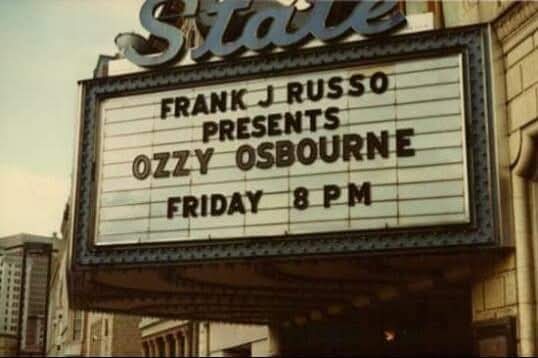
He admits the business was different back then, but still the Osbournes stand out as loyal and thoughtful partners.
“They were the sweetest, most down-to-earth people I have ever worked with,” Russo said.
Although in declining health in recent years, Osbourne went on to record admirable albums including a reunion with Black Sabbath for 2012’s 13— surprisingly or even shockingly one of few if not the only rock band of the era to still have all surviving founding members — and 2022’s Patient No. 9 featuring Ozzy’s trademark vocals and guest star writers and performers including Jeff Beck, Pearl Jam guitarist Mike McCready, Queens of the Stone Age’s Josh Homme, Eric Clapton, current Metallica bassist and former Ozzy bassist Robert Trujillo, Guns N’ Roses’ Duff McKagan, Foo Fighters drummer Taylor Hawkins, RHCP drummer Chad Smith, and Sabbath guitarist Tony Iommi.
Although unable to go forward with multiple “No More Tours” farewell tours from 2019 to present, Osbourne was able to go out on top with his final gig, “Back To The Beginning,” in his beloved hometown and again surrounded by adoring heavy metal contemporaries eager to take part. That includes not only bands like Anthrax and Mastodon but a sea of fans eager to not only witness history but show appreciation for the unlikely face of heavy metal, a universally loved Prince of Darkness whose most signature stage antic was to repeatedly tell his fans how much he loved them.
In an interview with Pollstar just days before Ozzy’s passing, Sharon said the influence and love shown for Ozzy during the “Back To The Beginning” finale moved him.” He turned around and he said to me that night, ‘I had no idea that so many people liked me.'” A vast understatement.
FREE
 Daily Pulse
Subscribe
Daily Pulse
Subscribe
 Daily Pulse
Subscribe
Daily Pulse
Subscribe