
How Olivia Rodrigo, Ed Sheeran & Billie Eilish Are Bringing Mental Health To Touring
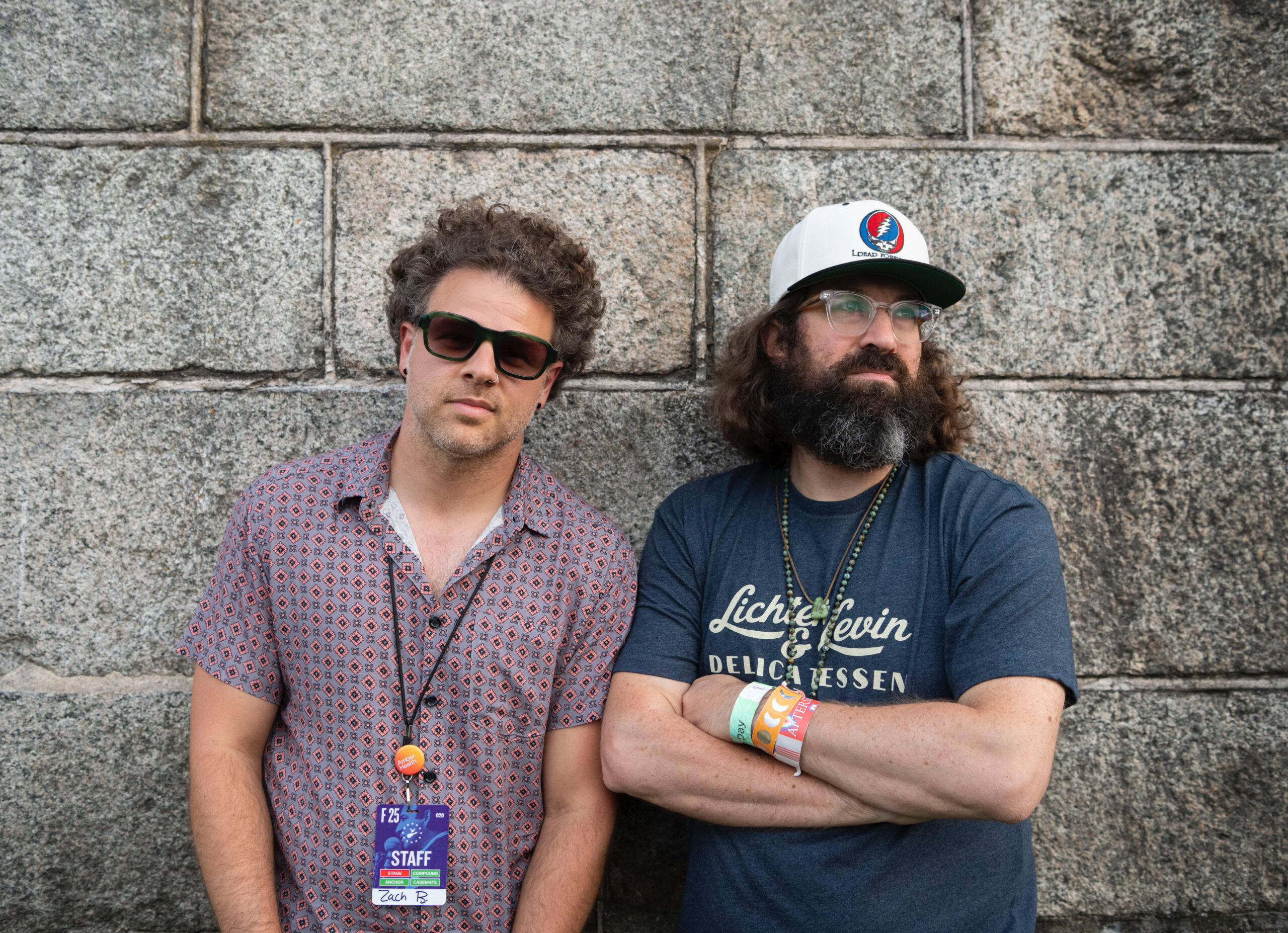
More artists are continuing to advocate for mental health and some are putting their money where their mouths are, including providing support for their touring teams via Amber Health. Olivia Rodrigo, Ed Sheeran, Billie Eilish, Green Day and Beyoncé are among the artists who have partnered with the organization, which offers proactive care via tailored programs built to sustain career longevity.
As Amber Health’s website notes, the organization is “grounded in the belief that mental and emotional well-being are not just important but are essential for the survival and evolution of the music industry.” The proof for the need for this support can be found in data such as a 2022 survey of more than 1,100 touring professionals that was published by Amber Health co-founders Dr. Chayim Newman and Zack Borer, LMFT, in the Journey of Psychiatric Research that found people working in the music industry have rates of depression, anxiety and suicide risk five to 10 higher than the normal population. It’s no wonder, with the unique challenges of life on the road, including extended time away from home and long workdays resulting in erratic sleep patterns.
What sets Amber Health apart from other organizations is that it’s solely focused on the music industry – and every single person in its organization, from clinical staff to administrative – comes from the industry.
“We don’t hire from outside of the industry. So all of our clinicians have a unique understanding of what it’s like to be in the industry. And so they get it. There’s that instant rapport building which we know allows for real clinical change to happen when the relationship is there from the beginning,” says Borer, who co-founded Amber Health with Newman in 2020.
Borer, who describes himself as “a huge music fan and music person all growing up,” was a songwriter for 10 years before becoming a therapist. While living in New York, he spent his time “playing the Lower East Side circuit and regional touring and bartending till 5:00 in the morning.”
Borer adds, “As the years went on, I became more anxious, more depressed, more unhappy … I would do a 360 of everybody I knew and I was like, ‘You’re suffering, you’re suffering, you’re suffering.’ And it didn’t matter at what level of the industry you were. It was people who were like me and it was people who were very successful. And as I transitioned out of being an artist, I landed on this idea of becoming a therapist for the industry.”
It’s natural that Newman also became enthralled by both music and psychology, having grown up with a father who was a concert producer and a mom who was a therapist.
Recalling going to see The Offspring at Roseland Ballroom in New York City in 1994 as his first concert, Newman “fell in love with the live music world.” He adds, “And by the time I was 16, I was already working as a promoter assistant and producing small shows and started to work in the music festival space.”
Newman, who went on to run a big music festival in Iceland for a number of years pre-pandemic, notes, “For me personally, as much as I fell in love with the industry, I really fell in love with the human beings and crew people and festival staff and artist teams.” He adds that he had also long been fascinated with mental health and human suffering and so while continuing to work in the festival world and observing the struggles of his colleagues, he was completing his neuropsychology undergrad, then master’s and PhD.
After initially working in private practice with folks in the industry from 2013-2019, Newman was introduced to Borer and they joined forces to fill an important need in the business – while “basically [building] our dream job.”
“We loved supporting people in this industry from a mental health side and being able to do the clinical work with them and then also realized that in private practice you’re so limited in how many people you could support,” Newman explains. “Even if you’re a therapist [with] the fullest roster doing eight hours of therapy a day you still could only support 50 people. … “And so we set out to start to build an infrastructure which then became Amber Health to really be able to support masses of people in this industry.”
Borer explains that Amber Health has developed programming that specifically meets the needs of every part of the industry, with a mix of services including in-person, virtual, preventative care and crisis management. The programming was created to address suicide risk, depression and stress, with data from research studies showing the vulnerabilities in the music industry.
“We work together with each individual team to try to understand what the pain points are within each organization or each tour,” Borer says. “What are some things that they might be anticipating? We will often sit down with tour directors or production managers and look at routing. Are there specific cities where they think the stress levels are going to be higher? We can design programs that will fit the needs of each specific tour.”
Newman adds, “On some of these large tours that had 500 crew members, within two months, we knew 350 of them by name. We’d see them in the production hallways and be able to develop those relationships in these little ways that made it much much more comfortable. If you want people to be willing to open up, you’ve got to be able to build rapport. This is an industry that doesn’t necessarily trust outsiders — and mental health support has been foreign for a long time to many of them. And so being able to create this relationship with them and be involved in the teams we care for allows us to be able to open things up clinically and be able to support them at a much different level.”
With the touring world being a non-traditional working environment, Amber Health is there to meet that need. As Borer says, “Our clinical team is very skilled at working in unique environments, whether that be in sort of traditional [settings] like in-person or virtual, but also, the corner of an arena. Or walking along a festival site as long as they feel OK with the limits of confidentiality.”
The Amber Health co-founders pride themselves on extensively vetting all of their therapists and making sure everything stays in-house to ensure the quality of care is at the highest level for those in the business.
Newman explains that every tour has a different team of clinicians, which is matched based on demographics, age, gender, ethnicity, whatever is needed for a particular tour – sometimes even genre of music. Amber Health has teams all over the world, having hit their 11th country earlier this year. As Newman says, “We’re really supporting people where they are and where they need us. Be it all over the U.S. and all over the world.”
Though Amber Health has spent years testing and developing their services, the co-founders both emphasized that what’s been key to Amber Health’s success in bringing mental health to the industry is individuals within each touring party or company that are willing to champion the concept.
“In the end what helps it manifest into reality is [production manager] Nicole Massey on Billie Eilish or Marty Hom [tour director for Olivia Rodrigo and Shakira, among many others] and so many of those kinds of people who have been champions within the industry and have advocated for this in their tours. Shaun Clair, the head of Clair Global, the biggest sound company in the world … the change makers from within being able to encourage and champion this in their ecosystems is really what has allowed this to develop. And we’re so grateful for them,” Newman says.
Newman adds that Hom, who he calls a dear friend and an early adopter, was initially skeptical about whether the clinical support services could work on tours – “then we went out and proved it. We did one huge tour together where we were called in a crisis and we ended up spending six months on that tour really making an impact. I think he saw it and then realized, oh, this is one of those ways we could leave this industry better than we found it.”
Hom himself shouted out the importance of the services earlier this year when interviewed for his Impact 50 honor and noted that helping “bring mental health and wellness into the touring industry” was one of his most impactful accomplishments of the year.
“I think it’s important that you try to, if your tour can afford it, to offer services for those people on tour to just have another ear for somebody to listen to them. We brought mental health on Beyoncé’s tour. I’ve done it on Olivia Rodrigo. I just recently did on Shakira’s tour. I see the future moving into that area,” Hom told Pollstar.
Clair Global has been working with Amber Health since early 2022. Clair says, “Our people are at the heart of everything we do. When everyone is mentally healthy, they feel supported, connected, and able to bring their best selves every day. That is why we partnered with Amber Health to make sure our teams have the resources and care they deserve, whether they are on tour or off. Taking care of mental health is about valuing people first and foremost.”
Looking ahead, the Amber Health co-founders plan to continue using data to best serve the industry they love.
“The next phase of the research has been to track the effectiveness of our programming and interventions on the tour,” Borer says. “So we partnered with MusiCares at the top of this year to do exactly that – to track the real time experience of what was happening moment to moment on tour in what’s called an ecological momentary assessment. Also to track the effectiveness of our interventions and how it changes those experiences. [We’re] super grateful to have a partner like MusiCares who wants to collaborate on this research in order to bring this to the industry. We have finished data collection from two tours currently and are finishing a third in [in July]. All of whom are large arena or stadium tours and are really looking forward to seeing what that data shows.”
Borer added, “I think we’re only scratching the surface here. And that’s what’s so exciting about this is we see the change. We were able to help thousands of people last year and we’re going to help more thousands of people this year. … [We’re] focused on continuing to build out programming but making sure they are clinically sound gold standard therapeutic approaches.”
Visit https://www.amber.health/ for more information.
FREE
 Daily Pulse
Subscribe
Daily Pulse
Subscribe
 Daily Pulse
Subscribe
Daily Pulse
Subscribe