
Executive Profile: The Belkins Built This City On Rock And Roll
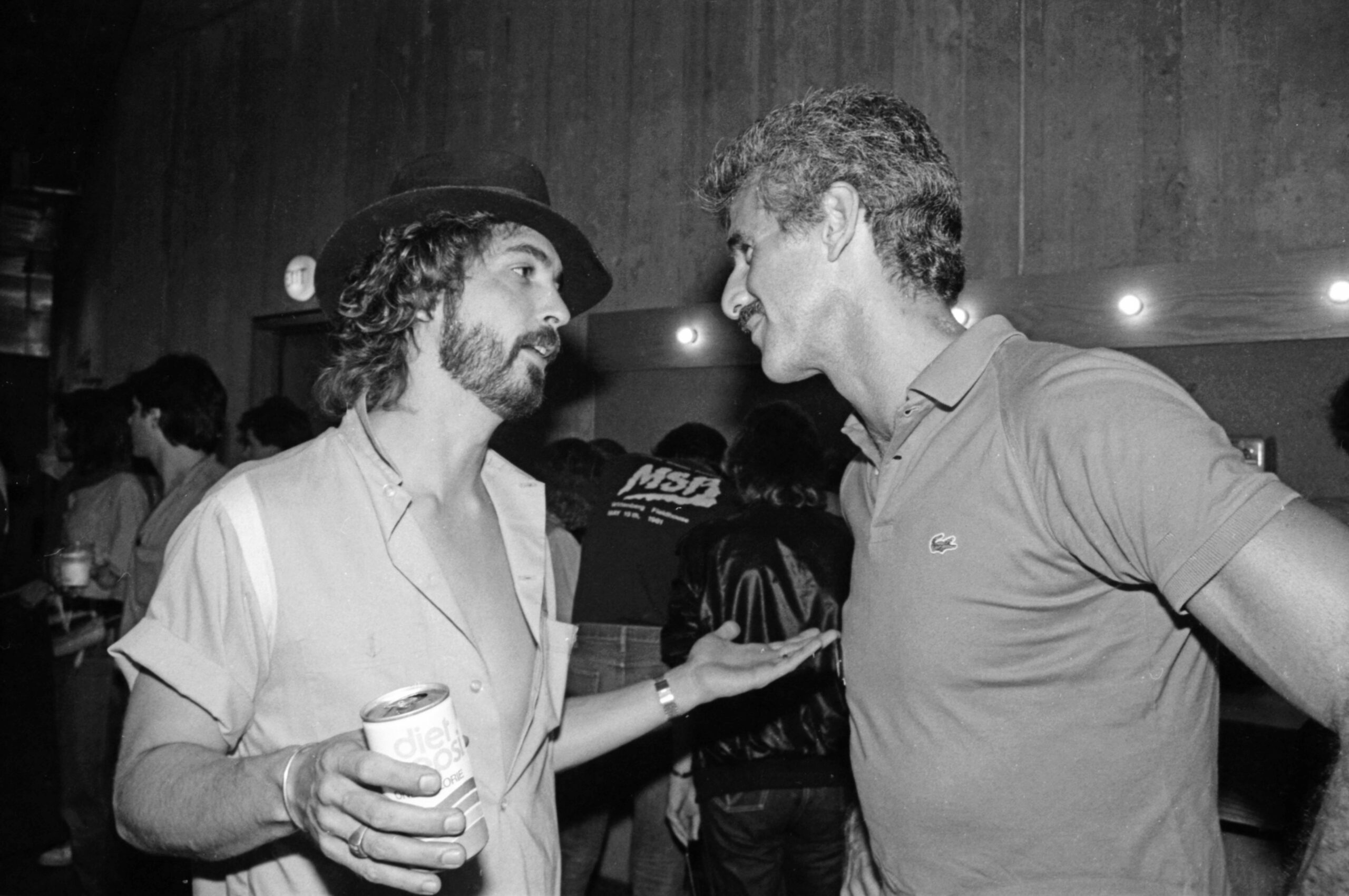
In 1966, when the Belkin Brothers booked two shows with The New Christy Min- strels and the Four Freshmen at Cleveland’s Music Hall, no one would’ve bet on them to become architects of Cleveland’s position as “must-play city” if you’re try- ing to break a band. Depending on the source, Mike, a former pro baseball player, and Jules Belkin either made $57 – or lost $250 –- promoting those two shows while running a suburban discount store and helping at Belkin’s Men’s Wear, their parents’ store on W. 25th and Clark Avenue.
A drug-related postpone- ment/cancellation of The Mamas & The Papas almost kept the first family of rock in Cleveland from becoming the link between the young people in Cleveland and the bands that WIXY 1260-AM, and later album rock freeformer WMMS 101-FM, were playing.
Believing in community first and showing the willingness to work hard and do it right, the Belkins were recommended to jazz promoter George Wein as a local partner for a jazz festival at Cleveland Arena that included Miles Davis. A financial success, there was no looking back for the brothers, who loved the creativi- ty of an industry with no rules, a world hungry for music and the thrill of what happened with live.
As the legendary agent Dennis Arfa explains, “The first time we took Billy Joel into baseball stadiums was the Cleveland baseball stadium. Then Mike came to me, saying, ‘I think we can sell out Cincinnati,’ so we played Great American stadium, too.
“That’s the thing: Mike and Jules really had that family thing. They understood being profes- sional at a time when there were no rules. People like working with them, and knew they’d always get paid and they’d be treated well. It’s why when they opened the Gund (now Rocket) Arena, Billy was the first act to play there.”
Charlie Brusco, longtime manager and sometime promoter, concurs. “In building a rock act, if you had Cleveland, San Francisco, Detroit and Boston – probably in that order – you’d break everywhere. The Belkins kept their fingers on the pulse: David Bowie’s first U.S. concert was in Cleveland (Sept. 1972, Music Hall) because people knew…
“From 1965-’75, the promoters had a gigantic part in the growth of artists. Cleveland had the buildings, the radio – and the Belkins who tied it all together,” Brusco said. “Even people like Ahmet Ertegun, when they wanted something done, they called the Belkins, who treated the artists like their friends and made things nice for everyone. They were creative in what they did, too.”
Brusco should know: he was part of an extended Belkin college division while attending Ashland College. Working with the Belkins, he bought and helped promote at other colleges the James Gang, Lou Reed, Poco, Traffic and others. Laughing, he recalled, “We did Emerson Lake and Palmer at Wooster College. There were so many schools, and those acts in the $7,500-$12,500 range could play all of them.”
“Nine months later, Bowie was playing Public Hall,” notes Live Nation Senior Vice Presi- dent, Marketing and Sponsor- ship Barry Gabel, who joined Belkin Productions fresh out
of moving to Cleveland for the woman who’d become his wife, a few months out of college. A mutual friend introduced the University of North Carolina grad to Jimmy Fox, drummer from the James Gang, who was working for the promoter, in 1979.
“My interview was three questions: ‘Where’d you go to college?’ ‘Do you have a car?’ ‘Do you know where the Beachwood Post Office is?’ I said yes to two out of three, and they put me to work running the Belkin Concert Club, which was a precursor to premium ticket sales. People sent us their $35, with a list of their favorite bands, which I wrote on 3×5 cards. Then when we had bands coming, we’d reach out with premium seats.”
As Gabel notes of the town that was coming into its prime as a rock mecca, “I was a sponge. I’d raise my hand when work was done. I watched Jules and Mike, who had a very open door policy with all of the jocks, MDs and PDs. They wanted to know and be ahead of the curve. But they also were open to anything – tough guy wrestling, motorcycle racing on ice, the Moscow Cir- cus, where we laid a red carpet around Public Square and had the circus performers on it.”
That sense of family business is pervasive. Mike’s son Michael Jr. began interning in high school. “I was a receptionist one sum- mer, in marketing writing press releases another. I did whatever they needed. I started officially a few days after graduation. Wen- dy Stein, the production lead, got married in January; Stacy Harper, whose worked with us for 45 years, stepped in – and I moved into production.
“I didn’t know the difference between a single phase and a triple phase, but I figured it out. It was looser when I started; no- body got a call if we were three guys short on a load-out. But we could also do our own market- ing, catering – and we made sure the artists liked it.”
After cutting his teeth on Human League, Rodney Danger- field and “a couple Culture Club shows,” Belkin Jr. was sent to Ohio State for his first major pro- duction on his own: Pink Floyd. The always humble promoter, who had Frank Barsalona and Bill Elson at his bar mitzvah, remem- bers, “I was in over my head, but Stacy had to be somewhere else. It was a big leap, but our team always comes together.”
Gabel considers it one of his favorite memories. “It was one of those really special full moon over the stadium ‘Dark Side of the Moon’ nights. The show was incredible, but what was funny is Jules is a diehard Michigan fan – and anything he could do to leave a mark, that was hap- pening, too.”
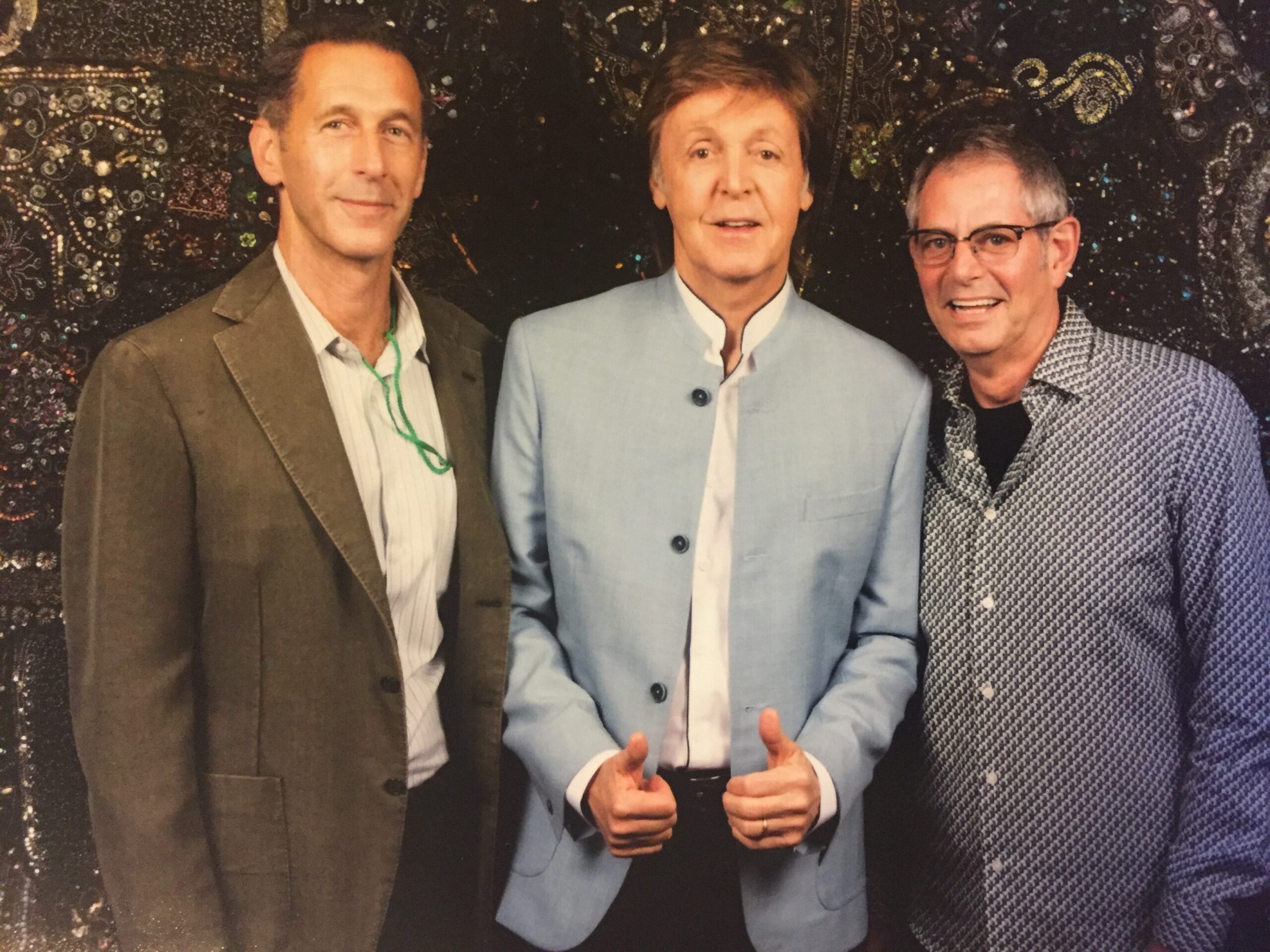
Their esprit de corps had a way of pulling people to them.
Even without venues – save the Odeon where Michael built relationships with future arena- and stadium-sellers No Doubt, Metallica and Nine Inch Nails – managers, agents and artists clamored to work with the friendly, professional Belkin organization.
After promoting a series of shows at Akron’s Rubber Bowl, including the Rolling Stones, Belkin launched the World Series of Rock at Cleveland Stadium. Bringing together
the biggest acts of the day foran all-day “game,” starting in 1974 with the Beach Boys, Joe Walsh & Barnstorm, special guests Lynyrd Skynyrd and REO Speedwagon and would go on to feature the Stones in ’75 and ’78, as well as headliners Fleetwood Mac, Peter Frampton, Aero- smith, Electric Light Orchestra, Ted Nugent and Bob Seger.
As Brusco said of the era and the Belkins’ unique role in it, “Most people Frank Barsalona wouldn’t let out of their lanes. But he trusted them, let them promote shows all over the Midwest – they were a family business, with their name on the ticket, and he knew that meant something.”
Arfa, who’s played Mötley Crüe, Def Leppard and Metalli- ca in the city’s biggest venues, concurs.
“Frank Barsalona carved up the nation, who promoted where, but he didn’t do that with them,” says Arfa, chairman of Independent Artist Group which still represents headlin- ers like Billy Joel, Rod Stewart and Metallica. “The Belkins being in Cleveland were almost the distribution center for the Midwest. Mike and Jules with that family thing that extended to everyone they work with understood the business of pro- moting, not just putting tickets on sale. They had people on the ground, and it mattered.”
Fierce advocates for the city, a call from then-mayor Mike White, asking if they could cre- ate some festivals on the north harbor portion of Lake Erie saw the Belkins and Gabel initiating a rib cook-off, a kids’ festival and a country fest.
Gabel remembers, “This was before Nautica, so we found a barge in Sandusky we could use as a stage. It was what Mike and Jules loved: creating something out of nothing. And because of Mike White, we figured out how to get sponsors. It brought peo- ple downtown, created things for the people of Cleveland to do. They used to say, ‘Please don’t lose too much money…,’ but it was always ‘What does the city get out of it?’ because they loved giving back.”
That giving back, especially for Mike Belkin, extended to managing regional artists they believed in. Beyond the James Gang, Belkin and partner Carl Maduri managed Wild Cherry, the Staples Singers, Doug Sahm, Breathless, Donnie Iris and the Michael Stanley Band, who hold or held attendance records at Blossom Music Center (four nights sold out), Richfield Col- iseum (two nights), Front Row Theater (10 nights), MGM at the Casino (12 shows) and more.
Mark Avsec, a founding member/songwriter of Wild Cherry (“Play That Funky Music”), as well as songwriter/ producer of Pittsburgh-based Iris (“Ah! Leah!,” “Love Is Like A Rock”), is now a prominent copyright, trademark and media attorney. As an artist emerging from the Midwest, there was never a question about management.
“Mike always fought for his artist. I had a lot of respect for him for doing that. He helped me through some tough times, and in a weird twist of fate, I ended up becoming a lawyer and doing quite a few legal matters for the Belkins,” Avsec said.
“Donnie and I have had an ongoing friendship with the Belkins for almost 50 years. Michael now handles Donnie and the Cruisers’ business. He realized Donnie has become an icon in Pittsburgh, and he took us upstream. Bigger and better venues with better sonics and production values. Michael got us there.”
That recognizing what matters is a signature for the company that sold to SFX/Clear Channel in 2001, then Live Nation in 2005. Suddenly aligned with what had been their competition, they created a synergy that expanded the power and quality of the shows coming to the region. Doubling down on what they do best, Mike and Jules responded to WNCX’s Bill Lewis’ championing Trans Siberia Orchestra by deciding to stage some local shows with a band that had never played live.
“We had a great relationship with David Krebs through Scorpions, AC/DC and Aerosmith – and his marketing guy, Adam Lind, was charged with helping put this together,” Gabel remembers. “We started with five shows, then 14, 21. We didn’t know what we were selling, but Paul O’Brien saw it as this very Capra-esque, Dickens aesthetic for the holidays for people who grew up on Yes, Rush, prog-rock.
“It was great musicians, poetry, rock, pop, blues, classical, Duke Ellington,” he continued. “Rather than the Nutcracker or Rockettes, this was for people who grew up on rock music – and it worked for people from 8 to 80. You see four generations.”
Playing 110 dates in 65 markets, raising 25 million from local charities and being a Top 10 Touring Act – now with two troupes out – annually, TSO has become a holiday tradition based on the Belkins’ commitment to thinking outside the box. As Lind marvels, “They were willing to try something different and to roll the dice on the unknown because of a gut feeling. That to me is a promoter. They always wanted to make a great event for the ticket hold and the artist; but most importantly, they loved the work.
“They were doing something special. This business is all very corporate now, but Belkin Productions created the concert business in Ohio – and they haven’t forgotten all those skills.”
Indeed. When a blonde, 22-year-old local rapper with some buzz wanted to play the Warped Tour, Michael leaned into his relationships and got Colson Baker five dates around the country. This year, the star also known as Machine Gun Kelly, or more succinctly and officially mgk, headlines the tour in Orlando and kicks off his album release with a weekend of charity-driven Machine Gun Kelly events in Cleveland.
Whether it’s the Rock-Off, bringing high school bands together in friendly competi- tion, or helping local talent reach their sum- mit, Belkin isn’t just about bringing in the big tours, working with radio to build young acts into headliners or create intriguing ways to showcase heritage talent. Nowhere is their commitment to the city more evident than Belkins’ role in helping bring the Rock & Roll Hall of Fame to Cleveland.
“The DNA’s always been here,” Michael offers. “We’ve got one of the Big Five orchestras, Playhouse Square, which is the second largest market for Broadway touring companies, shows and comedy, sports teams and nationally regarded museums for art, science, natural history, cars and aviation. But Cleveland has a long history with rock & roll, and between WMMS, the city leaders, my dad and especially my uncle, they went to work to bring it here.”
“The legacy isn’t necessarily the shows, but the memories and how the city has adopted so many of these artists and embraced them,” Gabel continued. “The music became the soundtrack for generations; they lived in the music in a way maybe other places didn’t.”
When the ribbon cutting on the Hall final- ly happened, it was the Belkins who staged the mammoth concert at Browns Stadium. Chuck Berry, Little Richard, Bruce Spring- steen, Aretha Franklin, John Mellencamp, Bob Dylan, Prince, Eric Clapton, Johnny Cash, Parliament Funkadelic, Jerry Lee Lew- is, Rod Stewart, the Allman Brothers with Sheryl Crow, Jimmy Page and Neil Young were part of what became an HBO special.
Between the kills in VIP seats for filming for TV and the Pretenders’ Chrissie Hynde’s insistence she wasn’t playing, because there were signs for McDonald’s, it was a night. Laughing now, Gabel hails the adaptive genius of production maven Harper, “Stacy says, ‘Let’s cover the signs up with tarps that say, ‘Welcome Home, Chrissie’ – a reference to her Akron roots – and then take ’em off once she plays.”
BOOM! Just like that, crisis averted, and the bands played on.
FREE
 Daily Pulse
Subscribe
Daily Pulse
Subscribe
 Daily Pulse
Subscribe
Daily Pulse
Subscribe