
AJR’s Adam Met On VenuesNow Conference, Fan Engagement & The ‘New Industrial Revolution’
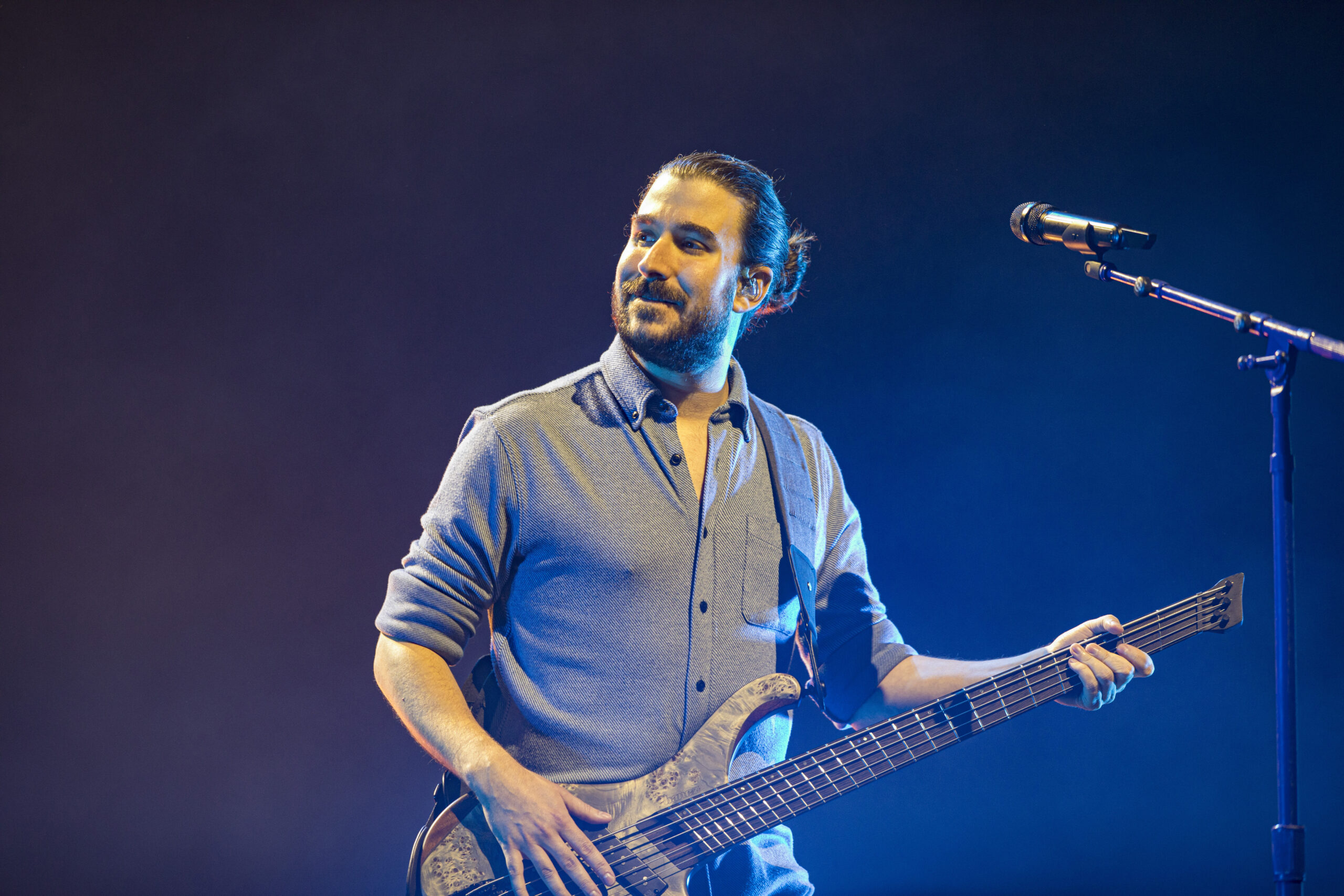
Adam Met, the “A” in the multi-platinum band AJR – who is also a Ph.D., author, educator and co-founder/executive director of the nonprofit organization Planet Reimagined, has been busy this year with his work as a climate advocate, from releasing the nonfiction book “Amplify: How to Use the Power of Connection to Engage, Take Action, and Build a Better World” to delivering the keynote address at Columbia Climate School’s Class Day ceremony in May. And on Sept. 9 he will take part in a conversation at VenuesNow Conference 2025 with Chris Granger, Oak View Group interim CEO and passionate sustainability advocate.
The forward-looking discussion on the intersection of sustainability, entertainment, and influence will explore how venues, brands, and cultural icons can leverage their platforms to inspire meaningful climate action and create scalable impact.
The conference (register here) takes place a few days after the release of AJR’s new EP, What No One’s Thinking, due out Sept. 5. The EP includes the single “Betty.” The indie pop band will wrap its “Somewhere in the Sky Tour” on Oct. 4 with a headline show at the Hollywood Bowl.
Met’s accolades include receiving the 2024 TIME Earth Award and being named a New York Times Changemaker for his work as founder and executive director of Planet Reimagined.
In addition to serving as the President of OVG360 – the full-service venue management, venue services, and hospitality arm of Oak View Group – Granger was named the Interim CEO of Oak View Group in July. OVG is the parent company of Pollstar.
Ahead of VNC, Pollstar caught up with Met to get a preview of their conversation.
Pollstar: You’ll be taking the stage with OVG’s Chris Granger at VenuesNow Conference in September. What do you hope VNC attendees take away from this conversation?Adam Met: That venues are one of the best places in the United States to spread the word about moving this country forward when it comes to sustainability. Except I’m never going to use the word sustainability and I’m never going to use the phrase climate change because so many people now look at it as such a political issue that we have figured out ways to partner with venues, get fans really excited about taking action when they come in person around issues. But what we’re doing is making it really impactful directly for them and making it hyper local.
It might have to do with water policy or farming policy or housing policy or things that impact them in their day-to-day lives. We provide opportunities for people to be able to take action. [With] concerts, people gather there because they care about something. They want to have fun. They want to have a good time. That’s the best space to leverage people for action around these things.
I love that strategy of focusing on the local and making it meaningful for fans.
We just did the Billie Eilish tour in the U.K. and we installed a bunch of our advocacy work … and it was so impactful because Billie cares about the issue, the venues cared about the issue and the issues are so vital that the fans cared about them too. So when you have that trifecta, it’s really magical.
What do you see as the biggest challenge facing the live industry when it comes to getting involved with sustainability?
I see the biggest challenge as focusing on the fan engagement piece of it as opposed to only focusing on decarbonizing operations. Yes, it would be great to decarbonize their operations, make sure they’re using renewable energy, limiting their water use, things like that. But the real opportunity is big, large-scale policy change. And that’s where we can reach people – is at these venues and have them registering to vote, signing petitions, engaging in all of these different issues. We can reach more people at these stadiums and arenas than pretty much any other place in the country. So if we can get people to think about it, how do we activate people as opposed to how do we change the practices that we have, I think that’s where the winning model is.
How is the regime change in the U.S. affecting the sustainability space? Is it making things harder or on the other hand, perhaps motivating people to get more involved with activism work?
I think it’s both making things harder and also motivating people. One of the things that I’ve found that has been really impactful over the last eight months is that many people are not using the words “sustainability” or “climate change” anymore because the issues themselves we just came up with an arbitrary title for them. The issues themselves are about zoning or about energy, about how much it costs when we turn on and off the lights, about how far our food is traveling to get to our plates, about how we’re getting from place to place. Those are the actual issues. We don’t need to call them sustainability or climate change. That it’s about making things cheaper and easier for us as people – that’s what people care about. So this reframe that we’re doing of the entire industry is something that I think venues would do really well taking advantage of because that’s what’s going to get people involved.
Anything else you wanted to say about what developments in the sustainability space as it relates to live touring that you’re most excited about?
Artists can engage with all of these local organizations and bring them on site. And I think that’s something that’s really overlooked. Sure, we can have a national campaign that’s participating in a tour that’s focused on going vegan or focused on energy use. But the things that touch people directly are the things that are the most local. We did a really big study last year and we polled thousands of people to figure out the issues that mattered to them the most in the climate and sustainability space. And the things that matter to them the most are the things that were really hyper local.
So, I’ll give you an example. In Phoenix on our tour last year, we pulled into the venue. It was 109 degrees out. The action that we had on site for our fans to take was fans signing a petition to get FEMA to designate extreme heat as an emergency to open up funds. We got thousands of signatures on that petition during that one show because heat really impacted those fans directly. When it’s something that they see in their day-to-day lives, that’s when they’re going to take action.
So, the local needs to be primary now even more than the national. And yes, artists can engage and donate their leftover food backstage. They can change the places where the food is coming from. They can push the venues to use renewable energy, use less water, no single-use plastics in the venue. There are all different things that artists can do. But the number one thing that artists and venues can do is engage the fans.
What’s the reception been like to your new book “Amplify,” which was co-written with award-winning journalist Heather Landy?
I have been so thankful for the reception to the book. Just in the first few weeks, it became a national bestseller. I was so thankful to everybody who has purchased it, all the fans who have engaged. … I think of it as a blueprint, a toolkit for people to use. If you want to scribble in the margins, go ahead and do that. If you want to rip out pages – I want to hear from people how they’re using the strategies in the book to apply to climate or health care or immigration or any issue that they care about. It’s meant to be used. It’s not just meant to be read.
And AJR has a new EP coming out Sept. 5. What can fans expect?
It is probably the most emotional music yet. But it also has this kind of driving production that you’ve come to know from AJR. And I’m really excited to be able to share this new music and perform it on stage.
AJR launched the Summer in the Sky tour in July. Do you have any favorite stops so far?
I loved playing Jones Beach on Long Island. It’s right on the water. Over 10 years ago, maybe 12 years ago, we did a radio show there … and so, this was our first time headlining. And it was such a great great experience. And I’m also really excited for the Hollywood Bowl [on Oct. 4] because we’ve never played there before. So our first time at the Hollywood Bowl will be us headlining.
You delivered the keynote address at Columbia Climate School’s class day ceremony in May. Any advice you’d give for young people wanting to get involved?
So many people think that we need more climate solutions. In reality, we have almost all of the solutions we can possibly need. It’s just about how to implement them and this reframing of things, not as focused on climate or sustainability, but what I like to call “the new industrial revolution” – a new thinking about building things, making things, growing things in America, and around the world, but in particular in America. So, we have the what. This next generation of activists and activism is going to be about the how. How do we get it done? How do we implement? How do we build that future?
What’s the latest with your nonprofit Planet Reimagined?
Planet Reimagined is growing by leaps and bounds, especially our program where we’re working with artists and venues in order to install advocacy for fans across the country and now across the world. We’ve expanded to Australia and the U.K. And our goal ultimately is partnerships. We want to work with as many people to bring fans into this world of activism as possible.
FREE
 Daily Pulse
Subscribe
Daily Pulse
Subscribe
 Daily Pulse
Subscribe
Daily Pulse
Subscribe