
How Populous’ Venues For The Communities Of Tomorrow Are Coming Alive Tonight
Live entertainment venues are increasingly playing an important social and economic role, with their flexible and multi-purpose designs meeting the growing demands of communities who want their cities, towns and suburbs to come alive at night. In Australia and New Zealand, governments are investing in “after dark economies” centered around entertainment precincts where music plays a central role.
The world’s leading sports and entertainment venue designer, Populous, is currently working on major venues across Asia Pacific, illustrating how much these buildings contribute to revitalising communities and stimulating the nighttime economy.
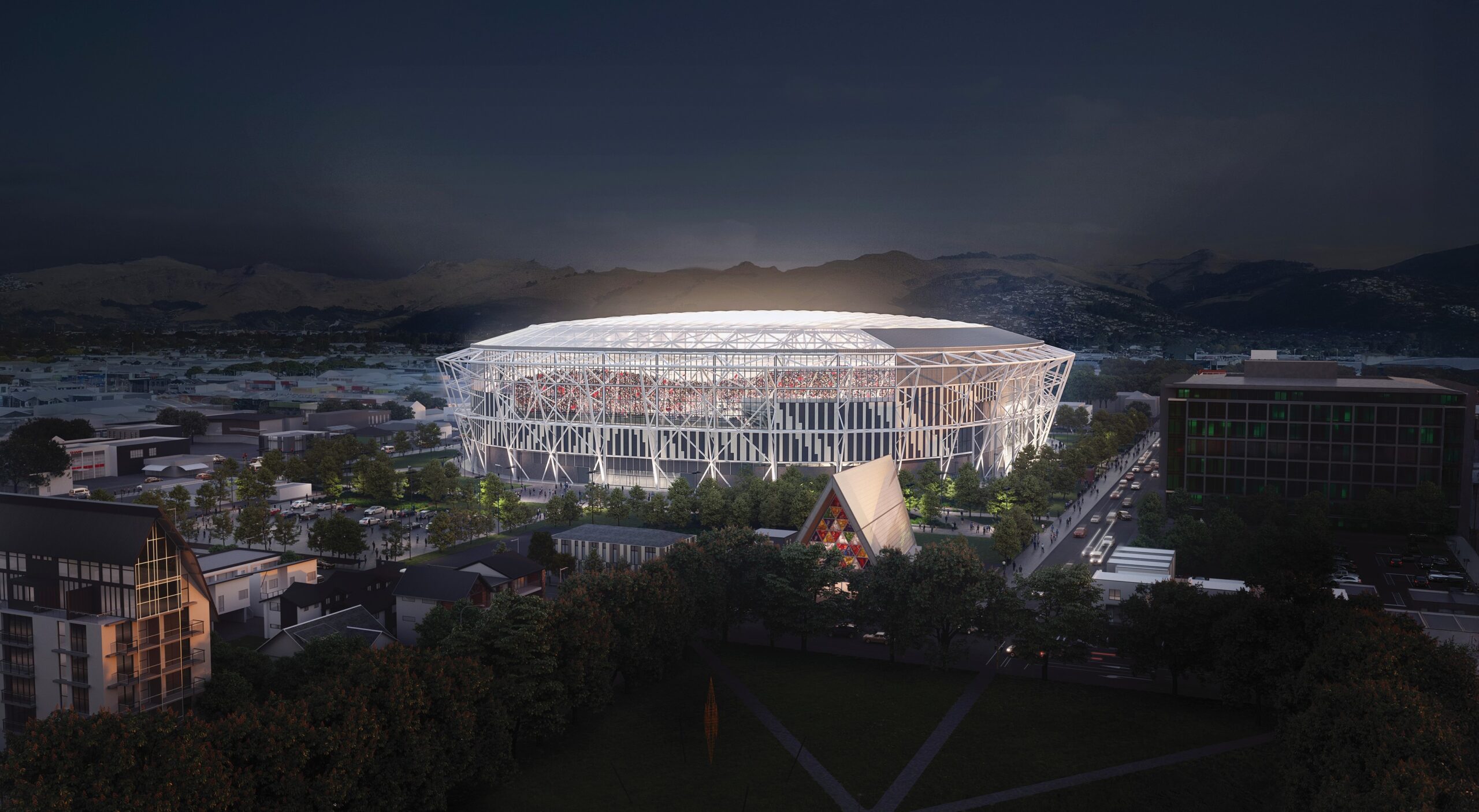
Planning for One New Zealand Stadium at Te Kaha in Christchurch, the country’s second-largest city, started nine years ago, with the 30,000-capacity venue scheduled to open in April 2026. It replaces Lancaster Park, damaged in an earthquake in 2011, bringing much-needed community infrastructure, capable of hosting a wide array of world-class events, back to the city.
Chris Paterson, senior principal and director at Populous and based in the firm’s APAC head studio in Brisbane, explains that the design brief was to be “as multi-functional as possible,” switching swiftly and seamlessly between major sporting events, concerts and family entertainment offerings so that the precinct can be activated seven days a week.
The stadium, in the heart of a busy neighbourhood, is fully roofed and can instantly scale up or down depending on capacity requirements, weather and time of day. “It has lighting and speaker rigging requirements built into its roof,” explains Paterson, taking much of the onus off those hiring the venue for shows. “It will bring down the cost to promoters and has minimal impact on the venue.”
Paterson says Populous’ regional knowledge gleaned from designing venues, particularly in Asia where density is much greater, brings new design thinking into the local market.
“The new 15,000-seat Las Vegas Sands Arena that we are designing in Singapore has back-of-house provisions that have never been seen before in the region – a dedicated Artist Village with multiple dressing rooms, green rooms and an on-site sound studio. Such detail and sophistication is now coming to the ANZ market.”
Paterson says that the innovation Populous has driven over the past decade in the sports world around hospitality offerings is now being applied to the entertainment sector. “We were the first to introduce suites and lounges. We’ve seen, particularly in the live music world, that people want to spend money at different price points and get different experiences. A lot of what we’ve learned in the sports world is becoming much more applicable to the concert industry.”
Venues now have to become destinations in their own right. “You can create opportunities for people to come early to events,” proposes Paterson. “That can be a lounge or other areas where there is pre-game or pre-event entertainment. That mix is very important.”
One New Zealand Stadium is part of the wider Christchurch Central Recovery Plan and is effectively a stadium designed like an arena. “The South Stand is a fan-shaped arena that you can put a stage in front of,” explains Paterson. “You can take the venue from, say 25,000 capacity to 10,000. End pockets on the North Stand can take a stage without interruption to the field.”
The venue is for the whole community, is close to public transport, and has food offerings that are local and sustainable. “It is designed for the circular economy,” says Paterson, pointing to the inner city precinct nature of the design as a key way to maximize the use of the venue all year round and to unlock the full potential of the city’s nighttime economy.
Another major Populous project that will bring live music to fans, who otherwise have to travel further afield, is Penrith Stadium in Sydney, Australia. Due to open in 2027, it will be the new home for the Penrith Panthers who compete in the National Rugby League.
“This venue upgrade will really open up new opportunities for major acts to come to the community rather than the community coming to them,” says Paterson. “Penrith is located in the growing Western Sydney area, and can support larger concerts that have been needed for some time.”
Paterson, an avid live music fan, is an ad- vocate for venues like One New Zealand and Penrith promoting and expanding Australia and New Zealand’s nighttime economies.
“It’s exciting to see governments really investing in and focusing on 24-hour economies and recognising the potential for entertainment infrastructure to be catalysts here.” Paterson says a great stadium or arena not only provides the space for a memorable concert – it maximises the benefit for local communities and businesses alike. “This ROI is driven by activation, and it’s essential that major entertainment infrastructure like One New Zealand and Penrith deliver on the promise of being multipurpose and utilised year-round.
FREE
 Daily Pulse
Subscribe
Daily Pulse
Subscribe
 Daily Pulse
Subscribe
Daily Pulse
Subscribe