
‘The Bob Dylan of Northern Ohio’ Alex Bevan Gets His Due
Courtesy Alex Bevan
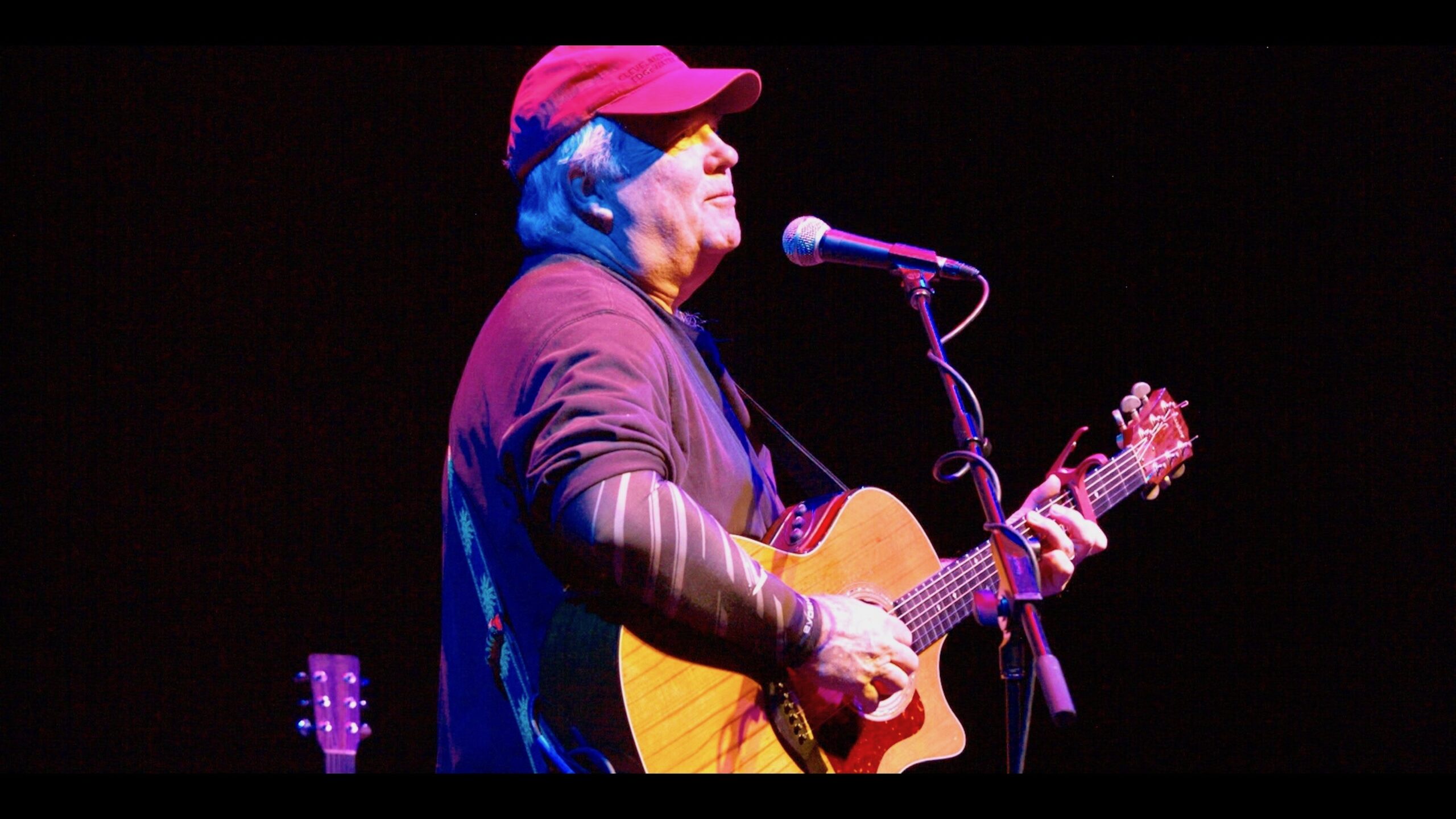
When Nashville Songwriters Hall of Famer Bob DiPiero, on a writing trip with Brooks & Dunn, heard it was Alex Bevan playing on a bench backstage on a slow afternoon at Blossom Music Center, he almost put himself through the bus’ window.
Turning to Kix Brooks, he declared, “Dude, that’s the Bob Dylan of Northern Ohio.”
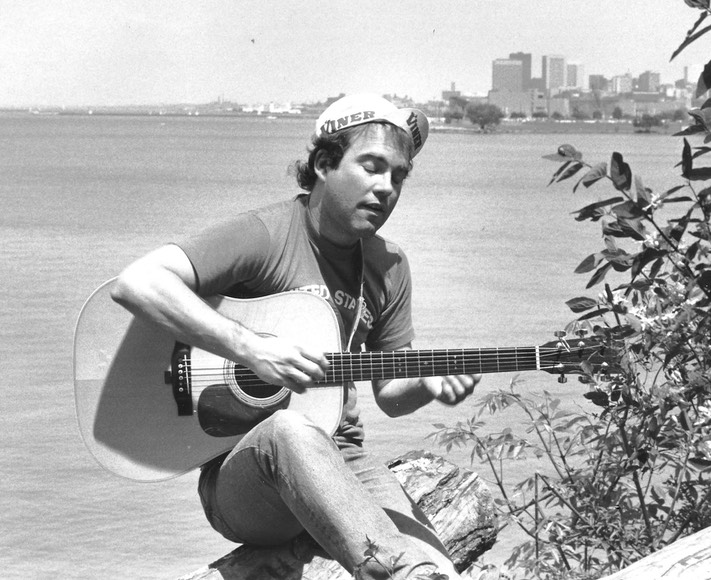
Gifted as a wry songwriter and folk flame keeper and born in east Cleveland, Bevan spent his teen years playing in the Flats of Cleveland, where he went from haunting coffee houses and folk clubs to rock caves like the Cleveland Agora. He was an opening act for the likes of Odetta, The Nitty Gritty Dirt Band, Pure Prairie League, The Michael Stanley Band, The Earl Scruggs Review, Livingston Taylor, Billy Joel and The Beach Boys among others. His 1976 summer anthem “Skinny” filled the airwaves of radio station WMMS and brought the Cleveland folksinger’s career into sharp focus and national acclaim. Today, the godfather of Cleveland folk has been performing for nearly 50 years, singing his precisely crafted original songs accompanied by deft guitar picking and improvisational wit.
Having been a singer/songwriter quoted in Newsweek (“Have Another Laugh on Cleveland Blues”) and fostering the songwriter community in the 21st Century, he’s witnessed local singer/songwriters owning space in the Rock & Roll Capital of the World.
Pollstar: So, Cleveland’s folk scene in the 1960s …
Alex Bevan: Centered around college coffee houses and the storied La Cave nightclub. Around 1968, Tom Rush, Gordon Lightfoot, Phil Ochs, Tom Paxton and Janice Ian changed us from imitation to creation. Audiences came looking for a more authentic musical experience. There were the dedicated folk clubs. Besides La Cave, The Smiling Dog Saloon, Faragher’s Back Room, Fagan’s Beacon House, Red Horse Hollow, and Bobby McGee’s were packed.
Booking was in person with the owner, mostly through a paper calendar, a pencil, a payphone and a bag of quarters. When you added college coffeehouse gigs like John Carroll’s Room One, you could make a meager living. John Bassette, Pat Dailey and myself were able to find a path to larger venues.
Courtesy Alex Bevan
The‘70s marked a golden age. Did WMMS play a part?
WMMS was at the right place at the right time. They exposed so much music, because it was really free form. A lot of national acts broke out of Cleveland because of them. But they also shared the wealth. Their one hour “Coffee Break Concerts” featured national acts, but also a lot of local singer/songwriters and bands, which created valuable exposure in the immediate locale.
I had a “hit” called “Skinny” – or “Skinny (Little Boy from Cleveland, Ohio)” – which felt like everyone in Northern Ohio knew, because WMMS played it. A talking blues, it was a party anthem. It led to my playing “Ho! For the Weekend” Fridays at 5 pm, a freestyle rap to set the workers free, which captured the week.
What was touring like?
Opening for major artists – I actually opened for the Beach Boys, Seals and Crofts at Blossom Music Center – or concerts put on by Student Activity Boards at state and private colleges. I also opened for Odetta in smaller venues; toured with Steve Goodman and Jethro Burns in their rent-a-car, always a Lincoln. Every day was different.
Belkin Productions offered opening slots for acts that could hold a crowd and only need a small footprint onstage: meaning two mics!
At one point, I signed with Denver’s Athena Enterprises. That was the start of my “College Concert” phase. They had a young Jim Buffett, John Harford, The Dirt Band and Earl Scruggs Review. I had a Toyota, we figured out what transportation we needed. When I had my band, it was an RV we called the Battlebus Gallactica. A great time, opportunity was seemingly more open ended than now.
You had your own label
I recorded an LP at Cleveland Recording, mastered it at Audio Recording, ordered a thousand records from Columbia Custom Record Pressing in Terre Haute, Indiana, had the jacket printed at Dunkel Press in Cleveland. Put all the pieces together and ended up with all the boxes of vinyl in my apartment.
I sold them from the stage, then found distribution from a local one stop, Piks Corporation. People liked the record. Springboard sold 18,000 in the region in its first two years. A lot of us – and some of the local bands, too – figured that out. ‘MMS was good about playing me, Wild Horses, the Euclid Beach Band, Breathless as well as the Michael Stanley Band who had a major label deal.
How has playing Cleveland evolved?
It’s more “siloed” now. There’s a small venue resurgence that helps. The Beachland Ballroom, Forest City Brewing, The Treelawn, The Music Box and the Rialto down in Akron all support the local scene as well as mid-tier national touring artists.
But the most important thing – to me – is there are more small gigs available for developing musicians in Cleveland. It’s a feeder system, if you will, with good younger energy that’s stretching the envelope of the genre. A whole host are beginning to break through, including Ray Flanagan, Rachel Shortt, Brent Kirby, Thor Platter, and Apostle Jones. s
FREE
 Daily Pulse
Subscribe
Daily Pulse
Subscribe
 Daily Pulse
Subscribe
Daily Pulse
Subscribe