
20 Years At The Heart Of Music: The Story Of Reeperbahn Festival According To Its Founders Alex Schulz & Detlef Schwarte
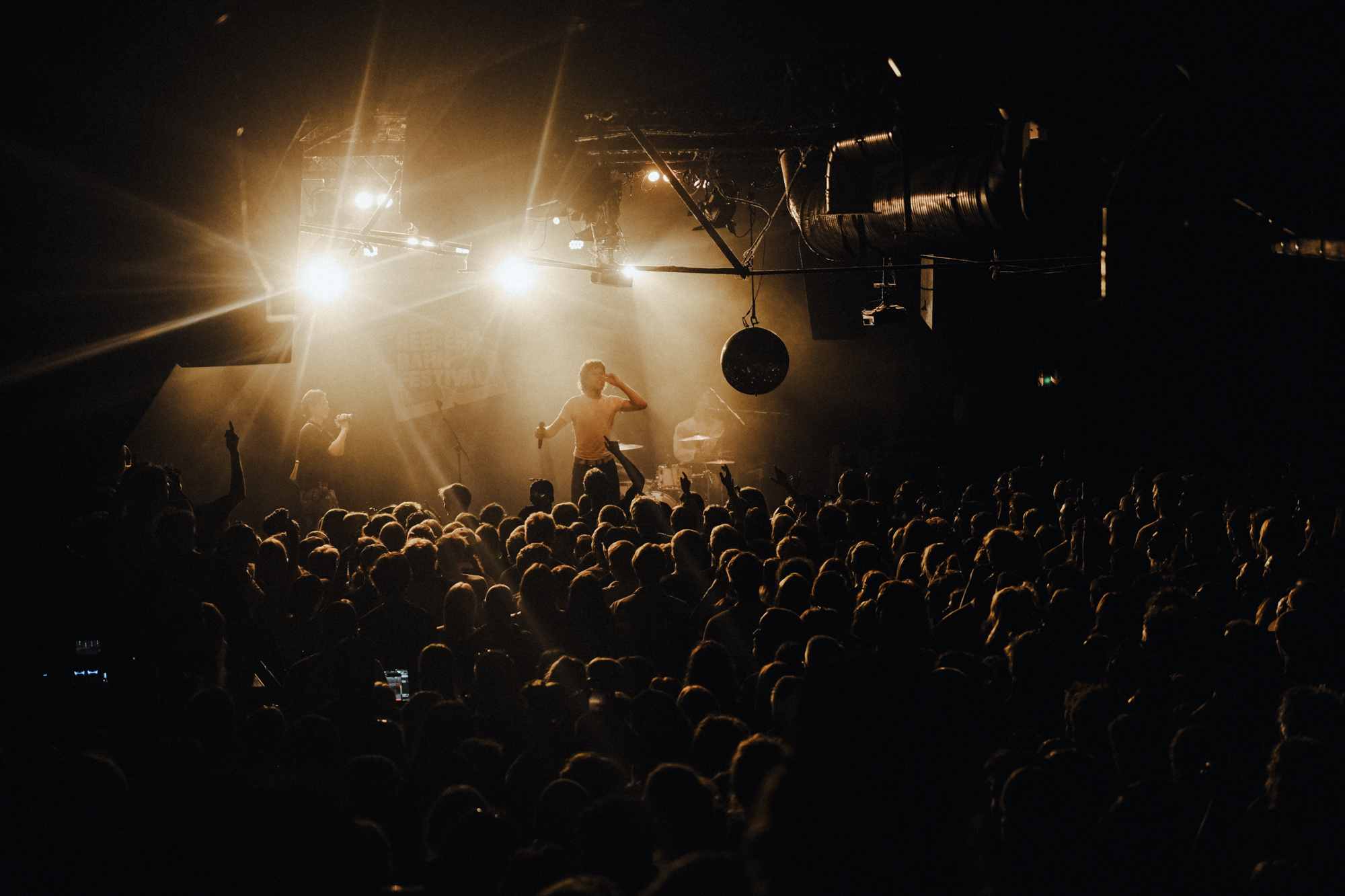
GERMAN SINGER AND RAPPER ZARTMANN performing at Übel & Gefährlich during Reeperbahn Festival 2024. Photo by Tom Heinke
Reeperbahn Festival turns 20 this year. The anniversary edition is scheduled to go down in Hamburg, Germany, Sept. 17-20, with a packed music festival and business conference schedule. Main events like the Anchor Award honoring Europe’s most exciting new acts are but one highlight of a program that includes some 450 concerts by around 400 acts from approximately 30 countries; 250 conference program items with around 300 speakers; and a vast side show offering something for anyone interested in the contemporary arts.
It’s a lot to take in, and there’s no one better suited to break it all down than Reeperbahn Festival’s founders, Alex Schulz and Detlef Schwarte, who spoke to Pollstar about their 20-year journey building one of Europe’s main music industry events, period.
It quickly becomes clear that both men never took for granted that they would reach this 20-year milestone. “Being right in the thick of putting together one of Europe’s biggest talent festivals and music business conferences,” says Schulz, “one doesn’t really notice the years going by, nor the event growing to its current size.” Schwarte agrees, “It certainly doesn’t feel like 20 years, it still feels fresh. Your ambitions grow alongside your event. Our aspirations today are different ones compared to when it all began.”
That was in 2006, and the first two years certainly didn’t forebode a bright future. The main questions back then, as Schulz recalls, was “do we throw in the towel? Economically, we were in a pretty tight spot.”
But he believed in his vision, which was very clear even at the time, namely that the main income for artists, and therefore this business, would be live, at least for the foreseeable future. “The interests of the music savvy audience and the industry intersect at the concert,” he says. To welcome music industry representatives in Hamburg was therefore always part of the plan, even if it took until 2009 to officially launch a conference program in addition to live concerts showcasing new talent.

As recorded music lost its value with digitalization, so did tradition-rich industry trade fairs like Popkomm or Midem – events that relied on companies booking stalls to present their products. Reeperbahn Festival was ready to serve a new way of doing business: right at the live show. Organizers of the competing conferences used to eye these two North Germans with some skepticism, fearing they’d come, guns ablaze, to take away business, as Schulz recalls. There was uncertainty about whether there was room for more than one major player in Europe serving as the annual meeting place for the industry. But time has shown that there is indeed room – a need even – for more than one event, according to Schwarte, who says the relationship between these events’ organizers today is marked by cooperation rather than competition.
The music business underwent several seismic shifts over the years. And even if none of them impacted the business as severely as the demise of physical, they’ve shaped it considerably. “In the beginning, the power of music, especially in economic terms, was our main focus. Today, the design of the event is much more culture and value-driven. The importance of topics including sustainability, diversity, definitely wasn’t foreseeable back then, but it has taken center stage,” says Schulz.
This year not only marks the 20th anniversary of Reeperbahn Festival, but also the eighth year of Keychange, a European music industry initiative to ensure gender-balance on festival and conference
lineups. “This industry is usually on top of developments that shape society as a whole faster than other industries. It has to, because it also claims to be at the heart of society,” Schulz explains.
Two other major industry shifts Schwarte identifies are Brexit, which has made European touring for UK acts way more complicated that it used to be – something a talent festival booking UK acts is
acutely aware of; as well as “the tendencies of monopolization of this industry, which are more than mere tendencies at this point. Market power continues to concentrate, and it becomes increasingly difficult to decipher where the power actually lies.”
“Despite all the globalization and monopolization trends,” Schulz adds, “the music industry is still a real ecosystem, where all the players – artists, labels, agencies, management, promoters, etc. – are closely interlinked. Viable solutions to the current challenges can only be achieved together, which is why we’ve chosen ‘Imagine Togetherness’ as the motto of this year’s Reeperbahn Festival.”
All the reasons why the professionals working in this business need a meeting point to talk. Not everyone buys a conference ticket to do so. With so many players from every sector of the international biz in Hamburg for four days, one can easily do business by scheduling private meetings inside cafés and bars that don’t require a Reeperbahn Festival wristband. It’s a challenge, Schwarte explains:
“People want to meet, it’s the most important aspect of these conferences, more important than having access to panels and keynotes. And meeting others is also possible on the outer edges of this platform rather than inside its heart. We have 60 to 70 off-events taking place around Reeperbahn Festival, which are organized independently by third parties and are not officially taking place under our banner. That’s all fine, but it also shows the need for our event. And you sometimes get the impression that, because we’re publicly funded, people think, ‘ah, they’re fine.’ As organizer, you hope for the solidarity of the individuals and companies that form this industry. I’m pretty sure they’d agree that not having Reeperbahn Festival would be a loss.”
Another big topic Reeperbahn is right at the heart of is the struggle of grassroots music. Moondoo, which used to host Reeperbahn Festival performances, closed its doors last year. The building is now occupied by Molotow, another famous club in the city, which had to leave its former, larger premises to save rent. “The club infrastructure is deteriorating each year, while the demand for spaces where artists can perform at during our festival only increases. That’s a problem, there’s no two ways about it,” says Schwarte.
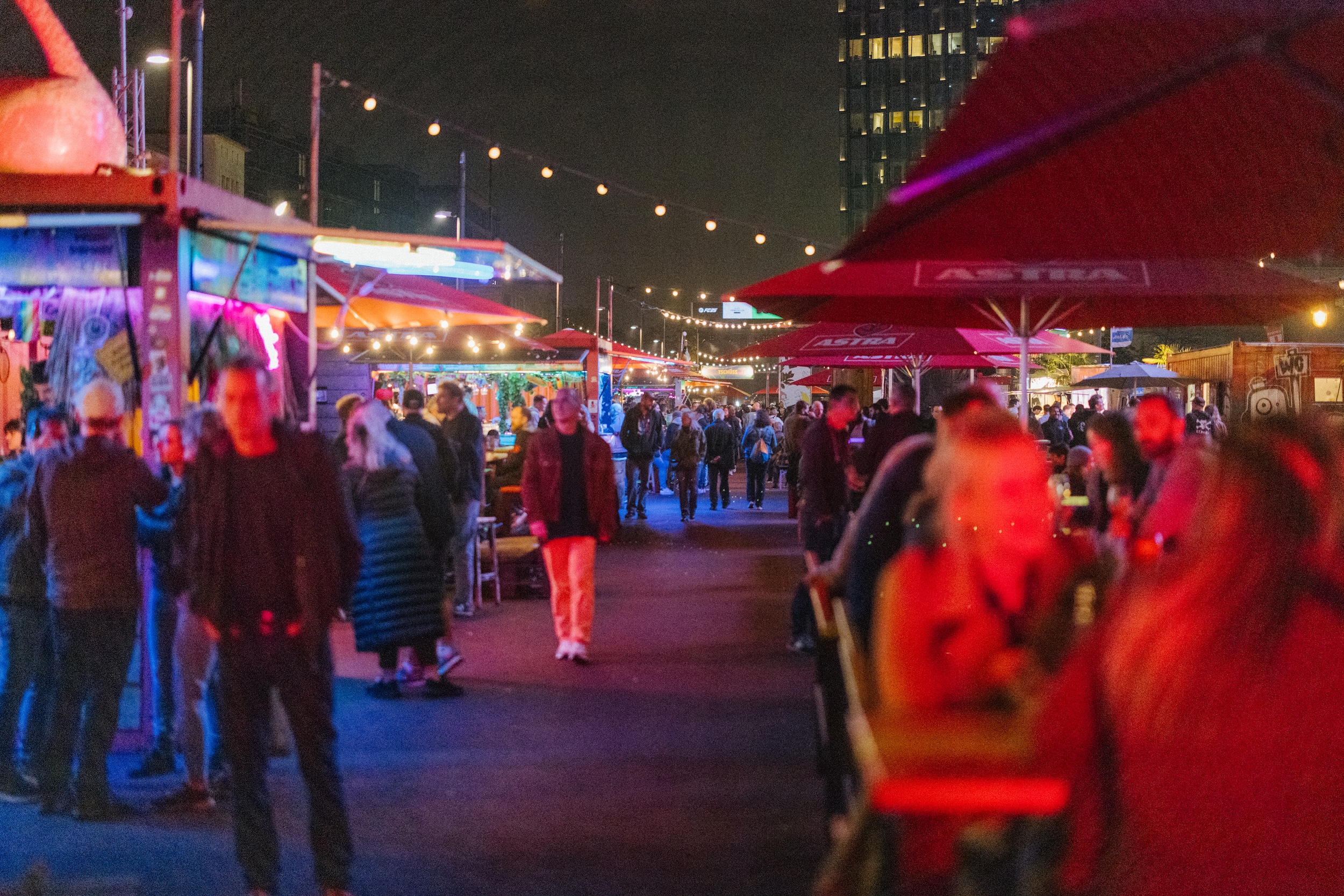
With 45,000 visitors descending upon Hamburg for the festival, its economic impact on the city’s club scene is significant, but limited to two to four days a year – not enough to secure the future of these spaces. But it reminds an international audience of the fact that these are some of the best places to watch live music. The reasons for the club’s demise are still being debated, but there’s no doubt the lockdowns, their effect on a generation of youngsters, who never got hooked on the gig-going experience, the post-pandemic economy, all have a part to play.
“There’s also reports that the younger generations don’t necessarily feel safe at the classic club gig, which is a problem in this line of work, where we rely on the willingness of people to be open to new experiences. You never knew what you’d get when buying a ticket to a club show, but for the first time, audiences seem to mind. They’d rather go for the incredible, and reliable, blockbuster experience only the biggest festivals and stars can produce. It’s unclear as of yet, whether this is a fundamental change or not.”
In any case, Reeperbahn Festival will be there to document it, at least if it’s up to its founders. “It sometimes gets lost in the day-to-day of this vibrant business that there aren’t many event like Reeperbahn Festival in Europe, in the sense that we’re not just catering to one part of this industry, but every player in the music ecosystem,” says Schwarte, concluding that “there’s real value
in what we’ve managed to build over the last 20 years, and it’s important not to lose it. And I’m also hoping that the curiosity and courage to explore new things hasn’t been lost within the young generations, but is, in fact, returning. If you’re willing to expose yourself to a little bit of rock and roll, small acts in dingy clubs, you’ll discover a lot of exciting music everywhere.”
FREE
 Daily Pulse
Subscribe
Daily Pulse
Subscribe
 Daily Pulse
Subscribe
Daily Pulse
Subscribe