
VNC Recap: The Shifting Economics of University Sports & Entertainment, From $2.8B Settlement, NIL and Mixed-Use Venue Design
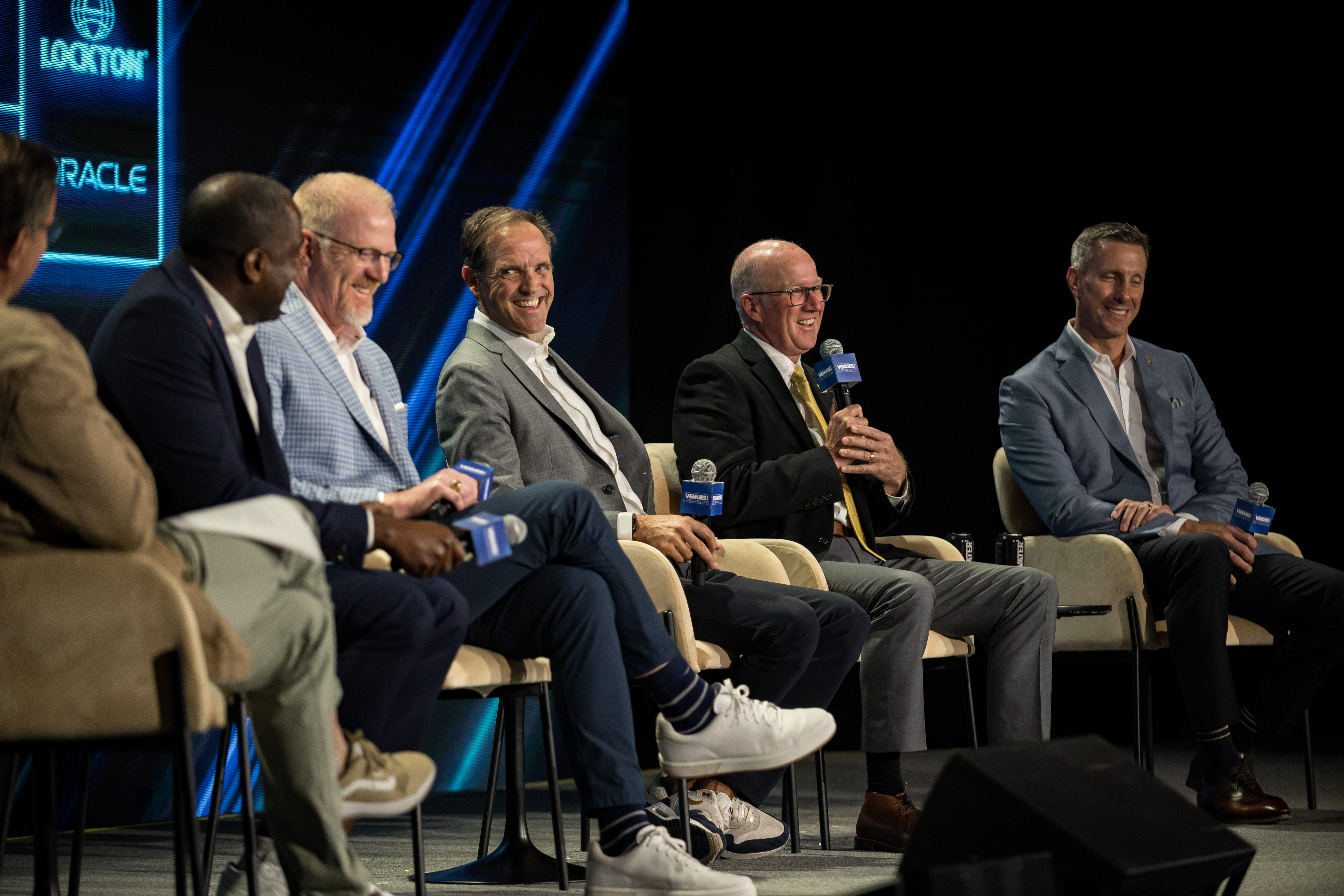
A shakeup in college athletics including a landmark $2.8 billion settlement has immediately transformed the way universities and challenges do business, and in many ways has jumpstarted revenue-generating priorities and projects touching on everything from food and beverage service, NIL partnerships, special events and venue renovations.
“Most pundits would agree that the change that’s happening in college sports today and how rapid it is, that there’s more change going to happen in the next three years than has happened in the last 100 put together,” said moderator Dan Griffis, president of global partnerships at Oak View Group, “Some would argue, and I’m sure most of the folks in this panel would agree that, basically more change has happened in the last 12 months than has happened in the last 100 years put together.”
College athletes argued they were denied the chance to earn money from endorsements and media appearances, which they said was in violation of antitrust laws. The NCAA’s $2.78 billion settlement includes athlete compensation dating back to 2016, money that will come out of (and need to be replenished from) university athletic department budgets. On top of that, universities are now able to spend up to $20.5 million on revenue sharing with athletes, suddenly changing the game and creating new opportunities along with new challenges.
“ And, and that’s just sort of skimming the surface as it relates to facilities and everything else that’s going on,” Griffis said as he introduced a panel of experts that he described as “The Brady, Messi, Mohammed Ali and Wayne Gretzkys” of the college athletics world, a group that represents the change already happening in college athletics as well as adapting as the landscape takes shape.
An example is Clemson University in South Carolina, who heads Clemson Athletic Ventures, a first-of-its-kind entity professionalizing the storied sports program, taking athletics commercial rights and business operations in-house.
“There is no better sort of canvas in my mind for brands to align with than that type of fan base,” says Drake, who has more than 20 years of experience in the space. He says creative and innovative strategies can succeed in college athletics but require alignment from top to bottom. “Anybody that does it is only going to be successful if there’s alignment from the top down. You can have alignment with an athletic director, but that alone probably isn’t going to work if you really want to commercialize all the rights that fall either within the athletic department or the university.“
NIL partnerships have brought new opportunities for athletes and allow them to get real-world business experience that can further their careers well beyond sports, and in a perfect world benefit the university just as much.
“We’ve had to rely on donors to help us be involved in name, image, and likeness the way that most schools have these past three, four years, but moving forward, we can get much more into the spirit of what NAL was intended to accomplish, and use decorated athletes that are motivated to connect with the brand and, and be involved in, in connecting those dots,” said Graham Rossini, Graham Rossini Athletics Director at Arizona State University / Sun Devil Athletics. “We do need to sophisticate and elevate how we run the business of college sports but we can’t lose sight of the purpose of what it’s designed to accomplish. It’s not intended to be a replacement for professional sports for 18-and 22-year-olds. It’s about preparing them for the world. So, NIL in my opinion, really comes in as a chance to build a superpower for these kids. NIL allows these athletes to get real world experience and knowledge in a way that’s never been available before.”

On the venue side, facilities continue to grow with the popularity and elevated experience of college sports. Likewise, any discussion about new facilities — including modern, first-class training facilities that become strong recruitment tools — starts with how to get return on investment and incremental revenue.
“Most of the clients that we’re seeing now want to incur no debt moving forward, so every project we’re looking at either needs to have a revenue generated component, or it needs to be, you know, completely donor funded,” said Byron Chambers, Senior Principal, Design Director at Populous specializing in college and university projects. He jokes that his design school days didn’t include courses on “net incremental revenue” but has become the priority as stadiums alone are not considered enough.
“We’re seeing the idea of public-private partnerships come into play, even mixed use coming into play within the collegiate campuses,” said Chambers, whose most recent projects include Vanderbilt university, Nebraska and Texas Tech. “The whole sports-anchored mixed is not just a trend, it’s a requirement. How do you create a revenue model that’s fun, stable and it creates an incredible experience for both athletes and fans. At the end of the day, it’s all about creating incredible experiences. If you create an incredible experience, you create loyalty, that loyalty drives revenue and drives future fans forward. All of that is super important in the way that we approach design today.”
FREE
 Daily Pulse
Subscribe
Daily Pulse
Subscribe
 Daily Pulse
Subscribe
Daily Pulse
Subscribe