
Cody Jinks Kicks It Into High Gear With New Album, Management & Tour: The Pollstar Interview
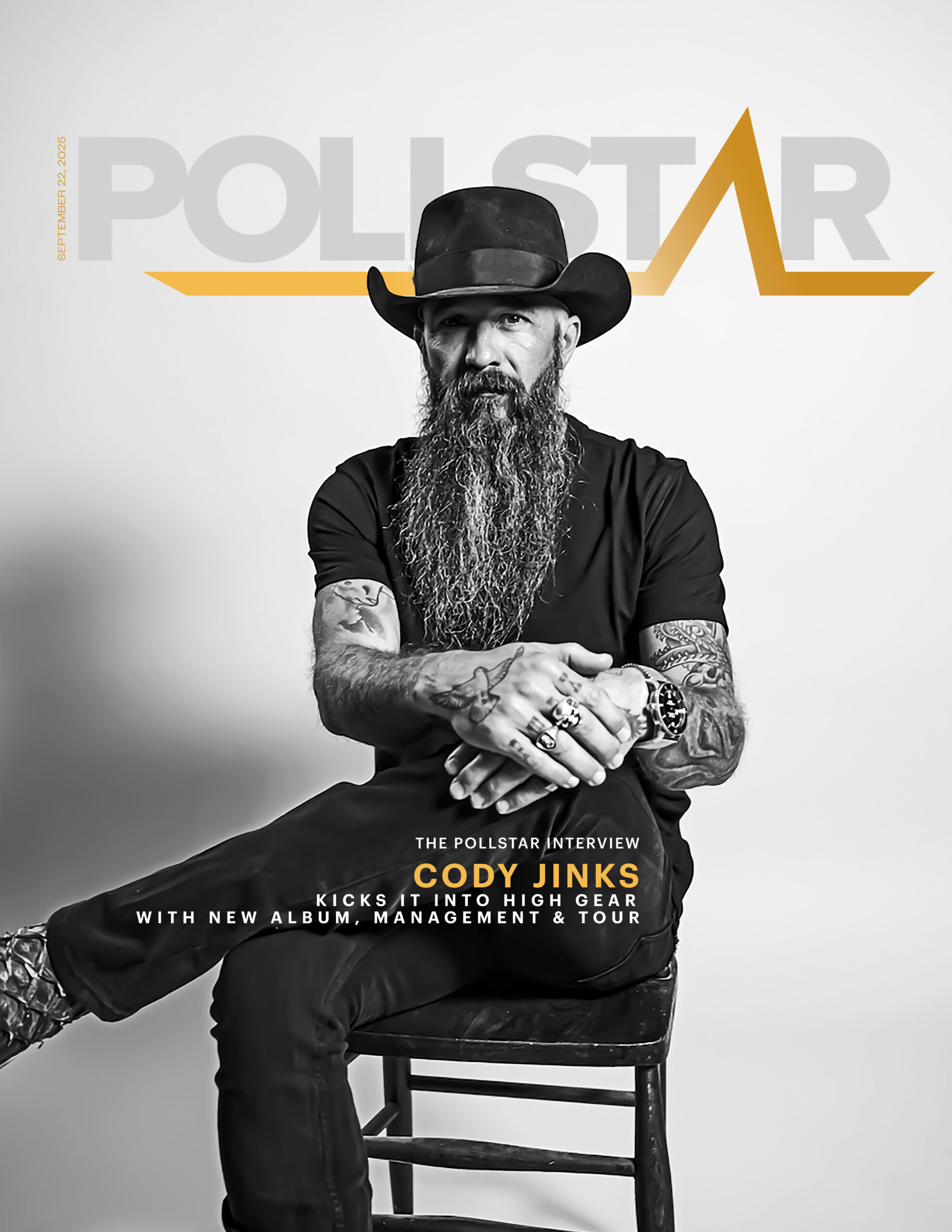
At 45, Cody Jinks is still on the way up. The Texas native released his critically-acclaimed eleventh album In My Blood this summer on his own independent Late August Records, and still does what he does: make hard-hitting, intensely personal albums, and tour like a bandit with his band, the Tone Deaf Hippies. But these days, the rooms are nicer, and the print on the festival posters keeps getting bigger. Benefitting somewhat from country music consumer tastes veering more and more toward edgier, rougher-hewn “outlaw” music, as Jinks himself puts it, the artist is “ascending” some 5 million tickets into his career.
Country, be it outlaw or otherwise, hardly seemed in the cards when Jinks first expressed himself musically back in the late ‘90s via Fort Worth, Texas, thrash metal band Unchecked Aggression. That outfit, like many first endeavors, didn’t stick around as a going concern, and by around 2005, Jinks was playing country. Blessed with a resonant baritone, a hard-charging band and uncompromisingly honest lyrics, a series of records beginning with Adobe Sessions (2015), I’m Not the Devil (2016) and Lifers (2018) began to gain traction, buoyed by incessant road work in places like the ones Jinks chronicles in his fan favorite ballad “Hippies and Cowboys” from his 2010 album Less Wise. Places he “knows by the smell.”
Now they probably smell pretty good, by comparison, with theaters and modern outdoor venues mixed in with sheds and festivals like Born & Raised in Pryor, Okla., and Tanglefoot in Temple, Texas. Jinks is booked by Mike Krug at William Morris Endeavor with Coran Capshaw managing and Drew Loschke brand managing at Red Light and Logan Hacker doing day-to-day from Jinks’ internal team.
Jinks’ former hard-living lifestyle was well-chronicled in his songs, just as his sobriety is now on the latest record with songs like “Better Than the Bottle.” Calling from the road this summer, Jinks spoke with Pollstar about how his touring and music have evolved, how they haven’t, and whether or not Unchecked Aggression was actually any good.
POLLSTAR: Love the new record, man. It’s pretty hardcore. It’s very much you.
CODY JINKS: Thank you.
Tell me a little bit about going into that, what your goals were and did you get what you were going for here?
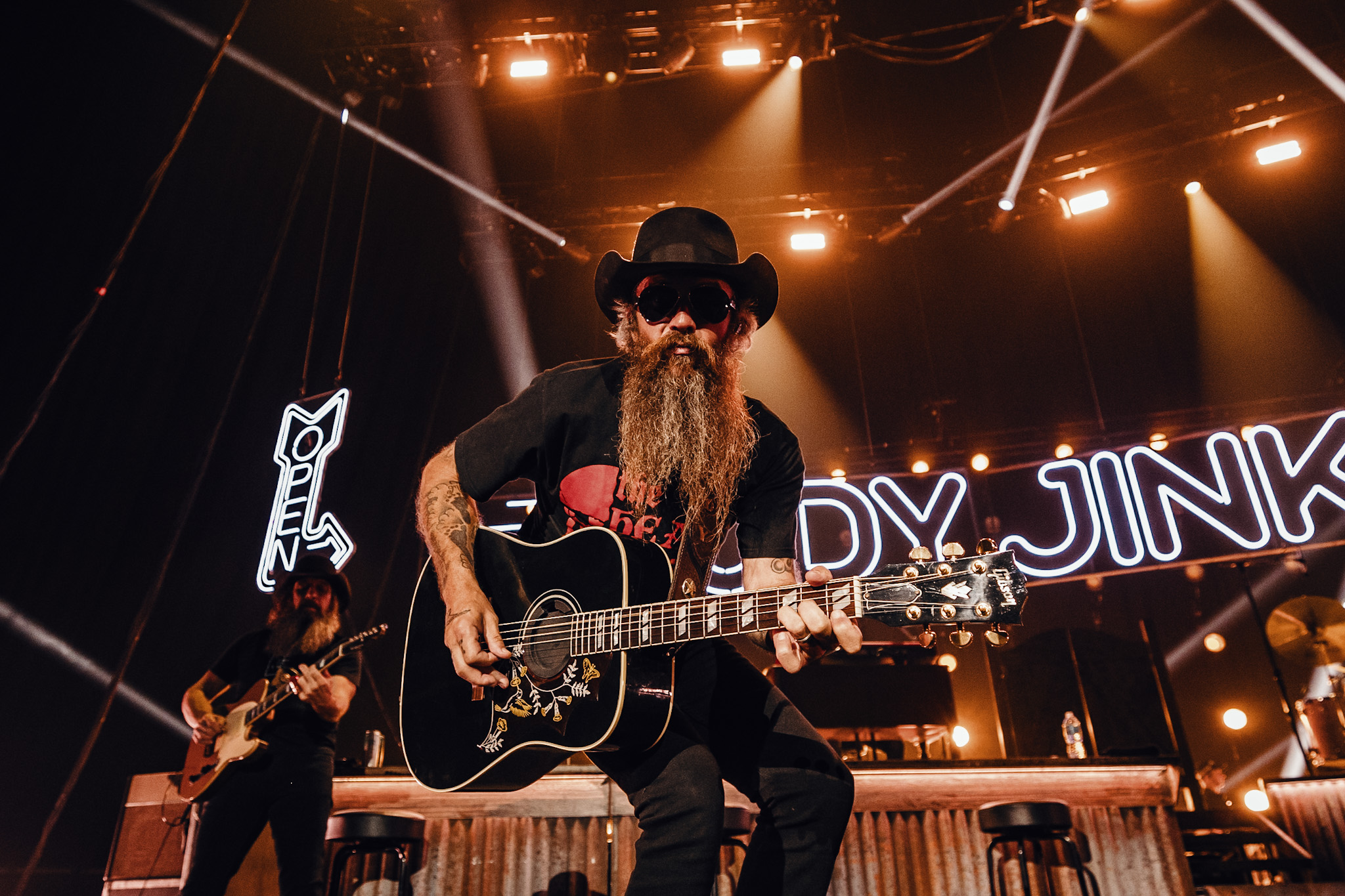
This [record] is the beginning of the second half of the story, of what I think this represents for me, us as a band, Josh Thompson, our bass player, as a producer, all these things together. We’ve been doing this a long time now, it’s a shedding of an old skin. We haven’t changed a lot. We’ve made our stage production bigger, more lights and bigger stage set-up, stuff like that, but we still do things very much like we’ve always done them. It’s a maturation process.
The song with Blackberry Smoke (“In My Blood”), I heard [Smoke guitarist/vocalist] Charlie Starr on there real clear.
It was our band and Charlie. He came in and laid down guest guitar and guest vocals.
That was a lot of fun. That came over the course of last summer. We were touring with Blackberry Smoke and ended up writing that song. We had a break for two or three weeks where they went and did some previously booked stuff, as did we, then we got back together. I’m like, “Man, I love jamming with you guys,” and they love jamming with us, and we just got to talking and the idea for that song came to be and we started writing it. It took us a few weeks, ended up becoming really happy with it.
We finished it actually in Canandaigua, New York. Charlie came over to my bus and we sat there, hashed the rest of it out, went over it three times and then played it acoustic that night together, brand new right out of the box. And look where it is now. It’s the title track to the record, couldn’t be more pleased with how it turned out and obviously our great friendship, Charlie and Blackberry Smoke for sure.
The touring match up, you guys with Blackberry Smoke, is really effective. It’s not exactly the same audience but it’s people who, if they got turned onto to your show, would probably like it and vice versa for your fans hearing Blackberry Smoke. It’s not a carbon copy audience, but it’s like-minded people, I would think.
It is like-minded people. There’s a crossover there. As you said, it’s not the exact same audience, but definitely the same walk-of-life type of people, for sure. And I see a Blackberry Smoke shirt or two every night we’re on stage. There’s enough of a crossover to where they are represented at most of our shows.
And those things can grow both artists’ following, and it’s going to come from the shows. Everything else follows what you can draw at the shows and who tells who about itz
That’s always how we’ve done things. From a fan’s perspective, looking at Blackberry Smoke, that’s the way they’ve conducted themselves, as well. As a musician, you want to create music that you want to hear, and that’s very opinionated of you, if you look at it in a certain regard. But the fact of the matter is we have these songs inside of us and we have this old school mentality of starting a band, getting in a van and go. Obviously, we spend the majority of our time on tour buses and airplanes now, but it’s the old school mentality, the old school approach. It’s written by a couple of guys that have been doing it for a good while now.
Fans want to know what to expect at a show. If you look at the people that have long careers, they don’t throw a lot of surprises at their fans. Whether it’s George Strait or I just did an interview with Roger Daltrey from The Who, you know him when you hear him, 60-something years on, and the same with George Strait; he hasn’t come out with a punk record anywhere along the way. I think you need to grow as a musician, and you are, but I can still tell it’s you on a new record, even if it’s the eleventh one. You know what you want to be musically.
We’ve found our sound, and you spend a lifetime trying to find it, perfect it, change it. Songs change, they grow, the sound grows, you grow as a band, you grow as a writer. We all grow individually as musicians, collectively as stage performers playing a live show. That’s the beautiful thing about it, to still be doing it after all these years at this level and still knowing that we can go in even after the eleventh record and still come up with something new and creative and fresh. But we do have our sound.
So you’re from Haltom City, Texas?
I am, North of Fort Worth.
I know it. I spent what felt like a decade there, lived there about a year. I think you were in first grade.
That’d been about 1986, 87.
‘Eighty-six. To my recollection of it, I don’t have any inclination to go back, but it may have been better for you.
I was in the first grade. At that time, I was in a little bit of a different part. I was one or two suburbs over from Haltom City and spent the majority of my teens in Haltom City. Our borders were really screwed up where I grew up in North Richland Hills/Haltom City area. There’s Richland Hills, Haltom City and Watauga that all come together in the same area. It creates a really weird school boundary. That whole North Fort Worth area, that was our stomping ground.
What I remember is I got thrown in jail in Euless, and they told me never to come back.
Useless (laughs)
Exactly.
I used to live in Useless.
That judge told me I looked like I stepped right off of “Hee Haw.”
What’s wrong with that? “Hee Haw”’s a good show.
I ain’t going back. But you had a band called Unchecked Aggression. Were they good?
I really like that question. We were getting there. By the time that band disbanded, we had made a full studio record and a three or four song EP that was never released because the band ended up breaking up. But that band could have been really great. I definitely thought that was the band I was going to be in for the rest of my career. We were good, but we were very green. Had a lot of fun doing that, but it ended up working out.
I would say it did, but I found it’s not unusual for a band in a more traditional music like country or acoustic to have started out in much harder music. Like the Avett Brothers, for example, had a death metal band before they started doing what they do, and it’s not a bad foundation to go do something else.
I think any music that you can listen to, play, learn from that’s not your primary genre, your, let’s say, “job specific” type situation, you could always learn more about music from. I’m constantly seeking new music, new bands I haven’t heard, revisiting older records. It’s a never-ending research project because you’ve got to keep creating, and wherever you can draw from, whatever musicians, bands you can draw from, it’s important you store all that somewhere.
It’s probably like my year in Haltom City. I use it somewhere along the way.
See? All these years later and you never went back, you learned.
You probably learned a lot from dealing with the music business, trying to get your stuff out there, not just recorded, but having good tours routed, good pairings on the road, playing the right venues, and then distribution and all that. You probably learned more about what makes it all work than you ever wanted to.
I know enough about the music business to be dangerous. I’m still learning, that’s a constant. That’s another hat I have to wear. We do the independent thing, and it’s a constant. The music business changes so fast, just like technology. It compounds exponentially and it snowballs, it picks up speed as it’s going downhill, and there’s always something new to learn. You have to keep your eyes open and listen a lot more than I used to listen, that’s a different hat. I’ve had to learn how to compartmentalize those two different aspects, being a singer-songwriter versus really having to understand the business because of how I run mine.
It seems like you’ve landed in a comfortable place, anyway, from the label situation, you’ve cracked the code there, and you’ve got a big agency (William Morris Endeavor), with a dedicated day-to-day guy, and Red Light Management is as big as it gets, though it’s independent the way it operates. You seem to have found a good place right now in terms of running the business of Cody Jinks.
I tell people often I ride around on the shoulders of some really, really wonderful people that get me to where I need to go. The really great thing about Red Light has been we took our organization to them, and I said, “Hey, if you want me, you want all of us, and let’s figure out a way to make all this work.” And everybody, from my camp, my day-to-day, to my own record label rep, to my own bus drivers, to everything, everything, everything. And they’ve been great. They said, “Yes, absolutely, we’ll figure something out.” They have. We’ve structured a really unique relationship, and I feel very, very comfortable right now. With our organization being blended with theirs, it’s been really nice so far.
That’s what they do. [Red Light founder] Coran [Capshaw] is a friend and I’ve watched him grow that thing. They take whoever’s generally working with the band or artist, and it could be a management company or it could be informal, but they let them do their thing to get where they are for Red Light to even be interested. Then they have all these resources and institutional intelligence. It seems like a good fit.
It’s unique what they do, as you just mentioned, in that they share their knowledge with us, with our internal team, my internal people, the people that I took over with me who are my trusted people. They’re very gracious, and the best thing that we can do as an organization is to keep learning, everybody from the top to the bottom and in between. Like you said with the way that Coran structures everything there, it gives organizations a way to thrive with help that they need to do what they do.
Looking at your route, they look like really nice, solid commercial, almost mainstream rock rooms, not so much the bars you were writing about in “Hippies and Cowboys.” At this point in your career, that’s a good thing, right?
It is. We’re comfortable, really, wherever we are. I usually joke around with the crowd every evening. I’m a honky-tonker, I came from a place and a time where I had to be able to keep somebody’s attention in any bar I was dropped off in. Whether it was a country bar or a rock bar or a blues bar or a biker bar or whatever kind of bar, we have the type of band that can hang with anybody. We play with metal bands, country bands, we can play anything, with anybody, that’s unique in and of itself.
Those metal clubs, if you can go in there and play something that ain’t metal or hard rock, you’re doing something right if you can keep from getting bottles thrown at you.
Well, I’ve had bottles thrown at me, I haven’t been right all the time.
What about the festivals? You enjoy those scenarios?
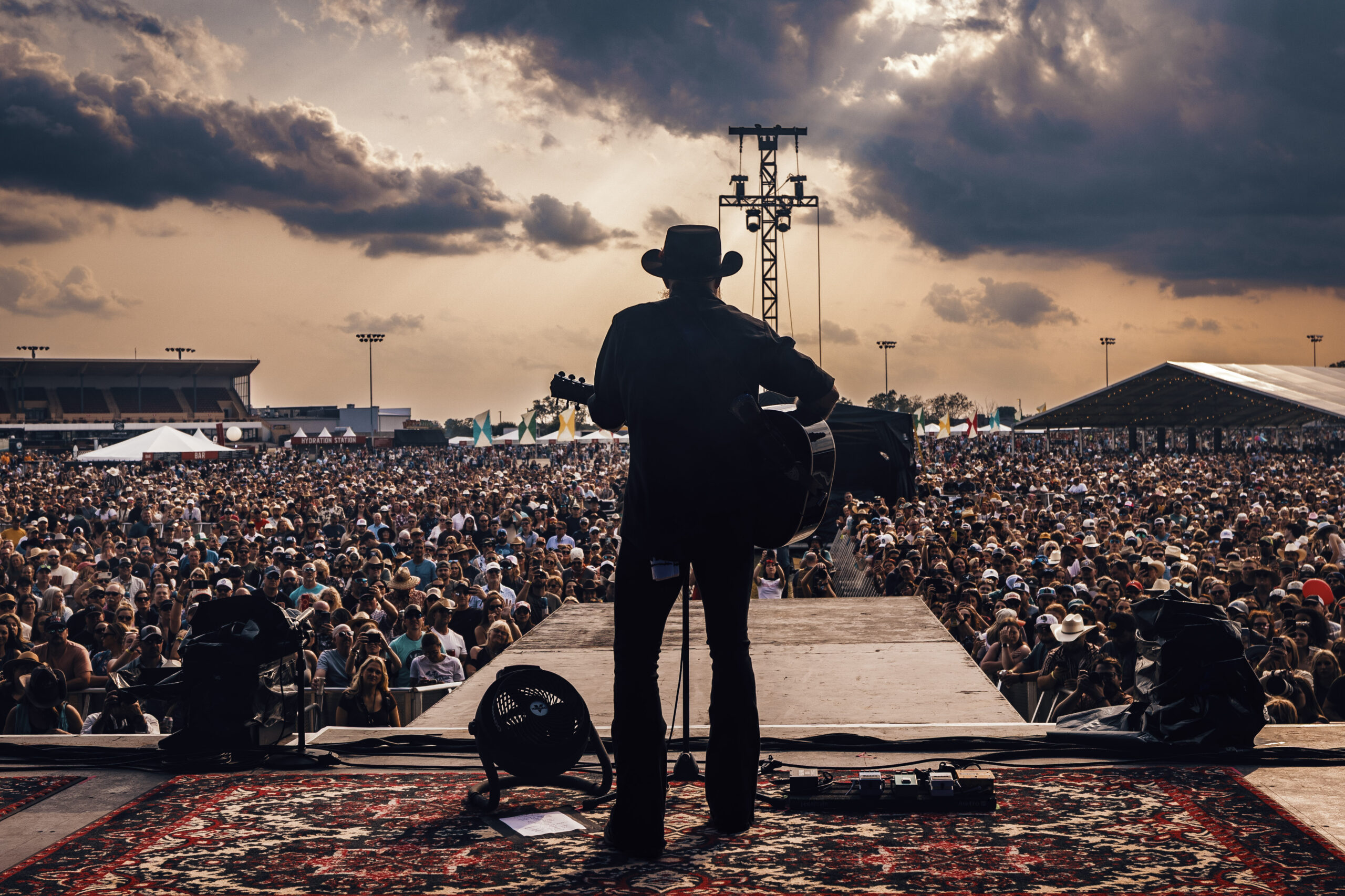
I really do. Festivals are usually really fun. They’re not always, but they usually are. I love watching live music as a fan. Obviously doing what I do for a living, we’re not able to get out there and see a lot of live shows. Festivals give us those opportunities and gosh, the last festival we were at we played with Tanya Tucker, Dwight Yoakam and Tyler Childers and we got to hear and see them as a fan. That was a great day. We had a great show, but as a fan that was also a great day.
For what I do, I love to go to the festivals. I get to see all the agents and managers and whoever’s running the festival that I deal with in my work, and you can knock them out in one day and a few artists as well and see a lot of different acts and get turned on to something you didn’t know about.
And festival days are a great opportunity for a lot of the artists to get out there and do some work and do some interviews, because there’s usually a bunch of press. It’s a good days work. When it comes down to it, it’s good to get out there and hang out and talk to people, see old friends, somebody from another camp that you worked with who’s been in your camp or traded camps or something like that. They’re a lot of fun.
![codyjbw0896[37]](https://static.pollstar.com/wp-content/uploads/2025/09/codyjbw089637.jpg)
Do you get much input on the routing or do you tell them to shoot for a certain room or festival or do you just let them have at it?
No. Typically, it’s not so much the rooms or the routing. it’s the scheduling. Specific dates I want to work or the band wants to work that we figure out. Most of us have kids, from very little kids to grandchildren. We’re very widespread, so family is first at this point. We’ve all been doing this a long time, we try to spend as much time at home as we can, try to route as smart as we can. The fairs and festivals are a lot of fun because that gives you a basis to route around. We’re doing amphitheaters and smaller arenas and that’s a great place to be.
Following your touring over the years, it seems like you’re in a good spot right now in the spectrum of a career. Tell me about your band (The Tone Deaf Hippies) right now, who’s been with you a while and who’s new, if anybody?
The newest guy is Matt Nolen. He did six-and-a-half years with John Fogarty and was a referral from Ward Davis. He and Ward go back15-20 years ago playing and writing together in Nashville. The new Randy Travis song, “Horses in Heaven,” Matt wrote. He’s a singer-songwriter, multi-instrumentalist, he’s been with us about a year. Jake Lentner, he’s been with us three years. I did a heavy rock or metal project four years ago and he came in and did the guitar work and he was so good. He gelled with the guys so good and we added him to the band. He’s been with us a good while now and everybody else has been here for quite some time. Hot Rod, our steel player, Austin Tripp, he’s been on the road with us ten plus years. Dave Colvin, our drummer, he came from The Heartless Bastards ten years ago or so. We were recording a record at Sonic Ranch and his previous band, Heartless Bastards, were recording, as well. We got his information and it ended up being a situation where a band needed a drummer and a drummer needed a band. He’s been with us ever since. Chris Claridy, lead guitar player, has been with us a long time. He’s a Texas boy. It’s a big band, there’s seven of us. We’ve got Josh Thompson, me and him have been playing together almost 20 years. He’s produced most of our last decade’s worth of work.
And what about your crew? Is it long-timers, as well?
My guys that are my main crew have been with me for a long time. My stage manager, he’s our production and stage manager, is Alex Salverian, we call him Sal. Gosh, he’s been with me ten years. Our front-of-house engineer, Seth Noseworthy has been with me for 10 years. Our day-to-day manager, Logan Hacker, started as my in-ear monitor man, he’s been with me 10 years. Gosh, we have several guys on the crew that have been with me a decade or better now. And the rest of the crew has been with me at least two years. Some of the guys, three or four guys that we basically contract out, this is their second tour with me, that’s a good sign. They’re part of the family now.
And it is a family. COVID blew this whole part of the business up. A lot of people were off the road for the first time in 20, 30 years. They go home and figure out you can have a dog and insurance and stuff like that and they didn’t ever come back. It gave a chance for the younger folks to elevate and new people to come in. I think it shook out pretty good, just from observing what I see.
We were fortunate. COVID killed a lot of bands We had been working, working, working so hard and so long up until that point. We were forced to come up for a break and after grinding for years and years thought, “I have to take a break now. I hope we’re going to be okay.” It turns out we were, because being independent really served us well at that time. There wasn’t a lot of hands in the cookie jar, so to speak, nobody missed a paycheck, band or crew alike.
That’s fantastic. That is highly unusual, unless you’re just a major superstar, stadiums all the time band.
We were very fortunate. Like I said at the beginning, I sit on the shoulders of some really amazing people that do a great job making us look good.
Assessing where you’re at eleven records in the can playing these nice rooms, do you ever sit back and say, “We’re doing pretty good,” or “I’ve made it,” or “I like where I’m at,” how do you assess where you’re at right now?
It’s odd, because typically at my age your career starts to descend and I’m actually ascending. I’m having part two of my career, which is very unusual at this age. But there’s a lot of people just now finding out about it. I’m having more fun on stage than I’ve ever had. I’m more comfortable in my own skin. I’m as comfortable as I’ve ever been mentally, and mentally being on stage, which, let’s be honest, man, it’s a weird job. You have to deal with keeping yourself grounded and sane and fortunately for me, faith and family is a big, big part of how I stay centered. We’re having a blast right now. As far as hot bands on the road right now, man, we’re out there kicking some ass. The crowds have been great. The band is on fire. We’re having fun. We love making music with each other. We love playing for the crowds. We love what we do. And it shows, because we’re up there running around like a bunch of maniacs having fun like a bunch of twenty-year-olds. Good Lord willing, I’m going to get to do this for a very long time. You don’t really quit this. Eventually, I guess, you just get too old to do it. I hope that’s what happens.
FREE
 Daily Pulse
Subscribe
Daily Pulse
Subscribe
 Daily Pulse
Subscribe
Daily Pulse
Subscribe