
Ahora Abierto: Vive Claro, Bogotá’s Newest Venue, Is A ‘Game Changer’ For South America
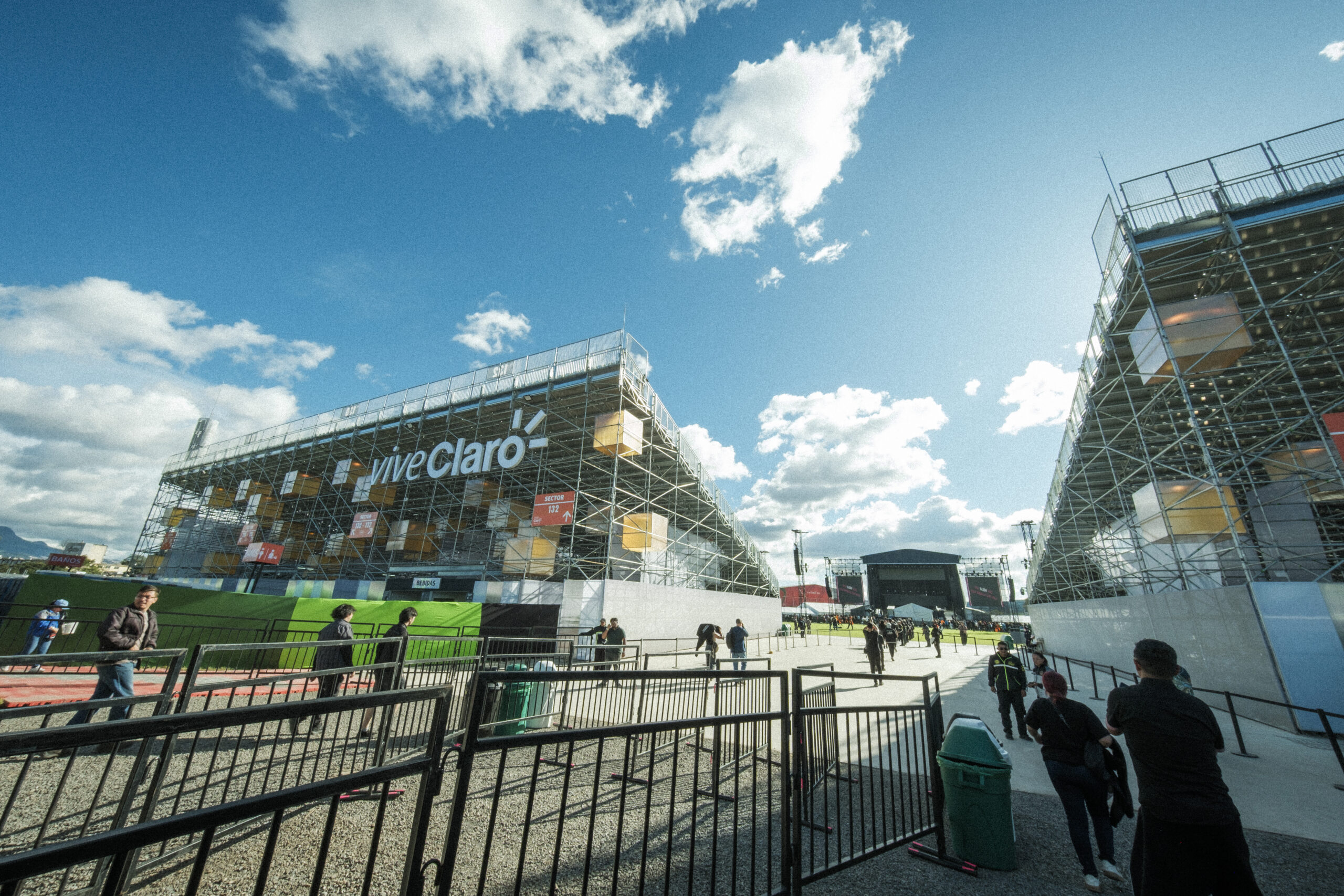
Everyone in the live industry knows what South America has to offer: passionate fans, modern arenas and soccer stadiums for artists with larger productions.
Though buildings like the Movistar Arenas in Colombia, Chile and Argentina and Coliseo MedPlus have helped the region draw acts like Twenty One Pilots, Sting, Chayanne and Katy Perry, it can be challenging to find avails at the stadium level with soccer matches and bookings done well in advance.
OCESA Colombia is hoping to change that with its latest venture. The giant Latin promoter recently opened the doors to Vive Claro, a 40,000-capacity stadium in Bogotá built specifically for live events, making it the largest venue in the country.
The promoter inaugurated the multipurpose stadium with Green Day, whose last reported show in the country was in November 2017 with 9,165 tickets sold, according to Pollstar Boxoffice reports. This time around, the punk band’s concert at Vive Claro reportedly moved about 40,000 tickets, with fans jumping and moshing in the rain.
It was quite the sight, one that Luz Ángela Castro, OCESA Colombia’s CEO, envisioned when she first announced the project last year. Back then, it was called Distrito Verde (“Green District”), but the name changed after the promoter aligned with major Latin American telecommunications company Claro, which invested over $1 million into the venue by installing fiber optic and fixed internet access points to enhance the experience for staff, vendors and fans.
Such a state-of-the-art venue of that size is new territory for OCESA and South America at large, showing that it is possible to find spaces for development.
“I love paving a new road for the industry and showing that it is possible to break paradigms and break established patterns,” Castro told Pollstar. “It’s about having the possibility to bring technology from Europe and the United States for the first time in South America.”
Vive Claro is uniquely located in a large 59-acre green area that is about a half a mile away from public transportation, and it’s surrounded by neighborhoods and distant mountains that serve a visual backdrop.
Its design is very similar to that of Estadio GNP Seguros, Mexico City’s 65,000-capacity stadium constructed for live music, with U-shaped stands surrounding the front of the stage and the center providing space for fans who want to remain on the ground and booths for merchandise. It maximizes the space by including VIP areas inside the stands, giving premium ticketholders a place to relax and enjoy food and beverages.
Vive Claro complements what was already a strong global market that boasts venues such as Movistar Arena (14,000 capacity), MedPlus Coliseum (24,000 capacity) and Estadio El Campín, a 39,000-capacity soccer stadium that hosted System of a Down, Shakira and Andrea Bocelli earlier this year.
The project reportedly cost around $30 million, and Castro says the design allows promoters to host events of any size, whether it’s 40,000 or 20,000 people. She views the space as a multicultural hub that can host the biggest music festivals as well as popular food fests. The immense space allows for activations and branding and merchandising opportunities for promoters and artists, all of which promote lengthier stays at the venue for fans and encourage them to arrive early in order to be fully immersed into an experience rather than just a music show.
Castro believes the structure’s strength is in its modularity, always envisioning it as a “mil usos,” a popular Spanish term that translates to “thousand uses.” The venue features bleachers from NÜSSLI, a Swiss company that designed the seating for Adele’s remarkable run in Germany last year. The stage, which is the largest ever built in the country and capable of just about any production, is also versatile and can be moved accordingly if artists prefer to be closer to the general admission area to deliver a more intimate experience.
For restrooms, the venue utilizes Sanitrax toilet modules from Satellite, the largest manufacturer of portable toilets and service units.

“It is about having the possibility of bringing technology from Europe and the United States for the first time to South America,” Castro said. “With this, we can generate confidence with the public, authorities and artists in the project.”
It’s no easy feat to develop a stadium in South America, let alone a smaller venue like an arena. The metropolitan cities in the region are densely populated, and local governments concerned with the ecological impacts tend to push back against such projects.
“It’s not possible to do things if you don’t have cooperation and permanent dialogue with authorities,” Castro said. “I have had a leadership role over the past 16 years at OCESA Colombia, and I have found that when you innovate or bring something that didn’t exist, you undoubtedly have to pave the way, and that has many challenges.”
However, because the area is privately owned by a government entity known as the Gobernación de Cundinamerica, which is dedicated to protecting citizens’ social services, OCESA was able to deal with them and assured officials that the cultural district would not only benefit the local economy but that they’d also do it with sustainability at the top of their minds.
As a panelist at the VenuesNow Conference, Castro boasted about the company’s sustainable practices, which include using solar panels for energy and recovering more than 40 acres worth of green space by planting thousands of trees and installing pumps to help circulate recycled rainwater.
Eco pavement was also implemented throughout the area to help fortify the base by managing stormwater, reducing mud and preserving the natural grass, protecting from it from heavy vehicles.
Vive Claro also aims to mitigate noise pollution, positioning the venue in a way that has sound carried away from the surrounding neighborhoods. They also have barriers with material that help reduce noise strategically placed throughout the venue.
“It’s a temple for music lovers,” Castro said. “It’s a place that was built to generate the best experience with amazing sound, great accessibility zones making it easy to enter and leave, parking lots, VIP areas and incorporation of state-of-the-art technology that permits fans to have connection in real time to upload content at fast speeds.”
It’s also going to be a major driver for the local economy, with as many as 2,500 employees working at a single event. The first seven events will generate more than 20,000 jobs, according to Castro, and the venue already has acts like Linkin Park, Guns N’ Roses, Shakira and My Chemical Romance and Colombian rapper Blessd on the calendar.
That kind of star power will only encourage more big-name artists to visit Colombia, which in turn bodes well for other South American markets.
“In some cases, we lost an artist or a tour very important for our economies because we are competing with Asia, Australia and other markets,” admitted Castro. “Colombia has positioned itself as an important market for international touring, but it’s fundamental to expand on what we can offer.”
There’s no bigger way to make a statement in the music industry than to build a stadium for live entertainment.
“It changes the dynamic and perception of Latin America in a moment where the development of innovative projects permits one to reach another level, and at this moment, the positioning of Colombian artists around the world is something we’ve never seen,” Castro added, referring to artists like Shakira, Karol G, J Balvin and Feid becoming global stars.
South American markets are quickly evolving and catching up to the big fish by embracing the innovations in all facets of the business. Vive Claro was the first to use Ticketmaster, which recently acquired Colombian ticketer La Tiquetera, furthering the notion of Latin America’s growing influence in live entertainment. Live Nation owns Ticketmaster as well as a majority stake in OCESA and Páramo Presenta, which co-promoted the Green Day show with Move Concerts.
While the rock show was a success, operators are still making adjustments to deliver the best experience for all, inside and outside the venue. There were complaints made by locals after the show regarding congestion around the venue and the noise coming from the stadium. OCESA assured officials and the community that they want to keep a line of communication with community members and government officials open, and it has a plan to address those concerns.
The promoter looked forward to showing those modifications with Kendrick Lamar on Sept. 27, but the concert was postponed hours before the event because of an issue with permits. Castro spoke to Colombian media outlet El Tiempo after the incident and said the current documentation system is out of date and assured that OCESA is working with local officials to ensure such a thing doesn’t happen again. (See page 37).
Even with these hiccups and the rain during the inaugural concert, Castro walked with a smile as she explored the venue in August, soaking in the moment that was years in the making and unimaginable a decade ago.
“To see this crystallize in real time is something that gives me great satisfaction,” Castro said minutes before taking her seat and enjoying Vive Claro’s first-ever show.
FREE
 Daily Pulse
Subscribe
Daily Pulse
Subscribe
 Daily Pulse
Subscribe
Daily Pulse
Subscribe