
Exec Profile: Jonathan Becher, San Jose Sharks Prez, On SAP Center’s $500M Upgrades, Lease Extension
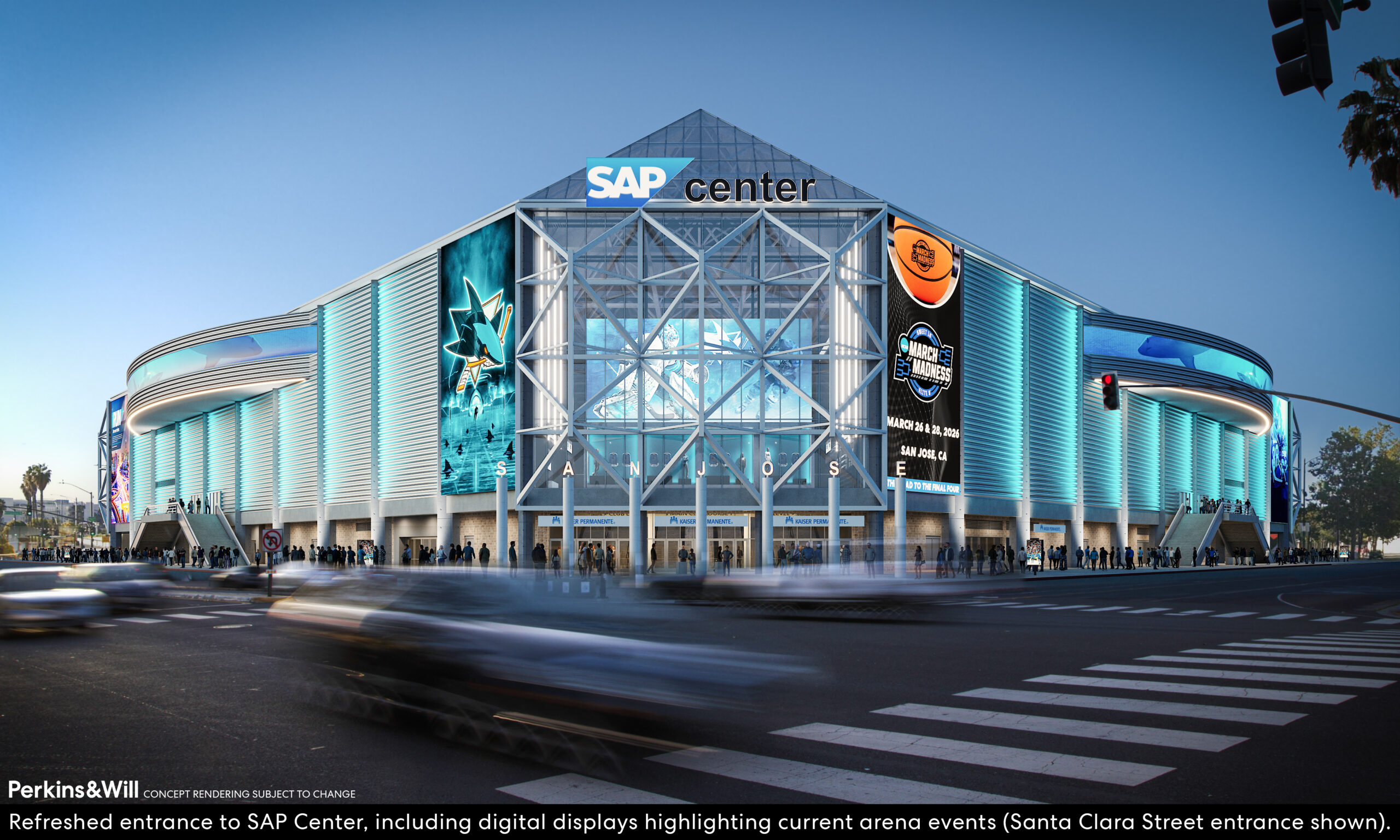
In late August, the San Jose Sharks reached an agreement with the city of San Jose on a long-term agreement keeping the team in the South Bay city through the 2050-51 season, with the city and team committing more than $500 million into the team’s longtime arena home, SAP Center.
Improvements will include infrastructure updates as well as modernized concourses, penthouses and club levels. The agreement was a culmination of years of discussion and answers questions of what the team would do when its current lease expired, both about staying in the city of nearly 1 million and at its aging SAP Center arena, which opened in 1993.
“At least to me, one of the moreinteresting things was that it was a unanimous vote, 11 to zero,” says Sharks Sports & Entertainment President Jonathan Becher. “There were some local reporters that wondered whether it would be a split vote. I guess, in this political climate we have in the U.S. these days, rarely anything is unanimous, but it’s good to know that people unanimously love the Sharks.”
Becher, one of the directors on the board of the Bay Area Host Committee welcoming the FIFA World Cup and Super Bowl to the region in 2026, breaks down what the deal means for the team, the city and the arena, outlining potential improvements to take place in the near future.
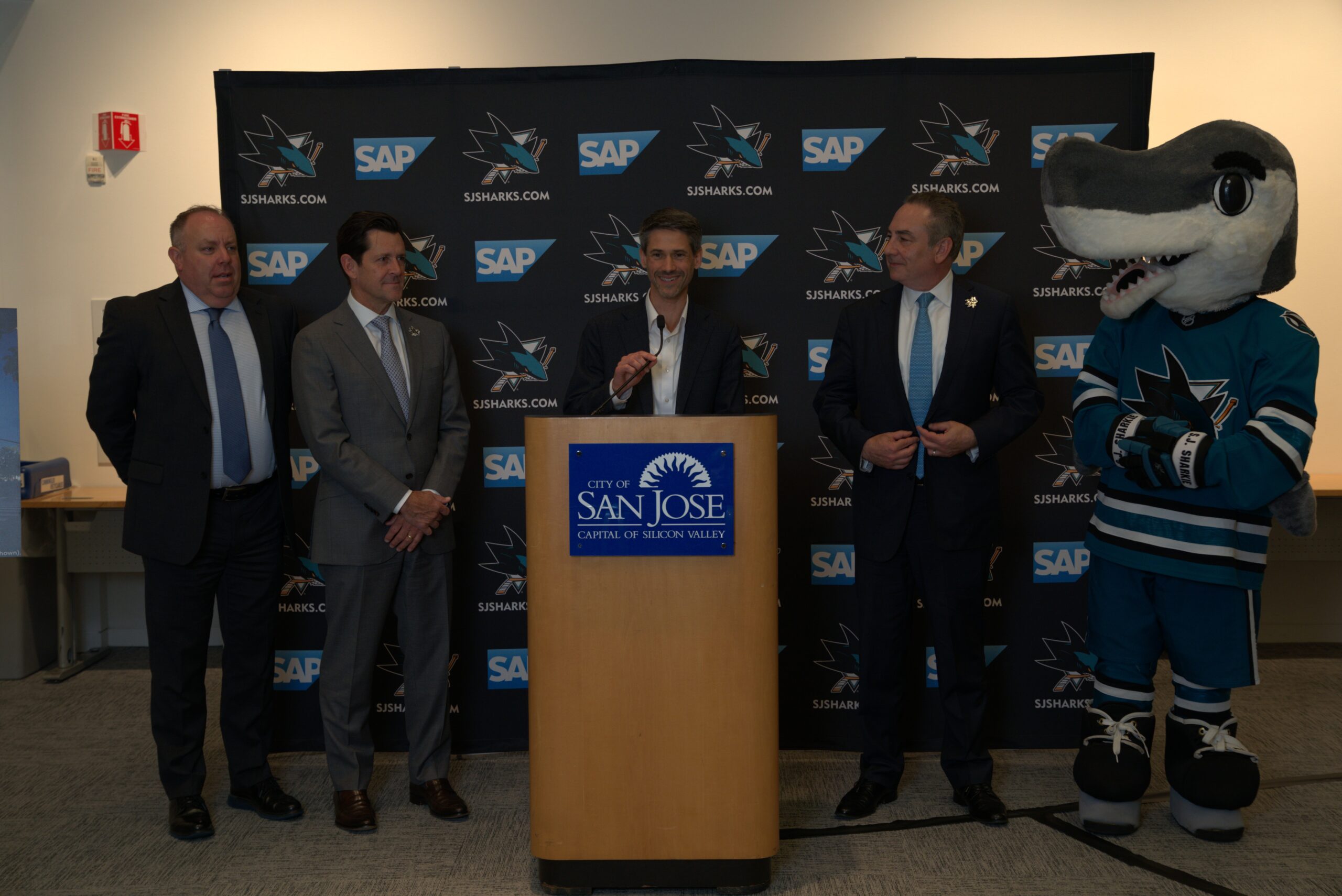
Courtesy San Jose Sharks
Pollstar: It’s not easy to come to terms on an agreement like this, especially one that runs so long.
Jonathan Becher: It rarely seems teams and cities are on the same page and, for a lot of teams, sometimes the relationship sounds adversarial. We’ve had a fantastic, or maybe I should say “fin-tastic,” relationship with San Jose from long before I got here from the moment that the franchise got started back in ‘91. There were no threats of teams moving or no city trying to pressure us, which is relatively rare in North American sports.
The other unusual thing is that this is a city-owned building, and despite that it’s the city’s building and we’re essentially a tenant, we’ve been doing all the maintenance and upgrades for the building from the day it was built. In fact, in the last decade, we’ve invested more than $100 million doing things like fixing leaks or changing earthquake codes and also adding some fun stuff. But what the mayor said really well, and what I was particularly appreciative of, is that even if the Sharks weren’t in this building, which we have zero intention of leaving, this keeps us here for a long time. So this is not so much about investing in hockey as investing in a premier entertainment facility.
This may not be their only investment to become more of a sports and entertainment destination. The mayor has said as much in various places.
What can you say about renovations and improvements at the SAP Center, where the team has played since 1993?
About 40% to 50% of the money is going to go to back-of-house infrastructure things that no one ever sees, and the other 50% to 55% will go to the fan experience. For example, the elevators are original for the building, 30-some years old. You might imagine they need to be replaced. The plumbing has never been replaced. We’re going to be replacing 400 toilets and urinals with all the piping – the fire protection system, the emergency generators, the electrical wiring, almost all of it is original from the building, which was built in the ‘91 to ‘93 timeframe. So there’s a lot of back of house stuff, WiFi, routers, that’ll be redone as well. That helps the fan experience, but the fans probably don’t notice that.
What about structural things?
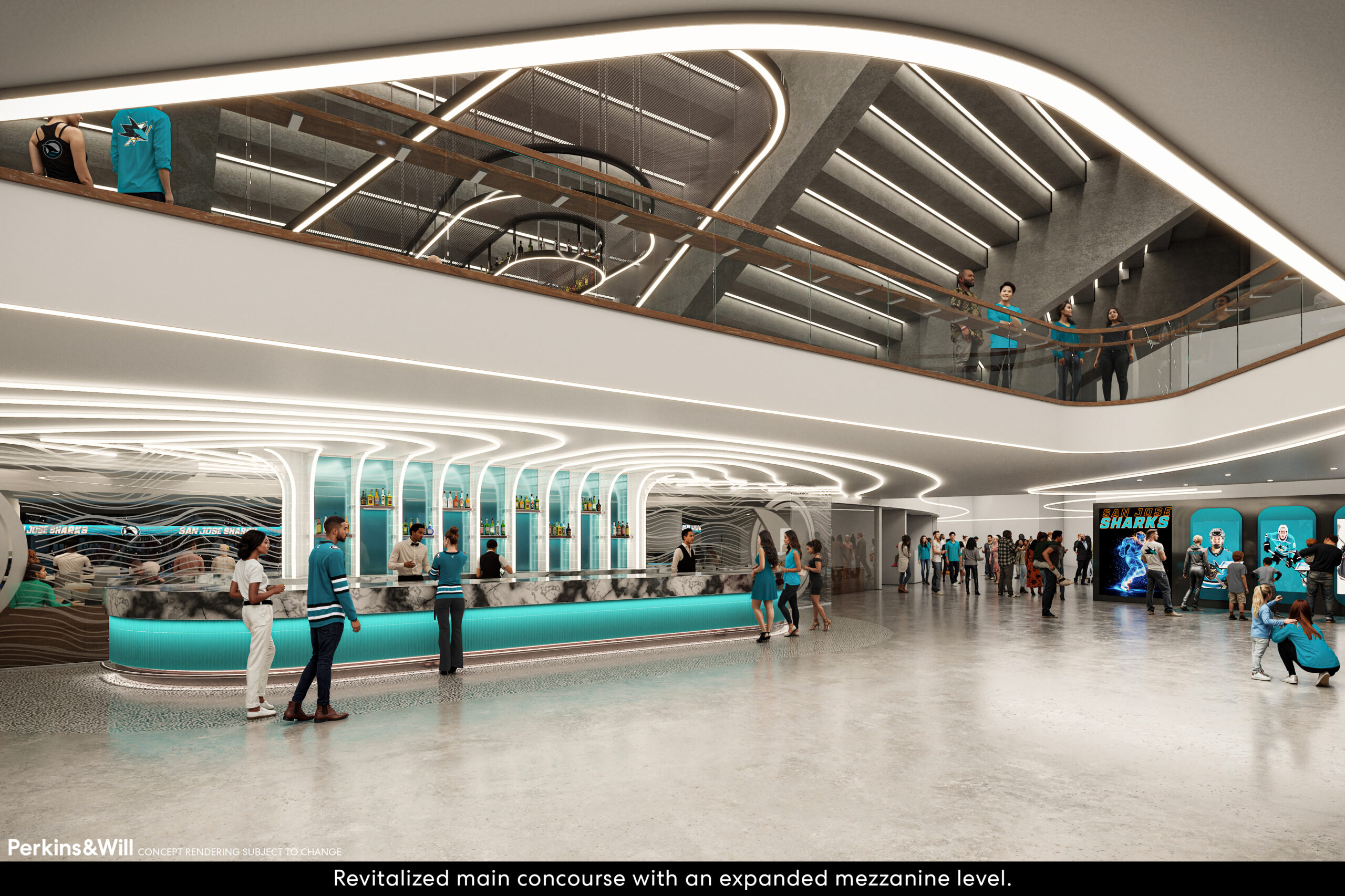
One of the design criteria is we want to distribute people more equally through the building, so the concourse is not as crushed during these high occupancy events. There’s two primary ways that we’re going to do that. One is a redesign of the concourse itself, looking at the different choke points of where it gets narrow, where people tend to gather. So you should expect a fundamental redesign of the concourse. Secondly, more importantly: we want to add other layers or levels to the building — details still all to be worked out. For example, we don’t have any people or fans or spaces on the arena level. The arena level is the floor level where the ice is, or the entertainer, or basketball when we have a basketball building. So you should expect as one of the results of this is that we will have some fan spaces on that arena level taking pressure off the club level, taking pressure off the concourse level.
The second thing we’re looking at, subject to city approval, is adding another level, or at least a partial level, halfway between the concourse and what’s called the penthouse level. We think we can get maybe 1,000 or more people on this new half level, and become a concourse-and-a-half building as opposed to just a one concourse. By doing all these things, we think we can take several thousand people off of the main concourse.
We need more degrees of options for our fan base. We have a few premium spaces, we’ve been adding more over the years. We have some tweaks, but they’re older, and we need more diversity and offerings from premium spaces. We probably have four different kinds of ticketing offering. Now we would like to expand that to eight, maybe as many as 10 different kinds.
What we want to be careful to do is not price out our traditional fans. I think sometimes in renovation everything becomes so premium and super premium that the traditional hardcore fan has trouble still being able to afford to attend.
Right now, we are primarily a two-entrance building, and 65% to 70% of our fans come through one entrance, so we will have additional entrances. Final numbers are still to be determined, but probably at least six, maybe more than that. That will take pressure off that primary entrance. Some entrances will be bespoke clubs, some will be more general admission, but there will be more entrances.
What is the overall activity like at the arena this year? How about concerts and other non-hockey events?
In general, we are doing well. When it comes to non-hockey events, we still average roughly 100 events. I think we’ve got a nice job following the trends along with the promoters. We have a large number of Spanish-language events and we’ve also stacked up in the last two years our corporate events. Our largest corporate event is Nvidia, GTC, their customer conference. We have sort of fallen behind in the arms race of all the extra stuff that you provide the entertainers, like gyms and green rooms and things like that. Those are in need of a refresh as well. So we are going to rebuild and go from OK to best in class in this regard as part of this construction, which will help us attract even bigger acts.
How’s the excitement of the 2026 World Cup and Super Bowl bleeding over to San Jose?
Both are in San Jose. The other third thing is March Madness is in our building, so we have a really big first half of the year between the Super Bowl, March Madness and then FIFA World Cup in June and July. There are tons of activations we’re working on in our building or in the surrounding area around our building. As part of the relationship that we have with the city of San Jose, we jointly host something called SJ26, which is all things happening in San Jose, from drone shows to watch parties to the FIFA teams actually staying in San Jose at hotels. So it will be a party atmosphere here. I think all the hotels are already sold out.
FREE
 Daily Pulse
Subscribe
Daily Pulse
Subscribe
 Daily Pulse
Subscribe
Daily Pulse
Subscribe