
Executive Profile: How Jorge Juárez Helped Make Regional Mexican Music Global With Carín León
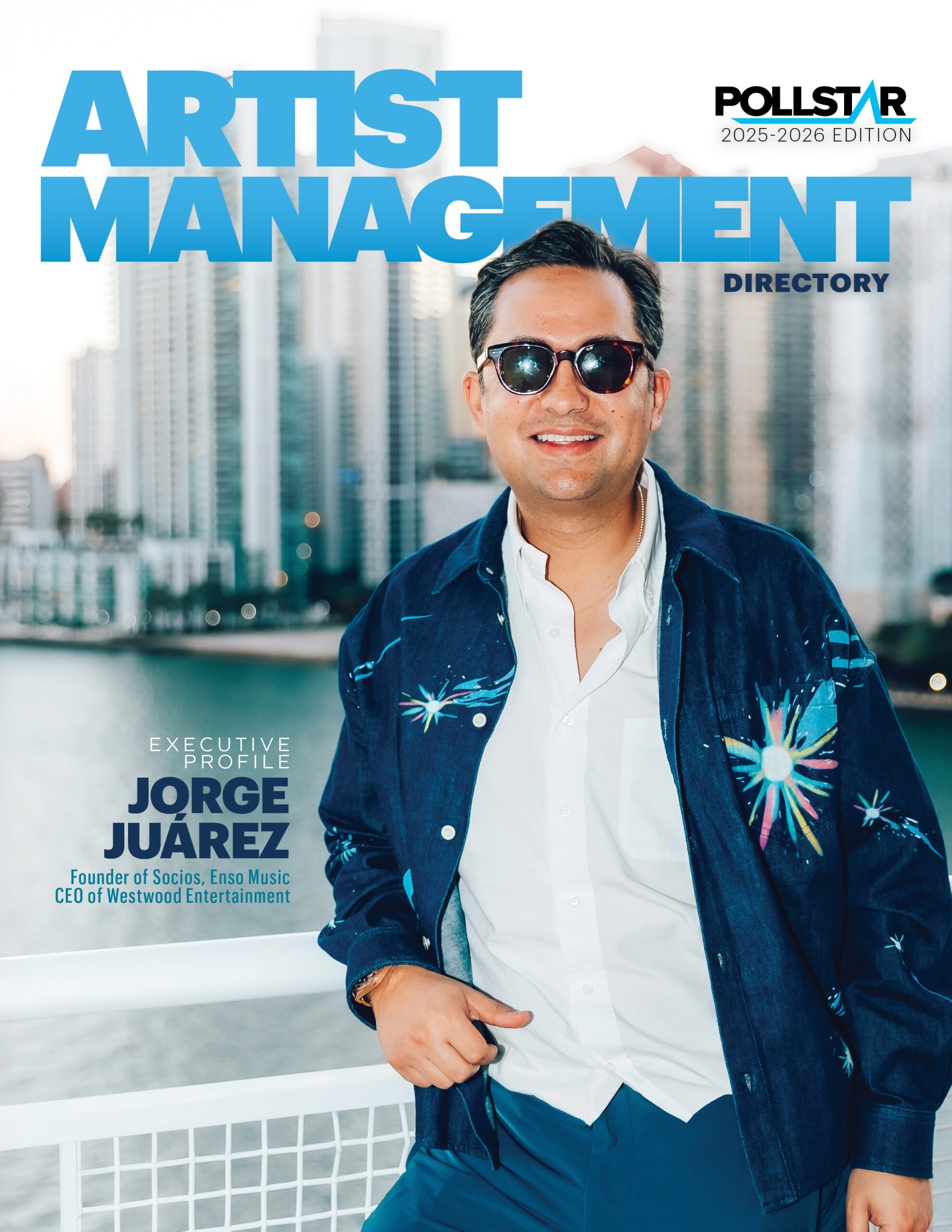
The 21st century brought unforeseen challenges to the music industry as physical media became more obsolete thanks to streaming services like Spotify and Apple Music, and the COVID-19 pandemic kept artists off the road, with the shutdown resulting in an estimated loss of more than $30 billion for the live business in 2020 alone.
But such times also gave way to innovation in the business as it had to adapt to the evolving digital age and social media, and those who embraced that change are reaping the rewards in this post-pandemic golden age.
Jorge Juárez is one of them. The 47-year-old’s journey into the biz began during those times of uncertainty when he graduated with a business administration and management degree from the Autonomous Technological Institute of Mexico (ITAM), one of the nation’s most prestigious universities. Though he wasn’t a musician, Juárez was always intrigued by the art of song and figured that his break in the music industry could be via management or promotion, so he traveled to Boston and took a summer course at Berklee College of Music.
Juárez was hooked. So much so that he wanted to learn all facets of the industry, from music labels to promotion to booking to management, and absorbed any book about the business. He soon started his own booking agency and then launched the boutique promoter Westwood Entertainment, trying to implement what he learned in the States into the live business south of the border.
With Mexico now recognized as one of the top music markets in the world, Juárez and entrepreneurs like him have had a hand in the country’s growing influence on the industry, and some of the artists the multi-hyphenate exec manages, including pop trio Reik and singer-actor Carlos Rivera, are seeing success on the road and in other media like television and theater.
But there aren’t many artists hotter than Carín León, whom Juárez has managed since 2023. Together, they’ve pushed the boundaries of regional Mexican by collaborating with country stars like Kacey Musgraves and Cody Johnson, and such moves led them to the Coachella and Stagecoach stages last year.
Juárez matches León’s ambition, and the two recently made history when the Hermosillo-born singer was booked as the first Latin headliner at Sphere in Las Vegas. Such a feat is a testament to the música Mexicana movement, León’s talent and Juárez’s foresight, and the genre that was once confined to North America is now venturing into new territories, conquering larger, newer venues across the globe.
It’s a proud, inspirational moment for Mexicans, one that evokes a viral interview in 2018 when soccer player Javier “El Chicharito” Hernández said, “¡Imaginemos cosas chingonas, carajo!” Though his statement, which translates to, “Let’s imagine awesome things, damn it!,” became a meme, it also served as a mantra for the nation, a call that Juárez heeds with everything he’s accomplished over the past two decades, including promoting major shows from stars like Bad Bunny and Karol G in Mexico and taking Mexican music to new heights with León.
Juárez sat down with Pollstar to talk about his milestones, globalization and how Mexican music can continue to rise and overcome the challenges it faces today.
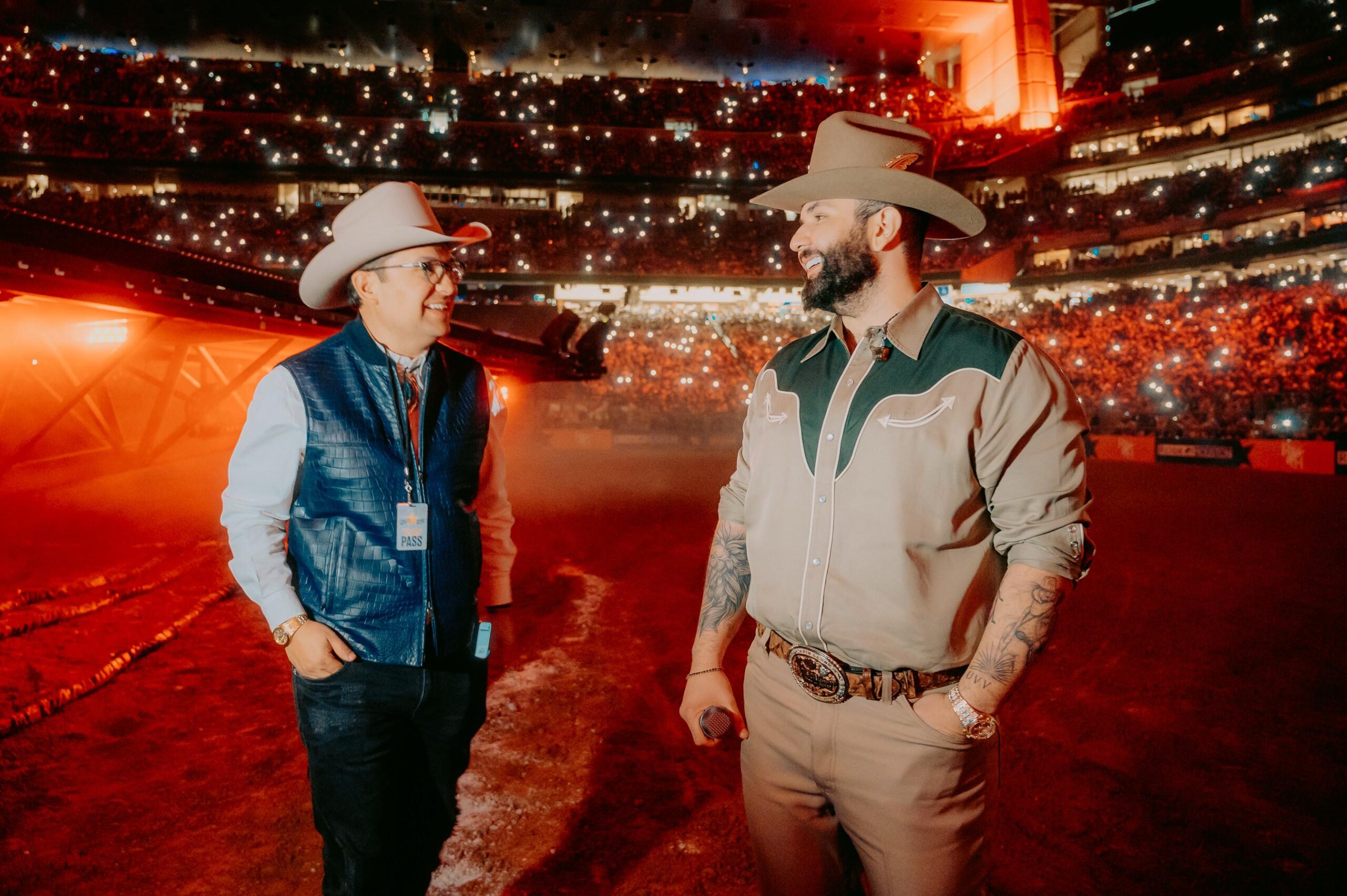
Pollstar: I’m always fascinated to hear stories of how people get into the live industry—sometimes by luck or knowing someone. How did it happen to you?
Jorge Juárez: I started in music in the early 2000s by vocation and luck, not by knowing a family member or friend dedicated to music. It was a period when piracy was rampant with Napster and other similar platforms. I wondered how one would get paid working in music. I am actually fortunate to have started during such a time in the music industry because I believe a crisis can lead to opportunity.
I initially intended to be a promoter, but I realized that I’d be fighting against giants. I saw how essential management was in the concert business, and I decided to get into that. I then launched a booking agency because there weren’t many in my country like there are here in the U.S.
While studying business and economics in Mexico, were you already planning on going into music?
I really liked music, and I was curious about it, but I never knew I’d dedicate my life to it.
I spent a summer in Boston, and I didn’t know they had a university dedicated to music. It piqued my interest, and so I looked into it. That experience stayed with me, and so when I returned to Mexico, the person who would become my business partner told me about Westwood Entertainment, a management company at the time, and he wanted me to join him.
I remember going to my dad and telling him that I wanted to focus on music. He said, “Look, if that’s what you want to dedicate yourself to, I support you 100%, but you need to study. I want you to understand the business because you have to be prepared.”
That’s when I went to Berklee to learn more about the music business. I was fascinated by it. I didn’t have a mentor I could reach out to when I had a question. I just started reading a lot of books. One day, I made a drawing of a human being, and I started to put where all the income of an artist came from. It was my way of being creative and understanding. I wanted to break the mold in my country and not just create a typical company. I did the drawing to put things into perspective, so one can see how you can do business with concerts, with image and everything else.
The business is huge, and I didn’t think that everyone who got into the business dug so much into it — at least in Latin America. That’s when I started to professionalize it, dressing up wherever I went when selling a concert. I wanted to show confidence because I was starting a business, and I began using a lot of the data from the few platforms available to help companies understand how to reach younger audiences. People back then were still accustomed to doing things the old way.
I learned during a period when album sales were sharply declining, and it helped me evolve and be proactive. Innovation is my religion, and it’s the only way for me to stay in the business.
Where did you get that drive to innovate?
I’d have to say my mom. My father was a good mentor, but my mom was the person who always supported and pushed me. When I played soccer as a kid, she would tell me I could be the best if I trained hard enough. She instilled in me the thought of not only being good but being the best.
I think that’s why I was so drawn to something unknown to me, like music. I was forging my own history, not relying on any connections. And to be able to say that, one has to be open to everything and everyone because you never know what you’ll learn.
What were the first shows you booked or promoted?
My father would always say that if I didn’t get my hands dirty, I’d never be able to manage a business. I remember the first shows were regional Mexican dances, and they paid you in a very peculiar way, paying you at the main plaza after the show. This was 25 years ago, and so I’d wake up at dawn to pick up the money. I laugh thinking about it now because I was somewhat brave to be willing to do that in a country like mine. But I wanted to learn and not leave it up to other people.
I also did an electronic music show for about 15,000 people, and only 30% of the security showed up. Thankfully, nothing bad happened, but I realized that I needed to build relationships with suppliers and find those I could trust.
From then on, anyone I did business with, I would meet them in person. Being in the room taught me a lot about how business was conducted and how to read people and the situation. I can look at a promoter and immediately know if they’re going to pay me or not.
When did you feel like you finally made it?
Honestly, it was with Natalia Lafourcade when we went to Japan about 20 years ago during a period when few Latin artists performed over there. We were there to promote her show and album with some help from the label. We go, and it’s there that I see the influence we have in taking artists to Japan, and that’s when I got this sense of music’s global power. It’s easier to gauge that now with streaming platforms, but at that time, it was only radio, television and the press. It was much more difficult to globalize music. I mean, you could count on one hand who achieved that, like Julio Iglesias and Ricky Martin.
When I peeked through that door, it opened a new universe that allowed me to dream big. Some say it’s people who drive this business, but it’s the music that drives it. That experience cemented my belief in the power of music, and it taught me a lot about working with artists personally and creatively, something that would help me in management.
I was recently asked what advice I’d give to the next generation of managers, and I say be assertive. Be honest with your artist because when you’re not, you end up losing valuable time in working with them and developing them. A manager doesn’t serve if they don’t know how to communicate.
How do you balance the personal and professional relationship you have with your artists?
You just have to work on your own personal growth. I’ve participated in meditation and coaching, and it taught me a lot. As human beings, we need to prepare for whatever life throws at us, personally and professionally. Deep down, we all just seek happiness and fulfillment in what we do, and that requires work. I have to put as much effort into myself as I put into my artist, so I can give the most optimal version of myself to my loved ones and clients.
I tell my artists they are the captain of the ship and I’m their copilot. I’m not going to stop myself from telling them when there’s something big ahead that could cause us to crash. I am not going to take command because ultimately, it’s their decision, but I just want to make sure I’m heard.
It’s like any relationship. I’ve been married for 20 years, and there’s the old rule my grandma always told me of never going to bed upset with each other— talk about it. And I’ve never ended my day upset with my artists.
Earlier, you mentioned Natalia Lafourcade, who is a talented singer. What other artists have you worked with that you can name-drop?
I’m very proud to say that the first artist to take me to stadiums was Bad Bunny in Monterrey and Mexico City. He really caught my attention after listening to his music. I remember calling him and his management teams at the time about 10 times, and they hung up on me. But when I met Noah Assad, my world changed because he’s such an open, intelligent person, and he opened a door for me, confiding in me to work with his artists. I saw something in the artist, and we did Estadio Azteca and Estadio BBVA.
The shows quickly sold out. They had done a good job managing him and working with the label, but for me, it wasn’t only about helping develop the artist in my country. I told them I wanted to be the promoter who made the biggest noise when it was consolidated. They then trusted me to work with Karol G in Mexico, too.
I also had the pleasure of working Aventura’s first tour in Mexico when many thought that no one listened to bachata in the country. I saw them performing at a special show during a conference, and I thought they were great. I started talking to them about promoting shows in Mexico.
Tell me about the artists you manage today.
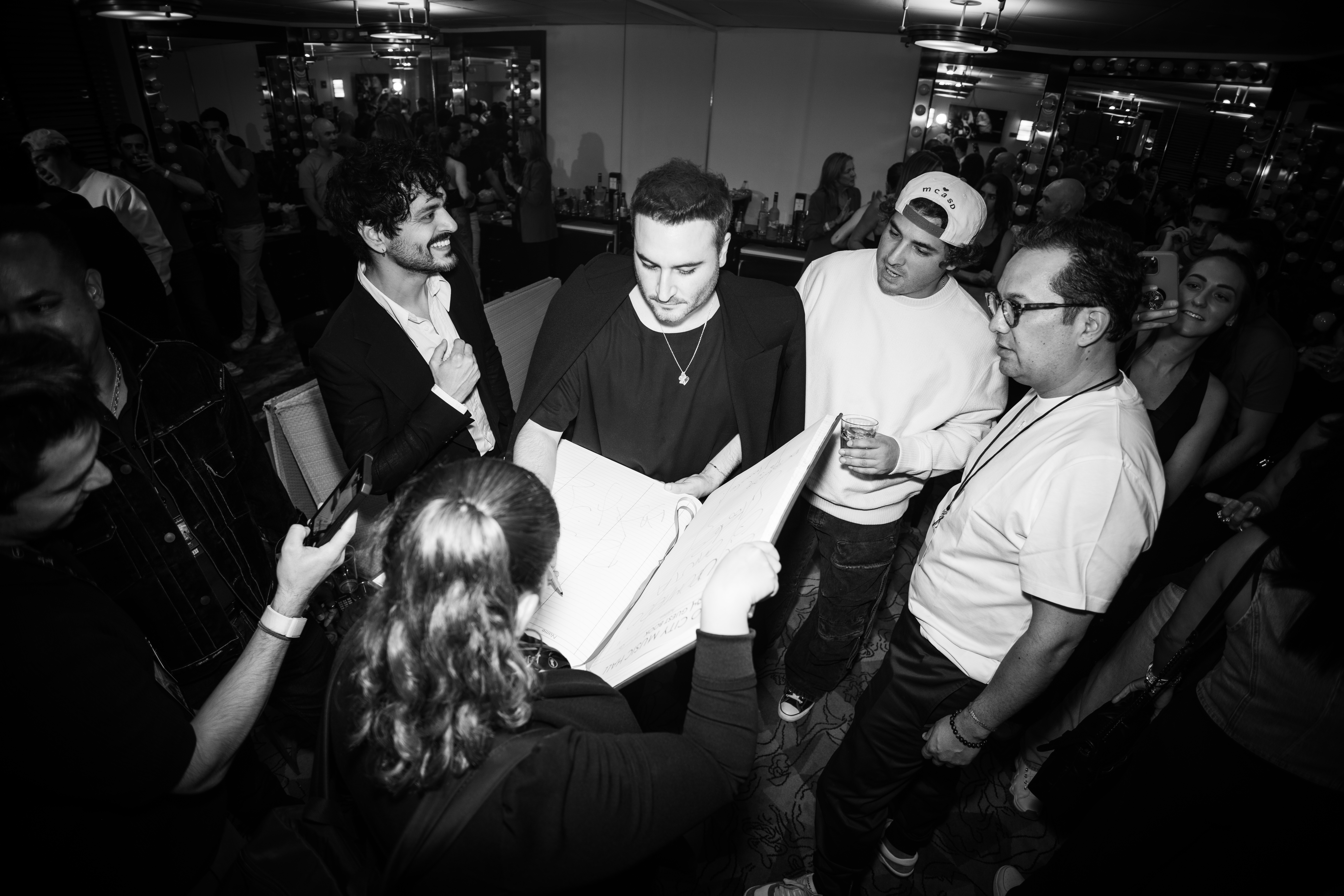
Something I’m proud of is being able to say I’m one of Reik’s managers. I’ve worked with them for 23 years. I think Jesús Alberto Navarro Rosas has one of the best voices in all of Latin America, but I think it’s awesome to work with an artist for so long. How many marriages even make it that long? How many managers work with artists for 23 years? And Carlos Rivera is someone I’ve worked with for the past 11 years. He’s one of those artists who just consistently sell tickets all over Latin America.
These are artists who demonstrate values and innovate within our genre. We are not open to just doing what is trending, and we continue to be ambassadors of their genre. I’ve always said that you are what your artist was. After the pandemic, I had to quickly evolve, and I wouldn’t have been able to do that without Carín. He is one of the most complete artists today, and it’s been a pleasure to manage him and be his partner. To be able to get back into regional Mexican and venture into country and other genres with him brings me great satisfaction.
You’ve been a part of history multiple times in just a few years, Jorge. The stadium shows you worked on, and artists like Carín León have solidified Mexico as a powerful market and reliable exporter of talent.
I’m proud to be Mexican and to see música Mexicana reach new worlds. I’ll never forget the day I was in China and I heard a Reik song on the radio. I think Mexico has always been influential globally, but it’s a lot more visible now. I notice artists are very smart and more capable and better informed. I also see that the industry is more open, especially with collaborations between genres to help the industry as a whole.
There is also more camaraderie between managers, a willingness to work with each other. We no longer carry flags with us. I think in the next 15 years, we will see Mexican music, much like that from Korea, taking on major roles in the globalization of music. Korean music today is huge globally, and Mexico will soon catch up because of migration. We are seeing more Latinos in Europe, and they’re bringing their culture and consumer habits with them.
When we toured Europe with Carín, we realized that there are big viable markets [for Latin artists]. I see a great future for Mexican music and our industry, and Carín’s Sphere residency is proof of that, right? We wanted him to be the first Spanish-language artist to play there, and we’re proud of making history. It’s one of the most important venues in the world, and he’s an artist who has all the credentials to perform there.
It’s awesome to raise the bar for our colleagues, to say, “Let’s dream big and do big things,” because that’s what’s going to help us as an industry. Someone else is going to want to perform there, and now that door is open.
While there are plenty of things to celebrate when it comes to Latin music, there are many challenges these days with visas and ICE. How have you been able to navigate those problems?
There will always be some kind of adversity in this business. If it’s not one thing, it’s another. It’s obviously terrible what’s happening to our people, but we also have to find the capacity to look for solutions and adapt. We have to find ways to connect with our audience because we can’t stop doing concerts. And while the situation with immigration officers isn’t helping, people here still need an escape, to enjoy things. I mean, we saw it in Las Vegas with Carín [at MGM Grand Arena in September]. You can see that people needed that.
One just has to be more mindful when putting on a show. Ticket prices need to be considered more, as well as the routing. What markets can you realistically hit? The pandemic obligated us to stop and assess, and look at how everyone came back. There are certain situations where one needs to listen and just evaluate the market.
Tell me about your relationship with AEG Presents and how they helped you and Carín achieve the goals you set.
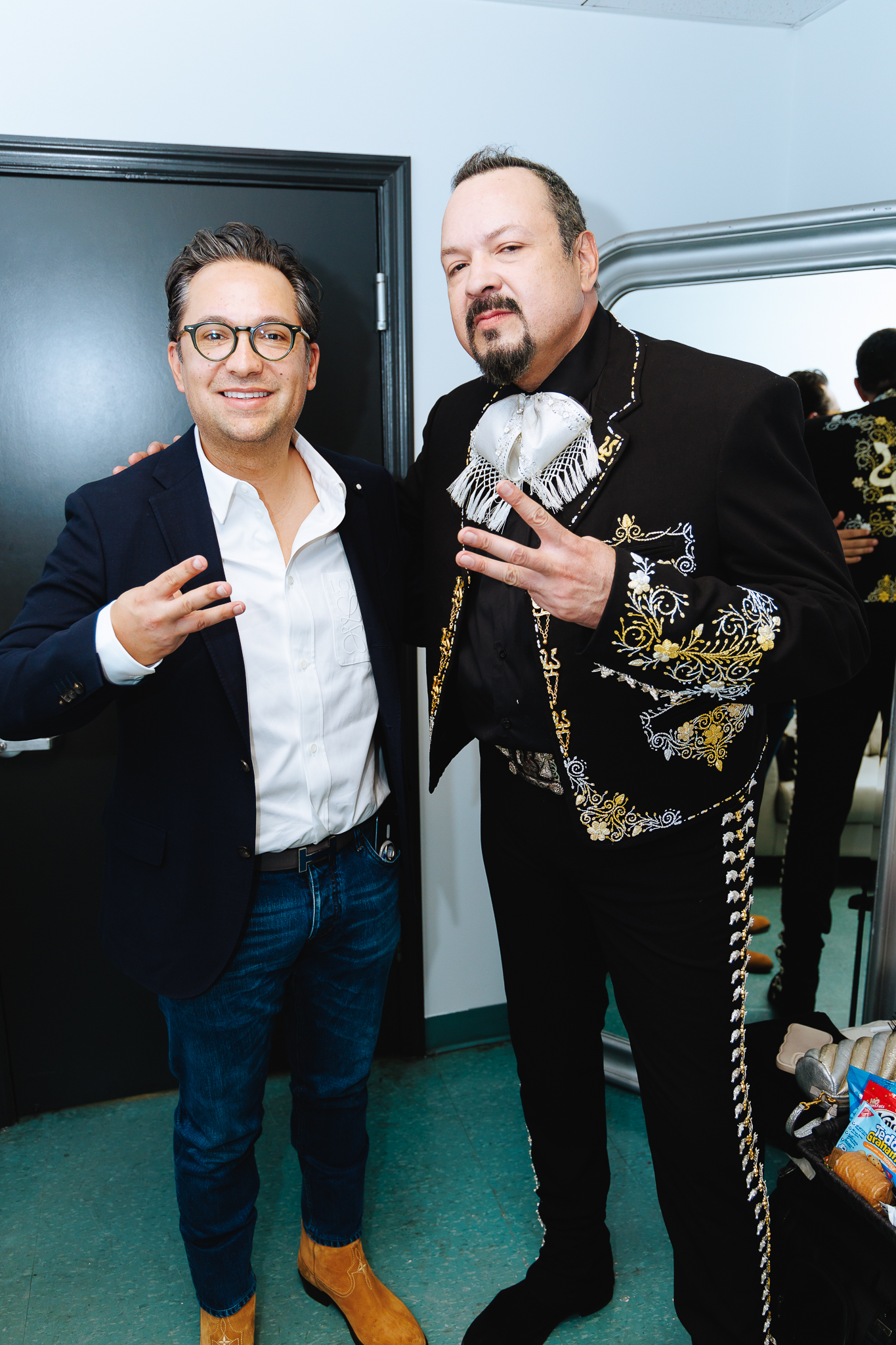
That is super important. AEG is a big brand, but companies are made by people. I know people, and I know [Global Touring President] Rich Schaefer. When I sat down with him, I told him I didn’t just need a promoter that could book us in all the arenas in the country. What I needed was a partner with the connections and infrastructure to take my artist where he wanted to go.
When he asked me to elaborate, I told him that I wanted Carín to perform at Coachella and Stagecoach in the same year. He said it was complicated and not something that really happens. But he did it. I also wanted a partner who could help us expand into the world of country, and AEG is strong on that side of the business. So not only has he served as a promoter, but he has also served as a team member who has worked hard to accomplish things. Thanks to Rich and Island Records, we were able to collaborate with Kacey Musgraves. AEG hasn’t only been a promoter but a partner who dreams of doing big things with us.
As an observer of industry trends and someone who consumes everything that has to do with the music industry, what are some concerts that have had an impact on you?
One show that surprised me in so many ways was Taylor Swift in Miami. My daughters weren’t huge fans, and I was kind of hoping they’d ask me to take them to her concert because I didn’t want to be the one to say that I wanted to take them to see Taylor Swift. I ended up going with two of my daughters, and I went to learn because everything she does is done so well. I don’t listen to her music much, and I’m not saying she’s not good, but she is where she’s at for a reason. It was a remarkable three-hour show that just felt like a complete experience.
You know what other show fascinated me? Chris Stapleton. He is a great performer. I never would have seen him if it weren’t for Carín, who loves him, and I instantly became a fan. It was a perfectly pure show.
With Sphere on the horizon, what possibly could be next for you and your artists? What do you look forward to?
We continue to set goals for ourselves. We have so much going on. The day we announced the shows at Sphere, I remember feeling butterflies in my stomach. Carín and I were just fearless, and we will continue to be. That’s why we’re working on having the first country music festival in Mexico in his hometown of Hermosillo.
I’m also really looking forward to Carlos Rivera’s next album and what Reik is doing creatively. I really do feel like this is the best period of my career, and I’m trying to keep it going as long as I can.
FREE
 Daily Pulse
Subscribe
Daily Pulse
Subscribe
 Daily Pulse
Subscribe
Daily Pulse
Subscribe