
A Thriving Mexican Jam Session: How Serca’s Servando Cano Built An Arena Act With Palomazo Norteño

Live jam sessions are usually associated with jazz or rock artists who improvise on stage to give fans a unique musical experience that pushes the boundaries of their respective genres. Servando Cano Jr., president of SERCA Music, is delivering that same experience on the road but with a Mexican twist.
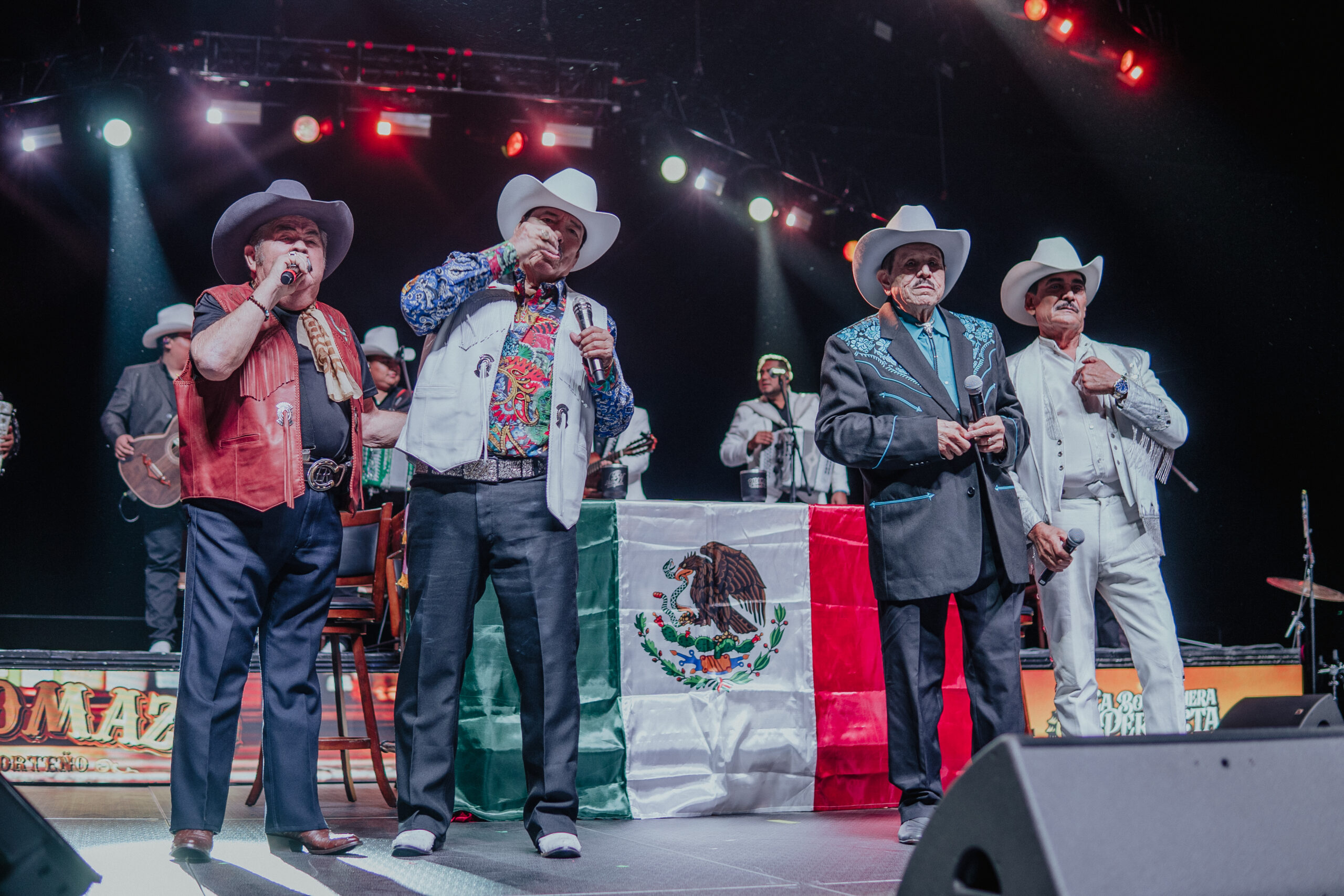
He titles it Palomazo Norteño, a traveling jam session featuring legendary artists Eliseo Robles, Lalo Mora, Raul Hernández and Rosendo Cantú that has not only made waves in box office charts but also on social media, with some of the artists going viral on TikTok and Instagram, boosting their profile as well as ticket sales among younger audiences, which is an impressive feat for artists over the age of 70.
The show sold out 13 U.S. dates in 2024 and continues to be a force in 2025. The quartet sold out two shows at YouTube Theater in Inglewood, California, and grossed $1,569,712 off 11,039 tickets sold, according to Pollstar Boxoffice. Palomazo Norteño also had a stellar showing at MGM Grand Garden Arena in Las Vegas during Mexican Independence Day weekend, moving 8,525 tickets and hauling $925,493.
And the tour is still going strong, with upcoming shows at Rio Rancho Events Center in New Mexico on Oct. 24, Palm Desert’s Acrisure Arena the following night, Freeman Coliseum in San Antonio on Nov. 1, Anaheim’s Honda Center on Nov. 15 and Sames Auto Arena in Laredo, Texas, in March.
Palomazo is a term used by Mexican musicians to describe an impromptu jam session, and such performances are especially popular in rodeo shows.
Cano Jr.’s venture builds on the legacy built by his late father, Servando Cano, who founded Serca more than five decades ago in the Northern city of Reynosa, Mexico, and helped Mexican music grow beyond its borders. Cano initially promoted local dance shows, which exponentially grew in the ’80s, such that events could no longer be held in small venues like cantinas and clubs, and he has worked with legendary Mexican artists like Ramon Ayala and Los Tigres del Norte.
Mexican venues and the box office were Cano Jr.’s stomping grounds, following in his dad’s footsteps and learning firsthand about the business. The Serca executive has had a hand in the current música Mexicana movement with Palomazo Norteño, showing the regional Mexican’s influence in the live industry on the south side of the border.
Pollstar recently caught up with Cano Jr., whose company also manages artists, promotes concerts and operates a concert hall, Domo Care, in Monterrey, to discuss the success of Palomazo Norteño, the state of the business and the challenges Mexican artists face today.
Pollstar: It must be so fulfilling to not only add to your father’s legacy but also help the Mexican music business grow. As an executive from Mexico, how has the business evolved over the past decade?
Servando Cano Jr.: With the emergence of streaming and CD sales affected by piracy, we in the industry had many problems. We began adopting some of the advanced technology and began using it in our favor because our music was targeted at a specific audience, and with the new technology, we thought it would open the doors for us to not only find success in the U.S. and Mexico but in Central America, South America and Europe. Our music could become global, and that was a major change. What has also changed is the size of the venues for many concerts. Before, they were held in dance halls, and now they’re being held in arenas, theaters and even stadiums.
One successful venture from Serca is the Palomazo Norteño. What can you tell me about that project and how it’s grown?
This was a project we worked on some time ago, thinking about the fans and the tech changes in the industry and the ways we could be more agile in accomplishing things. We thought projects like these needed some order, and it became a goal for us to make it happen. First and foremost, we did this as fans of this style of music. The event began growing, from 600 people to 2,000 and then 4,000. We started taking advantage of modern tools and recording some of the performances, and they generated millions of views. The difference is that the video was an hour long, and keeping people engaged with long content is complicated. But it became part of family reunions, where people left it on, almost like a playlist.
It started growing in 2024 and continued to grow in 2025. We brought it to the United States, and the first test was in Chicago, which went really well, even with a few logistical challenges. … And we’ve been progressing from there to bigger shows. We just did MGM Grand Garden Arena, which was a moment of pride for me because there were artists like Carín León, who has had a big year, and Alejandro Fernández, who is a legend, and we were among those acts achieving a sold-out show.
Was that your first time in Vegas?
Yes, and I believe it was the first time that a norteño group performed there. It was a huge success, and the people were excited because when you watch this show, and you can ask anyone, you’re reconnecting with your roots.
One of the advantages we now have [with tech platforms] is showing us who is going to shows and from where. Initially, it was people above 45 or in their 50s. It would be 80% them and 20% 44 and younger. Today, it’s the opposite. The predominant age group now is 14-35, who listen to their music and watch the artists. So, what happened? It’s because the dad attends, and maybe the son goes, too. We have really seen younger people at each concert.
To be honest, when the Vegas offer was made, I was a little worried. But when the onsale began and we saw the sales, we immediately knew it was going to be spectacular. We were conservative with our projections. We wanted to be in Las Vegas, and we wanted to do it during the most important week. It puts us on a good level, and we know that we can contend in that league. It really exceeded our expectations.
There was a post-pandemic boom for just about every genre in the industry, especially regional Mexican. We’ve seen a demand for artists from Mexico. As someone who has been in the business and organizes these events, how has the business changed, and how do you approach these shows with production costs rising?
It’s a battle these days because production costs and labor rise every day, but many fans are willing to pay for entertainment. We have our venue in Monterrey, where we know about production very well, and we’re trying to replicate the model that already works well for us in Mexico for the United States. But what we did at MGM Grand required a larger production, and we had to have the show stand out more. We’ve been growing the size of venues we visit, so production has been changing because we’ve been making the leap into arenas.
What has surprised you about the reception to Palomazo Norteño?
The palomazo is an improvised reunion between artists, and fans love seeing that. People know the singers, and one thing about palomazos is that there are no songs that allow for bathroom breaks. Fans stay for every song until the end, and it’s a three-hour show, and they are very satisfied because the concert never loses intensity. We’ve had the singers adopt social media and that has given them a lot more visibility and branding opportunities. Lalo Mora is popular on TikTok and in memes.
We’ve seen artists have trouble acquiring visas here in the U.S., and I’ve heard from promoters who have pushed back tours because of the deportations. How have you been able to navigate the challenges that exist today for Mexican artists?
Honestly, in those kinds of situations, fans are the ones who lose. We try to be as fluent as possible to avoid any issues. We, along with our artists, have handled the immigration situation very well. Apart from the company here in Mexico, everyone has done business in the United States for years, and they have had long careers. That has made the process much easier for us.
We hope this gets better, and we do believe that this will improve sooner rather than later.
How do you build on the success of the past two years? What’s next for SERCA and Palomazo Norteño?
The Palomazo will continue. We want to go into some markets where there is demand for bigger events, and we want to add more to the show because the fans want to make it a big party. We want it to be an unforgettable moment that they will take with them. We have various projects that will be announced soon. … I think if things continue the way they are, we will be doing some other important tours soon with other artists.
And when it comes to our venue in Monterrey, we will continue to invest in it and make it state-of-the-art. I think it’s one of the most beloved venues in the city, and the box office proves it. We are very happy with ticket sales, and we will keep working on a plan that isn’t year-to-year but thinking five to 10 years ahead.
It may seem like a lot of what’s happening was planned, but believe me, it was, and what we’re doing with Palomazo Norteño was in the works for a long time. It was just a matter of waiting for the right opportunity and the right project.
FREE
 Daily Pulse
Subscribe
Daily Pulse
Subscribe
 Daily Pulse
Subscribe
Daily Pulse
Subscribe