
Latin Grammys 2025 Preview: Q’s With Manuel Abud, Latin Recording Academy CEO
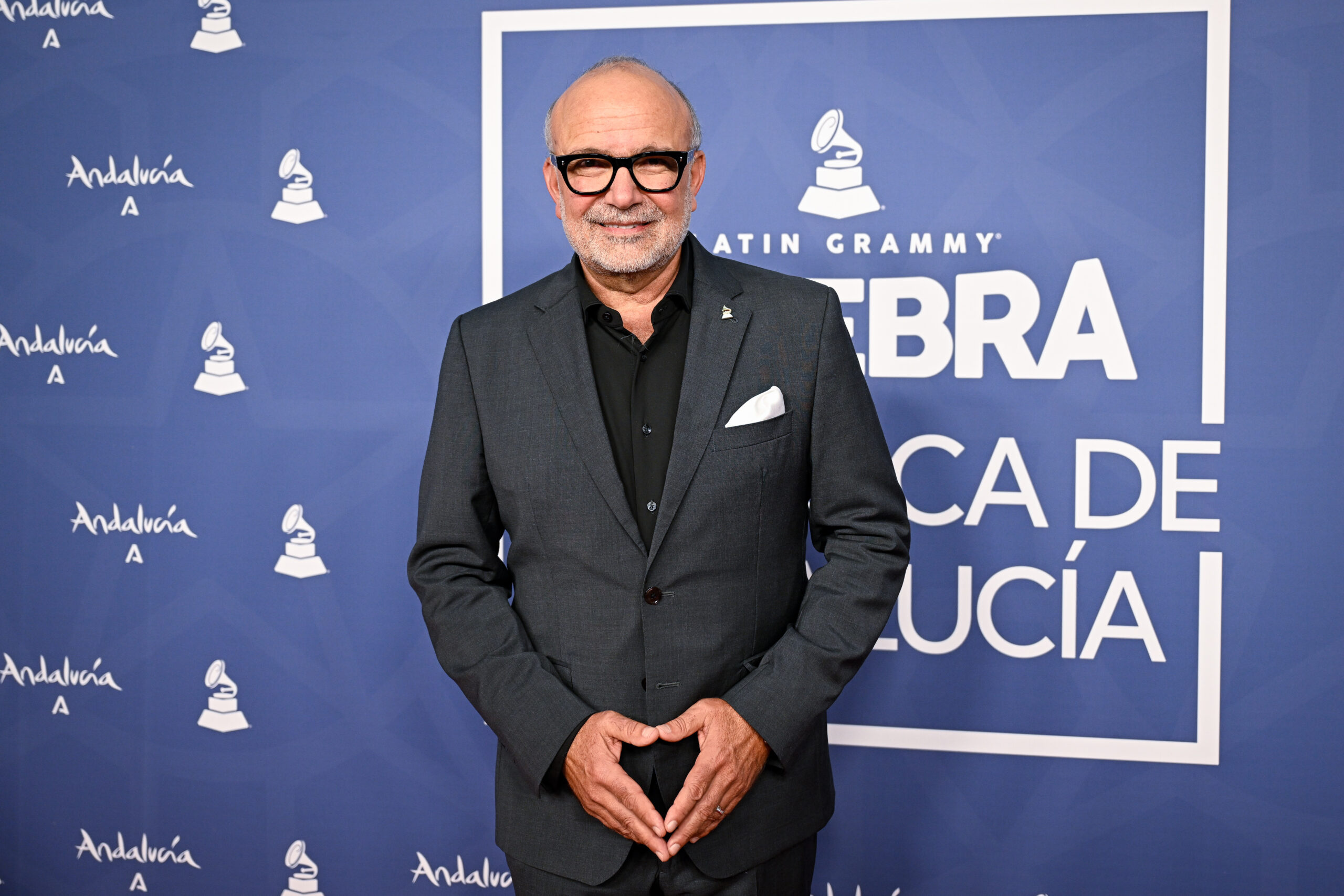
It’s been an eventful two years for the Latin Recording Academy. The association made history in 2023 in having its Latin Grammys ceremony in Sevilla, Spain, marking the first time the show was produced outside of the U.S.
A year later, the Academy celebrated a milestone in hosting the 25th edition of the Latin Grammys with a show that honored the past with performances spotlighting the salsa genre and icons like Juan Gabriel, José José and Vicente Fernández.
How can the Latin Grammys follow those two watershed moments with this year’s ceremony? It’s a daunting task for anyone organizing a major awards show, but Manuel Abud, CEO of the Latin Recording Academy, saw it as an opportunity to get back to what the Latin Grammys are all about: celebrating the various genres and artists within the Latin music umbrella and keeping each culture’s roots alive.
This year’s show returns to Las Vegas for the first time since 2022, with stars like Carín León, Gloria Estefan, Rauw Alejandro, Liniker, Elena Rose and more performing at MGM Grand Garden Arena on Nov. 13. It’s a diverse lineup that mirrors the current landscape of Latin music as well as the list of nominees, and that’s what the Academy aims to highlight in the 26th edition of the show.
Pollstar caught up with Abud to talk about this year’s ceremony, the state of Latin music and the genres that many felt were snubbed this year.
Pollstar: The upcoming ceremony is No. 26 for the Latin Recording Academy. Last year was such a milestone for the Academy with the 25th edition, and the year before that was Sevilla. How do you build on those events and establish a theme for 2025?
Manuel Abud: At the end of the day, let the music speak. This is about the music. I’m very excited about what we’re going to have this year because it is, in my mind, a transition into the next era, into the next epoca, whatever you want to call it. Having the 25th under our belt, I think this is a great year to position us for what’s coming for the music, and it’s very exciting.
I mean, look at our nominees for album of the year. It’s a great list with a little bit of everything. You go from the super established legends, and I shouldn’t mention any names, but you have Gloria Estefan and Alejandro Sanz there, you have current, established superstars like Benito [Bad Bunny] and Rauw Alejandro. There’s Vicente García, who is very traditional, and Carín León with the Mexican music and who is really killing it with the new style. CA7RIEL & Paco Amoroso were a surprise to everybody, and then you have two young female artists from Venezuela.
It’s such a robust and diverse list. It makes me feel good about where the music is going and where the Academy is. I think that’s what you will see during Latin Grammy Week and, of course, during the show, a reflection of that.
It’s a good list, but it’s hard to please everyone. There have been some journalists who felt that there was a lack of representation from some genres, like música Mexicana.
We have Natalia Lafourcade there.
She is there, but it’s a conversation many have had in the industry when it comes to Latin Grammys. How do you respond to them?
That’s the good news. The good news is that everybody wants to be part of it. Unfortunately, sometimes we, to your point earlier, can’t please everybody. And we’ve had these conversations before with other genres. Our position is always that there’s always room for improvement. We are by no means pretending to be perfect. Music continues to evolve. Our job is to push for that evolution. My job is to always try to make the membership representative of the community that we serve.

You mentioned the surprise of Argentine duo CA7RIEL & Paco Amoroso, who have spearheaded a new movement of experimental music. It’s nice to see the Academy acknowledging their unique sound.
Absolutely. I was also very pleased to see them nominated because they’re doing a great job. And I’m glad that the membership acknowledged it and voted them in.
What went into the decision to go back to Vegas for this year’s show? How does it help the Academy promote the themes of this year’s Latin Grammys?
Las Vegas is a great venue. My only problem with Vegas is that it is very challenging to give the Latin Grammy Week the exposure and gravitas that we aspire to give it. In my mind, it should be a big celebration of the industry, like the Olympics or F1, where everybody goes to that. Vegas is a great venue to create great events, but it lacks that ability because it’s such a diverse and big entertainment city that, I hate to say it, but you get lost in the shuffle. Granted, we are able to throw great parties and great events, but it’s really hard, if not impossible, to get the community to sense the engagement of the city. When we went to Sevilla, the whole city embraced and became Latin Grammys.
That’s what we aspired to do now for this year, coming out of 25th and after Sevilla. It was the perfect time to put a pause on this crazy logistical thing because Miami last year was also really challenging. So, we go back to the place where we feel very comfortable and everybody knows where everything is, where — I’m not going to say easy, but — it’s very convenient for production. The production is happy because they have all the support and all the infrastructure and all the elements. That’s why we thought that this year, Vegas was the perfect time to make that transition.
We continue to look at other international host cities. In fact, we are actively discussing the next two to three years. I don’t want to jinx it, but you might see us going back on the road. But we’re super pleased with the way this show and the entire Latin Grammy Week is shaping up in Vegas.
It’s an exciting time for you guys and Latin music, which continues to grow every year. However, it has been a difficult year for Latino communities and Latin artists with everything that has been going on politically. I imagine that makes this show more significant for everyone involved and much needed for the community.
I couldn’t agree more with you. We try to stay away from the political fray and the political arguments, but it’s impossible to ignore that we’re living in some very complicated times. But that is where going back to celebrating music is such a unifier. It is no secret that not only this country but the entire society is very divided, and as a music organization, what we should try to do is always focus on our mission and take advantage of the fact that music is a unifier and not a polarizing element. So, with that, it gives us the license to stay away from the controversies and the bigger issues.
What do you personally look forward to when it comes to Latin Grammys Week?
This is going to sound a little corny, but at the end of the day, what I want is just the people to enjoy and celebrate the music and forget a little bit about the craziness out there. I would love to see ourselves as the place where it doesn’t matter if you’re left or right or Black or white or green or purple. I would love to see at the end that we stayed away from those difficult times and difficult conversations, and we focus on celebrating our artists and our music. So, on that Thursday night when we announce Album of the Year, we all look back and everybody was safe and everybody was happy.
I always try to remind everybody to focus not on the competition, but on the celebration, because this is not a competition. This is a celebration. There will be somebody that will take home the gramophone, and it’s a big, big deal. But I keep telling my nominees all the time that just being nominated is a big deal. You’re already winners.
FREE
 Daily Pulse
Subscribe
Daily Pulse
Subscribe
 Daily Pulse
Subscribe
Daily Pulse
Subscribe