
No More Queues For Real Fans : How Fan3 Aims To Solve Ticketing – And More – Through Fan Verification
Imagine a world in which real fans don’t have to queue for a ticket to see their favorite artists’ shows. Where artists can be sure that they’re only talking to people genuinely interested in their work, and communicate with them directly. And where bots have a way harder time posing as real ticket buyers than in the current system.
Fan3, a UK-based entertainment technology company founded in 2021 by Steve Finan, Paul Rose and Ross Taylor, has started making this imaginary world a reality, and has some success stories to share as proof of its concept. In a nutshell, fan3 enables artists to build a secure, fraud-resistant fan community, taking direct engagement to the next level, and even tackling ticketing to make sure only real fans end up with access to shows.
Artists maintain full control over the fan data so they can build real and unique relationships with real and verified humans over time. This access to verified fans should in theory help cut out scalping, and Pollstar reached out to fan3 co-founders Ross Taylor and Steve Finan to find out more.
“Think about it as a modern-day fan community built on the blockchain,” Taylor explained, “the fundamental way that fans enter the community is through the very human interaction of being at a show, where we use NFC enabled wristbands as an engagement tool.”
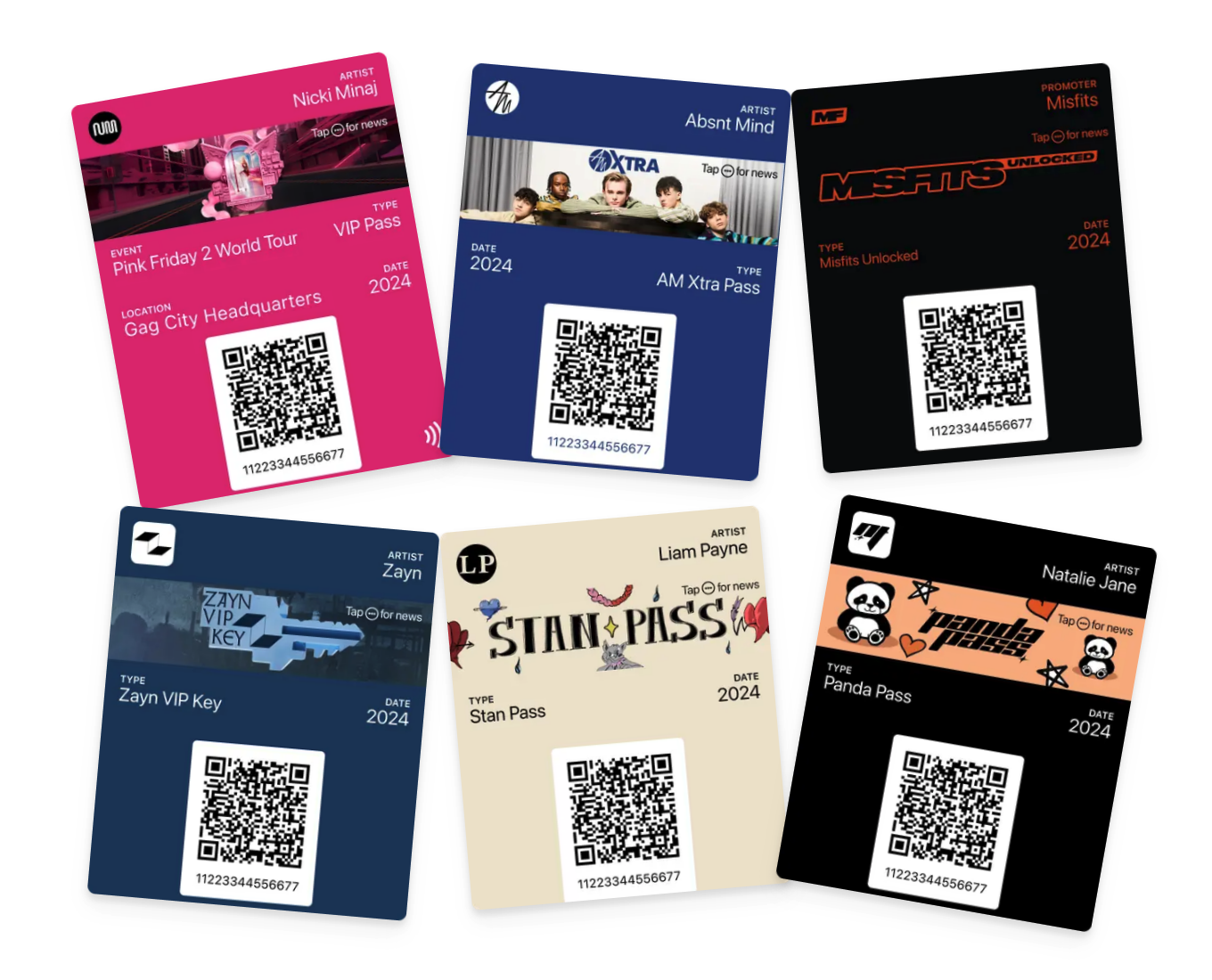
Fans receive a NFC wristband at the gate. They can hold their phone up to the NFC plate while in lock screen, there’s no need to open the camera, the fan3 application opens, and fans can claim their fan club pass and add it to their mobile wallet.
Because the pass, i.e. the fan’s club membership, is registered on the Avalanche blockchain with a unique code, it is unique to the user, and any communication happening through that pass is certain to reach the intended fan.
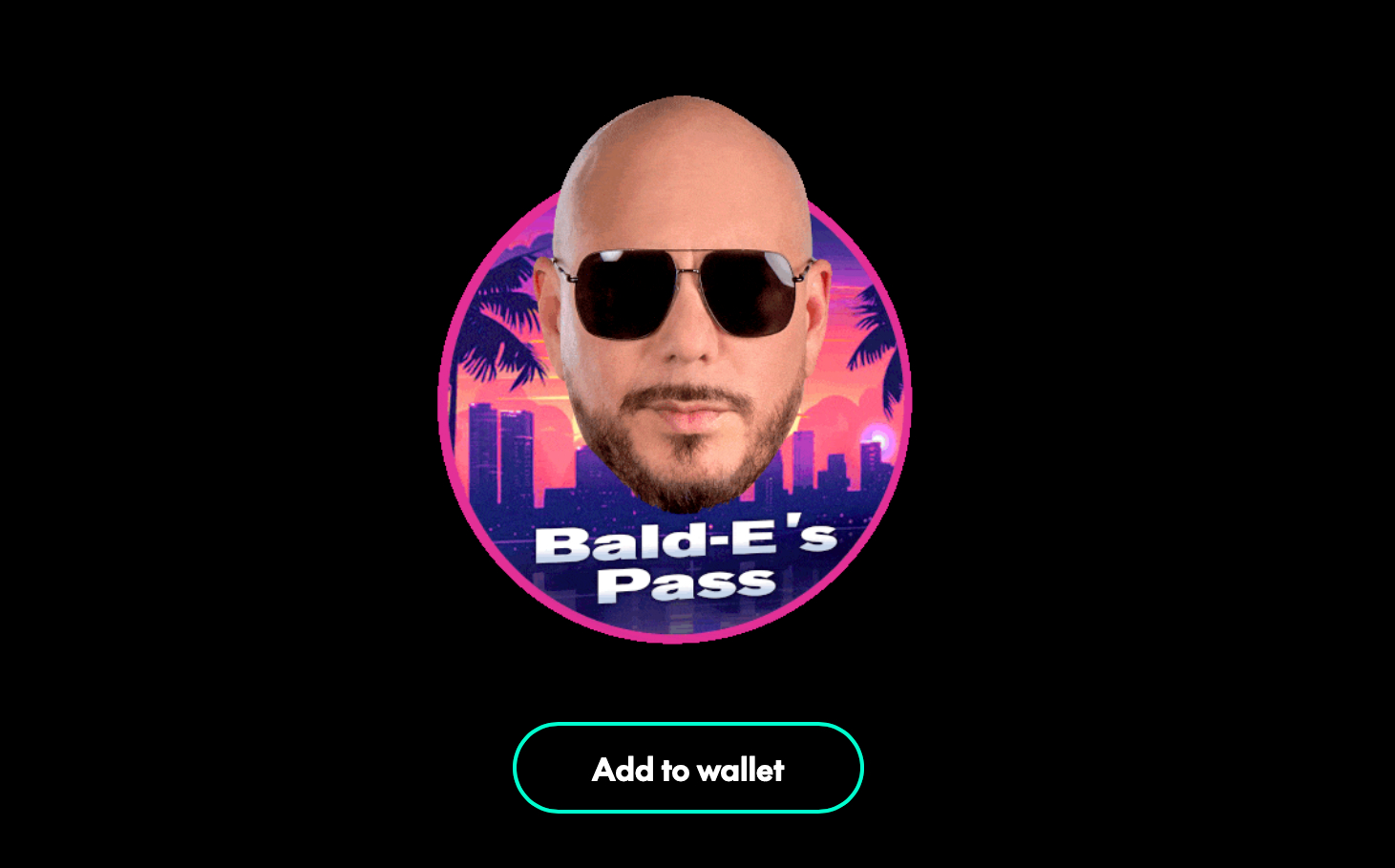
A current example are Pitbull’s Bald-Es: fans who shave their heads (or wear a bald cap), and draw on goatees before coming to his shows – a meme that turned into a worldwide movement. It’s a fan club created and run by fan3. The access point to join the baldies was through NFC enabled wristbands that were distributed across the “Party After Dark Tour”.
A link to join the club could obviously also be distributed through digital marketing channels, but engaging with the fans at the show is the first step in verifying they’re human.
Fans claim their pass through scanning their wristband, they now have a unique membership card that’s proof they are one of Pitbull’s real fans. According to Taylor, his team is seeing a 80% (!) conversion rate by doing the registration process via the help of NFCT wristbands, as opposed to doing it through QR codes, which may reach a conversion rate of 10%.
“Now we can contact them through that unique smartphone wallet pass, and provide experiences through our web application,” Taylor said.
One such experience is presale access. If done through the fan3 app, it should result in a verified presale, with only fan club members able to access it. The club membership serves as a layer of authentication, a gateway into the ticket sale.
Finan said there were currently between 0.5% and 2% of tickets from fan3 presales appearing on secondary sites, which was way lower than the up to 50% not uncommon for popular shows.
These are pretty impressive stats, indicating that artists are truly selling to genuine fans, people, who actually want to be at their show. They are especially impressive when taking into account that experts believe many of the tickets appearing on secondary sites aren’t even real, as there are still sites allowing sellers to list inventory without proof of ownership of the ticket.
“We will constantly try to innovate and experiment with promoters and ticketing platforms to create new protocols and verification practices for all fans, not just music. It’s not a one-solution problem we are trying to help overcome, its an ongoing live process and we feel we have the experience to make a difference,” Finan said.
He said his team was tackling fan verification and authentication from multiple angles and in collaboration with ticketing companies, promoters, and the rest of the industry. Even facial recognition can be added as a security layer, if artists and other clients want that.
Fan verification only gets stronger over time. “Every time a fan is taking actions in our platform, whether it’s visiting a pre sale page, watching content, listening to a DJ Mix or song, entering a competition – all of these are human-based actions that are consistently building up a profile of them as a consumer that can be used to further verify their authenticity for pre-sale access. Over time, that will just get more and more robust,” Taylor explained.
Artists are in control of their fan data, as opposed to when working with other companies’ apps, including ticketing companies, streaming services, Meta’s companies, TikTok, etc.
“From a GDPR perspective, the artists are the data controllers, it’s their audience. We want artists to own their audience, not rent it. We don’t want to be a gatekeeper of that relationship,” said Taylor.
A recent $5 million funding round from venture company Improbable has given fan3 the ability to lay out a roadmap of development both in terms of extra verification tools, as well as fan experience, to entice fans to keep coming back to the platform. The more they come back, the more they’re continuing to verify themselves as part of community.
“I believe there will be a world where we can fundamentally change the concept of presale and actually have a time period where only your biggest and verified fans can buy a ticket if they want one. Why does it need to be at 10 a.m. on a Wednesday, with minutes to get into a queue. If we know you are a verified human, if you’ve been to shows, you’ve listened to music, you’ve spent two years in the community, then why not offer a private ticket-buy link to a show. There’s a whole future in the way that that engagement can be improved,” said Taylor.
It’s an option the get rid of queues entirely, which is music in the ears of every real fan. “The more we get to know our fans the shorter the queue they join to get their tickets – with the ultimate aim of them not having any queue as they are so assured and verified as a person to us that will know that the group buying the tickets will most likely be the ones attending. We know this is never 100% possible but we want to be the company that can be relied on by the fan to make the greatest efforts to make their purchase at the right price a reality,” Finan added.
Other fun things fan3’s technology can do include sending geo-targeted push notifications; offering ticketing competitions or giveaways for local markets; allowing artists to engage with fans who didn’t manage to get a ticket, and maybe offer them one for their next show in the market.
Not mentioning audience insights artists and their teams would gain from all this engagement. “The longer they work with us, the more we go through an album into a touring cycle and back out again, we can actually start to really work with the agents and the promoters on routing and help them forecast supply and demand with more accuracy,” said Taylor.
The technology allows for simple, and global communication. But, most importantly, it allows artists to talk to their audiences directly, on a one to one basis, independent of algorithms.
Messages arrive on the lock screens of every fan, without it being a popularity contest on social media. On the “Party After Dark Tour”, fan3 ran a Europe-wide Pitbull lookalike contest, hosted in the app. People were chosen at each show, and fans were able to vote on the top 10 looking the most like Pitbull. The winners got flown out to Vegas to meet Pitbull at his Vegas residency.
Said Taylor, “We’ve run treasure hunts for tickets, using our geo-location features. We’ve run secret meet-and-greets, like a meet-and-greet in a car park outside Lollapalooza for an artist that was performing there.
“We can use it commercially, because not only is each mobile wallet pass unique, but they have a QR code on them – and soon NFC tap ability we’re currently building – so artists can use fan3 for merch discounts. At shows, if you’re in the community and you show your pass at merch, you get 10% off. We can work with the merch teams live and observe what stock’s not shifting, and support sales by offering discounts on certain pieces in certain venues on certain nights.
“Or send a push notification after the show, saying ‘We hope you had a great time, here’s a city-specific t-shirt. Would you like one?’
“There’s lots of different ways we can open up engagement, like polling features. Artists can ask their fans, what cities they’d like to see them in next, what songs they’d like on the set list, what graphics they’d like on the on the single artwork. You can communicate and cultivate your audience and your relationships away from the algorithm, and away from social media. That’s when engagement becomes really fun. It becomes about building community and having a place where fans actually want to be.”
FREE
 Daily Pulse
Subscribe
Daily Pulse
Subscribe
 Daily Pulse
Subscribe
Daily Pulse
Subscribe