
2025 Impact Intl. UK/Euro Honoree: Jörg Philipp
JÖRG PHILIPP
Owner & Managing Director
Beat The Street
‘AT NO POINT CAN YOU BECOME COMPLACENT’ HITTING THE ROAD IN STYLE
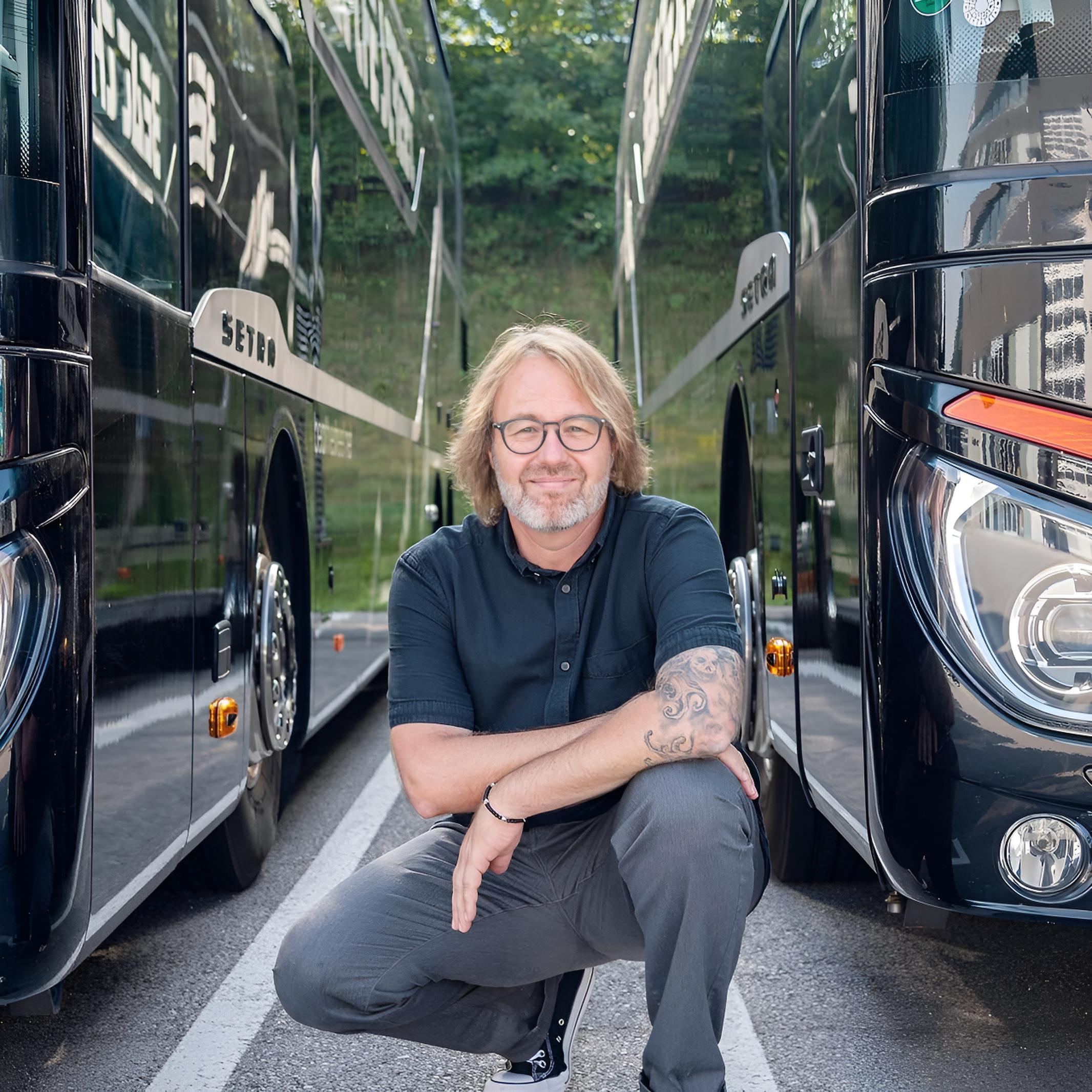
The best artists move crowds. Jörg Philipp moves the best artists. He has been doing so since touring Europe with the late American clown and entertainer Jango Edwards 33 years ago. The vehicle used for the purpose was a discarded bus Philipp had bought off its old owner for 10,000 Austrian schilling ($850). Most mechanics didn’t even consider repairing it, mocking its half-derelict state, but Philipp finally found one, who agreed to get it ready for the road.
Philipp took charge of the interior build himself. He also drove the thing in those early days, and operated his business out of Fritzens, a small municipality in Tyrol, Austria, in the heart of the Alps, where Beat The Street’s head office is still located.
Fast forward to 2025, and Philipp’s fleet consists of some of the most comfortable and luxurious buses in the industry. Single- and double-deckers, super-high deckers, offering between 12 and 16 bunks, day coaches, and the Starbus, a high-end luxury version that includes a tiled bathroom, and fresh-water flushing toilets. A fleet of smaller ground-transport vehicles was added in March 2011. That same year Philipp bought Phoenix Bussing in the UK, who he had partnered with on many tours in the years prior. Phoenix continues to operate independently, but the deal made Beat The Street the largest tour bus operator in Europe and the UK.
At the end of 2019, the company launched in the U.S. At the time of writing, Beat The Street operated 130 buses in Europe, and 50 in the US. “In Europe,” says Philipp, “we have the right amount of vehicles for the market, as well as for the organization to keep on top of everything. In America, we want to grow to 100 vehicles in the next five years. We constantly buy and build new buses, and sell older ones off. Even if you don’t want to grow anymore, you want to maintain a certain standard, and make sure you only overtake yourself, instead of being overtaken by somebody else.”
Beat The Street’s interior designers, its carpenters and electricians, could be designing rooms for any luxury hotel in the world. But they chose rock ‘n’ roll.
“Our building staff go out as team drivers in the busy summer months, living on that bus for six weeks. They spend time with the driver and the clients. During that time, they notice things: people hitting their heads, lights positioned the wrong way, etc. When we start with the new builds, everybody’s bursting out with new ideas. You always think your latest product is the perfect bus, but there is no such thing as a perfect bus,” says Philipp, adding, “we try and get close, though.”
The attention to detail shown by the team has been noticed by the world’s biggest names in music. It’s easier to list those artists who haven’t used a Beat The Street bus in the past, than to list those who have. Dolly Parton famously caused the Australian government to waive a number of traffic regulations in 2011, in order for her to bring two Beat The Street tour buses into the country, despite them being too large, and having the doors on the wrong side.
Says Philipp, “We’ve built up a loyal client base, and we work hard towards not losing any of those clients until they retire. It is my opinion that if you concentrate on doing a good job, everything else will fall into place. We don’t have to tell everybody how great we are. Let them find out for themselves, and reward us by being a long-term client.”
The only thing slowing down Beat The Street’s momentum is bureaucracy, from local stipulations on working hours, to restrictions imposed during COVID the year after the company’s U.S. launch, to Brexit limitations placed on drivers crossing between the UK and Europe. “The European ESTA will create even more red tape, which is frustrating. Rock and roll is dead when it comes to touring. Rock and roll is still happening, but it purely concentrates on stage. Everything else is as corporate as it gets, with all the negatives that come with that,” says Philipp.
For now, the negatives aren’t enough to kill his drive. Philipp is encouraged by tons of young talent rising through the ranks. Medium-sized theater shows and four to five-bus arena tours form the bulk of his business. He acknowledges the high costs of touring, but thinks it shouldn’t discourage young artists from hitting the road: “Bands like Deep Purple drove their own bloody van with the back line and sleeping bags on top, when they were already playing to 5,000 people in their early years. Nowadays, any up-and-coming band wants a bus. It’s good for us, but bloody hell, you need to bite the dust from the road first. I miss that attitude a bit from the new rock and pop stars.”
As hard as Philipp and his team have worked to get to where they are today, he knows that “it’s even harder work to stay where we are. I don’t want to ever lose that focus, I remind myself, the drivers, the builders, all the time, that at no point can you become complacent. At no point can you let yourself think you’re the king of the castle. The day I lose that attitude, is the day I should retire.”
FREE
 Daily Pulse
Subscribe
Daily Pulse
Subscribe
 Daily Pulse
Subscribe
Daily Pulse
Subscribe