
LA’s Hotel Café Owners On Moving After 25 Years, The State Of Clubs, A ‘Kingdom Of Friends’
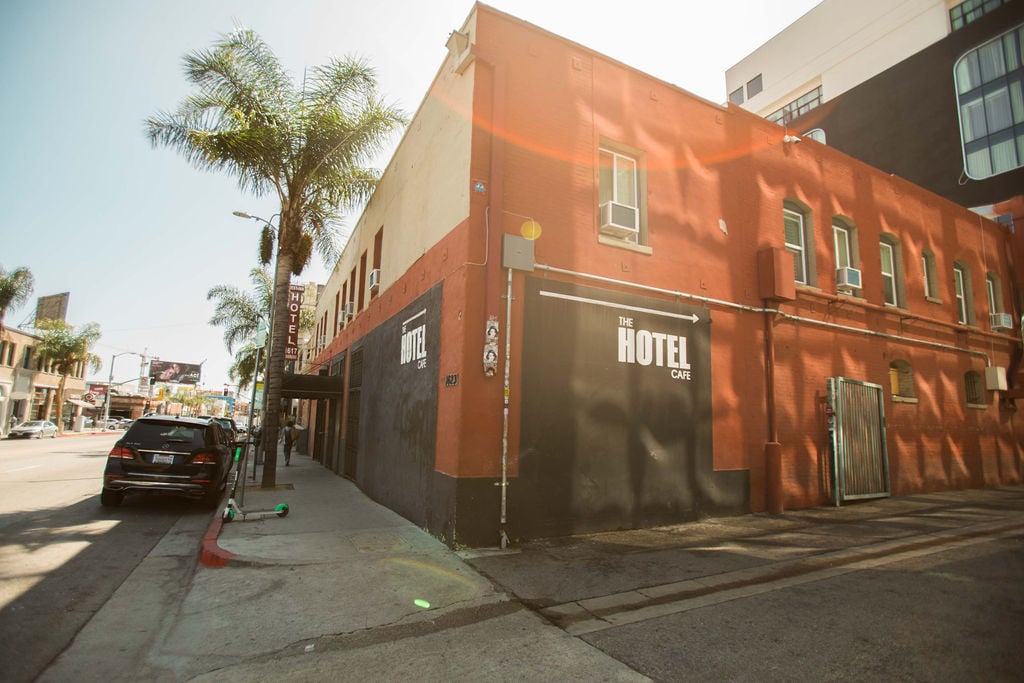
The beloved Hotel Café, an independent 200-capacity venue in Hollywood, recently announced that it will soon be closing its doors after hosting hundreds, if not thousands, of artists over the past 25 years, but they assured local music fans that it won’t be long before the venue opens its new doors.
Currently nestled in an alley on Cahuenga Boulevard (a spot that always evoked a feeling of being cool and in the know of the local music scene as one approached the secluded entrance, like Jon Favreau in “Swingers”), owners Marko Shafer and Max Mamikunian will close that location in early 2026 and reopen less than a mile away in Lumina Hollywood on Sunset Boulevard sometime in 2027.
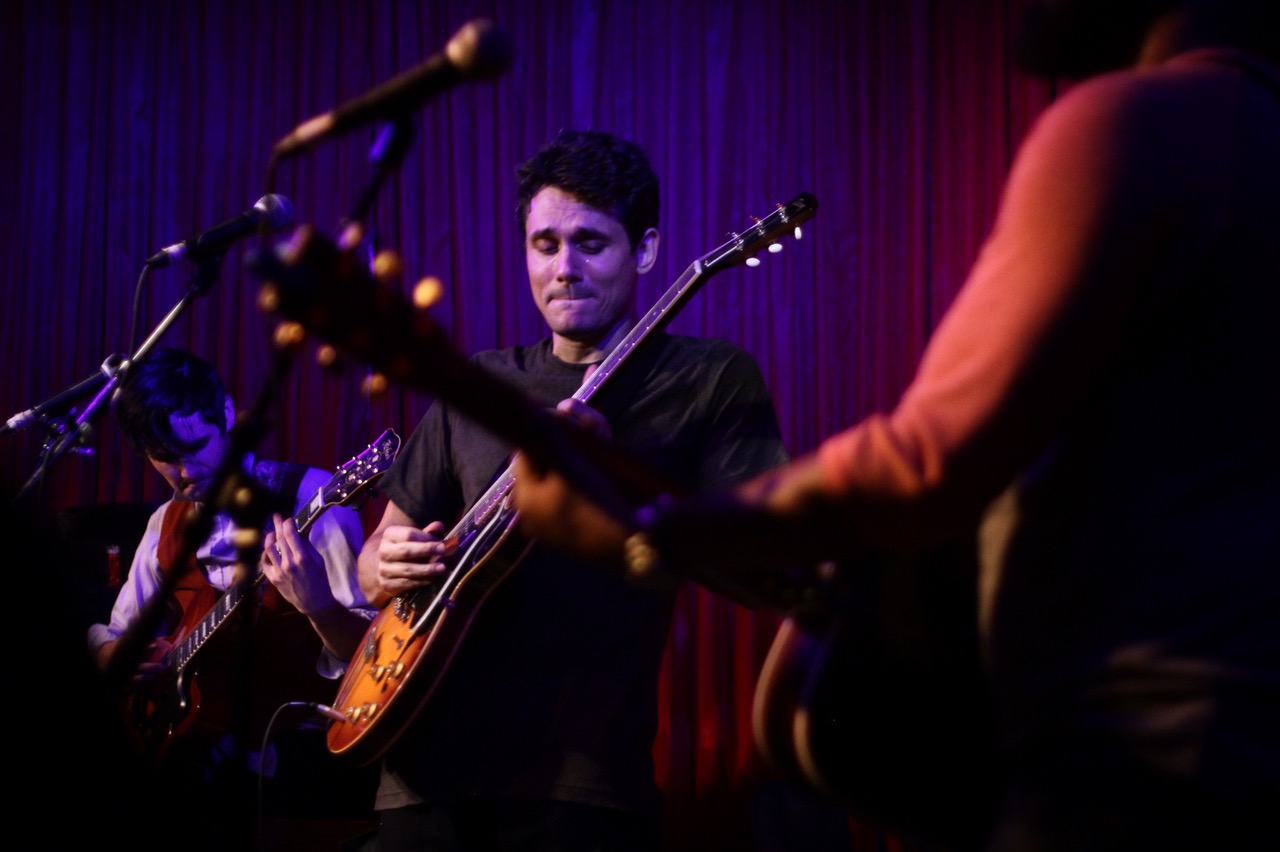
In the past quarter century, Hotel Café built a robust community with its intimate, cozy atmosphere and stellar live music program that featured established and rising artists such as Adele, John Mayer, Katy Perry, Tom Morello, Fitz and The Tantrums, Billy Corgan, Brandi Carlile and many others.
Rose’s Pawn Shop’s show on Feb. 28 is the final performance listed on the venue’s events calendar, but spring shows will be announced at a later date, marking the end of an era for owners and the beginning of an exciting new chapter for Los Angeles, a thriving live entertainment city (ranked No. 3 on Pollstar’s most recent Concert Market Rankings) that has seen development of smaller music venues like The Bellwether and Blue Note jazz club.
Venues like Hotel Café keep the indie spirit alive in L.A. and legitimize the area as a music town, changing the perception of Los Angeles being a city of movies and celebrities (which it also is, but why can’t it be both?).
Pollstar recently caught up with Shafer, Mamikunian and Production Manager Gia Hughes to talk about the big move, the state of venue business in L.A. and what they most look forward to in the new Sunset location.
Pollstar: Congratulations on the big news. This is such a beloved space and has been part of the L.A. music scene for decades. What led to the move? How long has it been in the works?
Marko Shafer: There’s a myriad reasons why the shift happened now, but mainly, as we’re getting older and we have over 25 years of this experience, we just wanted to create a better experience for L.A. than what the Hotel Café space could offer.
How does the new space allow you to achieve that goal?
Shafer: The condition of the space right now is that it’s a blank slate. So, we have the ability to create anything we want in there. In the current location, we’re limited to what was already there. At the new space, there’s a lot more space, there’s a lot more accessibility. We’re excited to put in what we know we can do there.
Was there ever a discussion with the Cahuenga landlord to explore the possibility of making it work there?
Max Mamikunian: I just wanted to chime in on the new space on Sunset. I remember it was actually two years ago last, last October that I called up Mark and said, “You’ve got to get down to L.A. and check out this place.” Of course, Mark knew what it was, but he hadn’t seen the inside of it. And I told the broker, “You’ll see when Mark and I walk in if it’s a go or not within 15 seconds.” And she said, “Well, that’s not pretty typical.” I’m like, “Yeah, but then your needs are so specific, we know if it’ll work or not immediately.” And it didn’t even take 15 seconds. We walked into that room, and it was so obvious that this was the new space.
Shafer: What can be done there is going to be pretty sweet.
Mamikunian: That just worked out perfectly. It’s something that we’ve had our eye on for years, really, so it wasn’t new. On Cahuenga, our landlords wanted us to stick around for sure, and I’m not surprised. We’re like a legacy business for them. But there’s no way for us to do both. It’s such a hands-on business and it’s personal for us. We did consider that option, but at the same time, we’re like, no, we have to pour our heart and soul into this. And in order to do that, it’s got to be one and then the other.
When it came to weighing that decision, how much of a factor was the surrounding area?
Mamikunian: The advantages are insane from Sunset compared to Cahuenga. And Cahuenga has always been a challenging little area for the businesses around it because it is pretty full of hotels, restaurants, bars. And then when you’re doing the type of programming that we do at the Hotel Café, which is multiple acts per night and all their gear and soundchecks and load-ins, you really do need a really favorable environment for that. There’s just a lot of egress and traffic. And I’m thinking of people, not just vehicles.
Was that the thing that made the decision a lot easier? Yes. Like Marco said, our goal here is to create the best musician and fan experience that we can offer. At the end of the day, once we got some deal points worked out at the Sunset property, we were chips in.
Shafer: We’ve been on Cahuenga for 25 years, and we watched it change dramatically. We were one of the first businesses pulling a lot of people in, and we watched the growth around us. But as Max said, it got very crowded. I think parking became somewhat of an issue. After COVID, getting fans out [was challenging] and how they consumed music changed. When you throw in just all the traffic and the accessibility as well, it just makes it harder to fill a room. As the years went on with more and more businesses opening, there was less parking, less accessibility. For years, loading in at The Hotel Café has been difficult, to say the least. We wanted to fix that experience for the bands as well.
Gia Hughes: I’ll say, as the person dealing with the artists and coordinating all that, part of this move that I’m most excited about is just how much easier everything will be for the artists. We pride ourselves on being very artist-forward and friendly and accommodating. Now that we can control things and build from scratch and envision how we want it to be, a huge part of that is about the ease of artists and our lives, as well. The accessibility in general will be much better for all parties.
What made The Hotel Café such a beloved spot is the intimacy and a good hangout spot with music in Hollywood. How do you enhance the experience for fans and artists with something new while keeping the essence of what made it a popular venue?
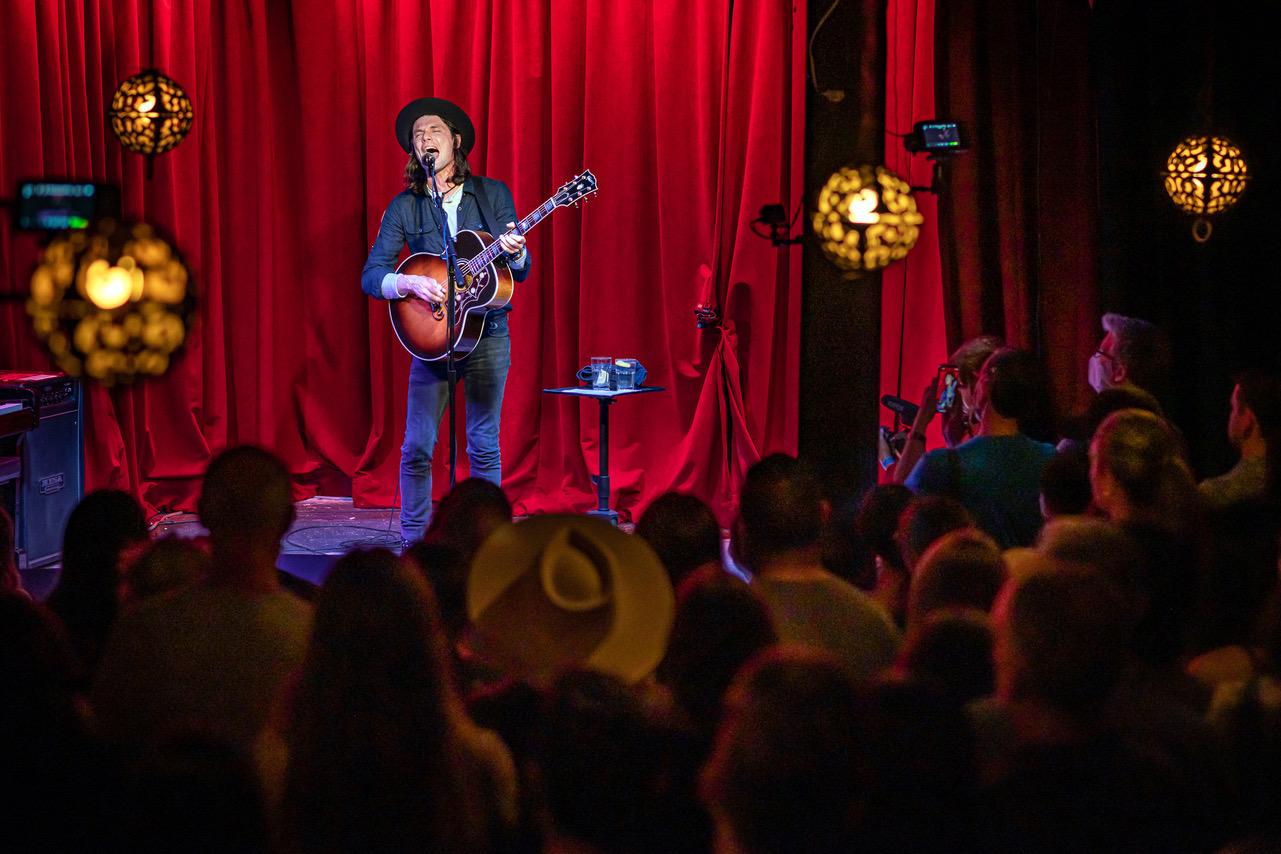
Shafer: It’ll be similar, in a sense. We will still have two rooms. One will be a bit bigger than what we’ve had in the past. But the other room is still going to be the intimate listening room that we’re known for now. I think the idea is to make both rooms somewhat scalable. So if we want to put in a ballroom-sized act, we can do that. But we can also put in tables and chairs for an intimate show in the big space. The small space will be very similar in size to where we’re at now.
Mamikunian: We’re adding another amenity that is really important for the fan experience, which is a full-service sit-down restaurant. That’s part of the space, not the venues themselves, but in the same building attached to them.
Shafer: So, it’s two rooms as well as a restaurant, and the restaurant will not just feed itself, but ultimately, as long as it goes as planned, we’ll be able to service both rooms with a menu.
A trend we’ve seen in venues is giving fans options when it comes to their experience, like VIP tickets. Is that a possibility for you guys?
Shafer: We’ve always shied away from a VIP experience. Only because we just like the original Hotel Café, there is no VIP experience. Everybody’s the same. I love that. I don’t love exclusivity. I like the fact that it levels the playing field for everybody. I don’t think we’ll have much of that. Maybe with private rentals or parties, but no.
Hughes: Part of what makes the Hotel Café special is that anyone can come in and basically everyone’s a VIP. You’re all in on the show and on what’s happening. Everyone just mixes and mingles. You come in, and you’re part of this special experience, and I think that’s why we get a lot of people coming back, because we kind of treat everyone the same.
In addition to accessibility, are you eyeing improving the stage or sound system?
Hughes: Oh, yeah. Just upgraded audio features ease for touring artists and local artists who are coming in. We’re talking about input lists and whatnot. It’ll just be a much easier access point for artists on the road.
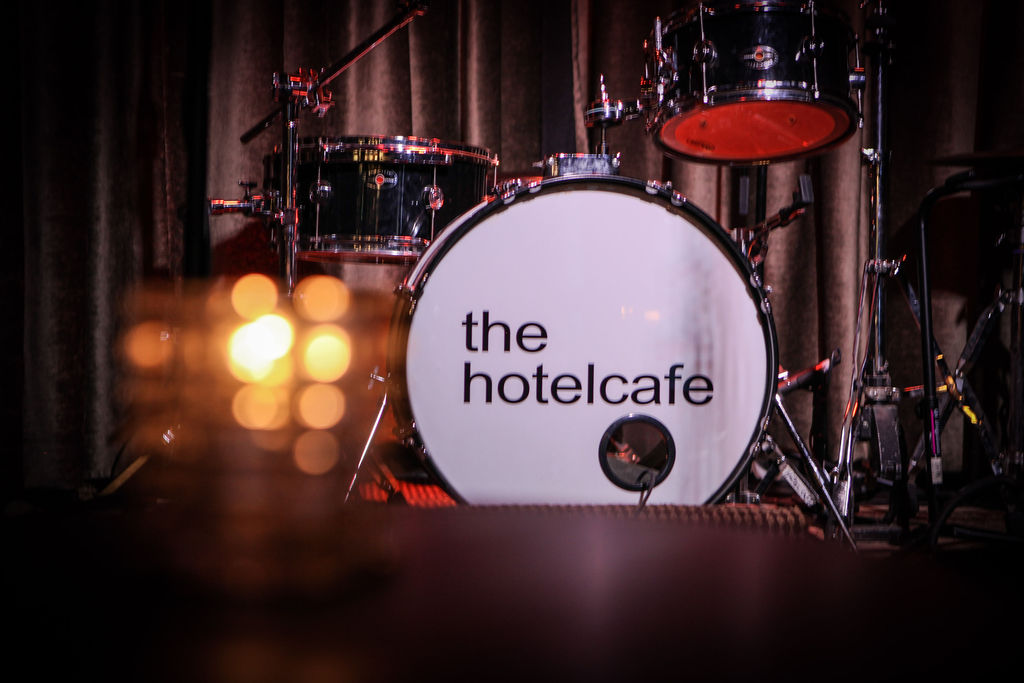
Shafer: We’re working on the sound system, which hopefully, for a venue of that size, will be one of the better ones in L.A., for sure. We’ve got a sound team that’s basically creating a sound plan for the entire room, so it is acoustically superior. The idea is we want to create a venue that not only provides for the fans, but we also want the sound to be the best it can be.
You guys mentioned inclusivity for anyone who comes through the Hotel Café doors, and it really applies to artists as well, with the artists you’ve attracted over the years. Some step away from their bands to do solo sets are your place, like Billy Corgan.
Shafer: Chris Martin [of Coldplay] did one. It was great. I remember him in the green room prior to that saying how nervous he was because he hadn’t played in a room that small in 20 years or something like that.
That’s the legacy you leave behind in Cahuenga. Was there a moment when you felt you truly cemented yourselves in this big city?
Mamikunian: It was pretty immediate after Gary Jules did his first performance there because we had been told for forever that nobody could do a music venue in L.A. It’s not a music town; it’s really an industry town. Largo can pull it off, but nobody else can really do it. When Gary did his show, not only was it sold out and there was a line around the block, but more than half of those in line were musicians. And after his set, they all wanted to play a show.
Shafer: It happened really quickly with Tuesday nights. And the growth since then, the community just splintered out with different artists. It started out with the folk-rock community and just spread. We didn’t make much money in the early days, but everything we made, we put back into the room. We were close with the artists, and we all built this together. I was 23 and Max was 22 when we opened and the musicians were similarly aged. We were a bunch of kids that didn’t really know what we were doing, but we knew if we put on good music, people would show up.
Mamikunian: And every time we made improvements, it was in coordination with the musicians who were playing.
Jack White recently said in in Rock Hall speech that big things happen in small rooms, and some of those small rooms have struggled since COVID. What are your thoughts on the state of the business today and the challenges of operating a venue?
Shafer: I’ve been talking about this a lot with different people. Maybe 10 or 12 years ago, there was a shift to it being less about the music and more about influencers. Before social media came along, bands could promote with handbills and flyers and posters and go around town and drum up people to come to their shows. Facebook, I think, was the first big one where they could send out one post and fill a room.
Those were the heydays, I think, for all small venues because anybody who’s in a band could fill a room and obviously keep the venue around, create a beautiful community. Then Facebook monetized that, it made it really difficult for independent musicians to play shows as easily. And at the same time, it was the rise of influencers. Some of them played “music,” and that shifted the entire musical landscape. I think venues were worried more about getting butts in seats at that point than they were about quality.
The whole social media thing, I think that’s going to shift back, but that made it really difficult. And then COVID came, and it changed the way that people discovered new music. We were all home for two years. Getting them back out has been a challenge for all venues, and not just music, but also theater and movie theaters. I think by building a better experience, that’s the hope that we have. The community of musicians, that’s there and that’ll always be there. I think trying to connect that community to fans is the challenge. If we can build a better mousetrap, a better venue, we have a better chance of getting them to come out.
Hughes: There are fewer barriers. There’s really no substitute for a good live show. And in continuing to do that, you’re playing a pretty big part, honestly, in the music industry as a whole. And just like having fans in real life connect with artists.
Shafer: If the independent touring thing disappears or younger musicians can’t go around and play the country, then they may decide not to be musicians anymore. It could fundamentally change music. If that entry level and the smaller musicians go away, then what does the whole scene look like anymore? If more small venues can’t survive, I don’t know where that goes. We’re going to give a hell of a shot in L.A., though.
What about trying to do that in a competitive L.A. market with so many venues?
Mamikunian: Marco and I actually have had this discussion a lot because we’ve seen a lot of venues come and go over the past 25 years.
Across L.A., there are always times you’re going to miss a show or lose a show to another venue. But generally speaking, on the small venue side of things, I feel like the more small venues there are, the better. It creates an atmosphere that’s like, “We’re a music town, and this is what we do.” It also kind of informs fans and patrons like, “Hey, what are we doing on Saturday night? Well, we’re going to go see a show and then we’re going to go do this.” Nashville has plenty of venues and has a much smaller population than L.A. And they all go out to see live music all the time. I always felt like it was really important to make Los Angeles into more of a music town with more venues.
Shafer: The problem to add to that is tickets to go see some of these acts in these huge venues are thousands of dollars.
I remember what happened to South by Southwest when we did South by Southwest for 10 years. And towards the end, why we stopped doing it is because all the big names and big artists moved in there. All the little independent showcases that made South by Southwest what it is kind of died because all the big names came in and the big artists came in and everybody was going to those shows.
If there’s a challenge of anything, it’s not how many small venues or competitions are for smaller shows, but I think it’s more the behemoths that demand higher ticket prices. Whatever economy we’re in right now, if people are limited to what they can go spend, it puts a lot of pressure on the smaller rooms for sure.
Especially the independent rooms.
Shafer: It’s been tough, and we’ve seen the numbers, but I gotta say: I haven’t been this excited in years. We like to grow things and build things and create experiences for people, and I’m really excited to be able to do that again from scratch.
Mamikunian: It’s in an incredibly beautiful building, it’s the Sunset exit off the 101, there’s parking, there’s gorgeous ceilings with these old beams — it’s just going to be so cool.
Hughes: It’s really sad leaving Cahuenga. We have a lot of strong memories there, and it’s the heart of our community. Someone commented on our post saying, “Hotel Café isn’t just a brick and mortar. It’s us. It’s the people that make it.” Obviously, we’re nostalgic and sad to move on from Cahuenga, but the new space is just the right move in the long run, not just for us as a venue but for musicians coming through and the community at large.
Shafer: An artist sent a text message to Max, and she described it as a “kingdom of friends.” We will do our best to move that kingdom into the new space.
FREE
 Daily Pulse
Subscribe
Daily Pulse
Subscribe
 Daily Pulse
Subscribe
Daily Pulse
Subscribe