
Todd Snider: Reflections Of A Roots Troubadour
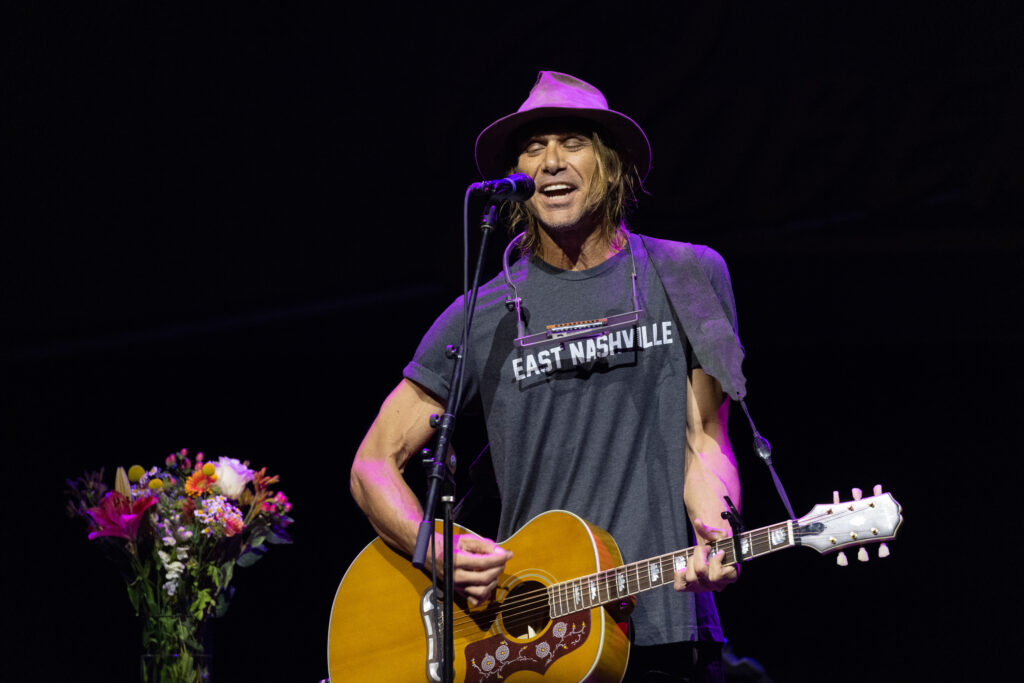
Roots troubadour Todd Snider died tragically on Nov. 14 at the age of 59. Reports say he was hospitalized with pneumonia and his condition worsened. His death came shortly after he canceled his tour in the aftermath of an assault and arrest in Salt Lake City outside his hotel before a show.
If he had survived, the experience likely would have found its way into a song.
Snider’s talent is hard to explain. Imagine if humorist Will Rogers played guitar instead of twirling a rope or if counterculture comedian George Carlin wrote relatable tunes instead of social commentary. Snider wove shrewd witticism around poignant songs drawn from real life – often his own.
In 2022, Snider talked to Pollstar about his “American Troubadour Tour” and an appearance at The Ramkat, in Winston-Salem, North Carolina, where he performed solo, with a guitar slung low on his hip, a harmonica around his neck and a sprawling delivery that enthralled the packed music hall.
Excerpts are shared here with respect and compassion for his family, fans and the music industry mourning his loss.
Pollstar: You’ve said this is your “second tour” – that the first one started in 1994 and you didn’t stop until COVID-19 forced a hiatus.
Todd Snider: As soon as it started, when I first went on the road, I never figured out a way to live off of it. So, I just stayed out there. It was the only life I could do and it went that way for 25 years, 20 some years just touring the whole time and maybe stop and go home and make a record but never went home really – maybe for holidays and stuff. I just liked that. I like to go to work every day.
Pollstar: That sounds exhausting.
When it stopped, I probably needed to. There were a few times where I probably should have stopped, you know, like going through something personal, and everyone could see it, but that was the only way I knew how to process it. …There are no gigs I don’t’ like, no way a gig can go that I don’t enjoy it. And even the travel part, they say they pay me for the travel, but I live for it.
Pollstar: Being forced off the road [during COVID] after all those years, must have felt like vertigo. How did you keep yourself creatively sparked?
Right when it started, not only did we have to stop, but a lot of the people that live like I do and inspired me to live like I do. That was really depressing.
I have this place that is a rehearsal hall that people use, and they store stuff there. I’ve been trying to slowly turn it into a soundstage, collecting the equipment to make a place where you could rehearse and record and film it well. I didn’t even know what I was doing that for. I was Just doing it for opportunity.
Pollstar: I’m guessing opportunity became something more?
Right when we got home, we were really, really ready to do – what do they call it when you are on the computer and it’s like you’re on television?
Pollstar: Streaming?
Yeah. We had those going right away.
It was really strange. There was no crowd and I wasn’t comfortable. I did another one and I think I said on the camera that I might not keep doing them and then John [Prine] died first. I had always told myself when, when some of these people died, I was just going to find a bar and go play their songs ‘tll I couldn’t do it anymore. And I couldn’t do that.
To make a short story long, I couldn’t do that. So, I went down and just played Prine songs In our little area. That day it worked for me like it would have at a show and I figured out how to do those little things on Sundays. It was like a dope addict, who got to have his dope just one day a week for a while. And that helped.
Pollstar: It’s interesting that coming out of the shutdown you released a live album Live: Return of the Storyteller, which was recorded during your first post-pandemic shows.
The way we had done the one before was we recorded the whole tour – we did this the same way – and then I would make a set list and I think I even said, I want me telling these stories and playing these songs, and they’d go through and find the best one and make it sort of a ‘Best of’ from the tour. I don’t give it a lot of thought, and then I second guess it later.
Pollstar: Well, your show seems equally curated. How do you keep the content fresh and not repetitious?
I don’t know if people would believe this, because I’m kind of a stoner, but I do this thing where there’s a website that started a million years ago, and they keep all set lists from the shows. My tour manager [Brian Kincaid] sends them to this kid, and the stories, too. And usually, before the show, I’ll sit down to make a set list – it’s ritually part of my night – and on my table there’ll be the last three shows. Say I’m in St. Louis, I can look at them and go, ‘Alright, the last time I was here, I told this story and I played those songs’ and I’m not gonna do that again.
Pollstar: Any other pre-show rituals?
A lot of times the thing that is fun when I’m on the road is I go out, around wherever we’re playing, earlier in the day. I’ll go walking around the town and make friends, people that didn’t know I was a singer, and then I keep those friends.
Pollstar: From your vantage point on stage, what does the return of live music post-COVID feel like?
It only went on for a couple weeks, especially the first one when I came out, it was like I was the Beatles but then all of a sudden everybody was hugging each other. Probably was a bad idea, but there was something I realized, it was like they’re not cheering, this isn’t just the normal coming out and they’re clapping. We’re have a moment here. This is different.
I didn’t anticipate that sort of beginning of the show, a New Year’s Evy type moment.
Pollstar: You’ve said, ‘The only difference between being a freeloader and free spirit are three chords.’ What does that mean to you?
I left home and became what I guess you could call a freeloader, a drifter, a griftie hitchhiker, a sofa-circuit person. And didn’t have any plans to be different. There’s a lot of kids like that. And then I saw Jerry Jeff Walker sing and I had that epiphany of it didn’t look like playing the guitar was very hard and he was singing about the way I was living – and romanticizing it. And my first thought was that if I could do that, it would really improve my ability to get rides. You will pick up a guy with a guitar, maybe. Or you let a guy who can sing stay a few days longer.
I thought, ‘This will improve my grift.’ That lead to busking and then I got asked inside. It just kept working.
Pollstar: Going back to some of your musical heroes Ramblin’ Jack Elliott, Guy Clark, John Prine and Jerry Jeff Walker, now that they’re gone do you feel a sense of responsibility?
Those guys, I would compare it to the mafia. Guy Clark was what I would call the consiglieri if there was one. But they’d all tell you – John, Jerry Jeff – they’d tell you that there’s going to be people coming behind you. And they’d tell you the rules about it. And you’ d follow them.
Pollstar: What are the rules?
That they’re your family no matter how jealous of them you get.
FREE
 Daily Pulse
Subscribe
Daily Pulse
Subscribe
 Daily Pulse
Subscribe
Daily Pulse
Subscribe