
Artist POV: Jorma Kaukonen On New Rare Live Album ‘Wabash Avenue,’ Playing With Jefferson Airplane & Free Concerts in Golden Gate Park
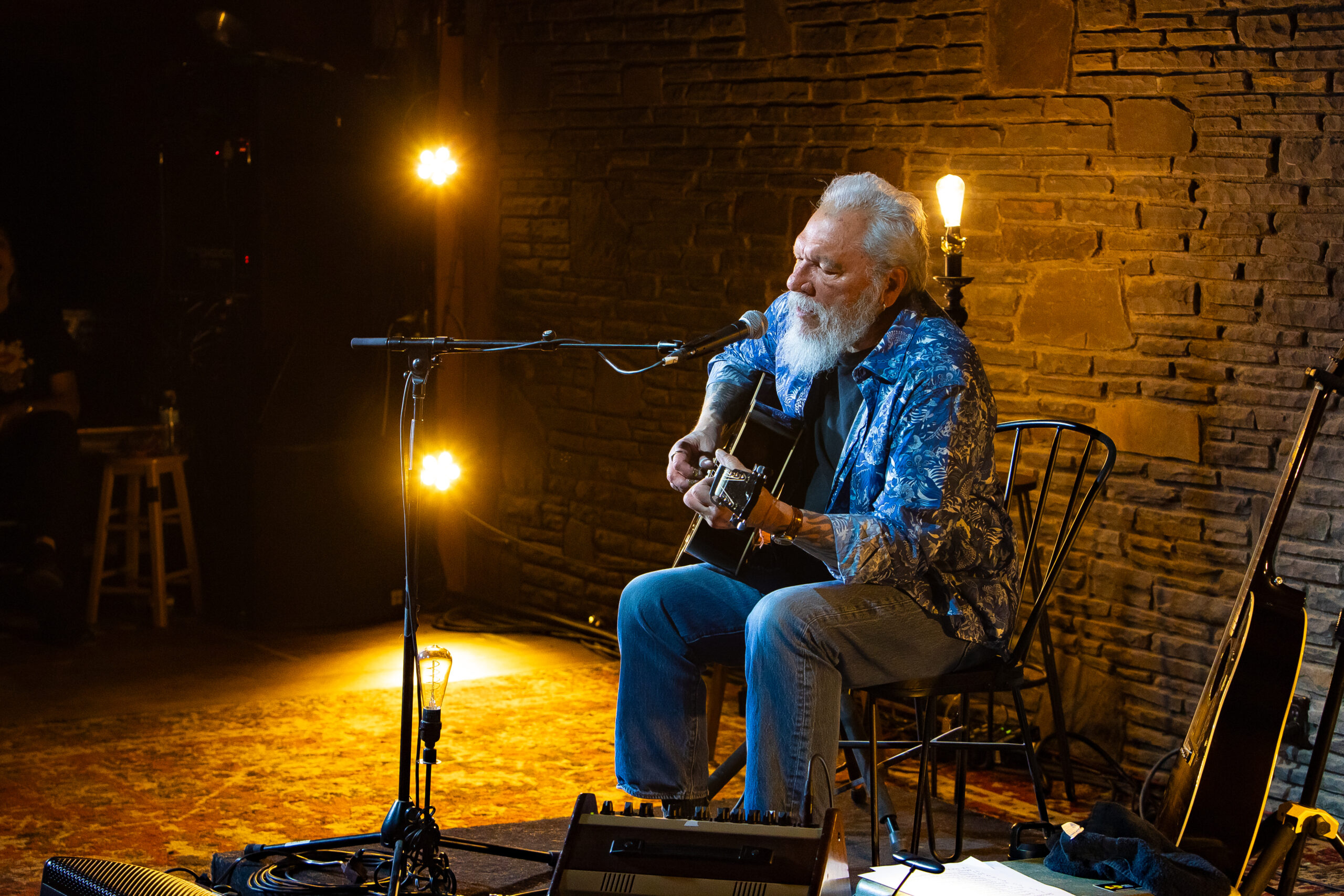
Jorma Kaukonen has spent the better part of six decades playing live on his own and with his world-famous bands, Jefferson Airplane and Hot Tuna. The influential guitarist’s live albums are particularly legendary. His latest, Wabash Avenue, was released on Record Store Day and features previously unreleased live songs from 1965 that Kaukonen’s wife found in storage. They were recorded at two different clubs in San Jose, California, while Kaukonen worked in a music store, gave guitar lessons, taught film classes and was just starting to play with the Airplane. The band’s ascent, starting with the 1966 debut album Jefferson Airplane Takes Off, put that solo music on the back burner… until now.
Kaukonen, who turns 85 on Dec. 23, wrapped up 2025 with three live shows: San Francisco’s Masonic Auditorium on Dec. 5 (with Peter Kaukonen, John Hurlbut, Sam Grisman, Bruce Cockburn, Susan Tedeschi, Derek Trucks and Jack Casady) Denver’s Paramount Theatre on Dec. 13 (with R. Carlos Nakai & Wil Clipman, David Hidalgo, Casady, Justin Guip and Ross Garren), and Natalie’s Grandview in Columbus on Dec. 18 (with Hurlbut). Next year, he’ll embark on a 15-date tour with Hurlbut, beginning on Feb. 17 at Belly Up in Solano Beach, California, and running through April 23 at The West Theatre in Duluth, Minnesota.
Pollstar: You’ve talked about this being the “cresting wave era” of your touring career. What does this mean?
Jorma Kaukonen: So the cresting wave is one of my wife’s little inventions in that I’m not retiring, but I’m going to pull back on touring. I’ve toured a lot most of my life, and I enjoy it. But to be honest, the traveling has gotten to be a little bit harder, so we’re going to cherry pick the gigs. I’m very fortunate that at this point in my life, I don’t have to tour full time in order to support myself. But I still love doing it, so we’re going to try to stay on top of the wave rather than getting buried underneath it. Just pick some great gigs and not kill ourselves driving five hours every day and playing a gig every night.
What can people expect when they come to see you play now?
I have a fairly large repertoire of songs, not all of which are active all the time in terms of being stage-ready for performance. But on these upcoming tours, I have a number of guests that are going to be sitting in, and I’ll have my buddy Jack Casady with me all the time. So we look at stuff and figure out if we haven’t played a song for a long time, it might be fun to revive it. If I haven’t played a song for a long time, I have to do a little work to get it back again, which is kind of fun. Thanks to YouTube, I can look at these different performances of me over the years and figure out if I want to rearrange it or whatever. It’s an exciting process to resuscitate old songs. Obviously, many are in heavy rotation all the time, just because that’s the way life is. But I always love springing some new old songs.
Do you create a lot of new arrangements?
I think things are evolving all the time. The essence of my music starting out may have been complex on some levels, but harmonically, it was pretty simple. So over the years, I’ve learned a lot more about harmony. And sometimes I try to infuse something that I’ve just learned in an older song, and sometimes it works and sometimes it doesn’t. But as I tell my guitar students: When we make mistakes, nobody dies. We just try not to do it again.
I’ve talked to lots of artists about having happy accidents in the studio, where your mistakes turn into something interesting.
I think that as a player, you need to keep tuned in on some level. Not that you’re intellectualizing the process of play, because that’s not the way it works. But if you have one of these happy accidents — because not all accidents are happy, there are sad ones, too — stay tuned into it.
Back in the days when you did longer tours, did you find the traveling rigorous?
My dad was in the Foreign Service, and we traveled all the time as a kid, so the traveling thing really honestly really didn’t bother me. I kind of looked forward to it. When the Jefferson Airplane first went on the road, which is the first time I really went on the road, rock bands didn’t have tour buses in those days. We rented cars when we could, or flew and took taxis and just lugged amplifiers around and stuff like that.
I was thinking about the first few times that we went somewhere. We went to Vancouver, British Columbia, with the Airplane when Signe [Toly Anderson] was still the singer of the band before Grace [Slick]. And then we also went to Mother Blues in Chicago. We’d go to the airport with our amps with slip covers on and check them in like baggage. And when you got to wherever the destination airport was, you’d run to baggage claim so you could catch them when they slid down the ramp into the carousel. Airlines wouldn’t let you do that today, and any musician with an amplifier would have a road case that they would have shipped ahead or whatever. I mean, it was so, so organic in those days. But we didn’t mind, we just loved going places and playing.
What do you remember about playing live in San Francisco with Jefferson Airplane in the earliest days?
Not just the Airplane, but many of us were contemporaries at that time. Janis [Joplin] and some of the other bands, we all got so close. We were fortunate in so many ways. I’m trying to think historically — I think that one of the Family Dog’s first productions was at Longshoreman’s Hall, before the other dance halls came up.
This, in a way, could have only happened in San Francisco. Don’t forget, back in those days, if you had a venue, you needed a special license to permit dancing. So when Marty [Balin] got us involved in the Matrix, which was a little club on Fillmore Street, that was a no-dancing club. And it’s so funny, because for rock bands, what do people like to do? They like to gyrate around and do that kind of stuff. But that was considered dancing, and sometimes the police would come in and monitor to make sure there was no illicit dancing going on.
Illicit dancing? I don’t understand what the problem would be for dancing?
The problem had to do with the licensing of the venue. So a bar could have live music, but if they didn’t have a dancing license, then you couldn’t have dance. It’s just bureaucratic nonsense. Ways for the city to make money, I guess.
So would people go to a club that wasn’t licensed for dancing and dance anyway to be rebellious?
Probably, yeah, because the key unspoken word so far in this interview is being young at the time. We were being real rebellious as part of the time. So I guarantee that if there is a prescription against dancing, people were going to want to dance.
Wow!
I know it’s hard to think about, but that’s the way it was.
I spent the summer covering big festivals in Golden Gate Park, including the 60th anniversary of the Grateful Dead and Outside Lands. Jefferson Airplane released a live album from Golden Gate Park, and I wondered what your memories of playing there are like?
These days, putting on a show in Golden Gate Park is an expensive business. But in those days, the Airplane got together with the Dead and sometimes with Big Brother, and we’d rent a flatbed truck, put a little PA on it and just put the word out: there’s going to be a free show at Golden Gate Park! Nobody would bother to get a permit.
A lot of people would show up, and we’d play music and it’d be free. And it wouldn’t be busted or shut down by it. It would occasionally get busted, sure. But I think on some levels, many of us looked forward to getting busted. Well, not necessarily getting busted, but coming to visual conflicts with the authorities. That was part of the deal back then.
Wabash Avenue was recorded live in San Jose, and it sounds like there was quite a live scene there at the time.
There were a lot of live scenes back then. There’s San Francisco, there’s Palo Alto, where Jerry Garcia and his pals held sway pretty much. Berkeley had their own cast of characters and then there was San Jose. And because so many of us back in those days didn’t have cars to actually get a gig or to move to somebody else’s home spot, it would require taking a Greyhound bus or whatever bus service they had back then, I can’t remember. To go to San Francisco could take the better part of a day. Unthinkable today. You hop in your car and, like, 35 minutes later, you’re there.
You have put out so many live albums. Is it a labor of love to do them now?
At this point in my life, I’m not really in the major recording business, and I know you know what I mean about that. You know, nobody’s offering me and my pals a budget to actually make a record, which can be expensive unless you have your own studio, which I don’t. But with these things we’re putting out, they’re really limited edition, which really is fun for us to do. The Culture Factory that does a lot of these releases for us, their packaging is really killer, really nifty stuff, and it’s just a classy operation. If we sell 3,000 records, that’s a pretty big deal for us. If Taylor Swift sold 3,000 records, she’d be having a meeting with her staff.
This interview was edited for length and clarity.
FREE
 Daily Pulse
Subscribe
Daily Pulse
Subscribe
 Daily Pulse
Subscribe
Daily Pulse
Subscribe