
$5B Centennial Yards Transforming ‘The Gulch’ In Already Top 10 Market (VenuesNow Market Focus: Atlanta)
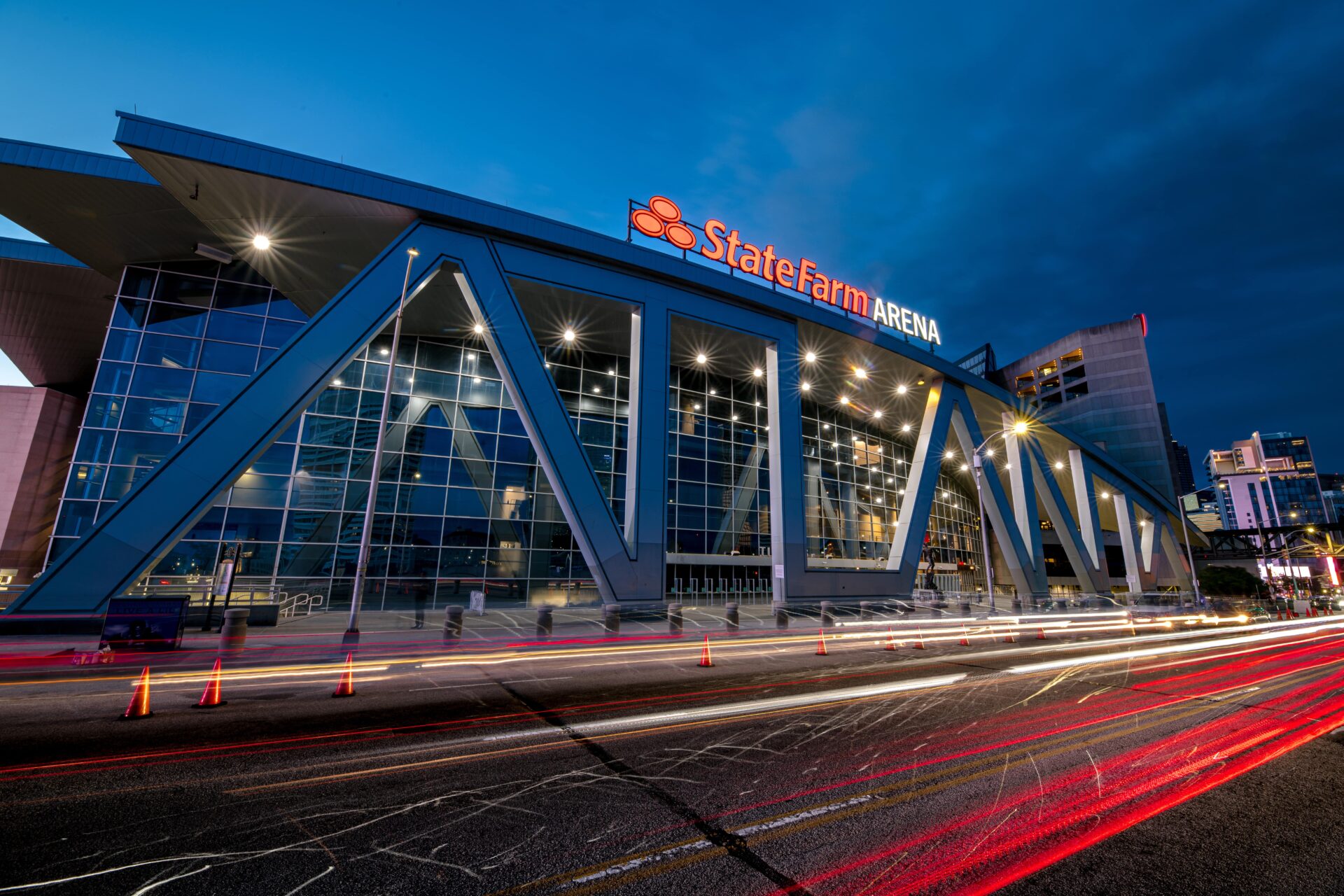
Atlanta is one of the most dynamic and distinctive entertainment markets in the United States often mentioned alongside Los Angeles and New York as a vibrant hub for film, music and live events.
The city’s global entertainment success is a blend of cultural influence, industry strength and audience diversity, making it the No. 9 concert market in the U.S. for 2024, based on data reported to Pollstar.
“I think Atlanta is one of the top entertainment markets in the entire world,” Steve Koonin, CEO of the Atlanta Hawks and State Farm Arena, says. “There’s a wonderful sweatshirt that you see around town – ‘Atlanta influences everything’ – when you look at obviously music and hip-hop, but we also look at the culture that’s come out of Atlanta in so many different areas.”
Several key elements have contributed to the city’s burgeoning live scene.
Thanks to Georgia’s production tax incentives, Atlanta is sometimes called the “Hollywood of the South.” It’s home to Tyler Perry Studios and is a popular filming location for major franchises including Marvel films, Netflix and HBO productions attracting crews and actors while generating income.
The city is the cultural epicenter for multiple genres including R&B, gospel and indie music as well as being a hip-hop hub (OutKast, Usher, Ludacris, Migos, Lil Baby). Subsequently, the city’s festival calendar stays full including ONE Musicfest, Shaky Knees and Sweetwater 420 Fest, among others.
Atlanta’s music multiplicity reflects the diverse population, which according to Nielsen DMA is 2,737,480 homes. There is a young, multicultural demographic shaping nightlife and music trends with college students from area universities including Georgia State, Georgia Tech, Emory and HBCUs like Morehouse and Spelman.
On the convention and tourism front, the Georgia World Congress Center is ranked No. 4 in the country by total size and exhibit space with 3.9 million square feet, which includes up to 1.5 million square feet of exhibit space. So, it’s no surprise that Hartsfield-Jackson International Airport is the busiest in the world with 108.1 million passengers in 2024.
With hospitality infrastructure and hotel capacity, the city has a proven track record of hosting mega-events from the Summer Olympics in 1996 to multiple Super Bowls (1994, 2000, 2019 and again in 2028) as well as the upcoming 2026 FIFA World Cup with Mercedes-Benz Stadium hosting eight games, including a semi-final.
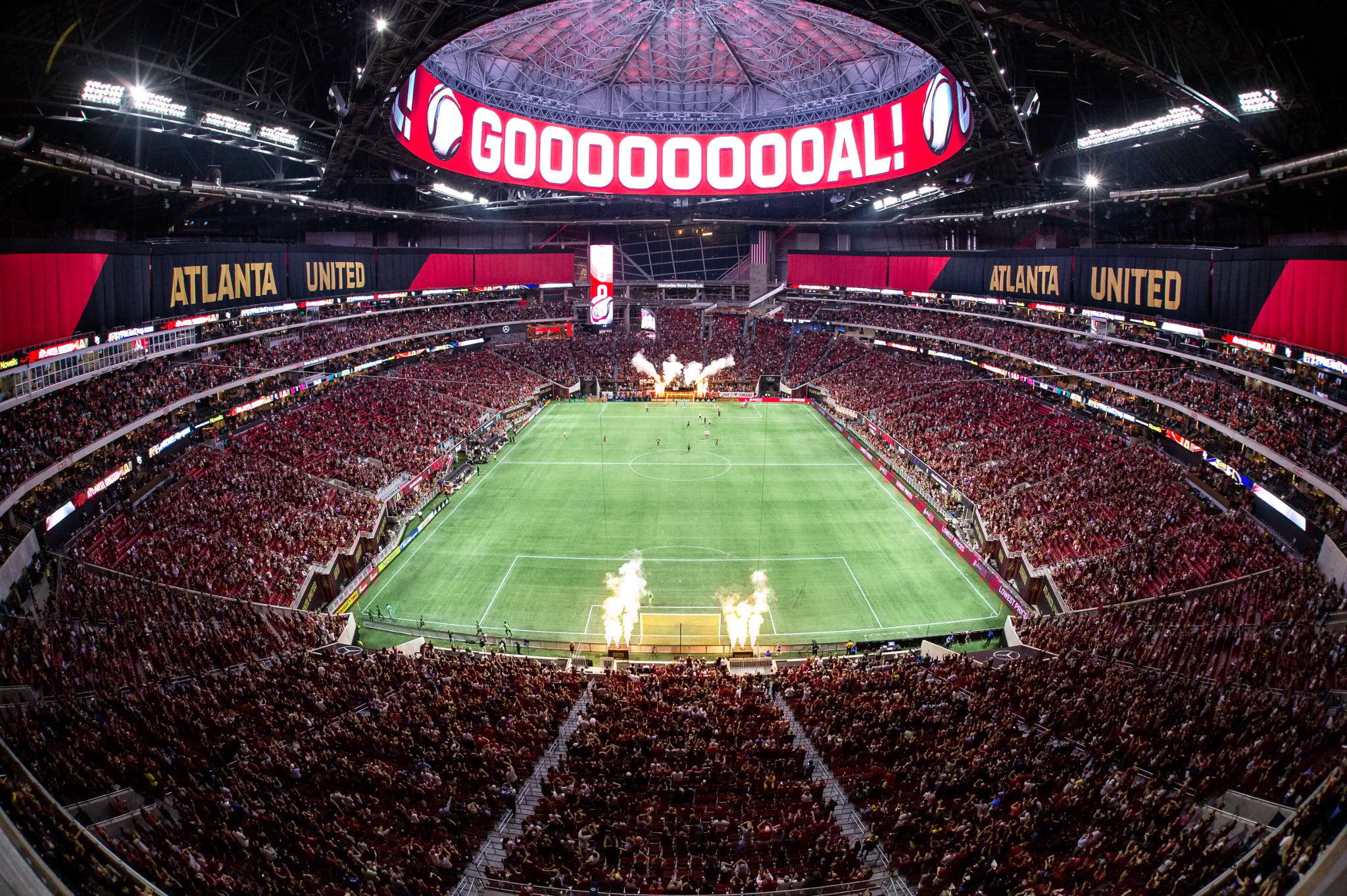
The city is already home to a full slate of professional sports franchises including the NFL Falcons, NBA Hawks, MLB Braves and Atlanta United, which is consistently among MLS attendance leaders.
With FIFA World Cup (June 11-July 19) on the horizon and an appetite for soccer in the city, the National Women’s Soccer League recently announced an Atlanta expansion franchise which will begin play in 2028. Owned by Arthur Blank’s AMB Sports and Entertainment (Atlanta Falcons, Atlanta United, Atlanta Drive Golf Club), the team will compete at the 80,000-capacity Mercedes-Benz Stadium.
Soccer is becoming as synonymous with Atlanta as peaches, with an MLS Next Pro team (Atlanta United 2) and the Arthur M. Blank U.S. Soccer National Training Center and headquarters. Atlanta also hosted and won the MLS Cup (2018) and played host to the MLS All-Star Game (2018); the 2024 Copa America kickoff game featuring Argentina and Lionel Messi; and the 2025 FIFA Club World Cup.
High profile events drive the city’s entertainment economy but wouldn’t be possible without a rich venue ecosystem offering everything from 80,000-seat stadium concerts to intimate club shows.
“We have these great venues that attract World Cups and Super Bowls, and some of the greatest concerts that travel throughout our country,” says Brian McGowan, President and CEO of Centennial Yards Company. “But our downtown doesn’t have the entertainment adjacent districts, the bars and the restaurants and the hotels and residential that you’re seeing pop up around the country, around the world.”
That’s about to change.
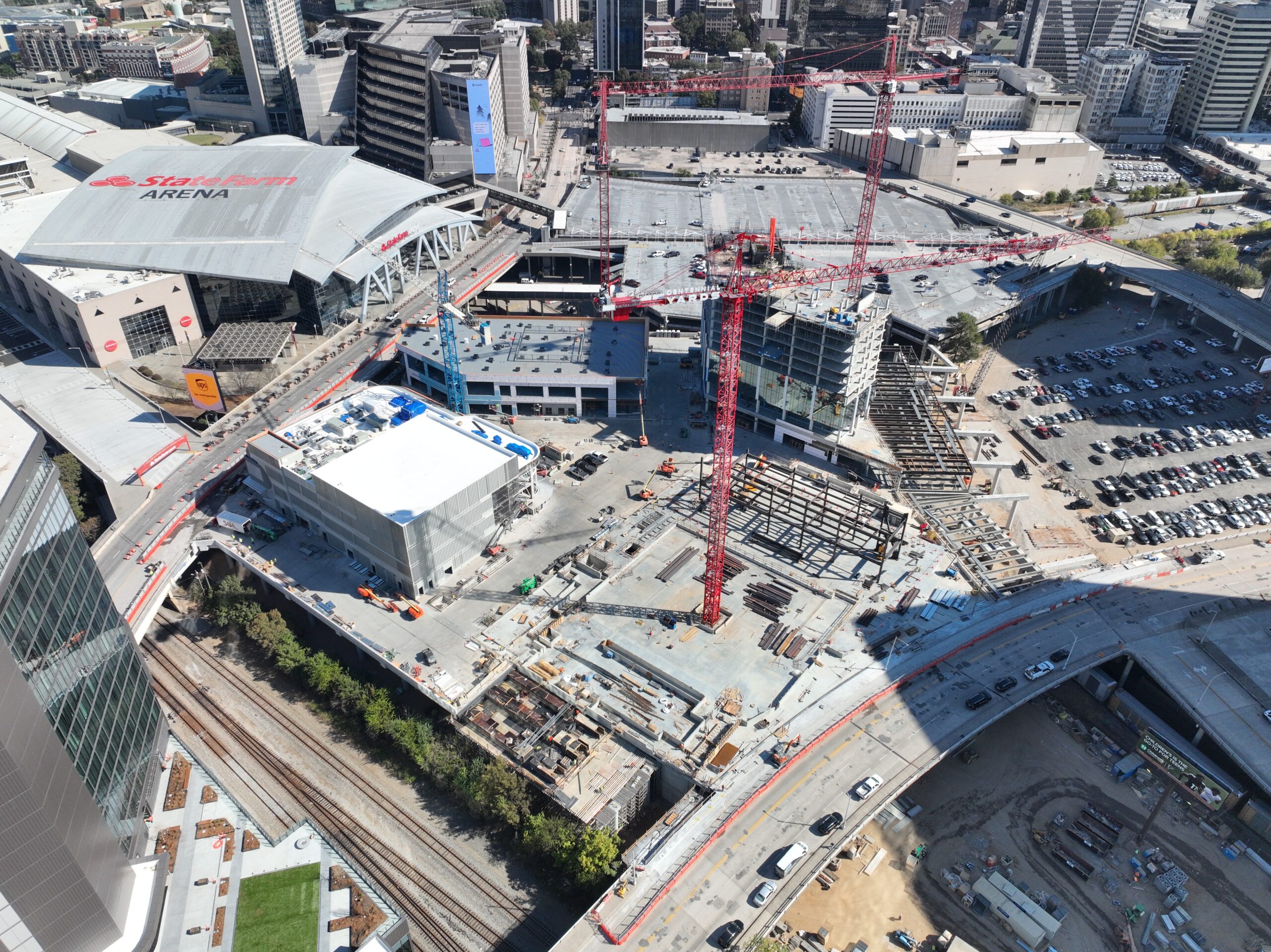
At the center of the current wave of development is Centennial Yards, a massive $5 billion-plus project in downtown Atlanta that will transform the 50-acre former railyard into a mixed-use neighborhood with more than 2,000 apartments, 1,800 hotel rooms, 900,000 square feet of retail and 1.2 million square feet of office space.
The lifestyle conclave includes a 7.5-acre entertainment complex with a gathering plaza for up to 3,000 fans and Cosm, which McGowan described as “a sports bar on steroids,” a 70,000-square-foot, three-level immersive entertainment complex scheduled to open in time for the Cup. Also planned is a new 5,300-capacity Live Nation venue, scheduled to open in 2027.
The transformation of the 12-block area is being led by CIM Group, the owner and master developer through its subsidiary Centennial Yards Company. The project is supported by investment from Atlanta Hawks owner Tony Ressler and his brother, CIM Group co-founder Richard Ressler, and a group of co-investors including Arthur Blank. While the team owners are involved, none of the sports teams themselves have directly invested in the development.
“As owners rooted in Atlanta, we are committed to shaping a downtown that is dynamic, inclusive and vibrant,” Ressler said when the long-term partnership with Live Nation was announced in May. “Live Nation’s new music venue builds on our vision for Centennial Yards as a destination where residents, visitors and fans alike come together to experience the best of Atlanta.”
Live Nation already owns and manages The Tabernacle, a mid-size concert hall located downtown, which opened in 1911 as a church and was converted into a music venue in 1996 with a capacity of 2,600. The new 5,300-cap venue with modern fan and artist amenities will fill a niche in the market.
“Atlanta has long been a cornerstone of American music and live entertainment, and we’re thrilled to help write its next chapter downtown with this new venue at Centennial Yards,” Jordan Zachary, President of Global Venues at Live Nation, said. “This venue fills a key gap in the local entertainment landscape and we believe it will further strengthen the city’s position as a cultural and economic powerhouse.”
Centennial Yards is adjacent to Mercedes-Benz Stadium and State Farm Arena with a vision of turning the underutilized section of the city into an active, walkable district blending sports, culture, community and commerce. Centennial Yards South is already open and development is ongoing with the opening this year of Hotel Phoenix, a 292-room hotel, and The Mitchell, a 304-unit apartment tower. The full project is expected to be completed in 2030.
“Tony Ressler has often said that Atlanta doesn’t have the downtown that it deserves – and that was in large part because there was a 50-acre hole in the heart of the city – and now that hole is being filled in with Centennial Yards,” says McGowan.
The entertainment districts’ major venue anchors are engaged and ready to activate.
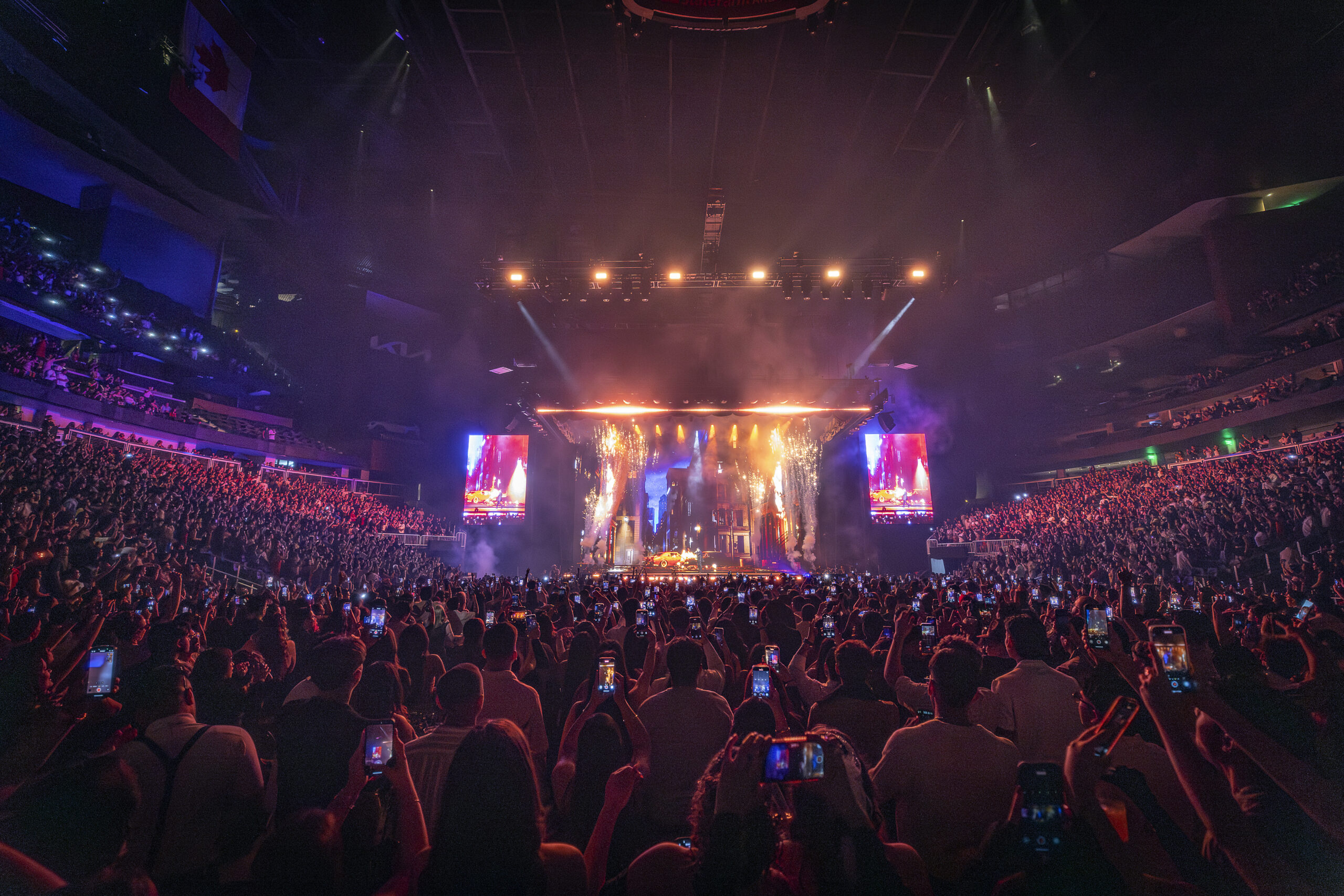
State Farm Arena, which opened in 1999, ranks among the busiest in the country. The facility holds 16,600 for basketball and 21,000-plus for concerts. The largest show in 2024 was Usher with a gross of $7,261,802 with 43,104 tickets sold over three shows beginning on Dec. 9, 2024, according to Pollstar data.
“Concerts are a huge part of our business,” says Koonin, an Atlanta native. “When we redid our arena several years ago, we asked Jon Bon Jovi’s sound people to come and consult with us. Artist after artist enjoys the experience, because we spent lots of money to make the building sound great. There’s not a ton of large, professional sports arenas that have the acoustics that we do, and that didn’t happen by accident. It happened by investment and planning.”
The $192 million top-to-bottom renovation in 2017-2018 transformed what was once Philips Arena into one of the most guest-focused venues in the country with an emphasis on social spaces, local flavor, inclusivity and developing one of the most impressive sustainability programs in the industry with a 90% landfill diversion rate.
Key elements included a 360-degree concourse; open-air club spaces and restaurants with views of the court or stage; five new premium clubs and 20+ themed social areas, replacing old private suites; and a massive 4K center-hung video board, one of the largest in the league.
“We designed the building where people can go, do and be wherever they want to be. We don’t legislate how they consume our products,” Koonin says. “What we’ve done is create these open spaces where people can come and have a drink and watch a band perform, rather than be glued to their seat and told by an usher what they can and can’t do. We want to make sure that our folks, our guests, feel that they can go anywhere, do anything, and buy anything.”
The arena has a cookie hotline where patrons can have treats delivered to their seat – and the back-of-house commitment is also centered on southern hospitality.
“The artist experience starts when they come into the building,” Koonin says. “From coffee carts for the crew to gifts for the promoter, to anything and everything we can do to make the artist experience better, we’re going to do it.”
The development of Centennial Yards extends the artist and fan experience outside the walls of State Farm Arena.
“The idea of building a vibrant downtown Atlanta that has a significant amount of entertainment opportunities is amazing,” Koonin says. “This is kind of like our equivalent of pre-school, elementary school, high school and college within 800 yards. And what I mean by that is you have Live Nation’s Tabernacle, which seats 2,200; the new Live Nation venue with 5,300 seats going into Centennial Yards; the 17,000-plus-seat venue that’s our building; and then next door is the 70,000-seat Mercedes Benz. We can be part of an artist’s journey from playing clubs to playing stadiums.”
With Mercedes-Benz Stadium 300 yards from his front door, Koonin’s team is actively looking at ways to optimize the 2026 FIFA World Cup.
“We are working with promoters and we’re working with managers,” explains Koonin. “We expect hundreds of thousands of people to be in our city, and not every night is a match night, as you can imagine, and we will provide great live entertainment for people coming to our city from around the world. So, we are actively pursuing it. By the way, any of your readers who are interested, please reach out.”

Since opening in 2017, Mercedes-Benz Stadium has been lauded as one of the busiest stadiums in the U.S. hosting more than 50 events and welcoming three million guests each year.
The venue has been home to some of the largest sporting events in the world including the College Football Playoff National Championship (2018 and coming in 2026), MLS All-Star game (2018), and the annual SEC Championship, Celebration Bowl and Peach Bowl.
The venue design allows for optimal functionality and innovative scalability by transforming from an NFL stadium to an MLS stadium with a FIFA regulation pitch. The ocular roof features eight petals that can open/close in eight minutes, providing the ability to host a variety of sporting and entertainment events in the open air or closed stadium environment. With flexible seating, the venue can accommodate up to 83,000 patrons.
The largest show in 2025 was Beyoncé with gross of $55,424,228 and 205,909 tickets sold over four shows beginning on July 10 according to Pollstar data.
Detailed organization and constant communication keep it all on track.
“There are daily planning meetings surrounding calendars,” Adam Fullerton, VP of Stadium Operations, says. “It’s constant communication… We operate on thin margins and we don’t leave ourselves a lot of room for error.”
Purpose-built for football, concerts and soccer, the stadium is preparing for the 2026 World Cup by switching from synthetic turf to natural grass in early February. The venue features a “smarter stadium” system with an advanced fiber-based optical network to ensure connectivity for fast, reliable Wi-Fi; 1,800 wireless access points across the stadium to accommodate 75,000 people; a 360-degree, 63,000-square foot HD Video Halo Board; and more than 2,500 video displays throughout the building. New in 2025 is a premium club on the 300 level in the bowl with great sightlines of the field or stage.
“The forefront of every decision we make is how is this increasing or enhancing the fan experience. If it’s not doing that then you’re probably spending your time on the wrong thing,” says Fullerton. “One of our core values as a company is ‘Listen and Respond.’”
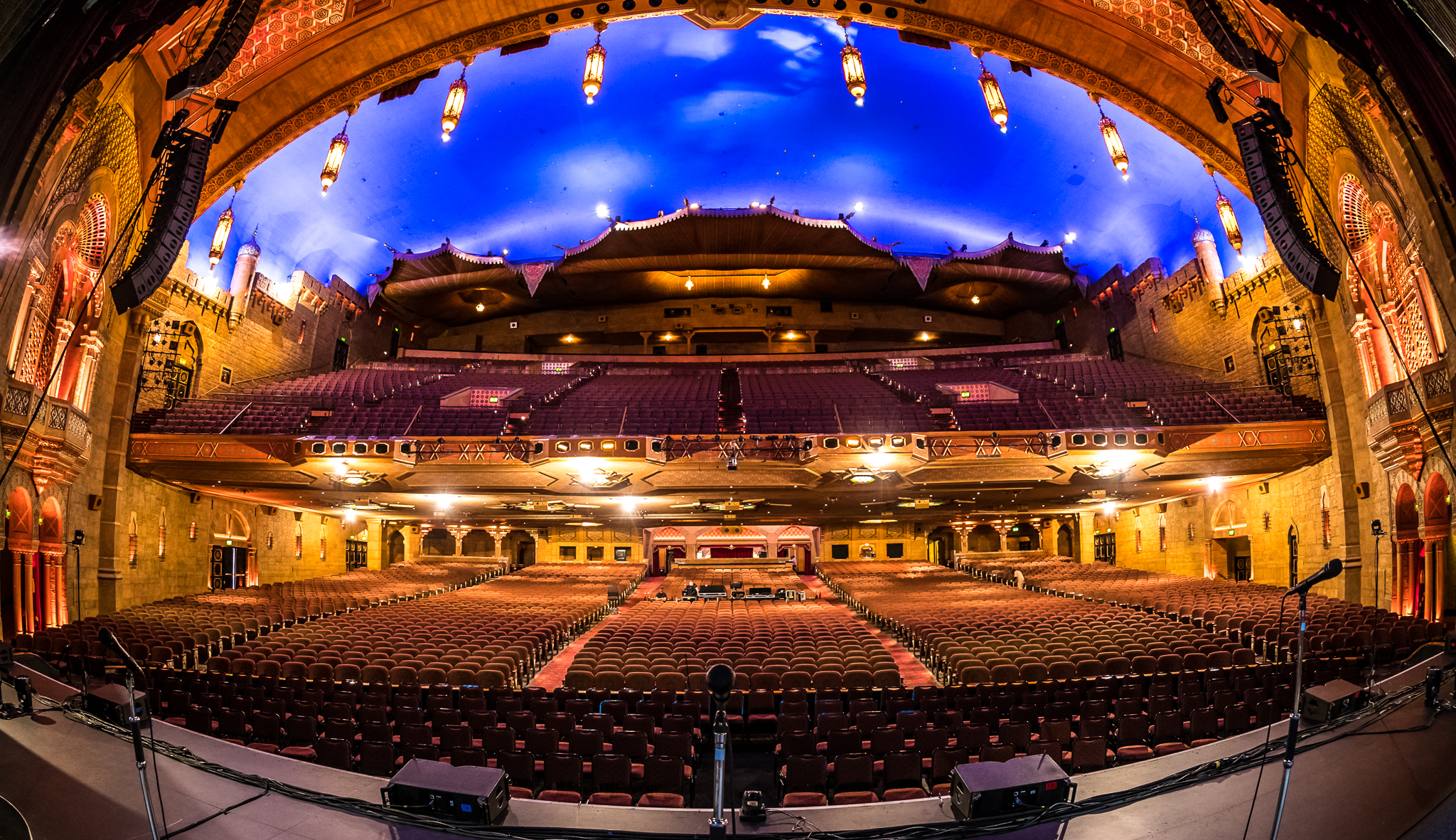
Bordering Centennial Yards is the opulent Fox Theatre, which has been a community centerpiece since it debuted on Christmas Day in 1929 with a showing of the Disney short “Steamboat Willie.”
Listed on the National Register of Historic Places, the 4,665-capacity theater hosts more than 200 performances a year including Broadway, concerts, comedy and films. It was recognized by the International Entertainment Buyers Association as 2025 Theatre of the Year.
The venue hosted the biggest theater show of 2024 with “Hamilton,” which grossed $12,423,944 with 128,029 tickets sold across 32 shows beginning on Jan. 29, 2024, according to Pollstar data.
The non-profit organization also runs a community-outreach initiative called “Fox Gives” which has awarded $4.7 million since 2008 to help preserve historic theaters across Georgia and the Southeast.
“It’s a very strong market,” Allan Vella, President and CEO of Fox Theatre, says. “All the facilities tend to be some of the top performing facilities in North America. The Fox is usually in the top three facilities in terms of events and grosses in a variety of areas, both concerts and Broadway. But so is Mercedes-Benz Stadium, State Farm Arena, the amphitheaters, the clubs like Center Stage – they are all very, very strong. And I think our market responds really well to the variety of entertainment that’s offered at all our venues.”
FREE
 Daily Pulse
Subscribe
Daily Pulse
Subscribe
 Daily Pulse
Subscribe
Daily Pulse
Subscribe