
‘From My Heart To The Page:’ Jason Isbell Unplugs, Hits Road, Earns 3 Grammy Noms

Jason Isbell is calm and relaxed. For the uber talented singer/songwriter/guitar player, the quest for calmness and relaxation has been…a journey. But in a conversation with Pollstar just before the holidays, the Alabaman and leader of his crack band the 400 Unit (named for a notorious psych ward at a Florence, AL hospital) was friendly, affable and generous with his time and perspective.
Isbell first caught the attention of rock fans when he joined the Drive-By Truckers at 22 and immediately made his presence known amongst the band’s two existing songwriter/guitarists by lending his considerable talents via immediate classics like “Decoration Day” and “Outfit.” The three-year, three-album stint with the Truckers was memorable, if short-lived, and Isbell made his solo debut with Sirens of the Ditch in 2007. A string of critically acclaimed and commercially successful albums followed (nine studio, five live), along with a truckload of honors and accolades.
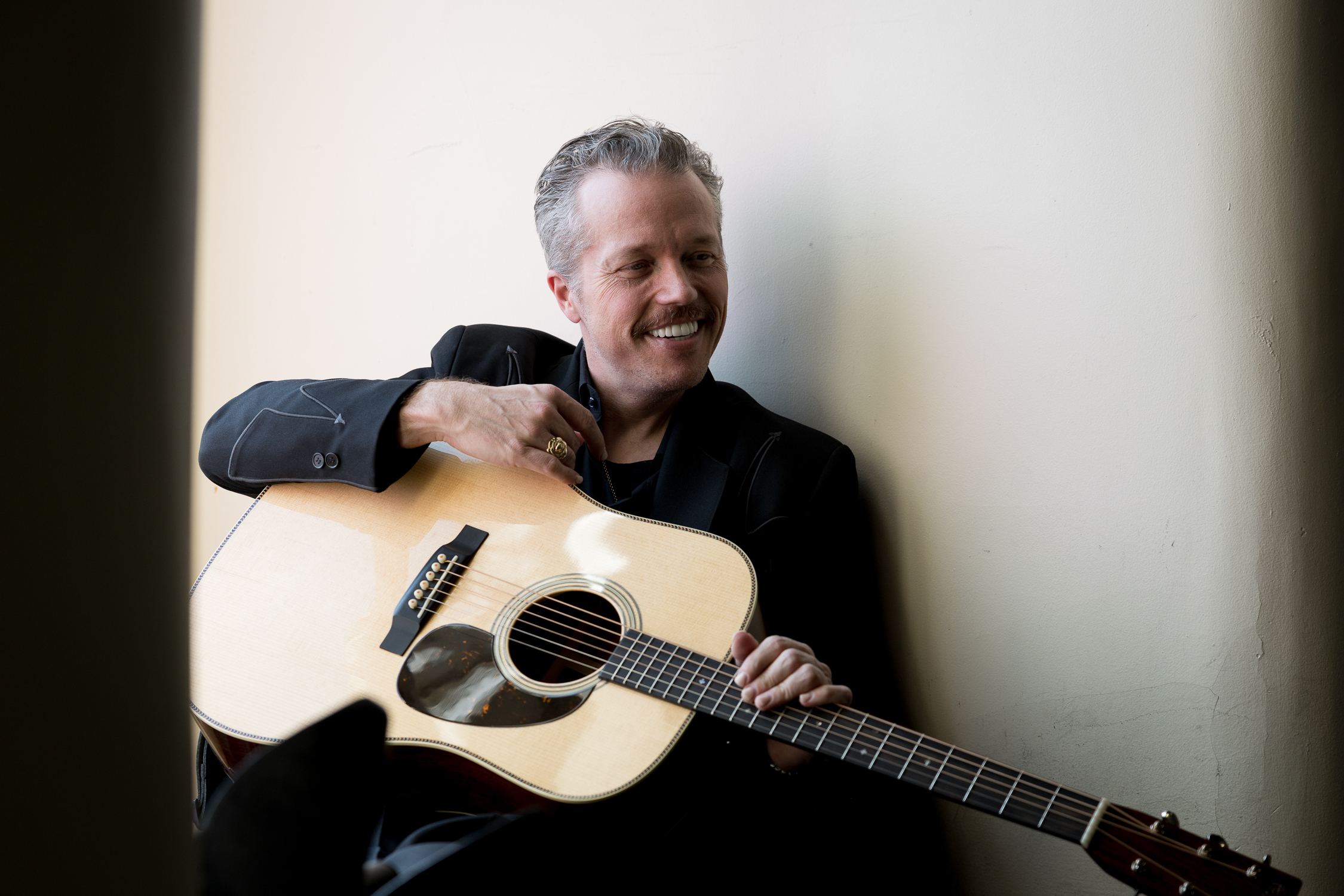
Today, Isbell is largely recognized as one of the greatest songwriters of his generation, with his latest release, the solo acoustic Foxes in the Snow, nominated for three Grammys. Isbell toured solo in support and will return to the road with the 400 Unit this year, booked by Andrew Colvin at WME (with manager Traci Thomas and publicist Chloe Walsh at The Oriel filling out his team)
After years of hammering out as many as 200 shows a year, Isbell is on brand today when he says looking at a route of 65 shows for the year makes him “relaxed.” He spoke with Pollstar at length about the state of touring today, reuniting with his former bandmates in December for late night TV, and whether it’s possible to write decent songs when one is happy.
Pollstar: So how you doing man?
Jason Isbell: I’m doing very well. I’m at home. I’m writing some songs and decorating, getting ready for the holidays, all that good stuff. How about yourself?
I’m hanging in there, trying to call it a year. I went out to your house a couple of times, once on Sirens, when you were out by Priest, right?
Yeah, that’s right.
I’m at Pollstar and we have a touring focus, but with these artist interviews, but we can talk about whatever we want.
Well, I too have a touring focus these days, just by default. I think all of us do.
It looks like you had a really good year. I looked at the venues you play and your average ticket sales on the slices we have and it looks like a sellout, capacity-type tour to me.
Yeah. I feel really good about it. There were some spots where I could tell people were feeling the pinch. Some of the smaller markets weren’t all the way full. You can sense people have a little bit of insecurity financially these days. But that’s all right, man. I always tell myself, don’t blame the people who showed up for the ones that didn’t, that’s served us pretty well. I remember when we first got to venues where we could actually hear ourselves and had a little bit of room to walk around on stage and the floor wasn’t sticky, that feeling, it doesn’t last very long. If you can remind yourself of that as you go through the process of having a touring career, it’s really a good thing to keep in mind, because you get used to anything. I’ve seen people freak out when there are two unsold seats. I choose to be happy and grateful.

If you look at the business, stadiums and arenas are always at the top end of our charts because of higher grosses, bigger capacities. If there’s areas that are flat or soft, it’s rooms at 2,500-3K or under.
There’s a lot of reasons for that. The infrastructure isn’t there in the same way. I went and did a show on late night TV with the Drive-By Truckers this week and we all got back together and went to dinner and hung out. Just talking in passing about how you don’t see kids in bands on the interstate like you used to, it’s disheartening. I know things change and I don’t want to sound too much like an old man, but when we started out 25 years ago, Patterson [Hood] was booking these shows himself on a cell phone we all shared. We’d be riding in the van and he’d be in the passenger seat on the phone with promoters and a notebook on the dash with all the tour dates. He’d be six or eight months in advance, booking the shows for the next tour.
Inarguably, there were more avenues to make that happen in those days. There were record stores you could come by and promote the show, independent radio stations you could go on and do press. There were a legion of venues from 200 seats to 2,500. There was a more defined path for doing it yourself and going out and winning people over one person at a time. Now we’ve moved to where it’s more of an all-or-nothing proposition, because if an artist doesn’t have a certain amount of social media clout, very often labels won’t sign them or won’t make them a priority. It makes it really difficult for people to build their career the way that we built ours.
That model doesn’t work economically anymore. You can’t pay the gas to get from town to town without a certain ticket price. And when you get up to $50, people don’t experiment for 50 bucks. Growing up in Nashville, going to Municipal Auditorium, literally everybody on radio came through town one after the other, ten bucks. Man, you saw everybody, it didn’t even matter if you liked them. That whole model is gone.
Everything’s good in the middle. We’ve been trending towards the edges economically in every sense for a good long while now. It’s the kind of thing where there’s going to be haves and have-nots, there’s going to be people making a really good living, making millions of dollars and then there’s going to be people that have to rejoin the workforce. You can’t blame the audience.
Still, in a world where everything’s fake, live is the only thing that’s real, and it’s at a premium.
Yeah and it gets more difficult to replicate. Everything else can be replicated, but going and seeing a band in an auditorium or a rock club or a theater, it’s going to take a long time before they can pull that off with AI. So it’s going to get more expensive.
KISS has that avatar show coming up in Vegas next year.
I know. They should have sent that one to the Kennedy Center.
Let’s talk about your latest record, Foxes in the Snow. You scaled it back. The writing just, man, it struck me. It always does, but this one seems straight from your heart. I wouldn’t ever ask you what a song’s about, but I’m curious if the people you write about know you’re writing about them?
They suspect. The thing is, it’s really hard to get someone to understand how much is about them and how much is not. If somebody’s not a songwriter, or not a writer of something fictionalized, which most people aren’t, there’s very few people in the world who spend their days trying to make up stories. The line between what’s inspired by something real and what is a documentation of something real can be very, very fine. One thing I love about songwriting is you don’t have to differentiate on paper between what’s true and what’s not…For me, that works really well, because I love to spin a yarn, and like to pull pieces of reality at will. I don’t think I’ve ever written a song that was 100% true. I try to make them all honest, but I don’t think any one of them are a direct retelling of how something happened, that doesn’t interest me…I’m in the business of telling stories.
I quit asking what a song meant when Jamey Johnson told me, “You don’t get to ask Picasso what he meant by that painting, so don’t ask me what the song means.”
That’s the thing. In visual arts, there’s this really interesting unspoken rule where the meaning of a painting can be so broad, and sometimes it doesn’t mean anything. Sometimes it’s just the person painting a picture they have in their head or they thought would look cool. Even with the masters, you look at like the judge-y eyes in a Rembrandt painting, you think, “Well, these guys are clearly thinking something bad about me,” because as the viewer you are the focus of that glare. I don’t know that that was necessarily the case. I think he’s just moving paint. Sometimes that’s what we’re doing with the song, just trying to make something that sounds right and feels right. There’s going to be some things that are details of my life that find their way into the songs, but you’re not going to solve any kind of mystery by trying to figure out how much of it is real and how much isn’t.
Ultimately, it’s about what it means to the listener, but being from the South, it’s an endless parade of lines coming at you all the time. All you got to do is step out in the lobby incognito.
That’s right. “Sit back and let it all be,” like the Boss said.
Do you write all the time, are you prolific or do you spend more time with each song, carry them around a while?
I used to be [really prolific] and write every day. I still do with deadlines I give myself. I want to go in the studio on this day and work for a week or two. A few months leading up to that, I’ll write feverishly. But I want to enjoy my life now. I was talking to a friend who writes hit country songs. He shows up to work every day in tandem with a couple others and they write a song Monday through Friday. That’s never been the way. I’ve gone through periods where I worked that much, either I was playing guitar and writing a song or I was pretty miserable, because everything else that was going on in my life was kind of shit at the time.
Now that’s not the case. I’ve got a 10-year-old daughter, a bunch of great guitars, a couple of fast cars I want to drive around and I can eat dinner whenever I want. I don’t have to escape my life by doing my work, so I have a different sort of balance. But the work is as rewarding as ever. It’s not as much a shelter, but the challenges are more intense now. As you get better at writing songs, the challenge gets harder. With Foxes in the Snow, I had a completely different goal as a songwriter than any record I’ve ever done. I wanted this to be blunt. I wanted it to be a dull, heavy object that was, like you said, straight from the heart. I didn’t want it to take too many detours getting from my heart to the page and sometimes editing is a detour.
I intentionally wanted this to come out with a thud, and that’s difficult. That’s another level I’ve not explored before. I’ve always pored over each song. I’m back to that now and writing again and going through every single line, word and syllable and trying to make it all exactly right. I don’t know I will ever return to just vomiting up my emotions like I did with that record, but it served its purpose.
The cool thing about the album is the way you play around with melodies and lyrics, where it sounds like a jaunty, fun little waltz or something, and what you’re hearing is somebody ripping their guts out. It’s a really interesting way to come at it and seemed intentional. What leads with you, does melody lead lyric or vice versa?
They happen at the same time, but sometimes it would be disconcerting. And it should be literally disconcerting, because that’s why we call it a concert. It should be something that makes you feel a little bit off balance between a jovial melody or chord progression and there should be some weight in the lyric, or the other way around. But it has to be done intentionally from the beginning of the process. Usually when I’m writing—I was working on a song last night— I imagine the whole band playing this song in the studio or live as I’m writing. That’s how I write full band albums. I don’t necessarily hear production, a lot of those decisions are made in the studio, but I hear a rock band playing these songs most of the time. For Foxes, I intentionally avoided that and wrote with the goal of performing the song alone.
That’s wild, because writing is such a solitary thing. Here you’re writing thinking of an arena full of people, and that’s not always a case.
No, it’s not. I think it’s because I come from a musician background more than a songwriter. I was playing guitar for a long time, playing in bands, before I wrote songs for anybody else to hear. I’m coming at it as a rock and roll guitar player. Most of the time, you’re rock and roll guitarist and naturally the rest of the band’s going to fill in. And that’s kind of how it happens in my head. But for Foxes, I wanted to do a folk record and a retelling of something.

When I interview somebody who’s a triple threat, so to speak, guitar, songwriter, singer, like a Haggard, I ask them what’s the most rewarding of those: in the studio recording, writing songs or playing guitar on stage. What do you get the most back from?
That’s a good question. Lately, singing has been really important because a couple of years ago I lost my voice and couldn’t sing. I got a vocal coach and learned to sing properly. Rob Stevenson, he works with really great singers like Brandi Carlile, Chris Stapleton. When you hear somebody really sing, it’s usually because of Rob or somebody he knows. I’ve been hollering for all those years and I actually learned how to sing. Now it’s extremely rewarding to be able to go out on stage and sing properly for four or five nights in a row and not get fatigued or have to worry about hitting notes or breathing properly. I still have a lot to learn and it’s not always perfect, but it’s so much better than before.
Honestly, if I had to pick the biggest reward, when you finish a really, really good song, and you know it’s really good, I don’t think there’s anything that matches that…you get to go out and perform it for people. You get to record in the studio, flesh it out, play with all these toys and figure out the intricate ways you can maneuver it and move things around. And also that it’s going to outlive you, that’s pretty special. The live moment is such a firecracker, it’s so brief, and it only happens once in that particular way, but a song, if it’s written well, is going to outlive the person that wrote it. That’s a pretty good feeling.
That’s a great answer. What do you think Haggard said?
I would assume he would say the song, but also he liked to play live shows. We were supposed to tour together right when he passed. What did he say?
He said guitar is what he gets off on the most. He said he liked to lay in the weeds and find that perfect moment.
He was a great guitar player and he had some great guitar players with him, but he made really, really good decisions on guitar. I love his guitar playing. I will say that guitar is the thing I do the most. I sit around and play guitar a lot. It’s also the most therapeutic because while I play the guitar, I feel better. That’s not the case when I’m writing a song. Sometimes it’s not the case when I’m playing a live show. But sitting around playing the guitar certainly makes me feel better.
Well, it makes me feel better to hear it. I watched that show with the Truckers on “Colbert,” that was a nasty little solo you stuck in there.
Thank you. Well, I mean I had to. I’m not going to fly across the country and show up to plug. They tuned down a whole step and I haven’t done that in a long time, not since I was in that band. I got my old Les Paul and got it a seat on the plane next to me, and took it up there and had to tune it down a whole step. I had to be very careful, because if you squeeze too hard, you’ll make all kinds of mistakes with strings that loose.
There was a moment in that song when all three of y’all were wailing, it was really cool. I thought I was back in 2003 or something.
[Laughs] Thank you. It was nice to make that sound again. There’s a particular sound that band makes I just haven’t made since. All three of those guitars tuned down low, playing the same thing real loud, you can’t replicate it any other way.
Nobody’s making that sound, and it was only made on two records that were outrageously good. I thank God some of it was caught not only on tape, but also live, too. That “Dirty South” video is ridiculous. I don’t know if you like to watch yourself or not, but I’ve told people this is the greatest band in America on this particular night.
That was a very good night. I remember that. It was 40 Watt.
What’d it feel like to get up there and make that sound again?
I mean it’s a good sound. But, man, honestly, what really surprised me most was that we’re all still around to do it. Those days were pretty lean and I know I wasn’t making the best decisions all the time. For me and Patterson, [Mike] Cooley, and Brad [Morgan] still being around and able to play, and all of us play it better than we did 25 years ago, is a testament to longevity and good luck. I’ll tell you that.
Well, being bad was part of the appeal at the time.
Yeah, but we could have gotten away with a little less.
Yeah, maybe so, but it’s what drew my attention in the first place. I noticed Cooley actually smiled. I don’t know I’ve ever seen that before.
[Laughs] Yeah, he was happy, he had a good time. He’s really a gentleman these days. The last few times I’ve been around him, it’s been so nice to see him. He’s in such good health and taking good care of himself. He’s got a big, happy family. It’s nice.
Decoration Day was just reissued. Do you think that record holds up?
Oh, yeah. It’s amazing. Anybody who says that record’s not solid and connected to the time and still meaningful after 25 years, I think would just be intentionally privileged to say that, because it’s really, really, great.
It was a moment in time, those three songwriters, that band, that sound. Had you been carrying around those songs of yours a while, or did you write them after you were in the band? “Decoration Day” and “Outfit” are what I’m talking about.
“Outfit,” I can’t remember if I wrote it before I joined or right after, but certainly wrote it with the band in mind. I spent time with Patterson and especially with “Decoration Day,” I felt like I had an assignment. I came in as a guitar player and nobody knew me as a songwriter. I thought, “Well, if I’m going to do something this band’s going to want to play and record, it needs to fall in line with what they’re doing.” But also I had such different musical influences from Patterson and Cooley that it was going to sound very different….but it fit very well. But yeah, I wrote those songs with them in mind.
I’m looking at your route for next year, what does it feel like to look at a sheet with 65 dates on it?
It feels kind of relaxed, to tell you the truth. We were up over 200 [dates], quite a few years with the Truckers. With the solo band, you had to keep working to keep gas in the van, the lights on. So a 65-show year to me is not daunting at all. Plus, I’m in better shape. I have a bit of a routine, a system, on tour that makes it possible to do it without losing my mind, as long as I don’t stay out too long. I like to be home with my kids anytime I can. I think 65 shows in a year is pretty doable.
What’s Europe like for you?
I love it over there.
I bet they love you. They go for authenticity and a storyteller-type vibe.
It’s just exotic enough to be really interesting to them. And they’ve always had a really good ear for what we’re doing culturally and musically over here. It’s nice to take something positive from America to other parts of the world right now, because that’s a bit of a rare thing. It’s nice to go over there with music rather than tariffs or something.
I’ve interviewed a lot of British artists, I just interviewed Roger Daltrey for the last Who tour, and they often asked more questions about America. Pete Townsend asked me more about Lynyrd Skynyrd than I had to ask him about playing the Super Bowl. Skynyrd’s first big tour was opening for The Who.
Yeah, and they were on fire on that tour too.
I can see why they would embrace an artist like you that’s authentic. I bet you do well there.
Yeah, I do really well and I’m treated very well. They’re very good to us over there. We’re doing Royal Albert Hall, which is about as cool as it gets for a touring band. Early on with the Truckers, I noticed the first couple times I went over, I think I was 22 and that was the first flight I’d ever been on. We went from Atlanta to Amsterdam. And of course I was drunk. Then I got over there and there’s something about Europe and the UK, that’s just different enough. I love going to Japan, but I don’t know how to do shit over there. I have somebody with me. I can’t wash a load of clothes in Tokyo. But the UK, there’s just enough similarity and there’s obviously not a language barrier and not too much of a cultural barrier. Still, it’s different enough. Everything’s so old.
Our history ain’t shit compared to that.
No. You get over there and start looking around at buildings. I remember using a bathroom in Spain that was like 2,500 years old and had been a bathroom the whole time.
Shakespeare peed here.
Yeah, exactly. (Laughs) This is [Roman emperor] Hadrian’s pisser.
Talk about your band and how it has aged with you. Isn’t it pretty much the same guys the whole run?
Yeah, bass player has changed. Chad [Gamble], the drummer and Derry [deBorja], the keyboard player, have been with me for, gosh, 15 years now. Sadler [Vaden], the guitar player, is on year 12 or 13. Will Johnson, the utility man in the band, plays drums and guitar, he hasn’t been with the band very long, but I’ve known him since the first month I was in the Drive-By Truckers. We met in Texas and have done so much stuff over the years and been really good friends. It’s like a family reunion when we get back together to tour. We’re all very close and spend a lot of time together. It also makes sort of a shorthand for communication when you’re learning songs or trying to react to one another on stage. I’m very, very lucky to have that band.
Is the same true for the crew?
Yeah, I’ve had the same crew for a long time, quite a few years. We got a couple of decaders in there and the rest have been five, six years, each.
I just heard “Driver 8” (R.E.M.), what a cool cover.
Yeah, that was really fun. I love R.E.M. That’s a very specific type of Southern band that I could really get behind.
A lot of touring artists tend to max out at a certain time, you’re still on the ascension, both creatively and commercially, as far as the tickets you sell and the rooms you play. Do you ever take stock of where you’re at career-wise or life-wise? Are they one and the same?
Well, they’re not one and the same, I try to keep them separate. The career can change, and you might not want life to change in the same direction. It took me a long time to stop worrying so much about it, because I come from the middle of nowhere in Alabama and I didn’t have a whole lot growing up. I had enough, but not extra. It took me a lot of years to get over the fear that everything was going to go away. And finally, with a lot of therapy, I feel pretty comfortable where I am and I don’t constantly evaluate how many tickets or albums am I selling, what are my numbers on streaming, that kind of stuff, because it’ll drive you crazy.
I’m 46, and too old to be worried about that kind of shit. I need to spend my time with people I care about and on the work itself, rather than the rewards or punishments that come with work. That said, there is a connection between the privilege of controlling your own process, and the level of success you have commercially. So every time something like the Grammy nominations happens, first of all, yes, it’s a huge honor and it’s an opportunity to be around a bunch of people I wouldn’t normally see, get all dressed up and have a lot of fun, but it’s not a competition. There are no better or worse albums, greater or lesser albums. Impact can be measured, but the quality of somebody’s art, you can’t rank that.
What I normally take away from it is these three Grammy nominations will give me the opportunity to work the way want to work for longer. And if I sell out a big show, or have a successful tour, what I take away from that is this is going to ensure I get to make my own decisions creatively for a longer period of time. And that makes it highly rewarding to me because the process of making this music is what I value most about my work and career. Every time something good happens and we make some more money, we sell some more tickets, we get some kind of award, I internalize that as insurance that this is another year I’m not going to have to do something I don’t want to do.
Well, it don’t hurt to keep that chip on your shoulder. I come from a similar background. You described it well, no extra. But keeping that chip on your shoulder, it doesn’t hurt you, man. It kind of helps me, personally.
Yes. I think as long as it remains a chip and not a boulder. To quote the Boss again, as long as it’s not a boulder on your shoulder, then you’re doing all right. It can most certainly grow, if you don’t watch it. I’m competitive. When I sit down to write a song, most of the time… I knew I wasn’t doing this with Foxes. I very intentionally let go of on that album, the idea of out-writing anybody. But most of the time, and when I sit down to write a song, I think, “All right, wait till these motherfuckers hear this.”
Well, when you write ‘em like you do, you can say that.
(Laughs) I think everybody should say it, depending on how it turns out. You should always want to scare your peers a little bit.
I’m sure the ones that love you ain’t scared, but the ones that were resentful, I’m sure they’re out there.
Yeah, maybe. Honestly, though, the kind of music we make breeds a good community. We’re not going for pop success. There’s room for more of us in the middle. I get along really well with people I consider my contemporaries.
Well, you know, Dylan scared the shit out of the folkies, so it ain’t unusual.
And the rock and roll guys, man, they changed their whole tune because of him. That was very significant. He’s always the anomaly. You can’t ever say it’ll be this way for me because it was this way for Dylan because that just doesn’t work.
Roger Waters said Dylan made him have to write about kitchen table issues all of a sudden.
Yeah. Right. And boy, didn’t they get great when they did that? It made a lot of the heavy rockers start picking up acoustic guitars and think about the things they were saying in their songs. Even people who never reached the narrative peak that Dylan would have, their music got so much better because they saw the shift and realized they needed to get there.
You wonder why he’s still plugging away and playing as many nights as you are, really.
I saw him a couple years ago play a couple nights at Brooklyn Bowl there in Nashville and it was great. He was acknowledging the crowd. He doesn’t need the money. I think the truth is he just likes playing music.
Is there anything on the back burner you want to do creatively, like a big band album, a blues record, anything like that?
Not conceptually in that way. What I like to do, and how it’s been since the start, is I start writing songs and let them dictate where they want to go. The next thing I make will probably be fairly extravagant. I’m going to spend a lot of time on it and try to get everything sounding interesting and just right, because the last record was just me and a guitar. I’m always looking to do things differently….But really, I just want to get back in a studio with a band and play with the toys.
It’s just you on Foxes, but it feels like you’re listening to a band. The way you play and sing together, it feels full. It didn’t really sound just acoustic.
Well, thank you. Part of that is due to knowing how those songs were going to be delivered. I wrote them with that in mind. But also you have to be a pretty seasoned musician to pull that off. I always prided myself in that I could walk out the front door with an acoustic guitar and go make a living. There’s certain things you like to prove to yourself over and over as the years go on.. We opened for Zach Bryan a couple summers back in some football stadiums and it was 60,000 kids and most of them didn’t know what we were doing. We were able to win them over. You don’t want to rest on what you’ve done in the past. It’s nice to still know you can deliver to a set of fresh ears.
When I saw Springsteen at Bonnaroo I made note that that was the first time in America he’d played in front of an audience that hadn’t paid to see him since the early ’70s. He had to win over that crowd.
It’s amazing to see. I saw McCartney do it at Bonnaroo. Yes, McCartney songs are part of the cultural fabric but, still, I saw him stand and play “Yesterday” for 90,000 people solo on an acoustic guitar. I thought, man, you can’t argue with that. There’s no amount of hype or promotion that will cover up the ability to stand on stage and do that.
That’s one of the greatest sets I’ve ever seen, period. He soundchecked right outside where our bus was parked. It was like, damn, that guy plays Wings songs really well.
Yeah, no kidding. The musicianship and the singing and different vocal deliveries that he still has. Seeing that show was breathtaking.
Of all the times I’ve interviewed you, you seem awful calm and relaxed.
Yeah, I’m more relaxed now than I’ve been in a long time. I’m healthy and happy. I got a lot of people around me who care about me, I’m doing well.
Can you write songs happy?
Yes. It turns out you can. You got to have a good memory. That’s the trick.
FREE
 Daily Pulse
Subscribe
Daily Pulse
Subscribe
 Daily Pulse
Subscribe
Daily Pulse
Subscribe