
Pollstar 2026 Comedy Special: Jerry Seinfeld & Nate Bargatze In Conversation

Listening to Jerry Seinfeld and Nate Bargatze in conversation is a revelation. They are scholars, students and master practitioners of the art of comedy, speaking easily about the craft, its history, and the intricacies of the marketplace. Over the course of an hour, they riff on bad storytelling; reference a phalanx of comedians—including Milton Berle, Peter Sellers, Chris Rock, Greg Warren, Julian McCullough, Dane Cook, Eddie Murphy and the 1969 TV drama “Then Came Bronson;” and discuss their unfulfilled dreams of becoming surfers or golfers, before making tentative plans to meet up on Bargatze’s bus if their hectic schedules ever allow.
Underlying all this is the fact that they are two of the most successful comedians of our time, with unparalleled work ethics and prodigious talent as well as a deep love for what they do. Bargatze’s star continues to crest as he tops Pollstar’s Top 100 Comedy Tours chart by a country mile with his “Big Dumb Eyes World Tour.” The run sold nearly one million tickets (963,000) and grossed $77.5 million—his second consecutive year atop the survey. This comes as his debut feature film, “The Breadwinner,” drops March 13, and his new game show, “The Greatest Average American,” premieres Feb. 25 on ABC.
Seinfeld is a comedy legend whose historic career continues to ascend. He places two entries in in the top 20 of the Comedy Tours Chart: No. 12 as a solo performer, grossing $18.2 million on 141,000 tickets, and No. 15 for his co-headlining tour with Jim Gaffigan, which grossed $15.1 million and sold 140,000 tickets. But enough with the numbers—this is all very unfunny. Let the comedy pros do the honors...
Jerry Seinfeld: So let’s start with here’s what’s on my mind. What do you have to do in this business that people stop trying to make you laugh? You get these guys and then you say something and go “I’m kidding.” What makes people think I’m going to riff with Nate a little bit. I’m his accountant.
Nate Bargatze: I get a lot of stories. And I’ll be honest, I enjoy telling them why their story is not good and what I would do with it. The problem is they get to the punch line almost immediately. And then they don’t know how to get out of it. So then it’s like the fun part, “I got hit by a car.” And then it’s like, “Yo man, you got to save that car thing and build up a little bit in the middle.”
Jerry: That’s so nice of you to even try to help.
Nate: I don’t do it all the time, but sometimes if we’re having a good rapport and it’s a regular person, I’m like, “Let me just help you out with that. Just so when you tell that story in the future…”
Jerry: How about your wife at dinner parties? Does she do stories, tell anecdotes of things that have happened?
Nate: She’s funny. It’s a different kind of humor. She’s always joking and says she’s her favorite comedian.
Jerry: My wife is extremely funny also. But when she’s telling a story, I just keep thinking tighter. Just tighter.
Nate: Oh yeah. Everything’s tighter. Nothing should be long. The idea of the elevator pitch, you should think about that all the time.
Jerry: it’s not important for them. It doesn’t matter if it works at dinner or not, really.
Nate: I’m amazed at how much people like it that are listening. You can see them being like, “Oh, wow. Oh, wow.” And you’re like, “Are you crazy? This is not a good story.”
Jerry: Sometimes, if it’s somebody that looks like they could take a little jab, I’ll go, “That needs a finish, but it’s a good story.”

Nate: I was talking to a younger comic like six months in, just recently. And he’s going on and on about one of his sets, a bad show he did. And you’re like, “I don’t care, man. You’re six months in.” Then he stopped and then came back to it. I was like, “Why don’t you tell that story again one more time? Let’s see how that one ends.” They don’t even realize it. Because he’s six months into comedy.
Jerry: I get to do this line in my set now. I set it up with this other joke, but it’s one of the most satisfying jokes I’ve ever done. I get to say that, “Maybe the hardest thing we do in life at this point is to not scream, ‘I don’t care’ in the face of anyone saying anything.”
Nate: I love it. There’s a famous line, do you know Jay Cutler? He played for the Chicago Bears. Went to Vanderbilt in Nashville and was very blunt. There’s a famous story: He’s at a bar. He’s been drinking. A guy comes next to him and they’re side-by-side in the urinals. And the guy goes, “Hey, what’s up, Jay? I also went to Vanderbilt.” And Jay just goes, “I DON’T CARE!” And then walked out. It’s become this legendary story. There’s part of you that thinks, maybe that’s what they wanted. I never met Don Rickles, but if you met Don Rickles, you’re like, “I want to be what you’re going to be”…I’m comparing Jay Cutler the football player to Don Rickles…
Jerry: Wow, that’s a reach. I knew Rickles a little. I saw him a bunch with Chris Rock when he was in the city. He would do a show and everybody wanted to see him afterwards. They would set up a chair and like three or four people would come to meet him. He would sit in the chair and insult people, just keep insulting them. I remember he said to me, and this was really uncomfortable, he says, “I can’t picture you having sex.” (laughter). That was like, OK, you’re 80. Why are you even trying?
Nate: Yeah, why (laughs)?
Jerry: Let me congratulate you. We’re doing this to celebrate and commemorate the phenomenal year you’ve had, which is the same as the year before and it’s going to be the same next year. You’re in this fantastic place where everything’s working so well. I’m thrilled for you. And you know what’s really nice? You’re one of the guys everybody’s happy for. Everybody feels like everything you are doing is earned and deserved.
Nate: Thank you. I learned it all from you. I still got all my weird rules of comedy and all the dumb stuff I do. It’s all because Jerry said it in an interview at one point and doesn’t remember, but I lived my life by it.
Jerry: I was talking to somebody about having a great appreciation for unbelievably simple jokes. I used your community college joke as an example. The stunning simplicity of that idea, not only is it simple, but it’s unbelievably funny. It’s just they call it community college because you’re going to be in the community. It’s such a great joke.
Nate: That’s what’s fun. What I tend to do is when I tell a story, weirdly, I always come up with the punchline first or the general idea of what the joke is. That’s the big mass and then build around it. That’s the fun part because you start coming up with little easy jokes. It could work on its own, but when you add it into something about community, it elevates the whole chunk.
Jerry: What are you playing with lately that’s new and fun?
Nate: I have this AI chunk I’m playing with. I got one thing I want to try. My wife always puts the blow dryer in the sink. It’s like if I grab the toaster and set it in an empty bathtub, it’s just waiting to happen. It was only that idea and I never had a place to put it. And then I have this marriage counseling chunk now. I have not tried it yet, but I’m extremely excited because I think I can put it in that show. And that’s an idea I had maybe 12 years ago.
When comics say, like, “When do you stop trying a joke?” I am of the belief I will never give up on a joke. I’ll give up if it doesn’t work, but if I know something’s there, I always think I’m not a good enough comic to figure it out now, but it sits in your head and you could have something in 12 years. You’re like, “Look,” you have to have a talk with it, “I thought you were going to be your own thing. I really did. I thought you could stand up there and be a really big player in my eyes, but you’re more batboy-ish…’”
Jerry: “We’re not going to send you down. We’re gonna keep you on the team, but you’re not really ready to start.”
Nate: “No one’s going to know your name. No one’s going to have your jersey on…”
Jerry: “But we like you.”
Nate: “But you’re in. I found a spot for you. I never gave up on you.”
Jerry: Somebody was asking me about this and I said, “I have this joke about Frankenstein’s sport jacket. Where did he think he was going that he would wear a sport jacket?” It’s from 30 years ago, from 1995. Somebody said, “How did you remember it?” I go, “We’re hoarders. We don’t throw away things. Why would I throw anything out that might have some value who knows when?”
Nate: With younger comics, I wish they knew not to put just anything out on social media and weren’t like, “Oh, yeah, that could be a funny tweet.” And you’re like, “You know, what would be better is just to let it sit for 20 or 30 years, and then find a place for it later that elevates it into some big rememberable thing.” You’re being asked for creativity so much and people are just trying to pull a line that could be funny for a podcast in the moment. Your act is everything. My act is the only reason I can do anything I want to do, and I try to protect it.
Jerry: What do you think about comedians feeling like they’re ready to do a special? This is a thing I’ve been talking to somebody at Netflix about. It seems to be a little bit of an issue of undercooked specials that could have used a little more time. But of course the platform wants the content. The comedian wants the check. What’s your thinking on how that’s been going?
Nate: They’re going too early, that’s where social media can work. What we had coming up was Comedy Central, which was very important. You went through “Premium Blend,” “Live at Gotham” where you did eight-minute sets. Then a couple of years later you got a Comedy Central half hour and then an hour. Hopefully by then you could start touring. Then Netflix came and all this stuff. People are not taking enough time. They think there’s a shortcut to stand up but they don’t know.
Before I tape this special, I’ll have done 150 shows. That’s not even including the clubs I went to before heading out. So 150 to 200 hours before I tape it. I get to poll every audience in America. I might be opening with something at the beginning I end up putting towards the end that fits better. You need to take your time to have it flow. I don’t want to feel like I’m cramming something in.
Comedy clubs are like, “Well, how many followers do you have?” Then they’re like, “I got to get followers if I want to get on stage at a comedy club.” That’s not a bad route, you’re trying to create so much content…but I don’t think people realize how hard it is to create an hour’s worth of material. It’s the hardest thing to do in entertainment. Every time you’re done, you think it’s impossible. I’ll never do that again. I don’t know how to do it. Right now, I do not think I know how to do comedy. You feel like you just got done with a special and you’re like, “I don’t know what to do. Nothing’s funny. I’m terrible.” And you’re making comics build online audience.
Or they do crowd work. If you want to be a Matt Rife kind of phenom, you’re not. Doesn’t mean it doesn’t work, but it doesn’t mean the likelihood of you getting to be Eddie Murphy doing two specials out of the gate, that’s one in a million. It’s already one in a million to make it as a stand-up comedian.
Jerry: The odds are much longer than that.
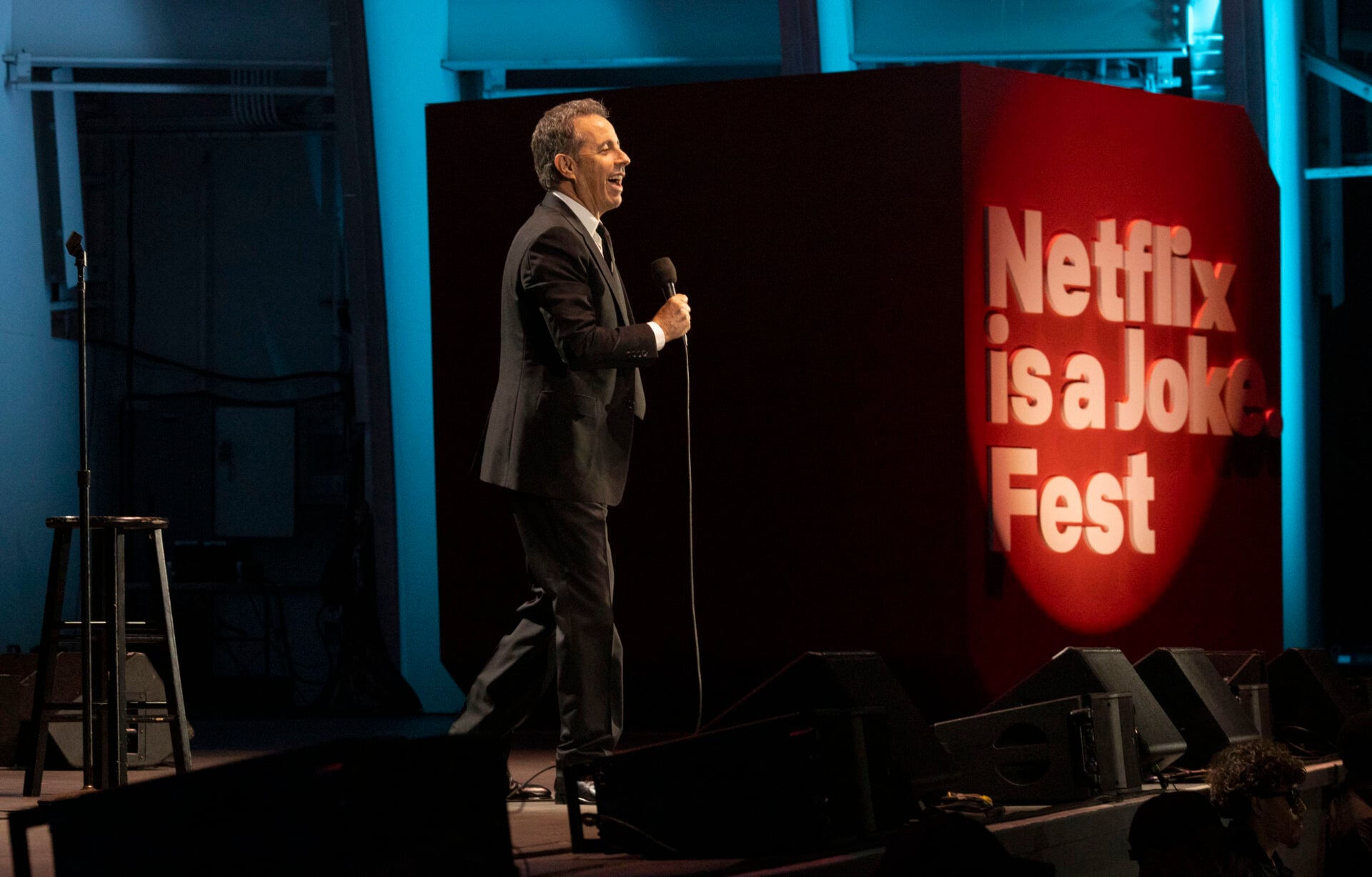
Nate: I went through every system. I’ve done every show you could possibly do. I’ve done bowling alleys to arenas. We have a YouTube page where we have this showcase and they’re doing 10 minutes and we’re trying to shoot some half hours with some comics doing an hour to try and give them a path. If someone pops, they pop. I’ve been going after a lot of older comedians, they could be my age or whatever, but they have the chops, the experience to be able to create this material.
One in particular is Greg Warren. Very funny comedian. He’s been doing comedy for 30 years. He was a Bob & Tom guy. They were a comedy radio show in Indianapolis. It’s what I listened to before I started in comedy. Greg was very funny. I brought him in and he’s come with me. We were in Kansas City and he got a date at the Comedy Club of Kansas City two months later. We do two shows in the arena there. Out of doing 10 minutes on two of the arena shows they added 14 shows. That’s just from him doing 10 minutes. But he murdered so hard. We had another one. Derrick Stroup did nine.
Jerry: What’s changed in the past 20 years for comedians? It’s like a destination, we’re going to see this comedian. This is an important thing for us to do. What changed?
Nate: A good beginning was your “Comedian” documentary. I come from that. We watched you build a new set. I’d never seen an inside look like that, especially for someone like me who’s not from New York. I was already trying to do comedy and seeing it, but I wasn’t seeing someone that was you go and not get laughs at Gotham or wherever. And you run around to the clubs and work on this thing. You started it essentially. There was a large group of people around my age that kind of made it like, “All right, we want to go do this. I want to be a stand-up comedian.” After that, comics weren’t getting sitcoms anymore. That route was shut down. Now you’re just going to do stand-up. Then you had alt rooms open-up and it started to expand.
Another one was Dane Cook. When he did “Tourgasm” and was doing arenas on HBO, he was the biggest comic on the planet. Then you’re like, “This dude’s a rock star from just being a stand-up comedian.” Then you had your Jim Gaffigans, Sebastian. You had comics having full careers and doing big arenas, big things and stand-up. Brian Regan’s another. Never did stuff in the Hollywood world, was a comedian that got big and Netflix was part of that. Comedy Central was a giant part as well. You said something about what hurt sitcoms was, what was going to be funnier than a stand-up comedian? You can’t make a movie have as much laughs as stand-up comedy.
Jerry: It seems like those forms deteriorated. The reason was that someone has to approve each thing in a movie or TV show. Whereas stand-up, we just go right to them and say, “What do you think of this?” Having a third person make a decision is an obstruction to being funny. That was one of the reasons my show did well in the ‘90s. It was Larry (David). And nobody said anything to us. We just did what we wanted, and there was no network involvement really at all.
Nate: Is it almost like they were like, “Fine. Try what your thing is.” And because of that you got successful where you’re then able to then go like, “No, now we’re the ones in power.”
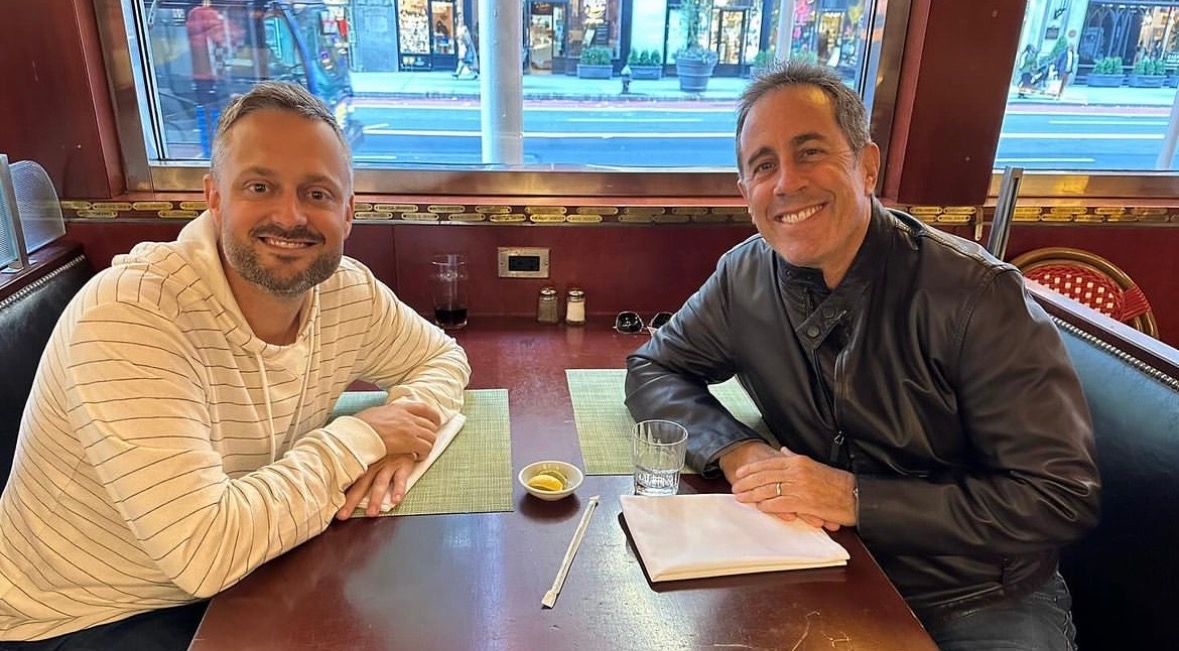
Jerry: It all flips around. You’re trying to please the network, and then all of a sudden, the network’s got to worry about pleasing you. The audience runs the show. The audience decides if we like this, then everybody has to back off.
Nate: We’re doing a movie that’s coming out and you’re banking on the audience that you have. And you’re like, “I think I know more than you do because I’m flying to Eugene, Oregon, Thursday, then I’m going to Yakima, Washington, and Missoula, Montana, will be the last state I haven’t performed in.” Have you performed in all 50 states?
Jerry: I’ve done all 50. What is touring like for you these days in terms of workload? I just saw your schedule on Instagram, it’s still very intense the way you work. How does that feel for you these days?
Nate: It’s like a gym. It’s a muscle. You got to stay on top of it. When you don’t go out for two weeks and then you get on stage and you’re like rough. I am awful.
Jerry: What about when your wife wants to go on vacation?
Nate: Yeah, I think they have a Side Splitters so that’s fine. We can go there and I can pop in and do one show to stay fresh.
Jerry: It’s funny how fast it goes. I find not only can you not remember lines, but you lose your nerve that you should even be doing this. Who am I talking in front of all these people?
Nate: That’s the thing in your head that’s going like, “Who do you think you are? Are you out of your mind?”
Jerry: You have to really not know what you’re doing to do it. You don’t want to ever think about it.
Nate: I had to work on my mind wandering. I had to work on pulling my mind back into the story of the joke I was telling. Every time I’m telling it, I visualize it. I love it so much. And you’re in front of a different crowd every night. Because I’m in the round, I’ll pick like four people. It might be an older lady, could be a family a little farther back, a woman with her husband. You keep an eye on them. It’s a good way to keep a gauge like, “Is that too harsh?” You’re picking four people to do the show for, weirdly enough, instead of a mass.
Jerry: You have a few guys that open the show for you. How did you come up with a format you like?
Nate: Once we were in arenas and it got big, you needed a host. Someone to guide the audience to let them know what’s going on. We ask before every show, how many people have been to a comedy show? It’s not 100%, it’s 50% or less. People don’t know what comedy is. They’re nervous because they think comedy is dirty, edgy, they’re going to get made fun of. I have Julian McCullough who is unbelievable at it and already a headliner in his own right. Once you get to arenas, everybody’s got to be headliners because it’s too big of a room. I needed someone they’re excited for to come back up. I bring three comedians out and they each do eight minutes. You want everybody to kill it. I’m trying to introduce these comics to these audiences.
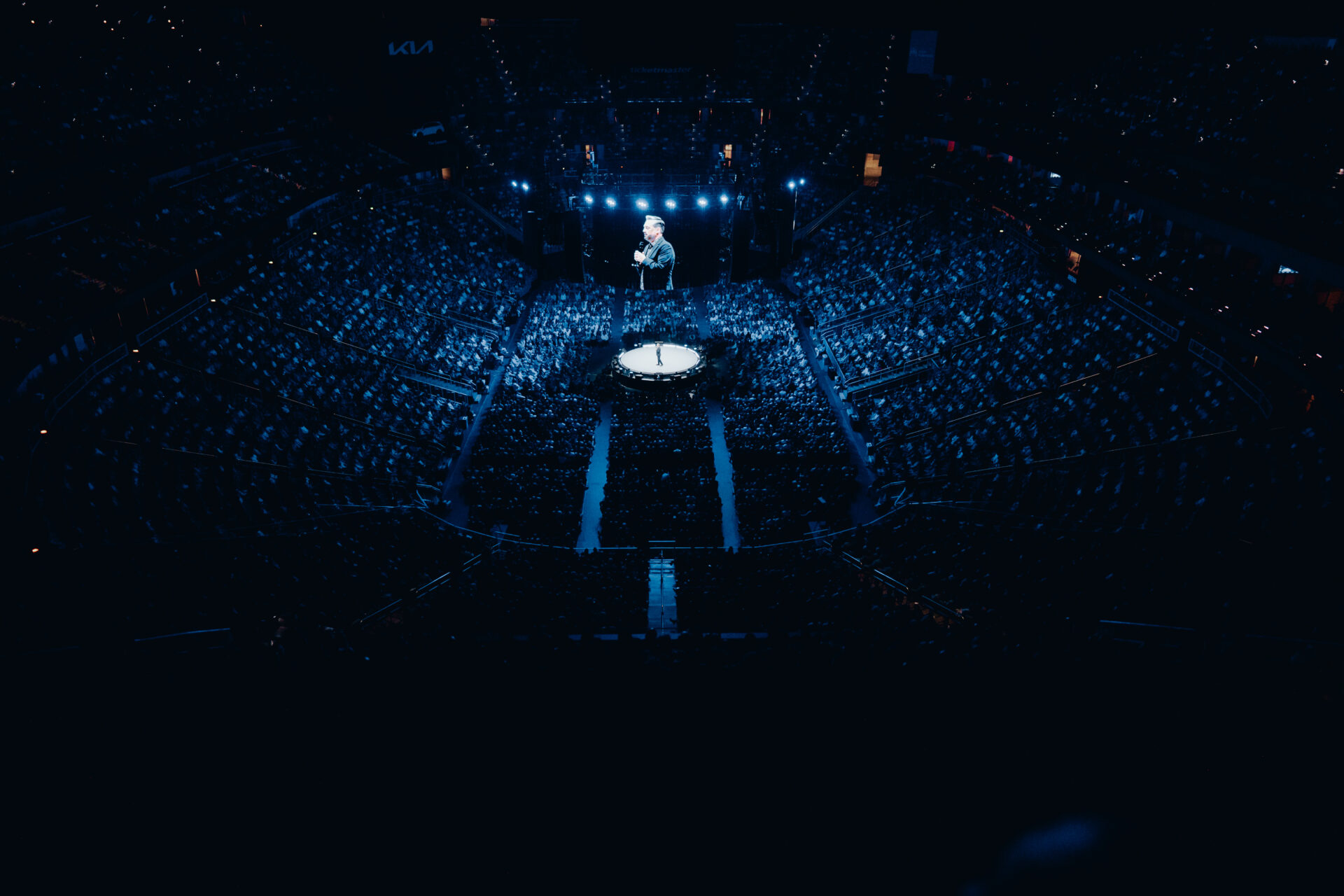
I like stand-up in the arenas, it’s really pushing stand-up to this higher level. I’ve got big screens, a sound system, it’s like watching a live special. And it’s about the community and everybody laughing. You want to give them a full show. When they all leave, hopefully they’re very happy.
Jerry: When we had breakfast, you were telling me that you were having trouble getting past an hour, you had this 60-minute barrier. Do you remember that conversation?
Nate: I think about it every day, every show. I’ve got myself to 62-63, I’m there. I had one that was like 68, the ego of me to go that long was insane. I like to think I keep it tight. I can add stuff to make it longer. Your timing is based on the audience. You can do a 60-minute set in a corporate setting and do 60 minutes of material in 15. And then it can go vice versa.
Jerry: Why do you still do corporate work?
Nate: It’s not a ton, but you know…
Jerry: Because it’s there, I guess, right?
Nate: I don’t do it as often as I did, but sometimes. Why do you go out every week? Your schedule is bananas, dude. I’ve been trying to get you to come out and hang with me one weekend. And every weekend I look at, you work everywhere.
Jerry: It’s the most fun thing I have in life. I find everything else is kind of OK. But working on a bit and hanging out with a comedian and I love hotel rooms. There was a show when I was a kid called “Then Came Bronson” about this guy who got on a motorcycle and just drove everywhere and he would go in different towns and work as a bricklayer until he had enough money to put gas in the tank and then he would just keep riding. And that was my hero. And that’s stand-up to me: just you and a motorcycle. Nothing else. And that feeling of freedom to me.
The only thing I look at and think, “Boy, that would have been a cool way to spend a life,” I talked to a guy last night who was a surfer. He was older and surfs every day. I thought, “If I could have done that and just been a surfer.” Because nobody knows you’re doing it. Nobody really cares if you’re doing it well or not. It’s just this thing you love. I think stand-up and surfing are similar in that the ocean’s always stronger than you. The audience is way stronger than you. But for this short period of time, I’m going to do a dance on this wave. And that’s what stand-up is. I look at surfers and that’s the only way of life I envy or admire. Just you and that energy. There’s something very pure about it.
Nate: I think golf is like that.
Jerry: That’s right, you’re a big golfer.
Nate: I am a big golfer. They have the same schedules as us. They’re like a Thursday to Sunday schedule. Those guys get on the road. They drive to these things and see if they can make any money doing any of it. It’s the pure love of it. And you understand it becomes the mentality more than anything where you got to be able to just handle it.
Jerry: Would you have wanted to be a golfer if you could have?
Nate: Yeah. I would have loved it. I mean, I love stand-up too much. I love it.
Jerry: That love is why you’re so good. People always ask me, why do you keep doing it? That’s the only answer. It’s just the love of it. I have a new bit about golf, about how they realized the game is too big if we need a car to get around. And then somebody said, “Well, what if we miniaturize it? What if we take this whole thing and miniaturize it?”
Nate: Well, then you’re like, “All right. Well, now you did it too much because it’s like a mini golf.” You’re like, “Well, there’s got to be a middle ground. Where do you go?” I would like to walk a little bit. I mean, it shouldn’t be in a parking lot where you’re walking 10 feet.
Jerry: That’s funny. We’re going to miniaturize, we’re going to miniaturize the pencils.
Nate: Yeah, everything. I had a joke about being older, that if the (TV) captions, if they’re just on, I’m not taking them off. I’m not saying I deliberately put them on, but if they’re on, I’m not at a stage where I don’t want them on. If no one’s saying anything, I go, “That’s not bad that they’re on.” I have a whole thing I’m doing because I’m 46. So I’m like the old of the young. I get to 50, which is the young of the old. Once you get to 50, you’re like, “Well, I can beat up everybody above me.” But the back end of the 40s is the frustrating part because you’re just like, “I bet I can clear that fence.” And then you need to be 50 to go, “Why would I want to clear the fence?” But I still got that young, dumb part of my brain.
Jerry: 40s is the most dangerous time because you don’t really know that you’re not young anymore. You’re not a young age.
Nate: And 50, you accept it. And what I say in the joke is that’s why everybody tells you when they’re 50. No one tells you their age. They go from like a child to quiet to then 50s, like bang! They’re just walking around just like 53 years old! They just start yelling it. And you’re like, “All right…”
Jerry: I like when people go, “I don’t want to date myself.” Like we can’t tell by looking at you the extra wide light gray New Balance. We have no idea how old you are. It was only because you knew Frankie Valli and the Four Seasons that we could tell.
Nate: I’m at the age now, too, where I want to wear the same thing every day.
Jerry: Oh, yeah. I’ve been there a long time. That’s Einstein, Steve Jobs. They got to that. I used to have a really good joke you may remember when I was in my 60s about I don’t want to turn around anymore. Someone says, “You got to see this.” And I go, “I’ll see it on the way back or I’ll Google it.” And I go I can’t wait for my 70s. So I’m 71 now with nothing funny about the 70s. I can’t even tell them because they get depressed. (laughs). What was it like making the movie?
Nate: I liked it. I wrote it. I was in every scene. I didn’t get to do a ton of editing. I love taking stuff out. As a comic, that’s all you do. It’s frustrating, but some of my favorite parts is going “It doesn’t work. Cut it down.” I want to see what I can do adapting to this movie world. This is a movie that I think you think I would make. It’s not going to be far off from me as a stand-up comedian. I’m not playing a stand-up comedian, but it’s telling those stories and having it all connect. The movie world is in a weird spot where it’s like horror or animated, everything is heavy. Everything’s so intense. You see that middle ground where you want to go, “I want to go make ‘Home Alone.’”
Jerry: That’s really hard to do. My idol is Peter Sellers. He was one of my favorite funny people. He had an incredibly simple way of working, but the energy of that guy is funny, as soon as he walks onto the set, it’s just funny that he’s even there. I think it’s harder to make a funny movie than a funny TV show because of the weight, the portion size is so big. You need these other stories to hold your interest and then you need visual stimulation, a car chase or something. A sitcom is like a stand-up set. It’s like, “We’re going to get in, it’s an escape room, let’s set this thing up and we’re going to get out of this puzzle.”

Nate: I still think they can work. I’m not a believer when people are like, “No one wants to go to movie theaters and no one wants to do this,” I disagree with all that. Traveling the country, doing stand-up and hearing laughs in different places and different reasons, that stuff matters. That’s the creativity you come up with when you write something. It’s the characters, you’ve fallen in love with and you know them. All the aspects. You mastered that on “Seinfeld,” that’s what it’s like hanging out with comedians. “No hugging…”
Jerry: And “no learning.”
Nate: Yeah, “No learning,” but there’s an underlying love there. It’s why I bring so many comics on the road because I need all of us to be together for us to be funny. it’s a different group almost every weekend. I rotate about 20 guys, just making fun of each other during the days, it’s like the old days.
Jerry: I actually thought the exact same thing. I loved doing comedy clubs. Whoever the middle act is that week, we’re hanging out every day all week. I still struggle with it. I’ve spent the past 26 years being married. I’ve learned to be with regular people. But the language of comedian-to-comedian is just a different language, right?
Nate: SNL 50 was just me and you hanging out. You tend to find all the comics together. I went to the Vanity Fair party after Conan hosted, and it’s just Conan and Ray Romano and all these actors and stuff and they’re floating and then we just end up together and talk.
Jerry: Was it me, you, Chris Rock and Louie standing together for a few minutes? That was at Chris’ birthday party. Wasn’t that an intense moment?
Nate: It was the best.
Jerry: It was the greatest. Something else I want to say before we finish: I want to thank you for something I’m sure you don’t know I know about. I don’t know how I stumbled on it, but you were on a podcast, this was years ago. Someone was asking you about my series and about the two years I did without Larry. And you were so familiar with those two years and the episodes and you defended that those were good years. I really mean this, it was one of the nicest, most complimentary things I’ve ever received. I’m sure you didn’t think I ever saw that, but I did. There’s no award that I have that means as much to me as when I saw you do that, that somebody noticed what we accomplished in those two years. I wanted you to know that I did see that, and it’s very meaningful to me.
Nate: Oh, man, that’s awesome. I’m glad you saw it. I’ve always thought that.
Jerry: Do you imagine you’ll maintain the pace you’re on now for quite a while? What you do is very intense.
Nate: Yes. We’ll see what happens with this movie. I have a plan of what I want to do. I think this big tour, I see another big tour. I’ve said that I was going to stop doing comedy and all this.
Jerry: No you’re not.
Nate: I know. The intensity of what it is now, I want to take as far as I can take it. And honestly, I want comics in 20 years to realize they can do this and not have to try to get into every other art form and try to work on stand-up. The stuff that I learned from just watching you guys when you came up. Y’all didn’t have the accessibility we had. You didn’t have specials. You didn’t have any of this stuff. You set the way for us.
Jerry: It’s nice to say you’ve been shown the way, but you’re a very special, unique talent to have accomplished what you’ve done and continue to do. Comedians will have a different kind of success watching you, but to do what you’re doing and the way you do it. I don’t care where anybody’s playing, the crowd. I don’t care. Pollstar, God bless the money, I just care about the bits. Let me hear what the guys got. And you’ve got the diamonds. And that’s why you deserve all of this. And people are not going to follow in your footsteps because I think you’re that special and that rare and that excellent at what you do.
Nate: I always say I’m a joke-teller, but I do it in a joke format. I never try to be too far from a laugh. But it’s the way it evolves and you want to do something different the next time. It’s just those laughs. I mean, they’re just so addictive.
Jerry: It’s like air underwater.
FREE
 Daily Pulse
Subscribe
Daily Pulse
Subscribe
 Daily Pulse
Subscribe
Daily Pulse
Subscribe