
From ‘Resistance To Revolution:’ Global Superstar DJ Carl Cox On 50 Years Of Setting Dance Floors On Fire
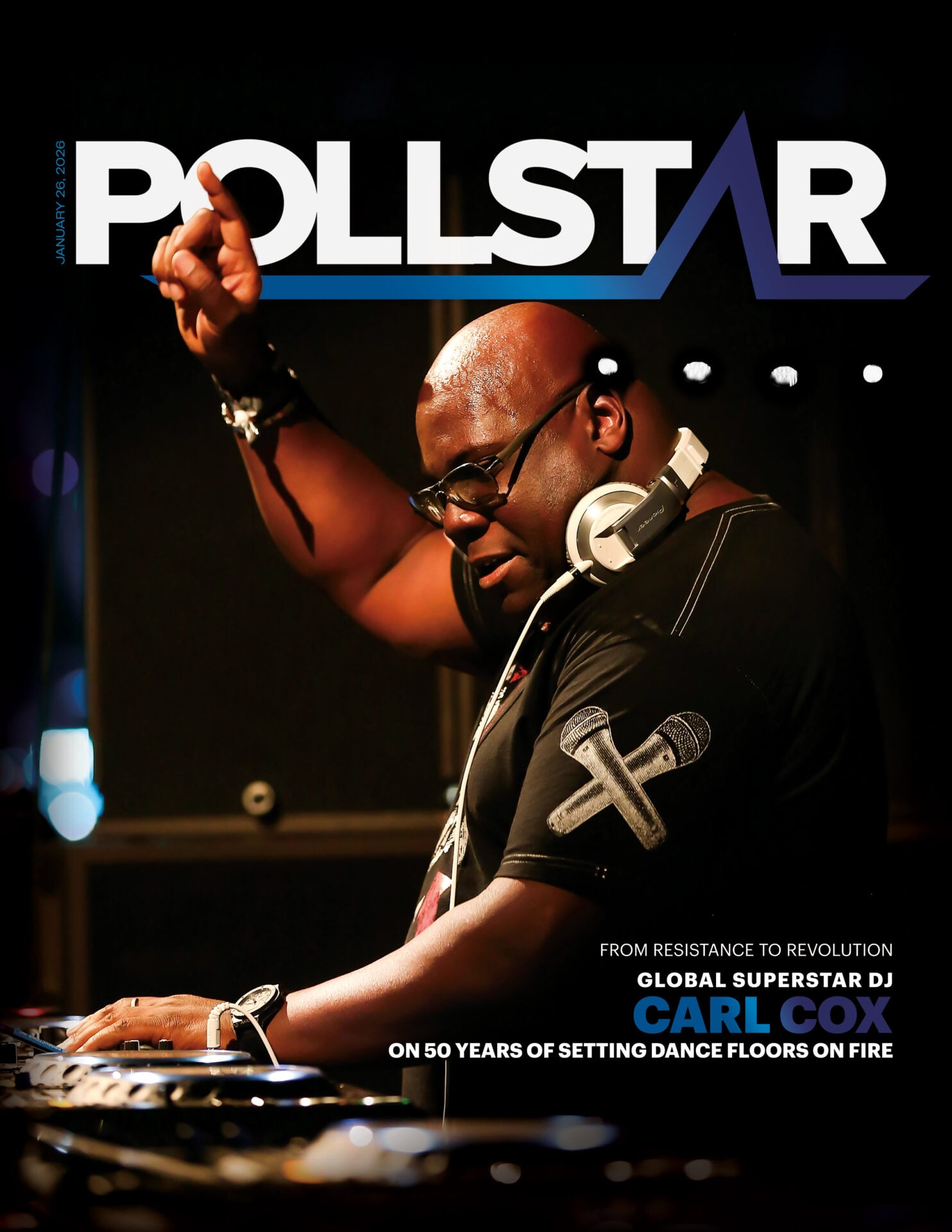
Carl Cox is certified global DJ superstar who’s rocked the faces off millions of fans across massive dance floors, warehouse parties, festivals and legendary clubs for half a century. This includes a 16-year “Music Is Revolution” residency at Space Ibiza, a 5K-cap venue where he played from 2001 to 2016 which he sent off with “The Final Chapter” shows and an epic 9-hour marathon set.
Born in Oldham, England, near Manchester, Cox was just 15 when he first discovered disco and then Chicago house music on his way to becoming a leading DJ light of the late-’80s British rave scene. Spinning at famed Sunrise raves, he gained notice for his unconventional mixing on three turntables. The “Three-Deck Wizard, ” as he was known, describes the practice as akin to a circus performer with “spinning plates.”
Speaking with Pollstar in November from Sabina, a luxe roost in Ibiza, the 63-year-old says his “Final Chapter” experience at Space was so special that he wasn’t sure how to come back. It wasn’t until 2025, when [UNVRS] offered him a residency, that he decided it was time to return to the Spanish Island, which was one of the first places he played outside of the U.K.
Pollstar Boxoffice Reports include 21 Carl Cox headlining shows dating back to 1999 and reveal what a consistent and dominating a force he is within dance music. On average, Cox has gross of $144,201. per show—which is only an average. On March 1, 2024, for example, he far surpassed that at a sold out Coliseo MedPlus in Bogota, with 8,545 fans in attendance and grossing $512,527, according to Pollstar. Boxoffice. With Cox’s own Intec Digital and Awesome Soundwave labels and Carl Cox Motor Sport brand and six-figure payouts his net worth, is reportedly north of $16 million, according to multiple media sources.
While Cox doesn’t have management, he’s booked by Analog worldwide, with Ian Hindmarsh representing him in Europe and John Barry in North America.
“It’s an honor to work with him,” says Barry, partner at Analog, “He’s the pioneer. He’s the reason that a lot of people are working in the industry. He’s the guiding impact, and he’s been a resounding voice through the fray. There’s a lot to learn from him – even so lengthy in his career, he’s always adapting.”
Since 2005, Cox has had own stage every year at Ultra Music Festival in Miami which has become the annual event’s second-largest stage held in Miami’s Bayfront Park at the end of every March. Artists who first performed on Cox’s stage and gone on to headline the main stage, include Steve Aoki, David Guetta and Afrojack. The stage itself would go global and evolve Ultra’s house and techno event hosting residencies in Miami and Ibiza as well as landing at Ultra Music Festival in Melbourne, Cape Town, Abu Dhabi, Tokyo, Seoul and more. While Cox does not appear at every RESISTANCE event, the curation has Cox’s fingerprints all over it.
“Over the last 25 years, Carl Cox has been a driving force in shaping our techno and house programming,” Russell Faibisch, co-founder, CEO of Ultra Music Festival, tells Pollstar. “Carl first performed at Ultra Miami in 2001, in the Twilo tent at Bayfront Park, then on Ultra’s Main Stage in 2002. We wanted to do something bigger with Carl for Ultra 2005, so we invited him to launch a stage of his own – the Carl Cox & Friends Arena – which expanded in scale and production over the years, eventually evolving into our RESISTANCE MegaStructure. As we celebrate 10 years of RESISTANCE, we’re proud and honored that Carl continues to be one of our strongest global champions – touring with us internationally and remaining a core member of the Ultra family.”
Cox sat down with Pollstar to reflect on his stunning five-decade career, sharing his performance philosophy, how he’s seen the rave scene change, what drove him to return to Ibiza in 2025, and how his RESISTANCE stage has evolved.
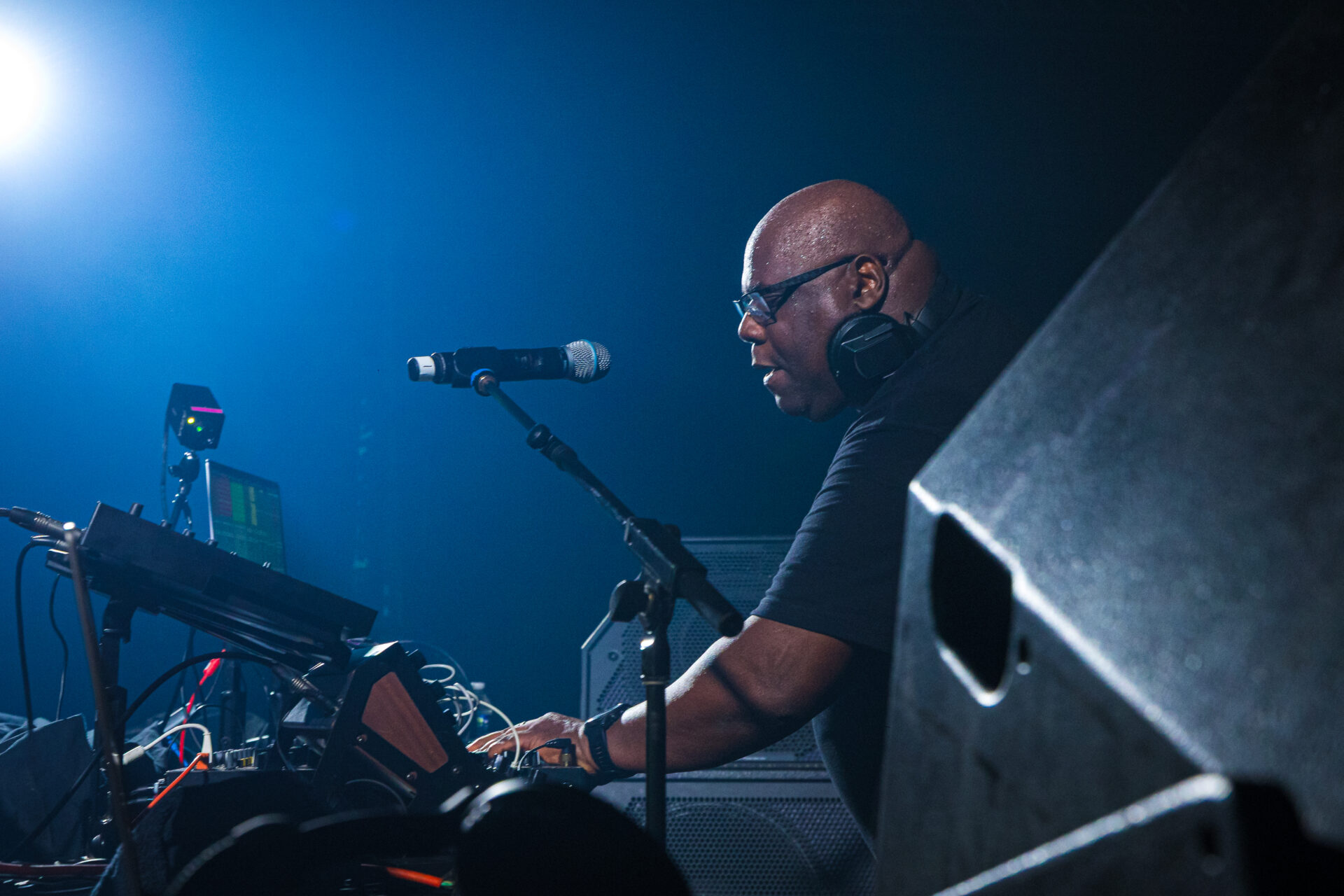
Pollstar: What is your performance philosophy?
Carl Cox: When you perform in front of an audience, in some ways you have to show that you are happy to be in front, you want to show what you can do. There’s all these things where all the eyes are on you. And you have to do something. I’m not a ballerina, I’m not a guitarist. I’m just a guy that’s standing in front of some machines, and out of the machines comes music, and there’s what you do with it. And you get feedback by the public based on what you’re doing. And then, when it comes back to you, you react to it. So, that’s what people want to see.
And, if that’s a performance, where some people want to jump off stage, others want to climb on the speaker stack, some want to go crowd surfing – it’s what you do with your performance. Mine has always been a little more animated because I’m enjoying myself. I base my type of performance on as if I’m the one who’s come to see me play. So, I kind of play to what I’d like to hear on the dance floor. Would I want to hear this record mixed in this way, and performed in this manner? And, I also want to see the DJ have a reaction to what they are doing, whether it’s a good mix or a bad mix, or a good record or a bad record. Whatever it is, the crowd will follow you, and follow your emotions with the music you are playing. So, it’s quite in depth, the idea of performance, because you can have a really good day and you can have a really bad day. And people will feel it in a sense of emotion.
And people can know if you’re happy or sad when you’re playing music. So, if the music’s really melodic and ethereal and downtempo, maybe you’ve had a bad day. If it’s high-energy and really pumping up the crowd – this is our performance. It’s wearing your heart on your sleeve, and stepping up to the plate in the sense of what you’re going to do next or what you’re looking to do.
You’ve experimented with many different modes while onstage. You’ll play with CDJs, or with vinyl. You’ve tried to produce while on stage. What are the benefits of each, and how do they all challenge you as an artist and performer?
When I started performing on the turntables, I decided that I wanted to introduce the idea of a third turntable, like no other person ever did. You could do it at home if you wanted to, but I wanted to do it in front of an audience that could see I was taking music from vinyl into a new perspective. It was something beyond itself that nobody was expecting. So, it’s almost like spinning plates. If you go to the circus, you’ll see some guy spinning plates. So, that’s what’s happening in the mix. You’ve got to find your record and keep it in, then you got to get the other one going, and all of a sudden, you’ve got all of them going. So, that’s what it’s like playing turntables. There’s no going back. There’s a lot of skill to it, and a lot could go wrong. Once a record is gone, and that’s the way you’ve decided to mix. My idea was to really push the envelope of what’s available to us. So, apart from having three turntables, as soon as we went digital, you can send MIDI signals to machines. Once I got the MIDI clock from the machine I was playing from, I got a MIDI keyboard and drum machine to create sample sounds. But then it was really exciting, because you could remix music that you were playing from a digital platform point of view, and that was really exciting to me.
One of my all-time mentors and performers from an electronic point of view was Jean Michelle Jarre. He made an album called Oxygen, and from when you played the record from beginning to end on Side A and Side B. So, everything I’ve been doing from that point of view, has been inspired by him. Because it’s a kind of performance. And that’s why I always follow the path of technology.
Now, the industry standard is four CDJ players, one mixer and an RFX drum machine. So, nine times out of 10 that’s what you’ll see, and the DJ would have a USB stick to put into one of the players, and all of the players will see the USB stick, and away you go. But, for me, it’s come to that point after all these years of going through what I’ve been through. This is what’s become a staple diet for everyone to perform from. So, I wanted to turn a corner from doing that in my live shows so that they’re hybrid. And that’s a scary place to be.
What I do in my studio is practice the idea of what I’ll be doing live. When I go to perform, it’s remixed or reimagined. You’ll hear a hook line from one of my records back in the day, and I recreate that record for what we’re listening to now.
What was the inspiration for your Evolution project?
The whole idea is to move things forward. I’ve been doing this for 50 years, so I’ve got to keep myself relevant and excited about the future of making music, and getting the generation now to understand that I’m here because I love music, and it does evolve. So, Evolve derives from what I used to play into what I’m doing now, and showing people that development.
You’ve got to experiment. You’ve got to try something. You’ve got to be looking forward to the future. What we can actually ascertain ourselves on, and enjoy ourselves, is what’s going on around the corner. So, I’m forever experimenting. It takes people quite a while to catch up with my new music. I could put a track out now that won’t be understood today, but then in a year’s time, they go, “Now I understand.” I try to make music that doesn’t instantly connect with people today – there’s too many people doing that, making the sound of now. And people eventually get bored of hearing the same thing. The idea is to try and keep it as fresh as possible.
This year, you made your return to Ibiza after spending several years off the island. You’ve been a mainstay there throughout most of your career, so what has this return meant to you?
What’s crazy is I’m here in Sabina now, and it’s off-season. I’m not here to DJ, I’m here because I love the island. I love the people who live on the island. I love what it means to me, because, 30-odd years ago, this is one of the first places I left from the UK, to go to Spain and Ibiza. I’ve been coming here nearly every year since then, apart from the pandemic.
I never knew that I’d have such longevity within a club that I used to play here, called Space Club. I had the opportunity to play that club, and then eventually have a solid 16-year residency there, and it became the No. 1 club in the world for years. When I was asked to play that club in 2001, I was able to curate my own night, called Carl Cox “Music is Revolution” on Tuesday night. I gave it five years. I was like, I’ve got this great opportunity, and I know how things in the music industry move along. People come and they find a way, then they end up listening to rock or reggae or whatever they want to. So, I figured five years, then I’ll move on to something else. And then we got to five years, and it just got better and better.
So we went to year six, seven, eight, nine, celebrating 10 years of Carl Cox at Space. I was like, oh my god, I’ve created my own church here. People are buying tickets, they’re flying over, they’re spending their time and they have this bucket goal to come to Carl Cox Revolution on a Tuesday night. And then we went to year 11, and I’m thinking, “Well, things must tail off by this point.” And then year 11 was better than year 10, so we kept going. Twelve, 13, 14, “Oh my god, I’m going to be here for the rest of my life.”
CAPTION: Carl Cox performs at Space Ibiza’s “Closing Fiesta” in Oct. 2016.
When it came to year 16, the club got taken over. And then I lost my church.
It was difficult for me to find somewhere to come back, after I had done Space all that time. I imagine the amount of music, late nights, the memory, the mix, the DJs, the people. If we could have recorded and filmed… I wasn’t able to go back to that club. It would have been easy for me to go somewhere else, but I just couldn’t do it. Space meant so much to me. I had to just stay away from the island, complete my career somewhere else until maybe one day I would be able to come back and continue my legacy.
An opportunity at [UNVRS] arose, and I actually used to play at the club where [UNVRS] had been reimagined and recreated – it was called Privilege before that, and before then, in the ’80s, it had been called the Coup Club. And the Coup Club was very well-known as a celebrity haven and for its culture. It had palm trees around it, and it’s open there. It’s an incredible space, in a return to the island kind of way. Obviously, a lot of people have moved on, and they don’t go to clubs anymore. But, the new generation who missed my set at Space is now able to come Sunday nights, and they can see what I do and how I curate these DJs and how I perform at the club. If you spend $8 or $9 million at a club, it’s not going to be a bad club.
It’s one of the best clubs I’ve ever played. The room’s amazing, the sounds system is incredible. The vibe is incredible. It’s an amazing spot. And for me to come back and play this club, it means so much to me. It’s like the legacy of old. The reason why I’m still enjoying myself and coming back is incredible. We moved forwards and onwards and upwards. I feel very honored and proud that I was able to come back. I could’ve said no, that I’m done and gave it my best shot. But I knew it wasn’t over yet, not with me. I still have a lot of water in my well.
How did you come to the decision that this was the right moment to return?
I think, more than anything else, if you leave anything too long then the ship has sailed. It nearly did. It was kind of like, after nine years of not being on the island – I didn’t want to be a DJ gun for hire. I made such a statement at Space that any of the other clubs wouldn’t have made sense. I would’ve just been playing the island because everyone else was playing the island, and it would have seemed that I’m just here for the money. And that’s not true. If I was there for the money, I would have been playing every single club every single week. When I come to the island, it’s about how it makes other people feel.
I’m still flying the flag for someone that loves music, and still gets excited by it, and I’m still excited about it. When you’re at the top, the only place you can go is down. So I’m happy not to be at the top, and I’m happy where I am.
You’ve performed in venues of every size – festival takeovers, arenas, intimate clubs and basement shows. Does your approach change depending on the size of the audience and the space you’re occupying?
It’s an art form. These days, a lot of artists prerecord or preplan. At my shows, I don’t even know what I’m going to get. I’ve never, ever preprogramed a set. I choose my next record based on the mood of the room or festival, and then absolutely go for it. If I know people aren’t going to go for a full-on techno set, I’ll pull it back a little and slow the BPM down a little bit, make it more groovy or melodic. Take it somewhere where my heart must be. This is music that’s coming from me to you, and people can connect with that. Preprogramming all the big records you’ve heard – that’s boring. I mean, an artist has a set of all the music you love to hear, and everyone goes mad and enjoys themselves. But I’ve never done it because that’s not who I am.
I’ve had a 50 year career and I’ve played everything you can think of, every scenario you can think of. It’s sink or swim, and I’ve been able to represent myself for who I am. I’m not going to fit here and everyone gets what I’m playing, because they don’t. And that’s fine – you’re obviously looking for something else, and life’s full of choices. You can go anywhere you want. But, if I’ve still got these people in the palm of my hand and they’re still screaming for more, that’s when I’m connected with who I am as a person, and I’ll go to the party.
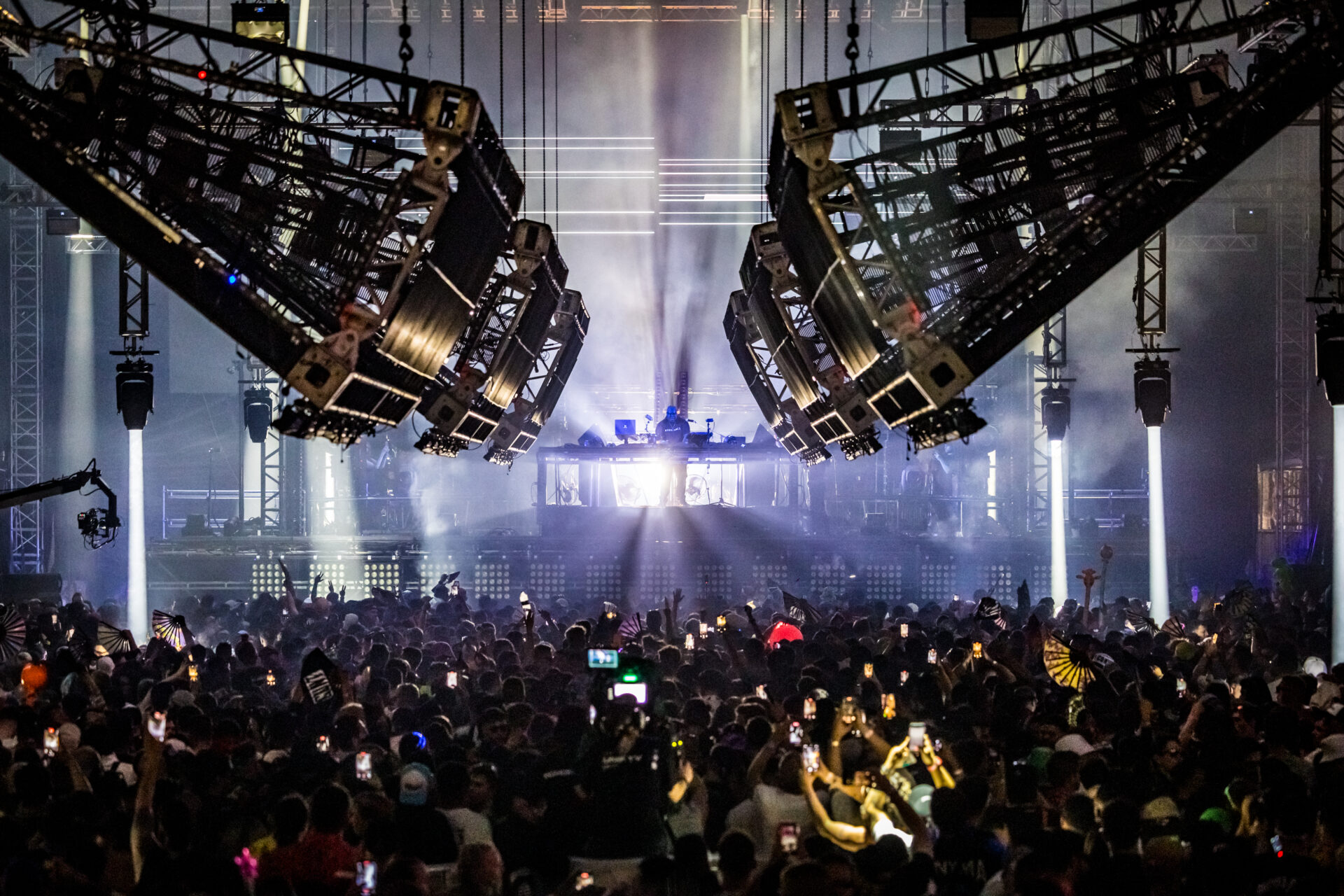
Throughout the majority of Ultra Music Festival’s history, you’ve had your own stage where you’ve curated full lineups. As a curator, what do you look for in performers?
When I started with the festival to be given my own stage, it was branded as the Carl Cox stage. I had no choice but to curate artists, I can’t be the only person playing on it. I needed to bring people around me. At the beginning, it was very innocent. If you look at some of the early footage, it was an attempt. And that was fine, we made sure to have good visuals and good lasers.
It was a really great platform for me to bring in DJs that I love, DJs that had a passion for the music they were playing and representing.
For me to create a festival within a festival was the challenge. If you look at all the artists that I brought to the table – David Guetta, he played my stage. Afrojack, Steve Aoki, they played my stage. All these artists played my stage before they went to the mainstage.
As the years went on, it got really popular, and then they created the Mega Structure. So I was there for over 10 years, and then things really began to ramp up, because the mega structure became the second largest area. The stage got bigger, the lighting got bigger. The visual, the stage. It was incredible.
But then, my future was if it was the Carl Cox stage, I can’t get out of it. So, I decided to have it called the Resistance Stage. It’s a resistance against the ideal of what people expect. It should be anything and everything. And then, with my name taken out of it, there’s no expectation. It’s just me making sure that the room works.
So Resistance came and went all over the world. I’m not on every single Resistance event, only the one in Miami – when I took one year off a couple years ago, everyone was quite shocked about it.
FREE
 Daily Pulse
Subscribe
Daily Pulse
Subscribe
 Daily Pulse
Subscribe
Daily Pulse
Subscribe