
‘A Market That Will Never Decline’: Q’s With Carlos Geniso, CEO of DG Medios
If concerts are part of the algorithm in your social media feed, it’s likely you’ve come across a snippet of a show from an act like Oasis, Dua Lipa, Kendrick Lamar or Twenty One Pilots performing in front of a passionate, sold-out crowd at a soccer stadium.
It’s also likely that the clip is from a South American concert that was promoted by DG Medios.
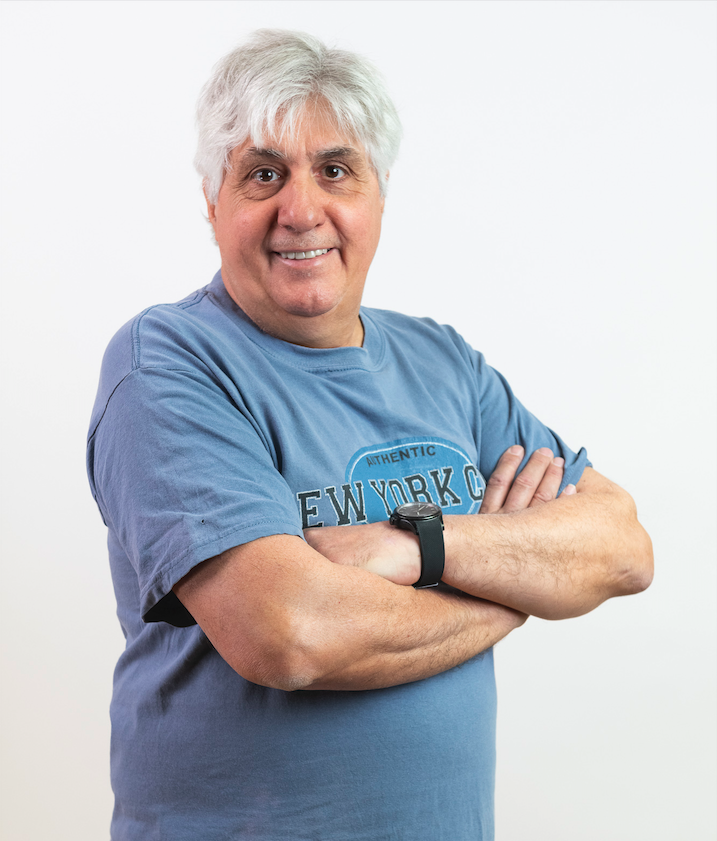
Carlos Geniso, CEO of the popular Chilean entertainment company, was plenty busy in 2025, producing some of the biggest shows of the year and working with the aforementioned acts, an indication that South American markets like Santiago are as vibrant as ever. DG Medios finished among the Top 50 in Pollstar’s recent Year End Promoters chart with nearly $58 million grosses off 739,882 tickets.
And it wasn’t just major English-language acts. Geniso did his part in giving Latin stars a platform to grow the genre, artists like Puerto Rican singer Chayanne, who sold out a whopping eight nights at Movistar Arena in Santiago and grossed $10,225,416, according to Pollstar Boxoffice.
Pollstar caught up with the renowned Chilean promoter to talk about the state of the live business in the region and how stadiums catapulted entertainment companies to record grosses.
Pollstar: Another year, another appearance in our promoters chart. It was a big year for stadium acts in South America with tours like Oasis and Shakira. What was your takeaway from the year?
Carlos Geniso: In the U.S. and Canada, sports leagues allow markets to develop with indoor venues like arenas that can fit as many as 20,000 people. They have an anchor that can bear the cost of investing in the development of arenas. In South America, the dominant sport, historically, is soccer. That means arenas are late in developing in the region that can meet the demands of the modern fan, and the venues that can do just that are the outdoor stadiums where soccer is played.
It’s why 2025 was very promising, and 2026 could be even better in terms of bookings. We’ve concentrated on booking acts in the first two quarters of the year and have had very successful events with excellent attendance. And toward the end, we were lucky to have Linkin Park and Dua Lipa, who had two stadium shows with about 110,000 people. Linkin Park had 52,000 and Oasis had nearly 60,000. With Live Nation global touring, we were able to work with such artists.
We also had good synergy with co-promoters, which is how we were able to bring Chayanne for eight sold-out arena shows. We’re actually bringing him back for three stadium shows in February, and we’ve sold about 80% of the tickets.
That’s impressive. We are seeing more demand for Latin music, especially for Mexican music, and many other genres in South America.
Nowadays, fans, even children, have access to so much music. What does that mean? It means that the fanbase you develop for each piece of content, each artist has a huge number of followers that grow much faster than what the business used to be like, organically. So that helps us capitalize and fuel the explosion that we are trying to achieve in the Latin American region.
That’s why Mexico is the No. 1 country in all of Latin America, and it’s bigger than many states in the U.S. It has a very significant market capitalization due to the development of the infrastructure and all the work promoters like OCESA did over the years, which is an important formula for developing the concert market throughout Mexico.
And in a way, it’s happening, perhaps on a scale that corresponds to the population size of each country in South America. Here in Santiago, we’ve achieved something unique: we’ve created a programming lineup that blends various genres, including Latin music, adult contemporary, youth-oriented and rap.
I believe this is a market that will never decline, that’s on the rise and will continue to grow. Something that’s more relevant than ever is rock music. We’ve sold over 110,000 AC/DC tickets so far. We’re going to have two dates with a capacity of almost 75,000-85,000 each day. We put tickets on sale for Iron Maiden, which we’re co-promoting with Move Concerts and Phil Rodriguez.
It’s all very promising. I can tell you that we have already sold nearly 400,000 tickets for 2026.
How have companies like yours, representing a country and an entire region, contributed to the evolution of the business, especially post-pandemic?
What’s important is that we grew up with a certain approach and a tradition of developing artists. Initially, it was based on the big hits of a record company. Since that has changed in the last 15 years with the distribution and physical format of selling records in conjunction with ticket sales, we have adapted to the new model: the diversification of the digital realm. And it has allowed us to work with major artists across all genres. We forged alliances with those artists and promoters who connect the region and communicate daily to see what opportunities are available to collaborate and build relationships.
We also aimed to strengthen artistic content so that they would have a dedicated space within the live concert circuit in the country. This involves moving from one country to another and so on, generating a series of shows that allow the artist to tour within the region.
Then, the region expands, and you begin to look at it a certain way: Latin America starts in Puerto Rico, goes to Mexico, then to Costa Rica, Panama, Honduras, and El Salvador. From there, it goes to Santo Domingo. It goes down to Colombia, sometimes Ecuador, and from there they go to Peru. Then the whole tour becomes regionalized, whereas before, there were about four or five shows. Now, artists can do 15-20 in the region.
FREE
 Daily Pulse
Subscribe
Daily Pulse
Subscribe
 Daily Pulse
Subscribe
Daily Pulse
Subscribe