
Pre-Show & Tell: Is The Grammys’ Premiere Ceremony Better Than The Main Show? (In Some Respects, Absolutely)
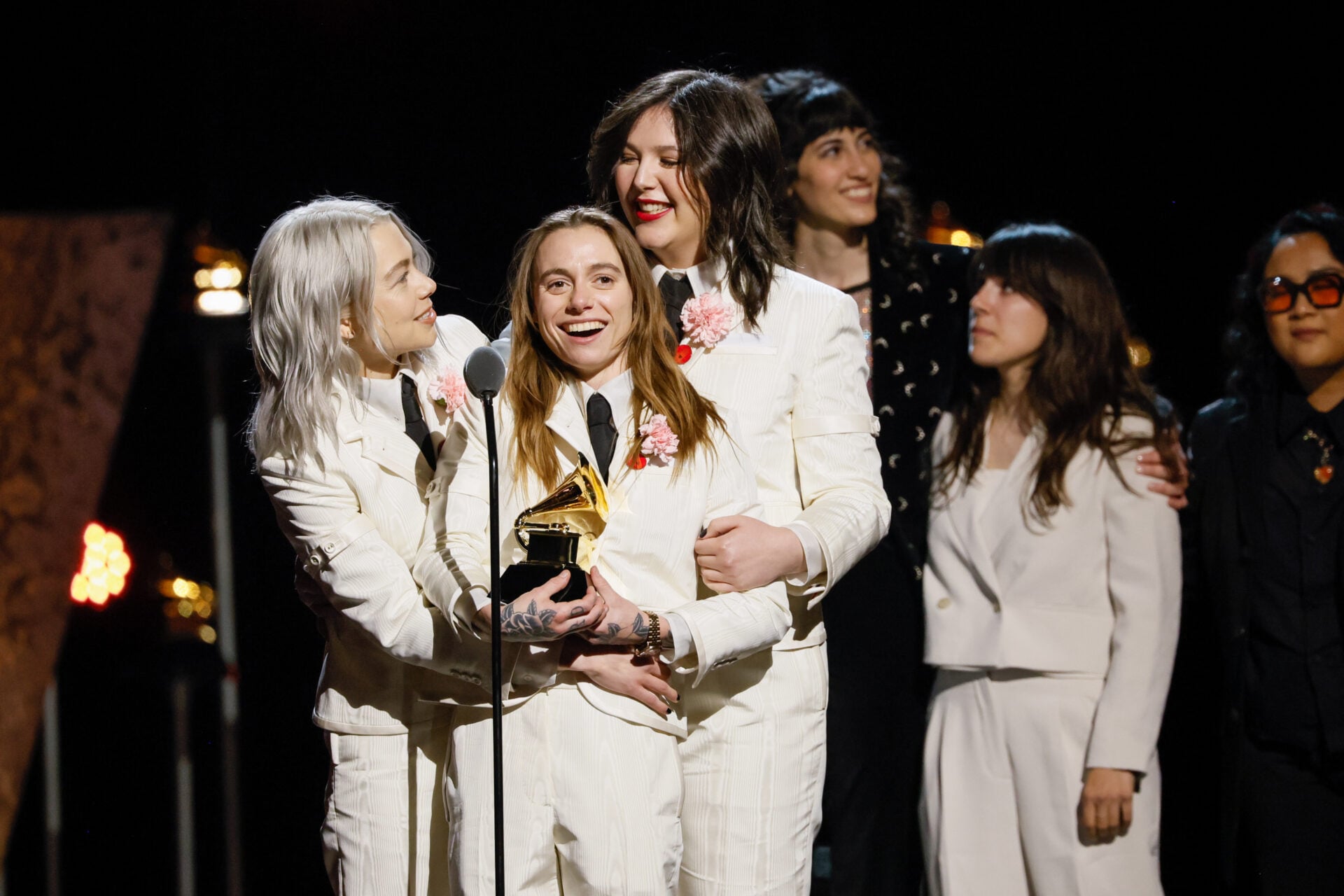
What do The Beatles, Beyoncé, The Rolling Stones, Joni Mitchell, Taylor Swift, Daft Punk, Chris Stapleton, Brandi Carlile, boygenius, Jay-Z, Tame Impala, St. Vincent, Drake, Billie Eilish, Jon Batiste and SZA all have in common beyond being some of the greatest, most successful artists of our time? The Grammy Awards Premiere Ceremony where each won Grammys and which may just be the Recording Academy’s best kept secret.
The four-hour pre-telecast event – where all but eight-to-10 of the evening’s 95 awards are handed out — streams live on Grammy.com and its YouTube channel to some 5.5 million from L.A. Live’s 7,100-cap Peacock Theater, across the street from Crypto.com Arena, where the main event takes place. Now with its own host (songwriter Justin Tranter has done the honors the last two years), its own on-stage band and a list of performers from all genres, the Premiere Ceremony has established its own credentials as a must-see Grammy event.
While the performances and production are scaled back compared to the Grammys, the quality of performers are very much on par. Last year’s pre-tel included Yolanda Adams, Deborah Cox, Angelique Kidjo, Taj Mahal, Dawes, Joe Bonamassa and Bela Fleck.
“We’re definitely starting to get the word out,” explained Ruby Marchand, Chief Awards & Global Industry Officer for the Recording Academy and one of the producers of the Grammys Premiere Ceremony. “This is particularly true within the independent artist community. Almost half of our nominees are from that sector, so they are well-aware of it. Presenters and performers, as well as our hosts, are also chosen from the independents. It’s a show that captures every genre within our awards process. It turns out to be a
joyous, four-hour-plus celebration of the musicality and virtuosity of those honorees, a true example of peer-to-peer love.”
Some of the biggest music superstars received their initial recognition at the Premiere Ceremony, including Taylor Swift, who accepted her very first Grammy in 2010 for Best Female Country Vocal Performance for “White Horse,” before appearing at the main event to accept Album of the Year for Fearless.
Redubbed from its Pre-Telecast moniker more than 10 years ago, what is now known as the Grammys Premiere Ceremony was originally held at the Recording Industry’s various chapters around the country up until 1993, with the non-televised awards handed out as part of a pre-event process after the very first live telecast of the Grammys was aired in 1971 on ABC, hosted by Andy Williams.
“The ceremony was almost like a dress rehearsal for the telecast itself, taking place in the same venue,” said Marchand, who noted the pre-telecast got its own space inside the L.A. Convention Center in 2004, when it shared the stage with the after-party. The pre-telecast livestream began in 2013 at the Nokia Theater (now the Peacock), then was rebranded as the Grammy Premiere Ceremony two years later, with “two separate but complementary celebrations on the same day.”
Tickets for the Premiere Ceremony go to anyone who has an electronic ticket to the Grammy Awards ceremony, with many who receive awards at the pre-telecast heading across the way for the actual show, stopping long enough to do the red carpet, naturally. Greg V. Fera has been the executive producer of the Grammy Awards Premiere Ceremony for three years now, while Cheche Alara serves as both musical producer and director for the live performances.
The overall atmosphere at the Premiere Ceremony, especially compared to the Grammy Awards, is relatively loose and informal with people coming and going, no reserved seats, the host usually urging the audience to move closer to the stage.
“When a winner is announced, they leap from their seats and head to pick up their award,” said Marchand. “People’s lives are changed forever in that moment, so it’s cool to be part of that joy and exuberance. We keep them entertained for four hours without commercial breaks.”
The Premiere Ceremony, too, has its share of “Grammy moments” that are the stock in trade of its big brother.
“There are all these unforgettable moments in this homespun family kind of community environment,” Marchand says. “There’s just so much love and joy in that room, a feeling in the air that the performers, audience and winners all share. There’s nothing like it.”
Indeed two years ago, Viola Davis celebrated her EGOT (Emmy, Grammy, Oscar, Tony) with a statue for Best Audiobook, Narration and Storytelling for her memoir, “Finding Me,” at 2023’s pre-ceremony. That same year, poet J. Ivy accepted the very first Grammy for Best Spoken Word Poetry Album, while last year, Sierra Ferrell created a buzz by sweeping all four Americana awards, including Album, Performance, Roots Performance and Roots Song. Another highlight was Amy Allen becoming the first woman to win Songwriter of the Year honors last year (and is nominated in the same category again this year).
“The two shows complement each other beautifully,” Marchand concluded. “And that’s been the intent for years. So, you get the full breadth and scale of the genres represented in the Premiere, followed by a whole other level of magic on the regular telecast.”
Marchand says the current distribution arrangement with Grammy.com and its YouTube channel is perfect—for now. “This is where it’s living very, very nicely,” she said. “We’re gaining viewers every year. That’s our footprint, at least for this year.”
FREE
 Daily Pulse
Subscribe
Daily Pulse
Subscribe
 Daily Pulse
Subscribe
Daily Pulse
Subscribe