
By Design: Populous’ Scott Capstack Talks Levi’s Stadium Renovations, Design Ahead Of Super Bowl
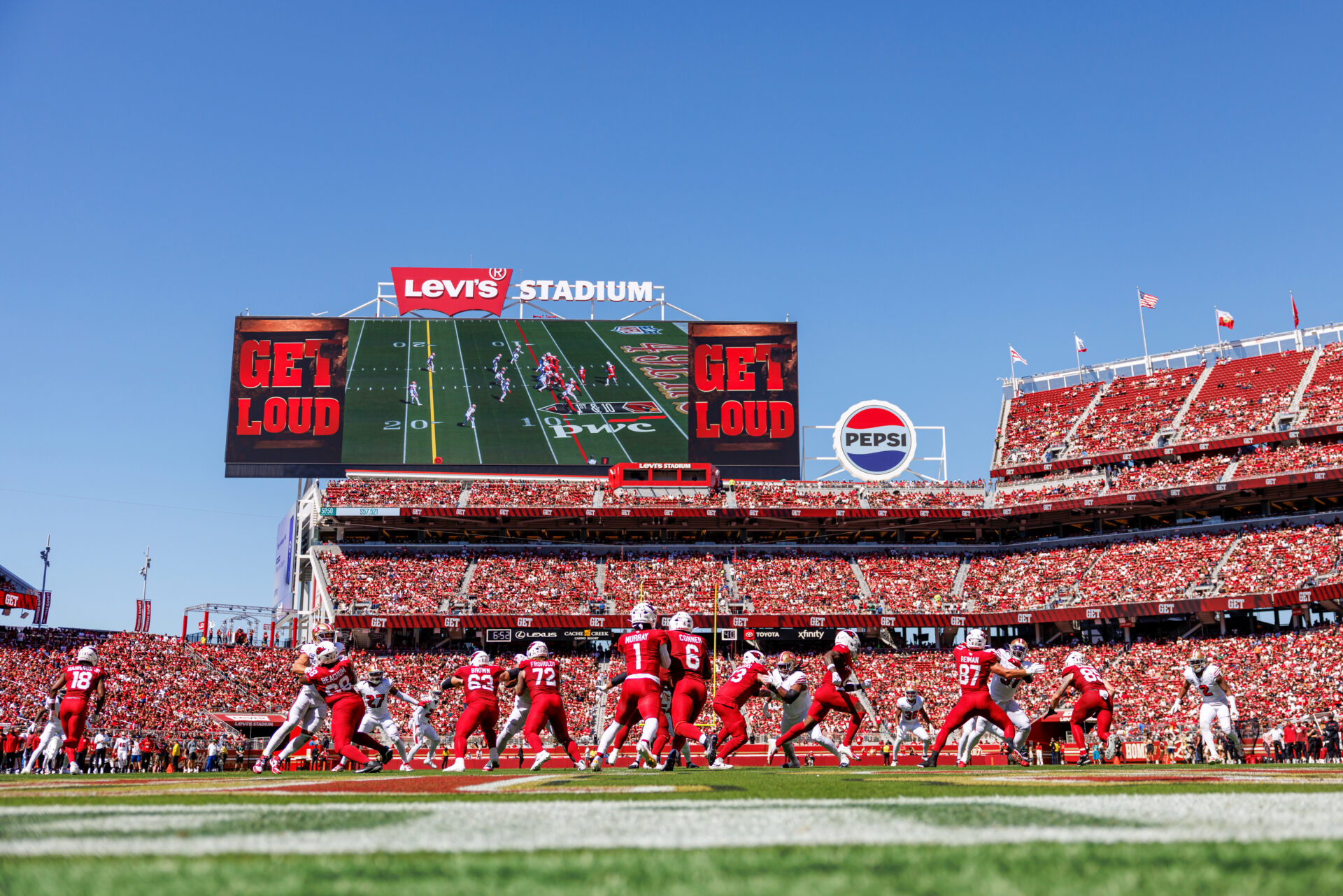
After debuting the completion of $200 million worth of renovations in time for the NFL season in September, the San Francisco 49ers’ home field Levi’s Stadium is on the brink of hosting Super Bowl LX, with the New England Patriots taking on the Seattle Seahawks on Sunday for what should be a beautiful day in the south end of the San Francisco Bay.
“They were reaching their 10-year cycle, so it was a natural refresh point,” says Scott Capstack, global director and head of design for the Americas at design firm Populous, whose time with the 49ers and Levi’s Stadium goes back to the planning stages in 2010 when he was at rival Kansas City architecture firm HNTB. “(The 49ers) were very progressive and forward thinking about making this, and it goes back to Super Bowl 50 and previously. They wanted to make this the best outdoor experience in the NFL, if not the U.S. and the world. It’s always been about hosting events like the World Cup and, now, two Super Bowls. So it’s always about how do we put the best foot forward and showcase the building, and showcase the experience inside of it.”
Ahead of the Big Game on Sunday, Capstack, from Populous’ HQ in Kansas City, shared more with Pollstar about the design behind Levi’s Stadium, which in 2025 hosted concerts by Morgan Wallen, The Weeknd, Metallica and has upcoming dates with AC/DC, Ed Sheeran and Bruno Mars. … Not to mention the Super Bowl Halftime Show with Bad Bunny, of course.

Pollstar: So while not designed by Populous initially, you’ve personally been pretty involved with stadium from the beginning.
Scott Capstack: I was one of the original designers when it got built, so I’ve been working in some shape or form on the building since 2010. That’s when I first got to know Al (Guido), who is a team president now, and the York family in that process. When I joined Populous in 2016, Al called me and from that point forward, Populous has been working on the project, starting with the first round of “day two” projects and envisioning how the building could be adapted continually to elevate the fan experience. So these are a culmination of many projects we’ve been working with them over the past decade, actually, now.
How do you feel about the end result, seeing the stadium in action this season?
Everything looks amazing. Obviously we’ve got not just the Super Bowl, but these renovations are also tied to the World Cup. They’re a host in ‘26, which is going to be an amazing effort. The stadium’s ready. I keep seeing photos from some of our team on the ground, how it’s going to look in livable over a week here. It’s pretty exciting.
So, once something like this gets built you have to start thinking about how to improve it already?
From a design process, your full focus at that time is getting the project right, getting it built. You’re putting a lot of energy and effort over years just to get it to fruition. But I think you also do a lot of planning. In theory, you’re doing a lot of excellent planning and design work to allow things like this to happen in the future.
When Al called me in 2016, they had been in the building for two years and already had started to think about, “Hey, we’ve seen how things work. Maybe we want to adapt some things here.” Fan experiences may change. It was also trying to look for additional revenue (opportunities) or experiences for fans as a whole.
How did those changes and additions roll out?
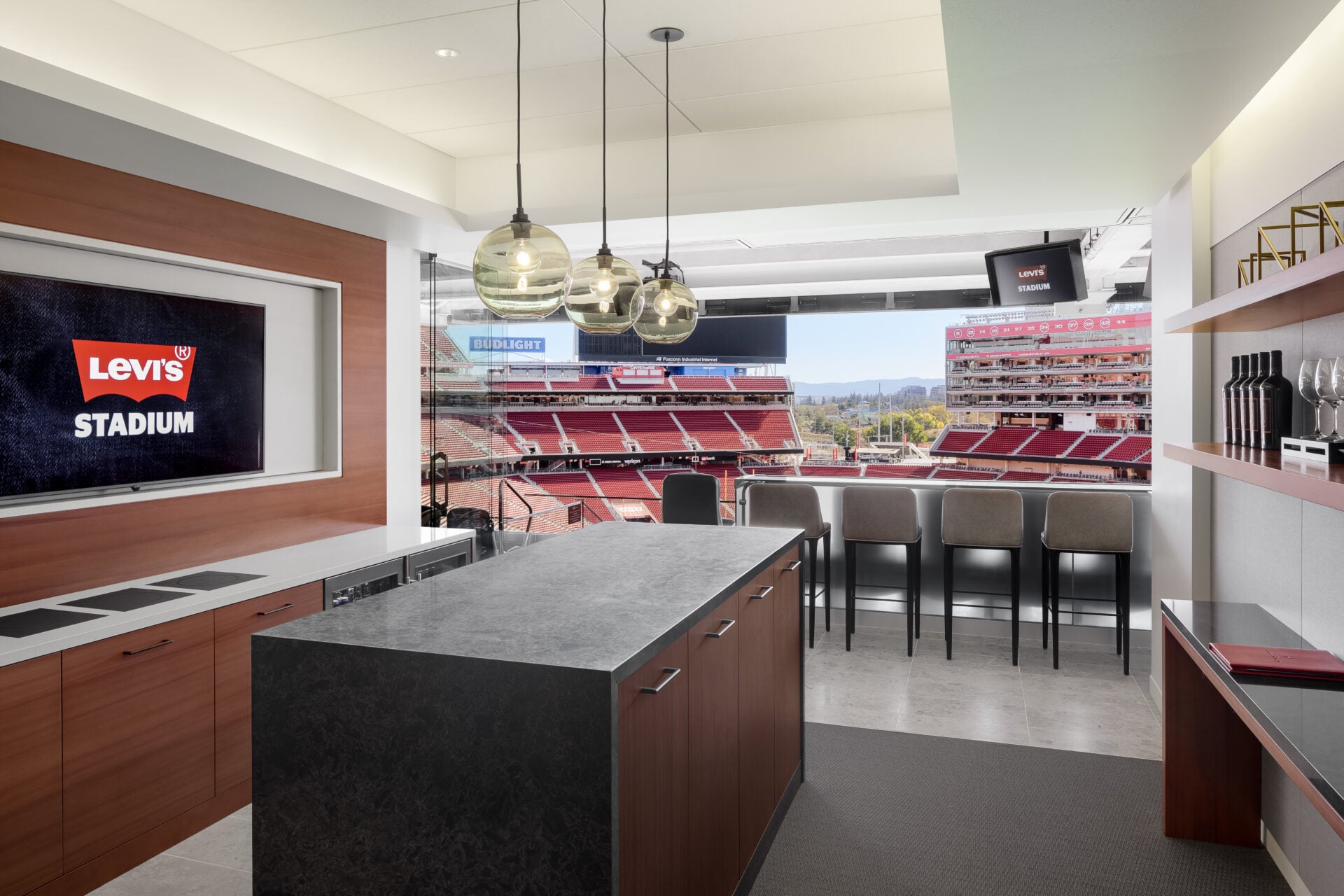
One of the first things we did was add a field club off the 49ers team tunnel and add some field seats in the end zones, which was a unique product for them. Then we added another field club in the other end zone. We updated some things on the concourse, and each one was kind of incremental over the past several years until we did this big last push, this $200 million-plus renovation over the past two or three years, which included a full renovation of all the typical suites within the building.
The video boards is a natural one, right? 4K technology continues to upgrade. It’s about how big can we go but also just having that 4K higher resolution throughout the building. Unlike the years past, which were heavy revenue and fan experience, this time there was a lot of things we were doing that were functional or back-of-house components. When you update the scoreboard, you also need to update all the video controls. So there’s a whole component of updating all of the video control and sound boards, sound control rooms in the building. We also upgraded the sound system in the building.
Then the other big component to this was also we made some structural modifications to the seating bowl to allow the field to be modified to accommodate a World Cup-sized pitch. If you looked at the building today, you wouldn’t know the difference, because we made it so there were pieces that could be removed and then put back into place. So for a 49ers game, it looks the same. So, it was about working through some of those logistics as well.
It takes good design and backing from ownership, but a lot of others to execute it effectively, from stadium operations, construction partners and others.
It is a team sport, right? No matter the team there, everything we do is a team sport and you have to work collectively hand in hand knowing each of you has your specific role and expertise to execute it. We’re the ones designing it and drawing it and putting it on paper, but we’re also working hand in hand in partnership with them about what is the more optimal solution from a constructability or sequencing standpoint, or helping the team and others think about operational plans that may help them navigate the building. That’s what our event practice does for the Super Bowl, but we live and breathe that every day. What’s also fortunate for Populous working with this team is we’ve been working with Devcon on this specific building as construction partner from the beginning. ME Engineers was our mechanical, electrical and plumbing engineer, and then our structural engineer is MKA or Magnusson, based out of Seattle. They were all critical as key partners and instrumental in the success of it.
What makes Levi’s Stadium special or stand out among other stadiums and venues?
What’s unique about Levi’s in the context of all the newer stadiums is it doesn’t have a roof. It is still a true outdoor stadium. What is always going to make Levi’s unique in that setting is, even though it is outdoors, is the climate, because of Santa Clara and the Bay Area. It’s not going to snow. It becomes a perfect venue to take advantage of that and still maintain that kind of awesome, real outdoor experience. The amenities within the building, they’re top-notch and still some of the best in the entire league, relative to the fan experience components. The building is one that’s highly efficient from an operational standpoint – easy load-in, easy load-out. That gives us the flexibility to host these kind of events on the world stage, things like concerts and other things to give it the ability to be a true year-round facility, which I think is most important as well.
How does it feel personally to see something you had a major hand in be part of, now, two Super Bowls and the upcoming World Cup – a first for any U.S. venue to do in the same year?
It’s pretty mind blowing every time you see it on TV and you see that action that comes into play. It really becomes personal. I’ve known this client and been working with the organization for 16 years now. It is not just a product you’ve worked on, you feel fully vested, fully committed to it, and the fact I’m still working on it even more so it becomes something where there’s immense amount of pride. I became a massive fan of the 49ers working on this project, even of going back to 2010 and still a fan to this day. You can’t help but root for them when they’re hosting.
How does that go over when you’re based in KC Chiefs territory?
I like to say I’ve been fortunate that I root for two teams that are red and and yellow in their color (laughs).
FREE
 Daily Pulse
Subscribe
Daily Pulse
Subscribe
 Daily Pulse
Subscribe
Daily Pulse
Subscribe