
Bad Bunny Redefines America With Historic Super Bowl Performance
After months of speculation over how Bad Bunny, one of today’s most successful touring artists, and his Super Bowl LX Apple Halftime Show would fare amid the current political climate, the Latin megastar ultimately delivered what was promised in a promotional trailer weeks ago: The ultimate dance party.
And what a fiesta it was, one that not only celebrated Bad Bunny’s Puerto Rican heritage but so much Latin American culture, proving that music can transcend borders and language and doesn’t need to be understood to be enjoyed while reminding us of Latinos’ contributions to our everyday lives.
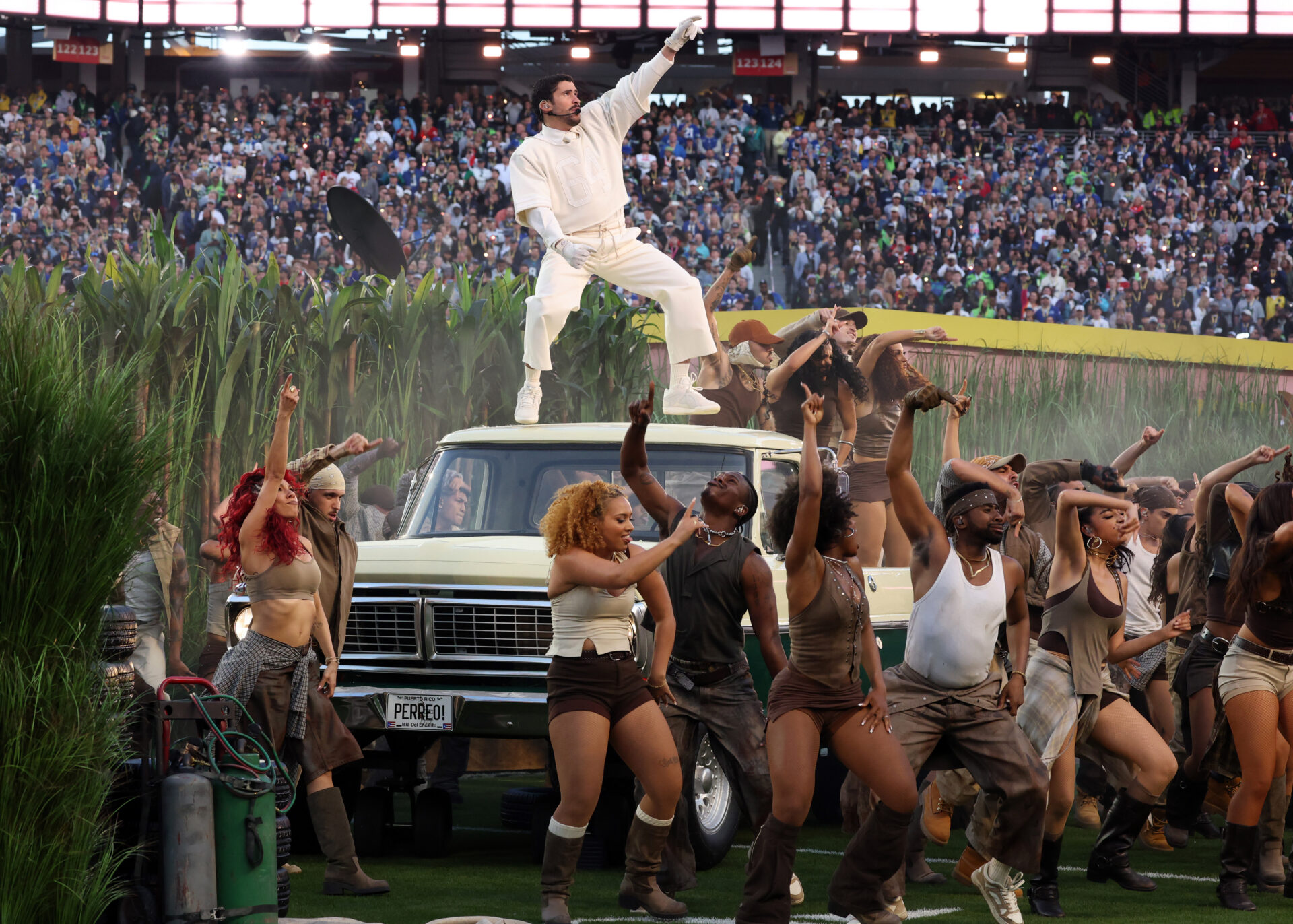
Bad Bunny, née Benito Antonio Martínez Ocasio, brought the communal, inclusive nature of his Grammy-winning album DeBÍ TiRAR MáS FOToS and transformed Levi’s Stadium in Santa Clara, California, into his hometown of Vega Baja with lush green fields and a sugarcane plantation (a nod to Puerto Rico’s agricultural history and colonization).
The 13-minute performance, predominantly in Spanish, opened with Bad Bunny, donning shoulder pads under an all-white outfit that included a football jersey with his name and the No. 64, walking through sugarcanes singing the 2022 hit song “Tití Me Preguntó.” As he moved past the plantation workers, the song intensified, and we moved through a multigenerational Latin American odyssey full of dancers, street vendors (Los Angeles foodies surely pointed at their televisions when the Villa’s Tacos stand popped up), men playing dominoes, a nail salon, construction workers and boxers—all images that are ingrained into Latino and U.S. culture.
The star-studded spectacle included his viral casita, which has been a staple in his live performances over the past year, where Karol G, Cardi B, Pedro Pascal, Young Miko, Jessica Alba and more were dancing the afternoon away as Bad Bunny transitioned to his iconic anthem “Yo Perreo Sola.”
One of the biggest surprises of the evening was an appearance from Lady Gaga, who performed a salsa rendition of “Die With A Smile” following a reportedly real marriage ceremony, and she then briefly danced with Bad Bunny as he transitioned to “Baile Inolvidable” in a setting resembling a wedding reception. The festivities, of course, featured a kid sleeping on chairs, one of the realest moments from the performance. (If you’ve been to a Latino party, you know.)
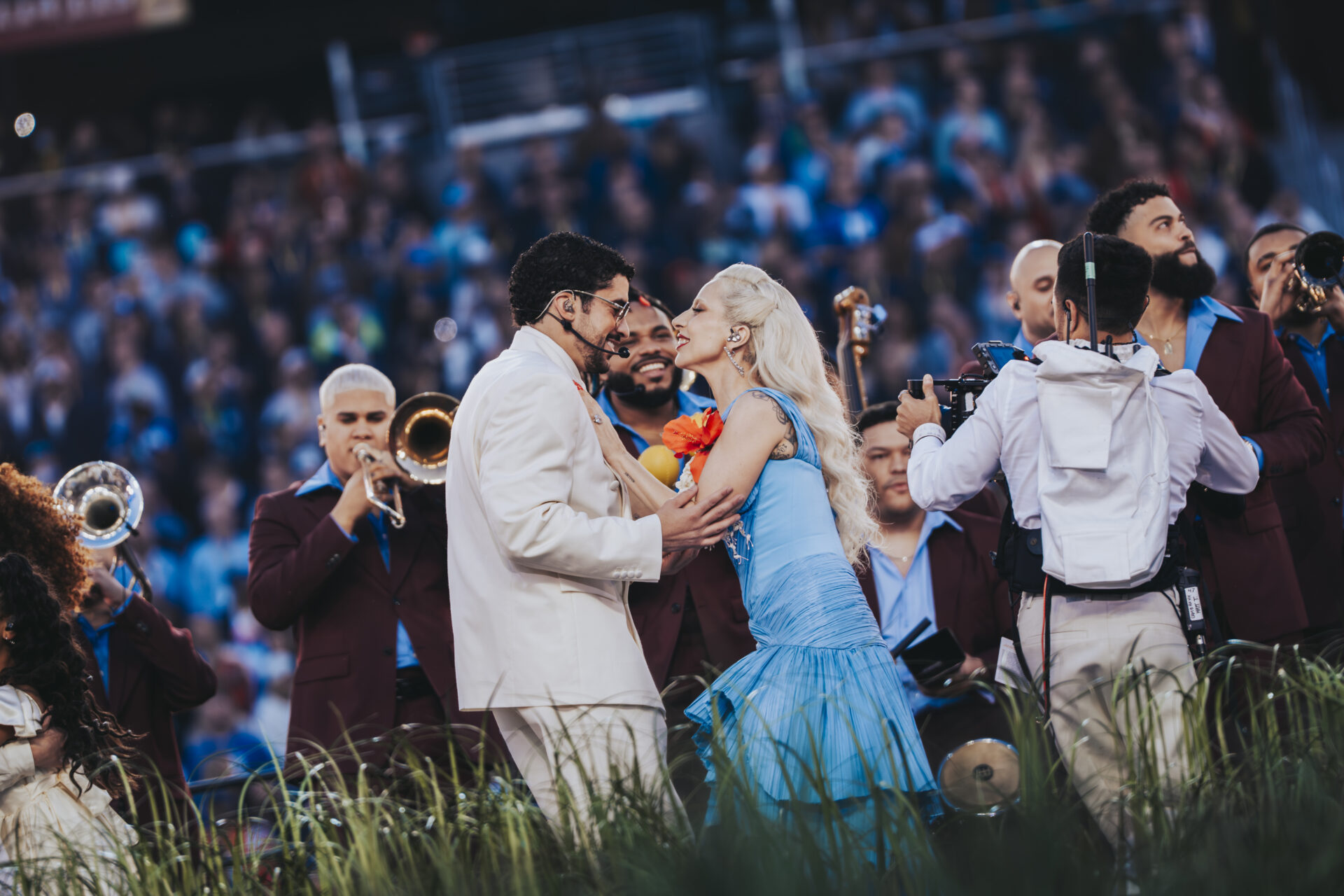
Bad Bunny managed to bring a marquesina, a Puerto Rican neighborhood party, to the Bay Area with his catchy, genre-defining body of work that he’s built over the past decade. The rhythms were as infectious as his smile, and it was obvious that he and everyone else on the field were having the time of their lives.
That’s not to say Benito pulled his punches in making some grand statement. The artist made a deliberate choice in performing “El Apagón,” a song that does not have the streaming power as many of his other hits but touches on the corruption in Puerto Rico and the displacement of locals. And he did it while carrying the Puerto Rican flag with a light blue shade, which is associated with Puerto Rican independence.
Seconds later, Bad Bunny turned up the intensity with a brief transition to “CAFé CON RON,” building up to what was the most dramatic set piece of the night.
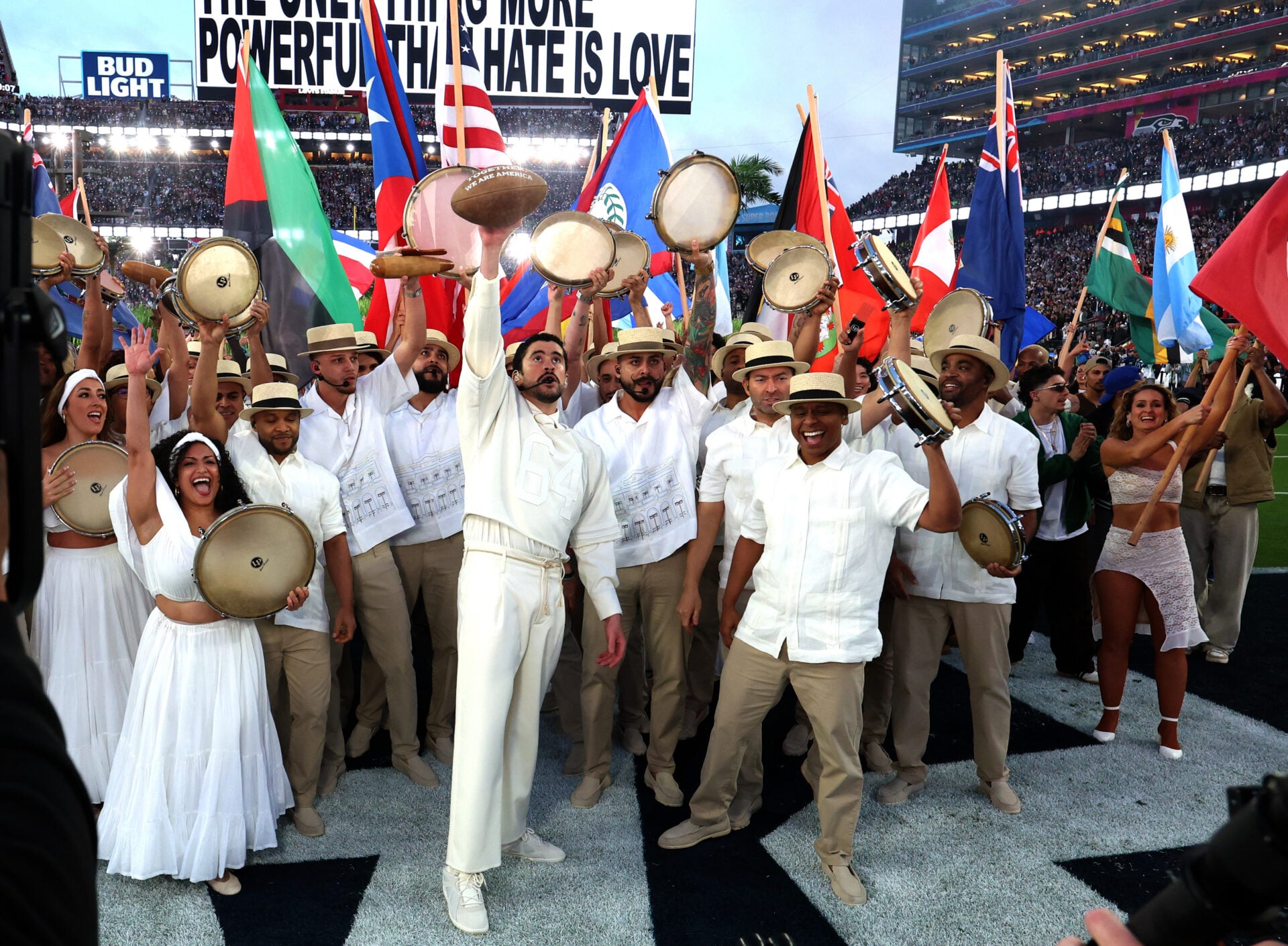
With a football in hand and flags from various territories and nations behind him, Benito uttered his first words in English: “God Bless America.” But he wasn’t referring to only the U.S. He went on to say, “Be it Chile, Argentina, Uruguay, Bolivia, Peru, Ecuador,” and other countries making up the Americas before concluding with his beloved Puerto Rico and a subtle, “We’re still here.”
Benito wasn’t done just yet. With the message, “The only thing stronger than hate is love,” displayed on the stadium’s video behind him, Bad Bunny flashed the football to the camera, revealing the words, “Together We Are America,” inscribed on it, and spiked it into the ground, a gesture done with passion, a sense of frustration and pride.
It was a cathartic moment for the Latino community that has gone through a lot lately, and what was most impressive was how Bad Bunny managed to stand up for his people without alienating the rest of the world. The triumphant set was provocative but never disrespectful, with the artist calling for unity during such trying times, something many leaders have failed to do as of late. If pop music is a reflection of our world, then Bad Bunny’s music, which draws inspiration from the Dominican Republic, hip-hop culture, Cuba, Mexico and so many other countries, is an indication that the future is Latino, and it can be full of joy for all people if we learn to embrace it.
The poignant message, however, wasn’t received by all viewers. In defiance of the NFL’s decision to feature Bad Bunny as the Super Bowl Halftime Show’s headliner, Turning Point USA, a conservative organization founded by the late Charlie Kirk, organized its own “All-American Halftime Show” featuring Kid Rock and country singers Brantley Gilbert, Lee Brice and Gabby Barrett. The livestream on YouTube drew as many as 6.1 million concurrent viewers, according to the New York Times. It pales in comparison to the number of eyes sticking with the programming provided by the NFL and Roc Nation, which is also involved in the Super Bowl Halftime Show. Last year’s performance from Kendrick Lamar drew a whopping 133.5 million views, a Halftime Show viewership record, and Bad Bunny’s performance is expected to draw similar numbers, if not exceed them, as one of the most-streamed artists in the world.
A fearless Benito never wavered despite all the noise leading up to the Super Bowl (which turned out to be a slog of a game) with an energetic set celebrating the diversity that is woven into the U.S.’s identity, while not assimilating to make a small percentage of people feel more comfortable with him. Even if you couldn’t understand his music, you felt it, along with the unique aura that surrounds Bad Bunny. He’s a unicorn, a counterculture figure akin to the Beatles who has revolutionized many facets of the music industry, from touring to streaming, and has propelled Latin music to unforeseen heights.
Regardless of the viewership numbers, it was a victory for everyone involved. The NFL likely added more loyal fans from the Americas and Bad Bunny expanded on what was already an incredible legacy, taking on the daunting task of performing live in front of more than 100 million viewers and doing it his way.
John Sutcliffe, a respected ESPN Deportes journalist covering the Super Bowl, had an emotional reaction to the performance and summed up what many felt: “It’s OK to have a tear in your eye and feel proud that Benito sang in Spanish at the most important celebration for Americans. ¡Viva Bad Bunny!”
Viva Benito, indeed.
FREE
 Daily Pulse
Subscribe
Daily Pulse
Subscribe
 Daily Pulse
Subscribe
Daily Pulse
Subscribe