
Still Separate But Unequal? The Fight For Equality In The Live Business Continues

Back in the 1930s segregated United States, Black promoters and agents welcomed Black artists to put on shows in an informal network of venues in Black neighborhoods known as the Chitlin Circuit including the famed Apollo Theatre in Harlem, New York, and clubs across the South. Beyoncé referenced this safe space with her full 2025 tour name, “Cowboy Carter and the Rodeo Chitlin’ Circuit Tour,” that became a bit of a full-circle moment as the superstar artist made history with her trek not only marking the highest grossing tour of 2025 but the highest-grossing country tour of all time.
Read All 2026 Black History Month content here
While major Black artists may have risen to the top of the charts, many acts – as well as promoters and other executives behind the scenes – still face discrimination and disproportional representation.
During the height of the pandemic and the rise of the Black Lives Matter movement following George Floyd’s death in Minneapolis as music agents took to the streets in support of the movement, Pollstar spoke to several Black promoters in July 2020 to examine — some 20 years after the Black Promoters Association lawsuit — if the industry had really changed.
In 1998, the Black Promoters Association of America filed a $750 million lawsuit against eight talent agencies and 27 concert promotion companies alleging antitrust and civil rights violations, including nine affiliated with Cellar Door Companies – many of which would eventually be rolled up by co-defendant SFX Entertainment, the precursor to Live Nation. The suit alleged that “because of an all-white concert promotion fraternity, the Black concert promoters are systematically excluded from the promotion of concerts given by white performers. No Black promoter, including plaintiffs, has been able to contract to promote a contemporary music concert given by white performers … or even been given the opportunity to bid on such promotion. In addition, plaintiffs are regularly excluded from the promotion of concerts given by top-drawing Black performers.”
After several defendants settled and were dropped from the suit, U.S. District Judge Robert P. Patterson Jr. granted summary judgment to the remaining defendants – including Creative Artists Agency, William Morris Agency, Jam Productions and Beaver Productions – in January 2005, and ruled that the promoter plaintiffs “failed to present sufficient evidence to support their antitrust claims or of a conspiracy in restraint of trade.”
So, now where does the live industry stand, more than five years after the BLM movement prompted major music industry companies to make donations and pledge their support to advance racial equity – and the current U.S. administration has turned DEI into a bad word?
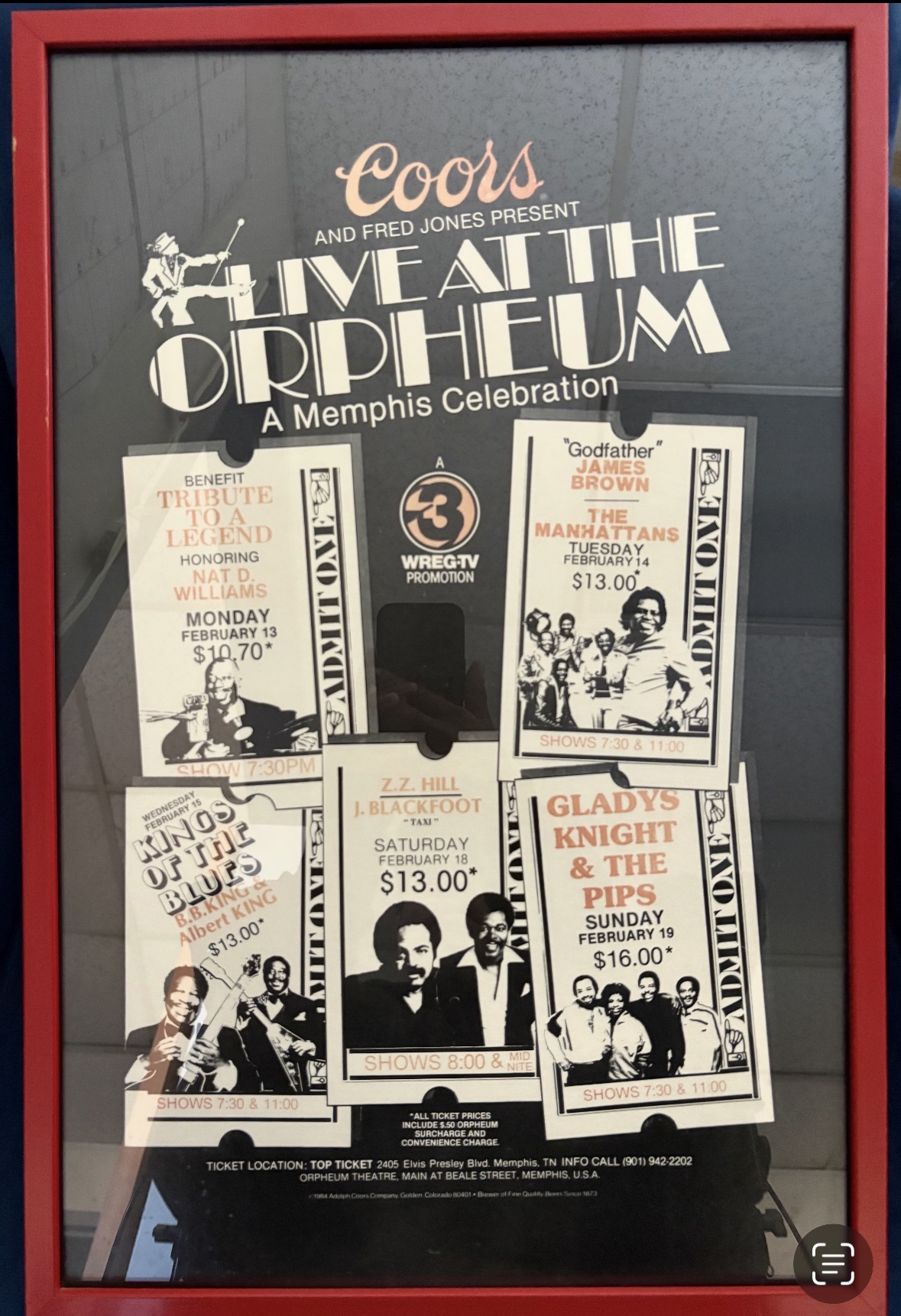
“It’s always been tough,” said Memphis-based promoter Fred Jones, who got his start in the live business as a tour manager for Isaac Hayes and was named as a plaintiff in the Black Promoters Association Lawsuit. While acknowledging the hardships, Jones noted the old adage about the live industry being based on relationships.
“I’ve heard some of the stories prior to me getting into the business, but I was pretty fortunate that I came into the business when Isaac Hayes was on top of the world. So, it opened up doors all over the country, all over the world really. He was the top guy and I was working for him at that point. When I got with the Isley Brothers in ‘77, they were on top of the world, too.”
Jones pointed out that as the industry has become more corporate, it’s difficult for regional promoters who are just based in one market, because everything’s about promoting full tours, rather than single shows.
As Jones looks forward to putting on the 37th annual Southern Heritage Classic cultural celebration in Memphis Sept. 11-12, he says, “I’m still here and still working at it and enjoying it. So that’s a good thing.”
When Pollstar reached out to industry veteran Bill Reeves, who has been the tour manager for Anthony Hamilton for nearly two decades, he notes that the timing of the conversation was interesting.
“As you know me and my good friend and colleague Lance Jackson started a group called Roadies of Color United and that was about 10 years ago or so because we felt that roadies of color were still working but were not represented in the larger narrative of the entertainment production business,” Reeves says. “If you read the articles [in the trade publications] you wouldn’t know that there is a whole ecosystem of Black roadies because all we ever saw depicted were the white guys … You ask, have things changed? Well, Lance just last week got the stage manager of the year award at the Parnellis.”
He adds, “There is a larger representation of roadies of color generally in the entertainment production business. It used to be only Black artists had Black guys and White artists had White guys or sometimes Black artists had White guys, to the exclusion of the Black guys … I’d say we’re moving in the right direction … In the larger world, of course, the anti-woke, anti-DEI thing that the current political establishment is espousing – that’s a completely different conversation. But in our little corner of the world … I would say there has been some significant progress made in the last 10 or 15 years.”
Houston-based promoter Darryl Austin has been promoting shows since 1991 and during the past 35 years he’s held roles in just about every sector of the industry including serving as an artist manager, a club promoter, a director of a 2,800-seat theater, a small venue owner, and working for a record label.
Austin, who was part of the original Black Promoters Association and the 1998 lawsuit notes, “I was given access to the discovery documents detailing correspondence from booking agents saying, ’Don’t show this to the Black Promoters’ or referring to a Black agent as a ‘monkey.’ I witnessed the retaliatory actions from the talent agencies against the Black Promoters for fighting the exclusionary racist power structure. 20 years later, some things have improved but much of the industry is very much the same.
“Groups like the BPC (Black Promoters Collective) have made huge strides with national tours generating great success,” Austin says. “I’m very proud of Gary (Guidry) and Sulaiman (Mausi), et al for their accomplishments. With the proliferation of the internet and social media, booking some artists is less agent-dependent as more artists’ contact information is available online to book directly. There are more Black [executives] in positions at venues and booking agencies than ever before. However, the fundamental structural inequities very much continue to this day.”
Austin explains that the inequities he’s observed include Black promoters being required to “pay five times as much money upfront as an artist deposit than our White counterparts, which allows them to have a competitive advantage in liquidity and cashflow for marketing and logistics. In addition, I’ve had white agents tell me that I have to pay what amounts to a ‘Black Tax’ to book major artists where there’s an extra cost of sometimes 20-35% to book the artist. All of these inequities create an environment where it is exceedingly more difficult for the Black promoter to be profitable and to stay in business.”
Looking toward solutions, Austin says the “power is in the hands of the talent. … The business is talent-driven so the talent has the power to mandate that they want a Black manager, a Black agent or a certain percentage of my tour dates to go to a Black promoter.”
Gary Guidry, who serves as CEO of the Black Promoters Collective, got his start in the business nearly three decades ago. After throwing parties in college and “catching [the live] bug,” he ended up working with Arthur Primus, who was Tyler Perry’s national promoter.
“I come along where Black promoters were coming off of the decades of the old Chitlin’ Circuit and then going into the gospel plays … that era where we could promote what we could promote, which was gospel plays and a lot of old school artists … funk bands and some of the ‘90s artists … but it was always a struggle to get any A-lister … most of those type of artists, your Ushers, your Beyoncés, those artists were going off to do business with the more corporate players out there, the Live Nation, the AEGs of the world,” Guidry says.
During the pandemic, the BPC formed as a coalition of six of the nation’s top independent concert promotion and event production companies and now put on 200-250 shows per year. BPC ranked No. 42 on Pollstar’s 2025 Year End Promoters chart with a gross of $67,487,587 for the chart period – with Guidry noting that the company is expected to gross over $150 million annually in revenue.
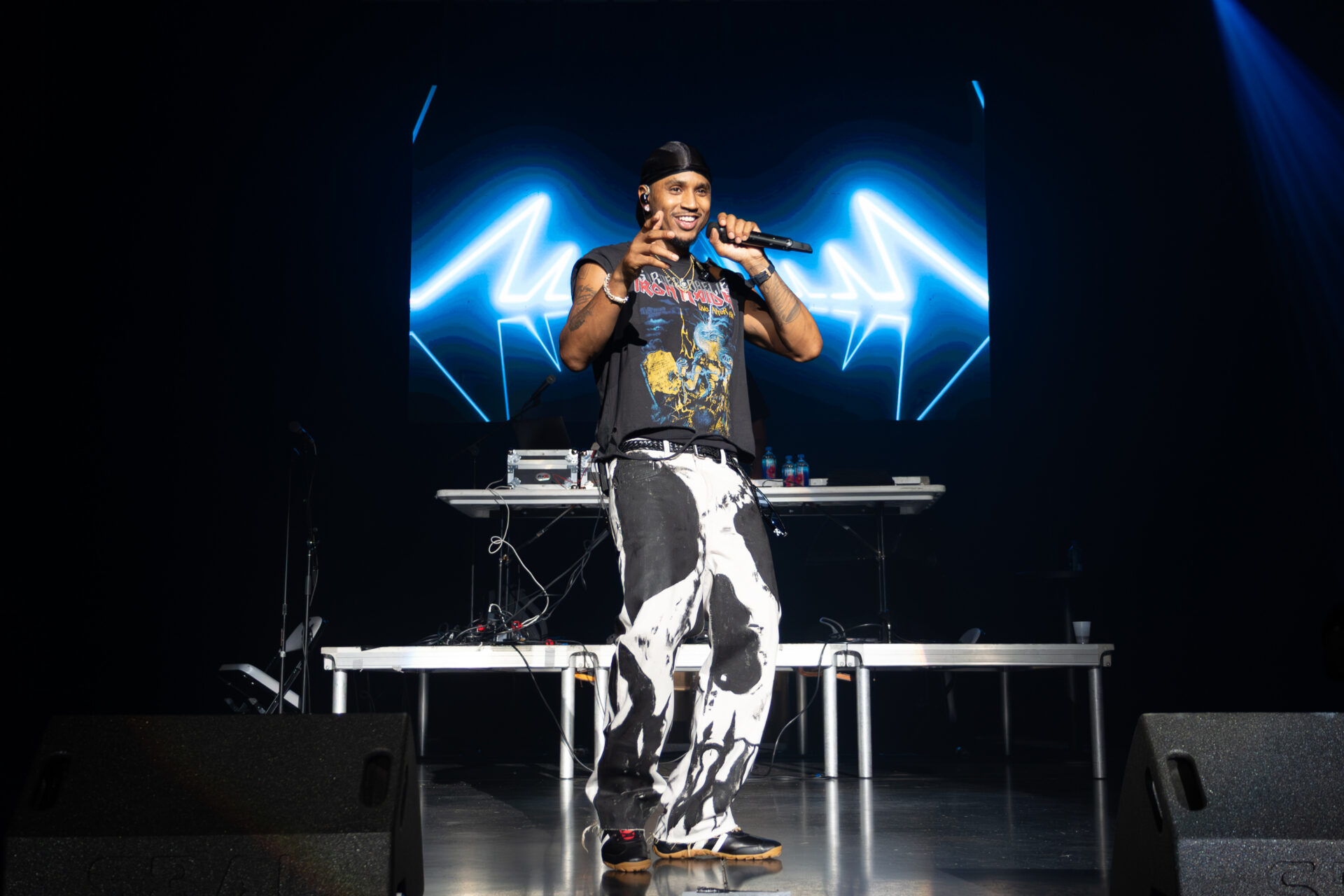
Photo by Ayisha Collins / Getty Images
“I think things are better for us because of the gravity of our connectedness – the fact that we are able to assemble and have a larger voice than any one individual voice that we would have had,” Guidry says. “We’re able to scream loud enough to be heard and to break through the noise of what would often have been ignored. And so I think it’s better for us because of the strategy that we took. Is it better for the whole of every minority buyer out there that’s trying to do what we’re doing? No, it’s not better. Deals are still being done the way that they’ve always been done by those who do those deals. And so that’s why it’s been really important for us to have a presence, to get on the board of IEBA, to be on panels at Pollstar and Billboard … these great gatherings where our peers are so that they can not only get exposure to us but to also recognize that we are just as smart, just as capable and we also have some extremely good ideas behind closed doors before people make a final decision.”
To sum up what many have shared, Guidry notes that “the work is not done” when it comes to the changes needed for the industry to be more equitable. He says, “I’m so proud of what we have accomplished. And it’s an honor to be looked at in the light that we are being looked at by the industry. It’s an honor to receive those accolades and those congratulations, but at the same time when I look around and still see that all of these wonderful stadium tours that are being announced with these iconic brands that it’s still not one of us that are producing those or at the forefront of some of those deals, we still have a long way to go and and we’re just going to keep pushing until we get there.”
BPC’s recent highlights include being nominated for three Pollstar Awards with “The Boy Is Mine Tour” by Brandy & Monica and “The Queens! 4 Legends. 1 Stage” with Gladys Knight, Chaka Khan, Patti LaBelle and Stephanie Mills being nominated for R&B Tour Of The Year, while “The Millennium Tour” with Trey Songz, Omarion and Bow Wow is up for Hip-Hop Tour Of The Year.
Guidry adds, “We’re focused on doing what we do well, which is really partnering with artists and coming up with real authentic storytelling that resonates with their fan base. And as long as we keep doing that well, we’re just hoping that that messaging resonates in the industry so that more people will want to work with us. And so the more people that want to work with us, the more we can scale the business.”
FREE
 Daily Pulse
Subscribe
Daily Pulse
Subscribe
 Daily Pulse
Subscribe
Daily Pulse
Subscribe