
Sustainability Matters: A Look At Black Leaders Driving Live Sustainability Efforts

Sustainability and racial justice are intertwined, as people of color in low-income communities are disproportionately affected by the effects of climate change – from Hurricane Katrina flooding New Orleans’ Lower Ninth Ward to power outages in Puerto Rico, as detailed in Bad Bunny’s Halftime show.
Last year’s Black History Month edition of the GOAL (Green Operations & Advanced Leadership) member newsletter pointed out that “the environmental movement has long been driven by Black visionaries – from Dr. Robert Bullard, Hazel M. Johnson, and Dr. Beverly Wright, who laid the foundation for environmental justice, to today’s leaders like Dr. Ayana Elizabeth Johnson, Catherine Coleman Flowers, Colette Pichon Battle, and Mustafa Santiago Ali, who continue to push for equitable climate solutions.”

Sustainability Program Manager | Charlotte Regional Visitors Authority
The live entertainment industry has a unique platform to champion sustainability, whether it’s artists speaking out or venues making events more environmentally-friendly while bringing joy to fans. In celebration of Black History Month, Pollstar is featuring a few of the inspiring environmental advocates working in live who are helping make a positive impact.
Read All 2026 Black History Month content here
ASHLEY GLADNEY has been working with the Charlotte Regional Visitors Authority for over 11 years, having progressed in her career from operations to project management to sustainability. As the Sustainability Program Manager for the CRVA, she oversees the sustainability program for five city-managed facilities, including Charlotte Convention Center, Spectrum Center, Bojangles’ Coliseum, Ovens Auditorium and the NASCAR Hall of Fame.
Gladney ensures the CRVA is “following the strategic energy action plan (SEOP) in alignment with the city of Charlotte for all of our buildings,” with a goal of becoming carbon neutral by 2030. She adds, “We’re looking at our reduction and our energy and our carbon footprint year to year. So that’s a large part of my role.” She also oversees renovations pursuing LEED (Leadership in Energy and Environmental Design) and other certifications, including Spectrum Center receiving a True Zero-Waste Pre-Certification and GBI Net Zero Certification.
Working with so many venues, Gladney says the biggest challenge is aligning sustainability goals with the building’s use. For example, anticipating “what the trash [and] the usage is going to look like based on a game versus a convention center [where] every single event is different and you really don’t have that kind of predictability data.”
Along with Spectrum Center receiving Front Office Sports’ Most Sustainable Award in 2024, Gladney’s recent career highlights include joining Circular San Antonio on a sustainability U.S. delegation to Switzerland in October. She plans to incorporate her learnings, including encouraging more people to use public transportation to get to Charlotte’s venues.
“I don’t think we ever stepped foot in a car the entire time that we were there,” Gladney said. “Everything was accessible by train or walking … So that was really something that stuck with me about how we can find ways to get people to our arena.”
She added, “We’re still having discussions with our local transit about what a partnership could look like for our building. We installed bike racks around Spectrum Center to encourage people. We were lucky that the city had placed multiple bike routes and protected bike lanes that allowed people to get pretty close to the arena. … And for the convention center, public transit and access was one of their largest and highest scoring parts of their LEED certification.”
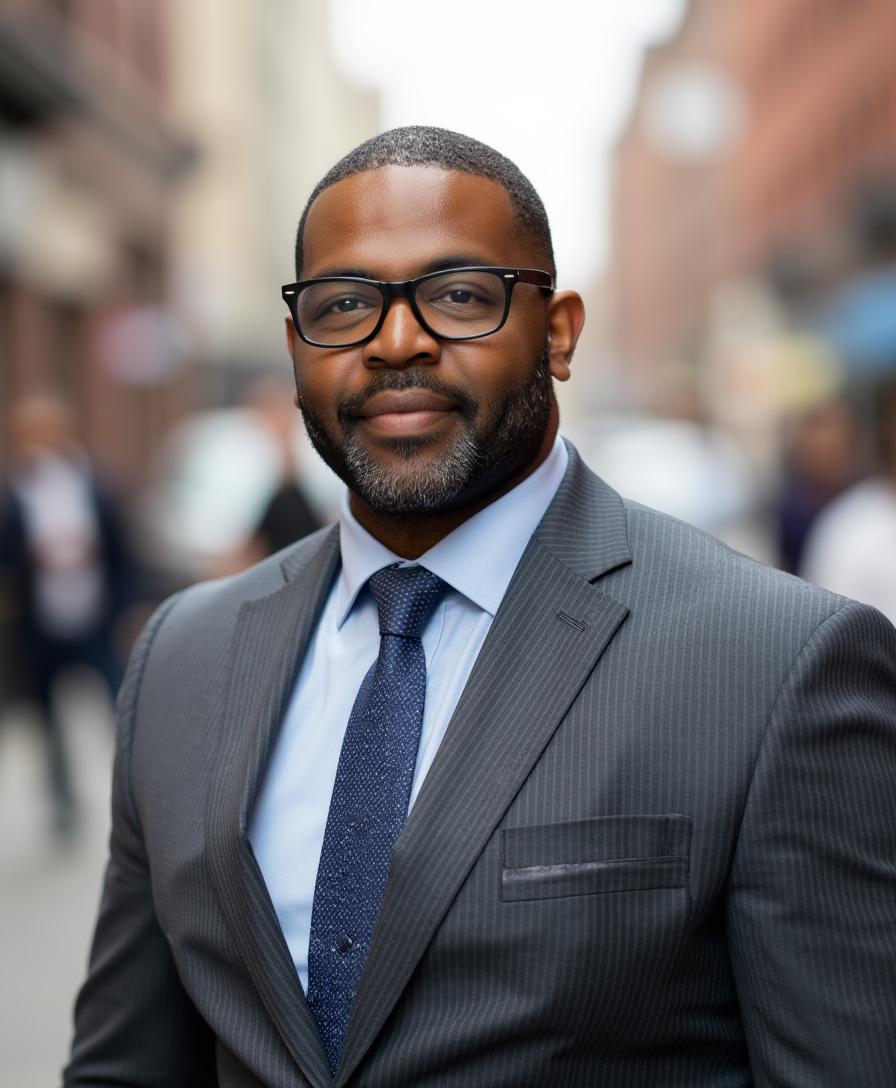
Vice President of Operations | Moody Center
FRANTZER LE BLANC, who serves as vice president of operations at the Moody Center in Austin, Texas, and whose role includes spearheading sustainability and energy-saving initiatives, explains that when he joined the venue in October 2022, six months after it opened its doors, Moody didn’t have a sustainability department.
“We just had recycling and landfill. And then that’s when GOAL, (the sustainability network for live venues co-founded in partnership with Pollstar parent company Oak View Group) was first starting. They were asking people to track what their recycling was. I had a conversation with my director of operations. I was like, ‘Well, let’s just do more. … let’s try to build something.’ So the first thing we started out with was low-hanging fruit. If we turn the lights off on dark days, how much energy does that save? We found an intern that was a student at UT that was in sustainability, and we just started trying things. … We were like, ‘Well, we can divert trash [from the landfill], but we can also help a lot of lives. So let’s build a team where we can offer jobs, give them a higher wage instead of paying an outside company.”
Moody Center has gone from a 26% landfill diversion rate to 86%. Other sustainability projects at the venue include donating unused food and partnering with battery manufacturer Procell to lessen its lithium waste.
“It just became organic. It was like what’s next? What can we do?” Le Blanc says. “And it’s fun to be in live entertainment, yes, you get to entertain people, but this is part of how we can change the world. We obviously have a lot of trash here (laughs) as a venue. And to be able to be a part of a system where we are diverting and affecting climate change in a good way was really the desire to do this.”
Le Blanc notes that growing up in Philadelphia, around a lot of poverty, he initially wanted to be a social worker and while in college he was lucky enough to be an AmeriCorps Promise Fellow in the inner city at a youth school: “So that’s why I think I’m so big on community impact … that is still one of my whys – how can we improve not only other people’s lives on my team … how can we impact the community and now globally as in climate change?”
SAMATA PATTINSON is the founder and CEO of BLACK PEARL, a sustainability organization working across fashion, music and entertainment. Last year, the organization curated Sustainable Fashion Guides for Billie Eilish’s “Hit Me Hard And Soft The Tour” to encourage fans to “explore each tour stop more consciously and creatively, through fashion.” Following a soft launch across Europe and Tokyo, BLACK PEARL expanded its guides to the U.S., highlighting vintage stores, local designers, repair workshops, and community initiatives.

Founder & CEO | BLACK PEARL
“From the start, the goal was to make sustainability accessible rather than prescriptive,” Pattinson says. “Touring is fast-paced and complex, so the guide needed to be practical, clear, and adaptable – something teams could actually use in real time. Billie and her team were deeply committed to doing this thoughtfully, which made the collaboration especially meaningful. The response was incredibly encouraging. We heard from fans, stylists, and industry professionals who appreciated seeing transparency and education built into a major tour. For me, the project showed what’s possible when artists use their platforms not just to inspire, but to equip people with tools for change.”
Pattinson explains that her entry into the sustainability space was about “noticing patterns – who bears the cost of progress and who gets left out of the conversation.” She adds, “I became interested in sustainability not just as an environmental issue, but as a social one. Once you start paying attention, you see how deeply connected environmental harm is to inequality, labor, race, and access. That realization shifted sustainability from something abstract into something deeply human for me, and I knew I wanted my work to sit at that intersection.”
With an eye on change in the live business, Pattinson says she’d love to see sustainability embedded into the planning process from day one, rather than treated as an add-on: “That means better data sharing, more accountability across supply chains, and greater collaboration between artists, venues, promoters, and brands. The live music industry has enormous cultural influence, and with that comes an opportunity – and responsibility – to lead by example.”
BLACK PEARL is continuing to expand its work in live while developing new tools and resources that help creative teams make more informed decisions. Pattinson says, “What excites me most is the shift I’m seeing – more people are asking deeper questions, earlier in the process. That tells me the conversation is evolving, and we’re just getting started.”
FREE
 Daily Pulse
Subscribe
Daily Pulse
Subscribe
 Daily Pulse
Subscribe
Daily Pulse
Subscribe